Artwork
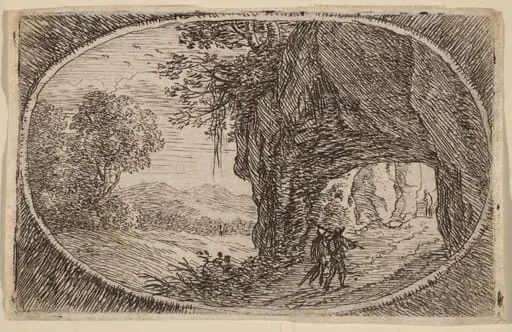
The Pierced Rock
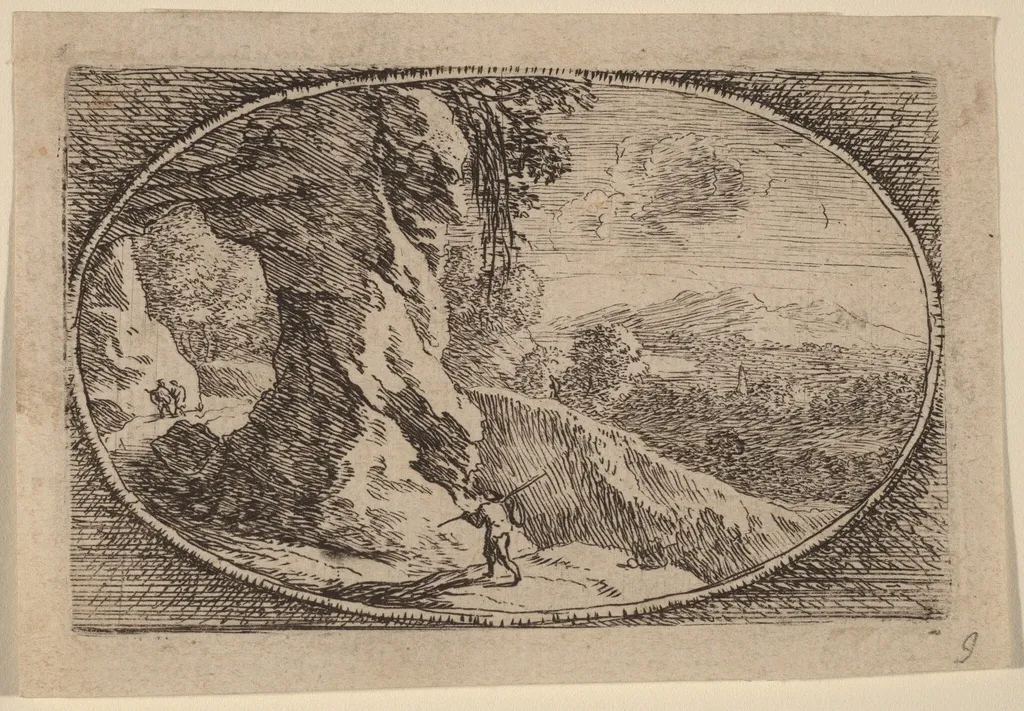
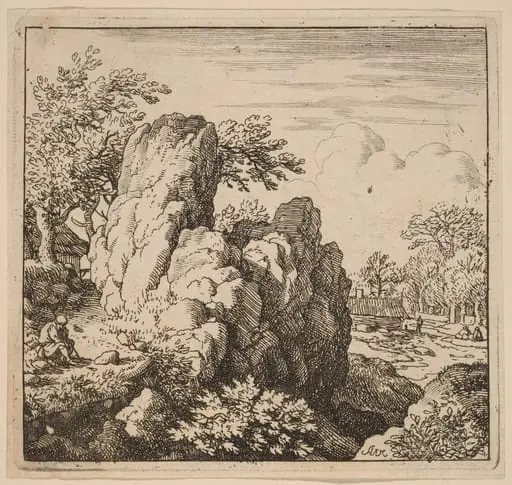
The Pierced Rock is an ink print by the Baroque artist Herman van Swanevelt. It dates from 1628 and is held in the collection of the National Gallery of Art.
About this work
Overview
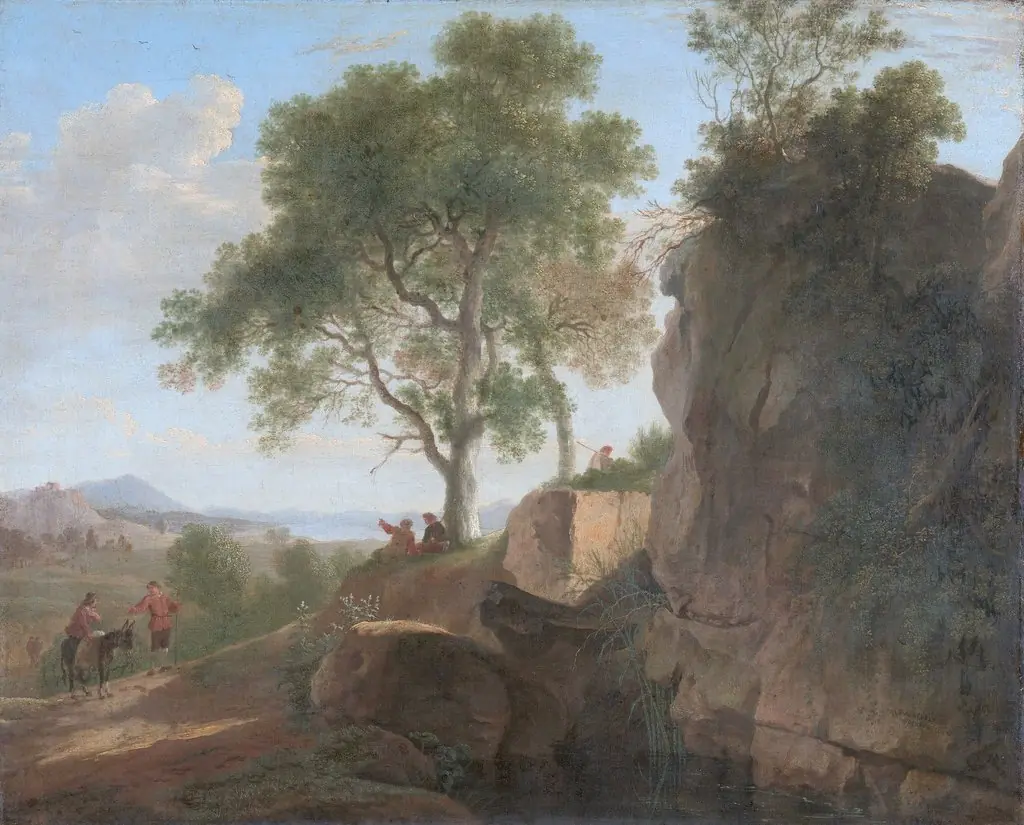
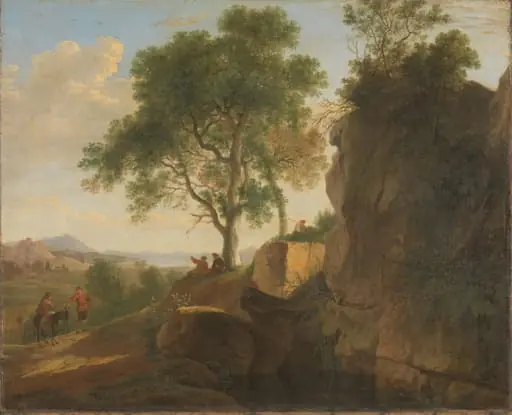
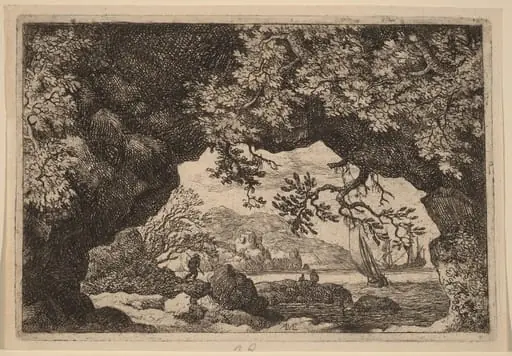
Distant mountains and a hazy body of water frame the scene, while faint figures near the base suggest human or animal presence without detailed rendering.
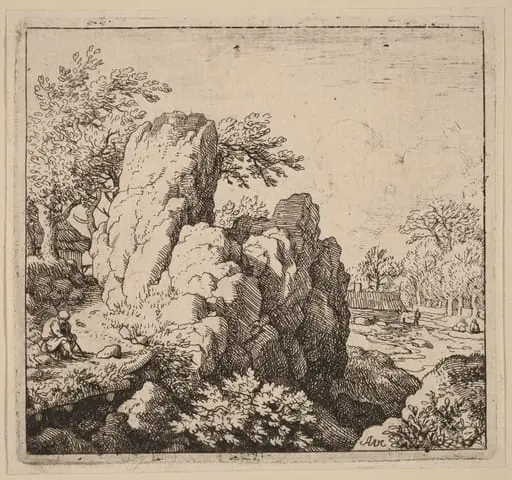
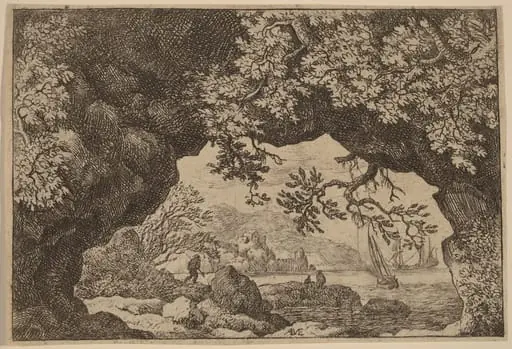
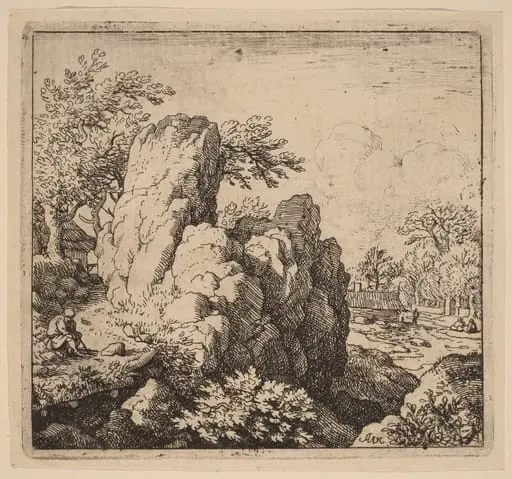
The Pierced Rock is an etching by Herman van Swanevelt, dated 1628. It depicts a quiet, wooded landscape dominated by a central, gnarled tree rising from a rocky outcrop. Distant mountains and a hazy body of water frame the scene, while faint figures near the base suggest human or animal presence without detailed rendering. The composition emphasizes stillness and spatial depth, characteristic of early Baroque landscape prints.
Subject & Meaning
The work centers on nature’s quiet endurance, with the pierced rock and ancient tree forming a symbolic anchor. The absence of overt narrative or dramatic action invites contemplation rather than storytelling. The subdued figures, barely discernible, imply human presence as incidental to the landscape’s permanence, reflecting a Northern European tradition that valued nature as a contemplative, spiritual space.
Technique & Style
Van Swanevelt employed fine, controlled etching lines to model form and atmosphere. Delicate hatching suggests foliage and cloud cover, while the rock’s texture is rendered with precise, intersecting strokes. The tonal range is restrained, avoiding strong chiaroscuro in favor of soft gradations that enhance the scene’s calm mood. This technique aligns with the Italianate landscape tradition, adapted through Northern European draftsmanship.
History & Provenance
Created during van Swanevelt’s time in Rome, the etching reflects his exposure to Italian scenery and classical ruins. It was likely produced for a niche market of collectors interested in landscape prints rather than large-scale paintings. No definitive early ownership records survive, but similar works circulated among Dutch and Flemish connoisseurs in the mid-17th century.
Context
Van Swanevelt’s work emerged within a broader trend of Italianate landscape etching, influenced by artists like Claude Lorrain and Adam Elsheimer. Unlike the theatricality of Counter-Reformation art, his prints favored subdued harmony and atmospheric perspective. This approach resonated with Northern European audiences seeking tranquil, idealized visions of nature amid urban and religious upheaval.
Legacy
The Pierced Rock exemplifies a quiet strand of Baroque printmaking that prioritized mood over drama. Though less celebrated than his contemporaries, van Swanevelt’s delicate compositions influenced later landscape etchers in the Netherlands. His focus on natural serenity contributed to the evolution of the genre, paving the way for 18th-century topographical and romantic landscape traditions.
Artist & collection