Artwork
The Botanical Magazine or Flower Garden Displayed: White Cape - Coast Lily
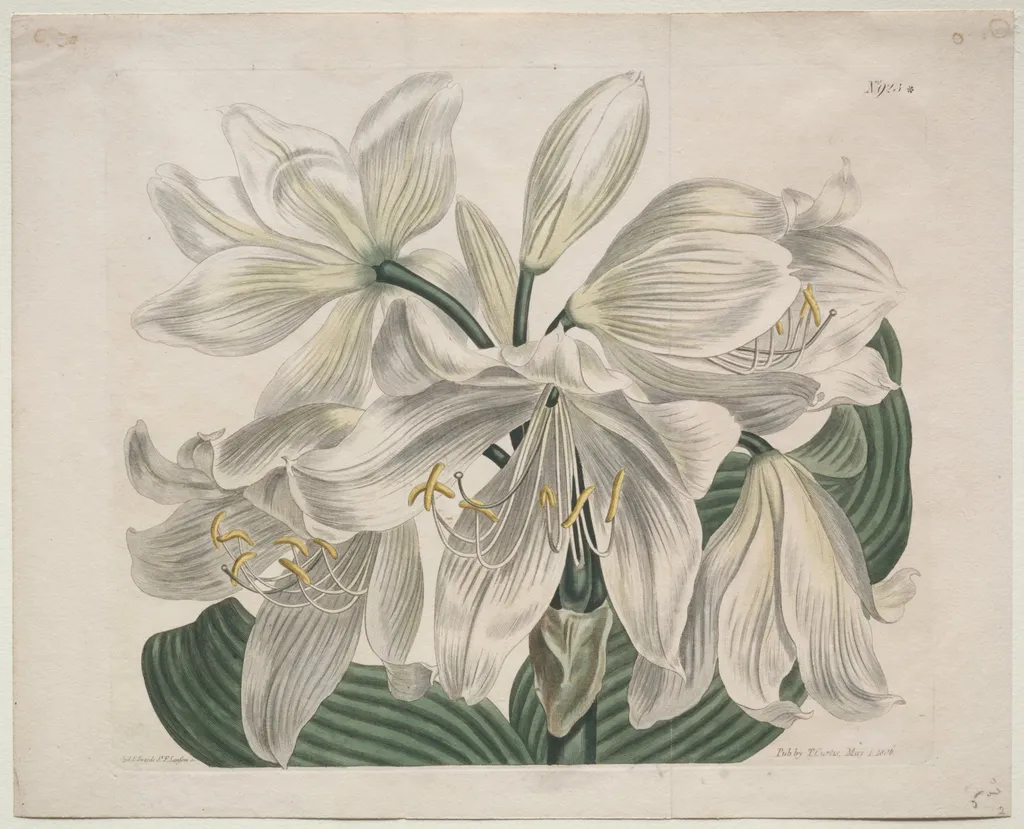
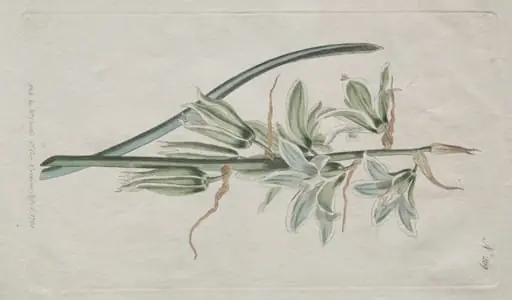
The Botanical Magazine or Flower Garden Displayed: White Cape - Coast Lily is a print by the Romanticist artist Sydenham Edwards. It dates from 1806 and is held in the collection of the Cleveland Museum of Art. Published in London beginning in 1787, The Botanical Magazine was a serial publication dedicated to documenting ornamental flowering plants.
About this work
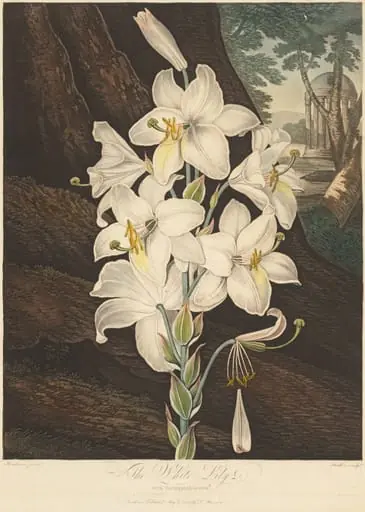
You see a white Cape Coast lily against a dark background. Its petals curve softly, almost glowing. Thin green veins trace the petals like fine threads.
This is a plate from an old botanical magazine. It shows plants with scientific care. Artists had to draw from live flowers, not photos.
Look up Sydenham Edwards (British, 1768–1819) to see more like it.
Overview
Founded by William Curtis, it combined scientific accuracy with artistic detail, offering subscribers monthly plates of plants cultivated in British gardens.
Published in London beginning in 1787, The Botanical Magazine was a serial publication dedicated to documenting ornamental flowering plants. Founded by William Curtis, it combined scientific accuracy with artistic detail, offering subscribers monthly plates of plants cultivated in British gardens. Each illustration was drawn directly from live specimens, reflecting a commitment to empirical observation during a period of expanding botanical knowledge.
Subject & Meaning
The plate depicts the White Cape Coast Lily, a South African species introduced to European cultivation in the late 18th century. Its delicate, curved petals and subtle veining emphasize natural form over ornamentation. The dark background isolates the flower, directing attention to its structure and texture. This approach served both aesthetic and educational purposes, aiding horticulturists in identifying and cultivating exotic species.
Technique & Style
Illustrations were hand-drawn from live plants and hand-colored using watercolor, with each plate requiring meticulous attention to detail. Artists avoided idealization, striving to capture the plant’s true appearance under natural light. Fine lines traced venation and petal contours, while muted tones preserved botanical fidelity. The absence of decorative elements reinforced the work’s scientific intent, distinguishing it from ornamental florilegia of earlier centuries.
History & Provenance
The plate was produced by Sydenham Edwards, a skilled botanical artist employed by Curtis. Edwards contributed hundreds of plates between 1790 and 1819, establishing a visual standard for the publication. The magazine was widely distributed among gardeners, collectors, and institutions, including Kew Gardens. Its plates were often bound into volumes, preserving them as reference materials for decades after initial publication.
Context
In late 18th-century Britain, global exploration fueled fascination with exotic flora. Botanical gardens like Kew became centers for plant classification and acclimatization. The Botanical Magazine emerged as a practical tool for amateurs and professionals alike, bridging the gap between scientific taxonomy and domestic horticulture. It reflected broader Enlightenment values: observation, classification, and the systematic dissemination of knowledge.
Legacy
The Botanical Magazine continued publication for over two centuries, influencing generations of botanical illustrators. Its emphasis on accuracy from life set a precedent for scientific illustration. Edwards’s work, in particular, became a model for precision and restraint. Today, its plates remain valuable resources for historians of science and horticulture, offering insight into the material culture of plant collecting in the Age of Empire.
Artist & collection

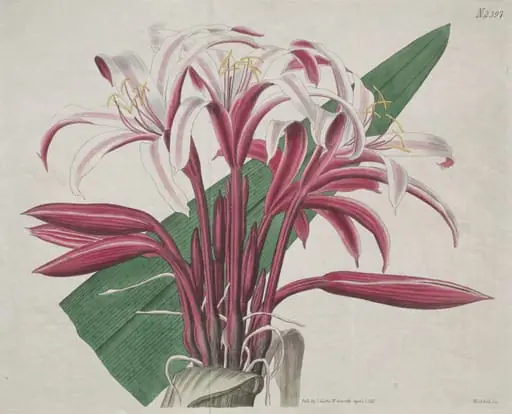 The Botanical Magazine or Flower Garden Displayed: Stately Crinum
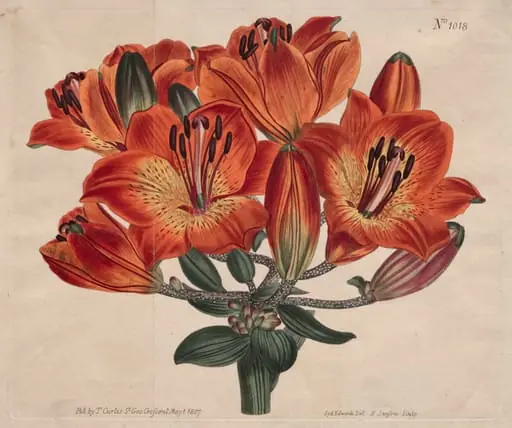 The Botanical Magazine or Flower Garden Displayed: Umbel-Flowering Bulb-Bearing Orange-Lily
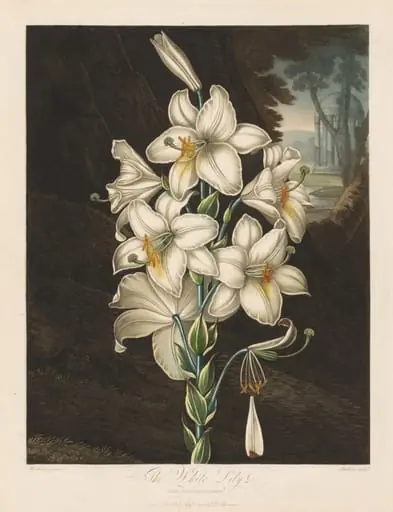 The Temple of Flora, or Garden of Nature: The White Lily with Variegated Leaves
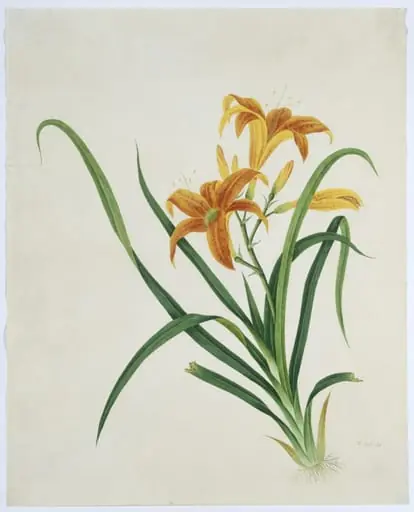 Orange Day Lily
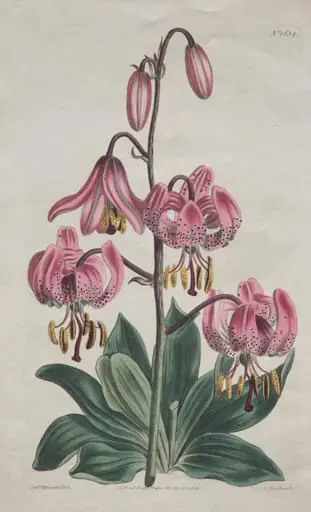 The Botanical Magazine or Flower Garden Displayed: Smooth-stalked Martagon, Turk's Cap Lily
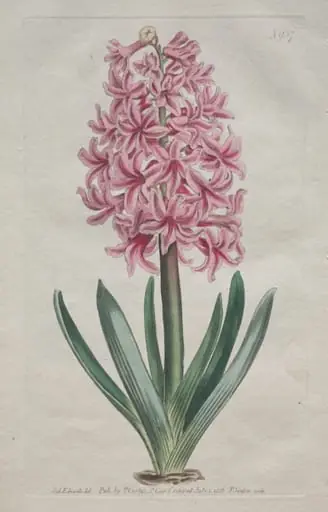 The Botanical Magazine or Flower Garden Displayed: Garden Hyacinth
 The Botanical Magazine or Flower Garden Displayed: Star of Bethlehem