Artwork
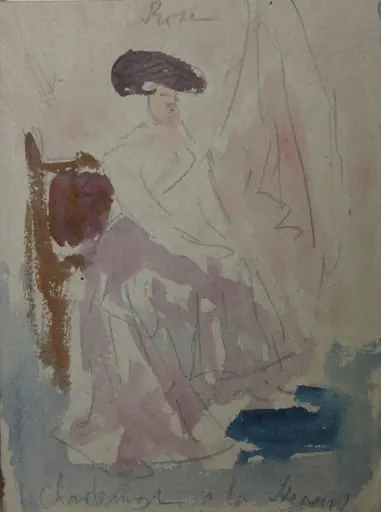
Studiu de mișcare
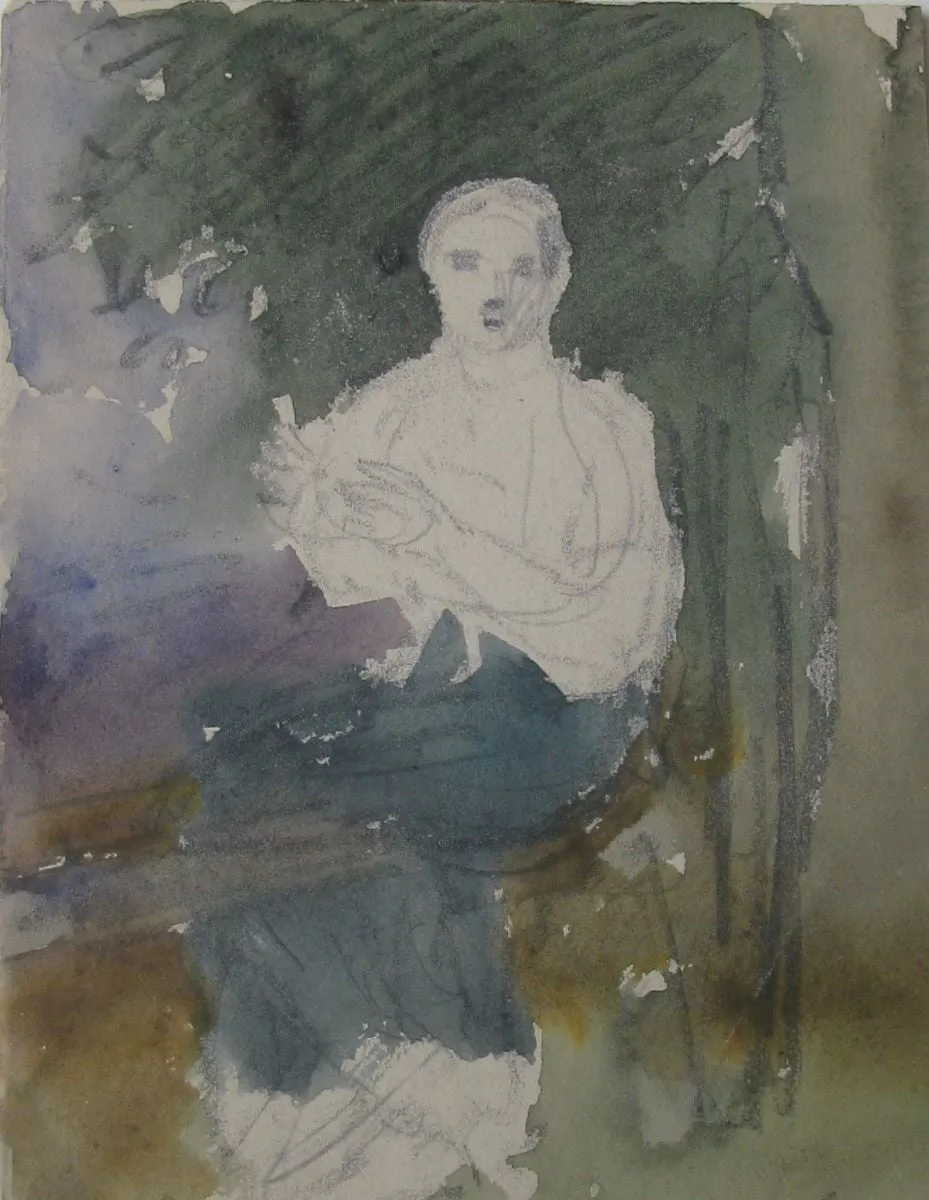
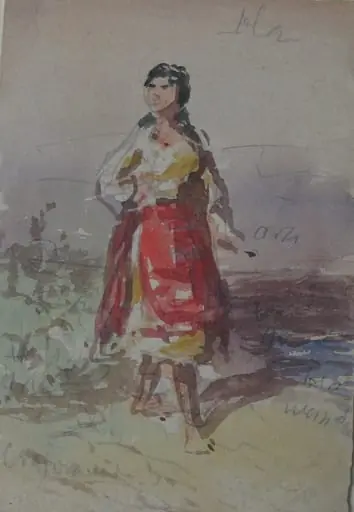
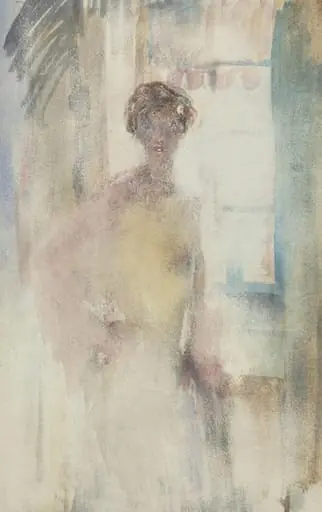
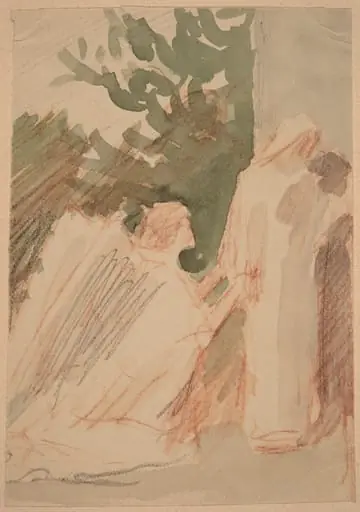
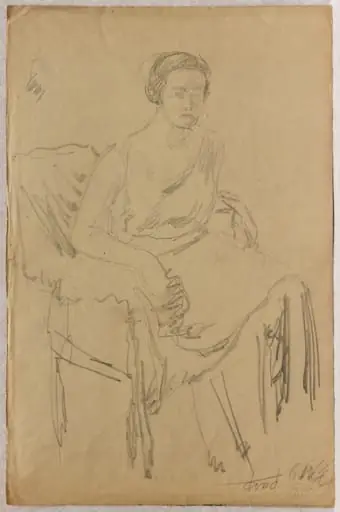
Studiu de mișcare is a drawing by Carol Popp de Szathmári. It dates from 1878 and is held in the collection of the Bucharest Municipality Museum.
About this work
Overview
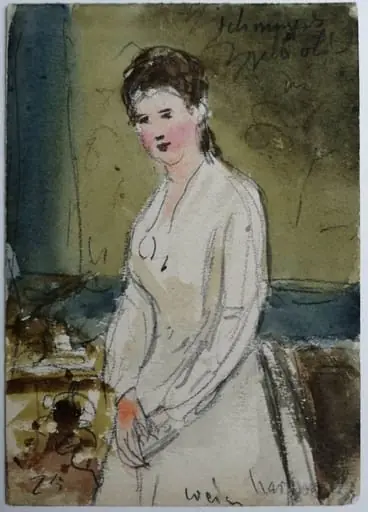
Studiu de mișcare, dated around 1878, is a painted study by Romanian artist Carol Popp de Szathmári. It resides in the collection of the Museum of Ethnography. The work presents a solitary female figure in a restrained composition, emphasizing stillness over motion despite its title. Its quiet tone and intimate scale suggest a personal or experimental intent rather than a formal portrait.
Subject & Meaning
The subject is a woman dressed in a simple white shirt and dark skirt, her hands gently clasped before her.
The subject is a woman dressed in a simple white shirt and dark skirt, her hands gently clasped before her. Her neutral expression and averted gaze convey introspection rather than engagement. The absence of narrative context or symbolic elements invites interpretation as a study of presence — an exploration of quiet dignity and everyday posture, possibly reflecting broader cultural ideals of feminine composure in late 19th-century Romania.
Technique & Style
The painting employs visible brushwork and a textured surface, particularly in the muted green background, which lends a tactile quality to the space surrounding the figure. The rendering of the figure is restrained, with soft transitions and minimal detail, avoiding idealization. The use of light and shadow is subtle, focusing attention on form and posture rather than dramatic contrast, suggesting an interest in observational realism over theatrical effect.
History & Provenance
Created in the late 1870s, the work entered the Museum of Ethnography’s collection, where it remains today. Its origins are not well documented beyond the artist’s known activity during this period. As a study, it likely served as a private exercise in figure composition, possibly linked to Szathmári’s broader interest in documenting everyday life, though it was never intended for public exhibition at the time of its creation.
Context
In the context of 19th-century Romanian art, this work aligns with a growing interest in domestic and ethnographic subjects, moving away from grand historical themes. Szathmári, primarily known for portraiture and documentary imagery, here turns inward, focusing on a single figure in a moment of stillness. The painting reflects a broader European trend toward intimate, psychologically grounded depictions of ordinary individuals.
Legacy
Though not widely reproduced or publicly celebrated, Studiu de mișcare contributes to understanding Szathmári’s range beyond official portraiture. Its preservation in an ethnographic museum underscores its value as a cultural artifact — a quiet record of a woman’s presence in a time when such private, unadorned studies were rarely preserved. It remains a subtle testament to the artist’s engagement with the everyday.
Artist & collection
Artist
A 19th‑century Romanian artist who made drawings and prints of daily life, Carol Popp de Szathmári left sharp records of people and places.