Artwork
Schiță de grup
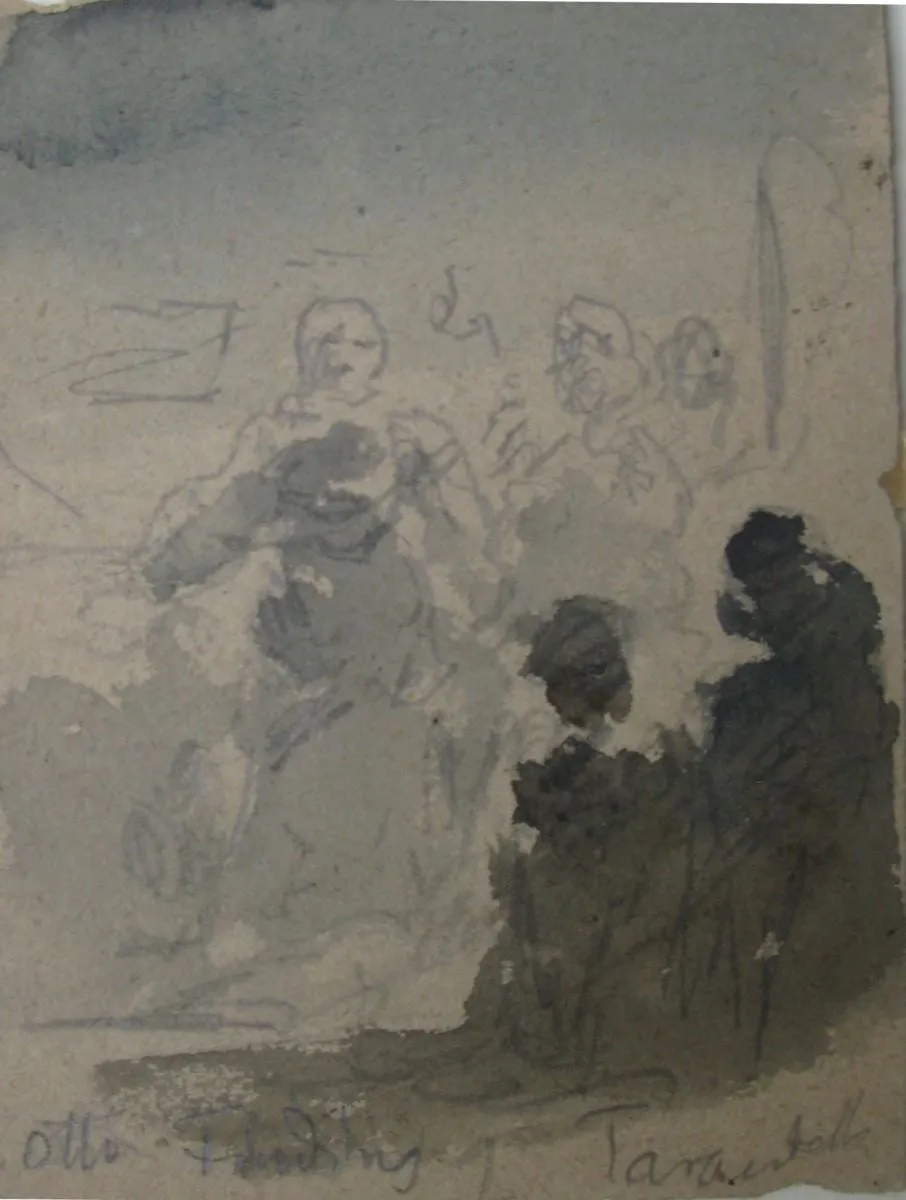
Schiță de grup is a drawing by Carol Popp de Szathmári. It dates from 1878 and is held in the collection of the Bucharest Municipality Museum.
About this work
Overview
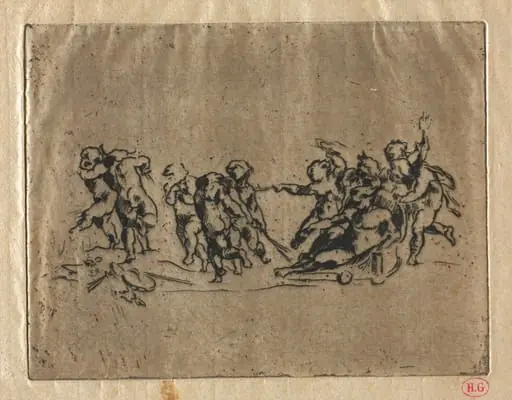
Schiță de grup, dated around 1878, is a pencil sketch by Romanian artist Carol Popp de Szathmári. It resides in the collection of the Museum of Ethnography. The work presents four indistinct human forms in close proximity, rendered with minimal detail and rapid, unrefined strokes. Its unfinished quality suggests it was made as a preparatory study rather than a finished composition.
Subject & Meaning
The figures appear as anonymous individuals, their identities obscured by the sketch’s haste and lack of definition. One figure, darker and more defined, stands slightly forward, possibly indicating a focal point or social prominence. The absence of context or setting invites interpretation as a study of human presence rather than a narrative scene.
Technique & Style
Szathmári employed loose, gestural lines and varying pressure to suggest form without detail. The figures emerge from a neutral background through tonal contrast, with one figure rendered in deeper shading while others dissolve into lighter, sketchier marks. The technique reflects an emphasis on immediacy and observation over polish, characteristic of preparatory drawing practices of the period.
History & Provenance
The sketch bears the artist’s signature, 'Szathmári,' alongside partially legible additional text. It entered the Museum of Ethnography’s holdings as part of a broader collection of his works, likely acquired shortly after his death. Its preservation suggests recognition of its value as a document of the artist’s process, even in its incomplete state.
Context
Created during a period when Romanian artists were increasingly documenting social life, this sketch aligns with emerging ethnographic interests in capturing everyday people. Unlike formal portraits, it prioritizes fleeting presence over individual identity, reflecting a shift toward observational realism and the artist’s role as a recorder of transient moments.
Legacy
Though not widely exhibited, Schiță de grup remains a quiet example of Szathmári’s engagement with informal portraiture. It contributes to understanding how 19th-century Romanian artists approached the human figure outside official commissions, offering insight into the informal, experimental side of their practice.
Artist & collection
Artist
A 19th‑century Romanian artist who made drawings and prints of daily life, Carol Popp de Szathmári left sharp records of people and places.
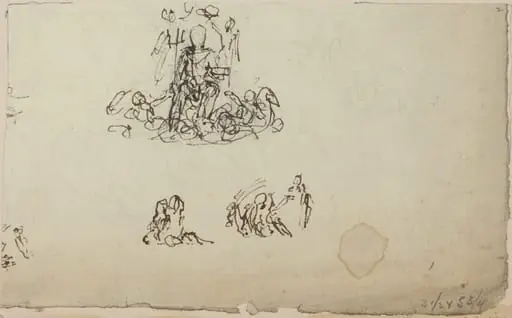 Study of Neptune and Sea Creatures (?)
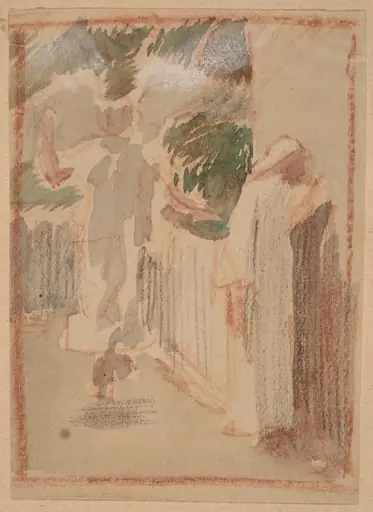 Study for a Panel
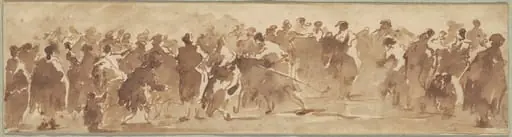 Group of Many Figures
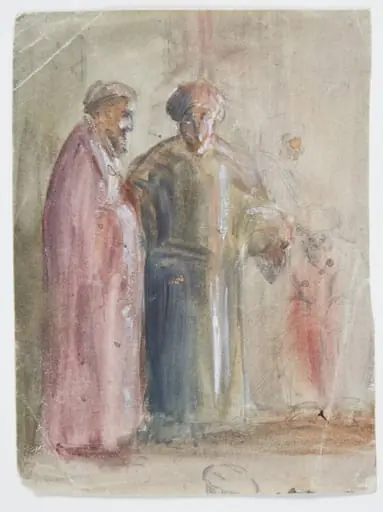 Figurscene
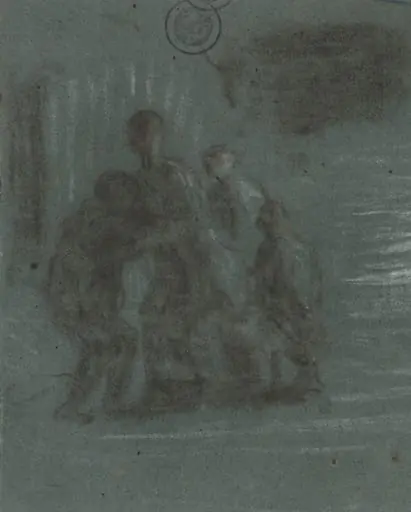 The Prodigal Son
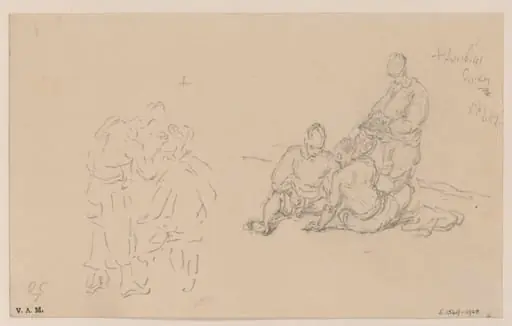 Two sketches of groups of Chinese figures
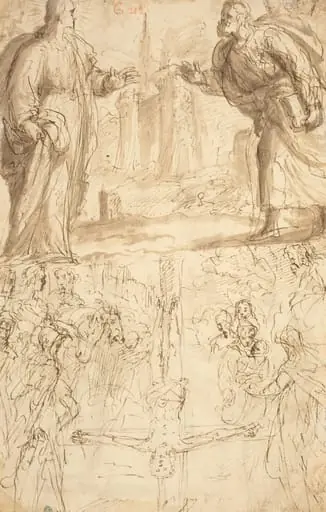 Crucifixion of Saint Peter
 Figure Studies (recto)
 Figure Studies
 Recto: Rinaldo and Armida; verso: Study for a gateway
 Study for a Panel
 Bacchanal with Children and Chariot