Artwork
Primăvară la Baia Mare
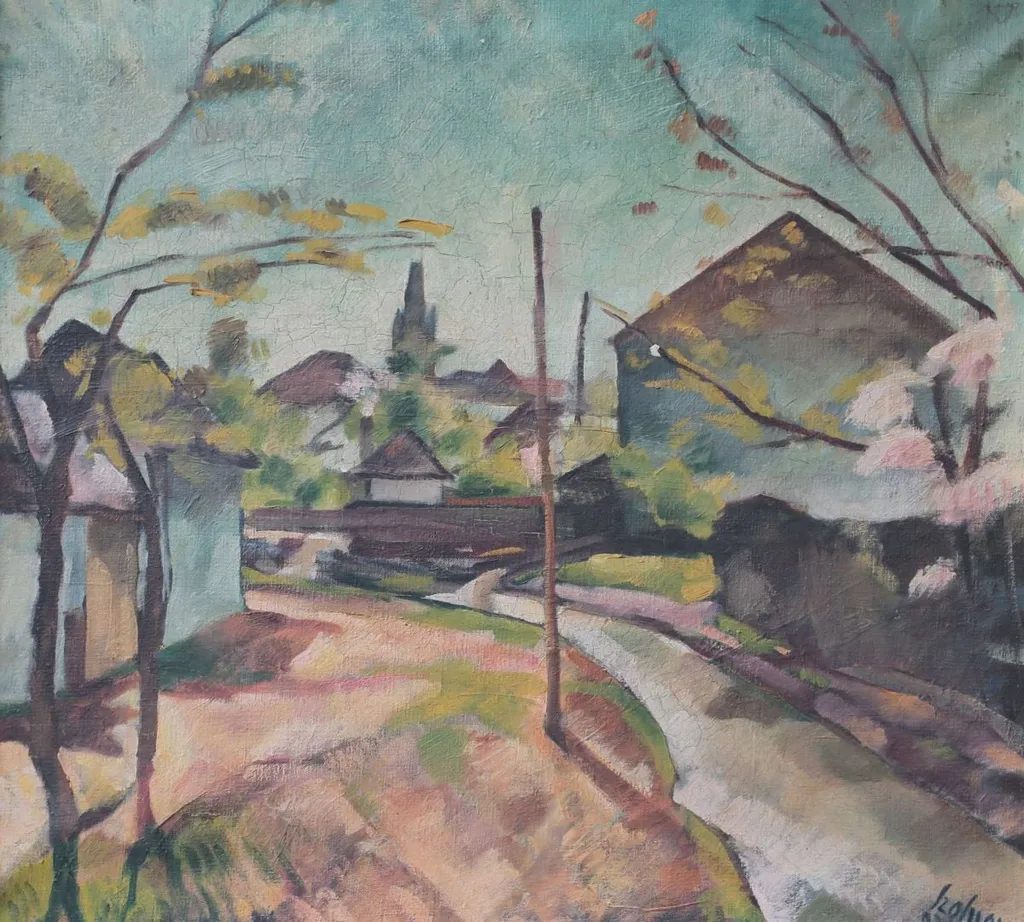
Primăvară la Baia Mare is a print by Sándor Szolnay. It dates from 1927 and is held in the collection of the Museum of Art Cluj-Napoca.
About this work
Overview
The work is part of the Museum of Ethnography’s collection and reflects the artist’s interest in rural life and seasonal change.
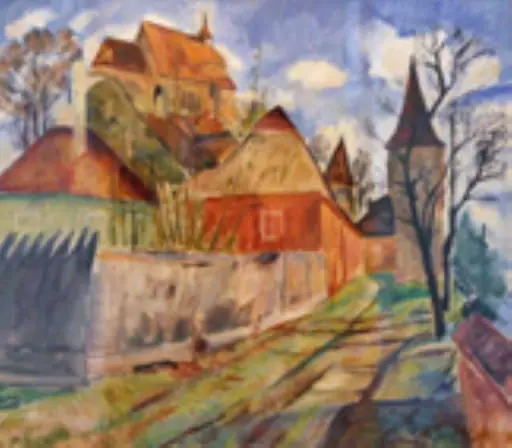
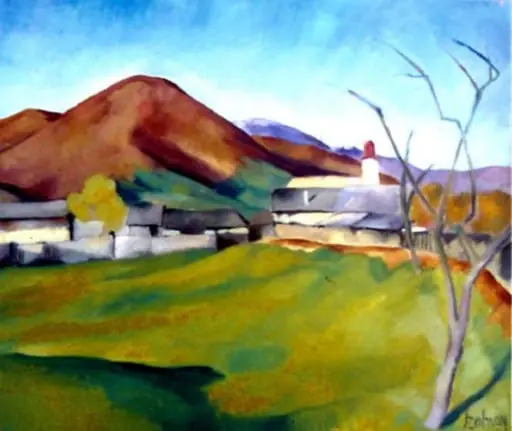
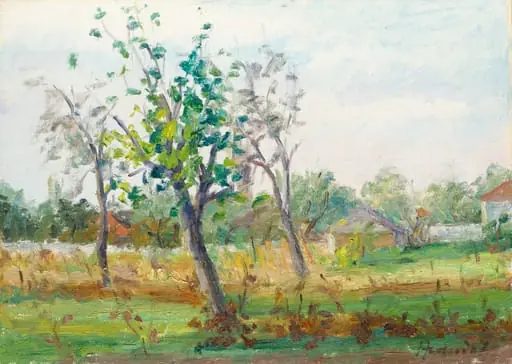
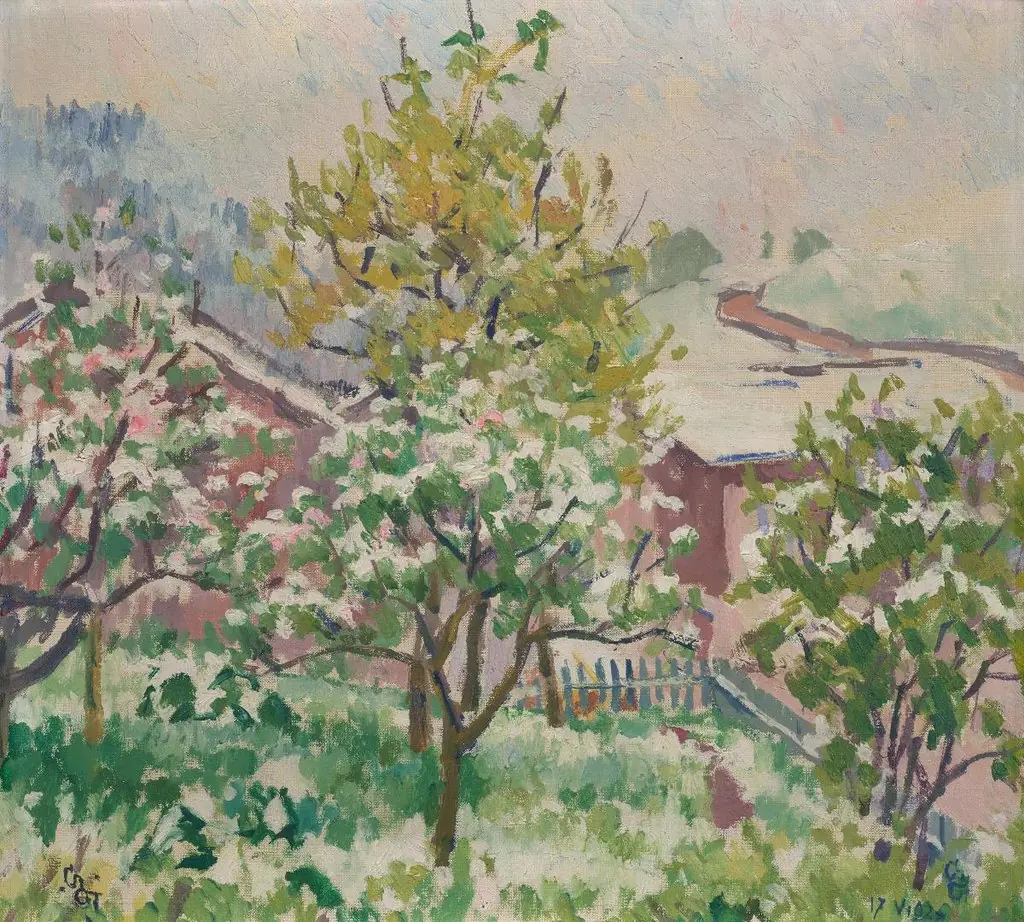
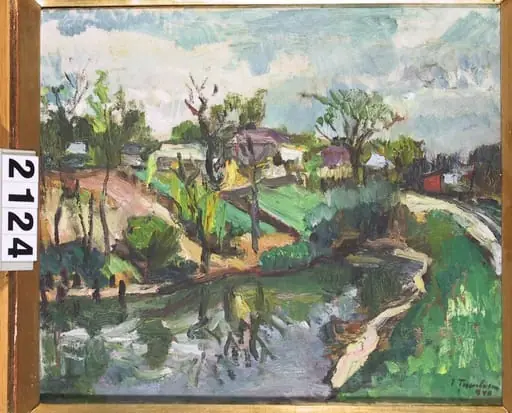
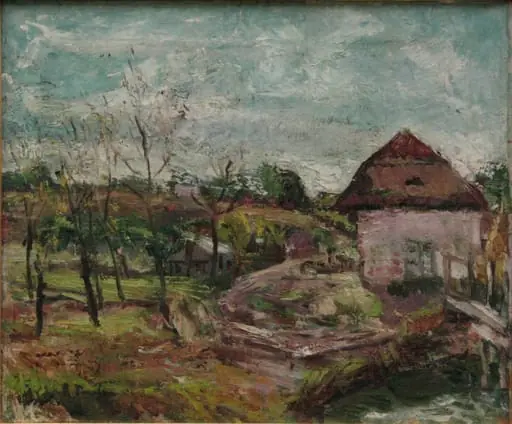
Primăvară la Baia Mare, painted in 1927 by Sándor Szolnay, captures a quiet spring scene in a Transylvanian village. The work is part of the Museum of Ethnography’s collection and reflects the artist’s interest in rural life and seasonal change. Rather than emphasizing architectural precision, Szolnay conveys atmosphere through subtle color and loose handling, aligning with early 20th-century tendencies toward emotional resonance over realism.
Subject & Meaning
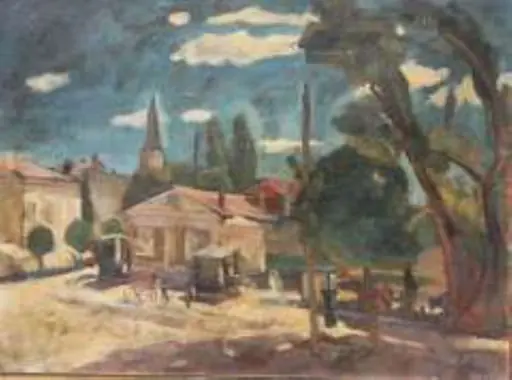
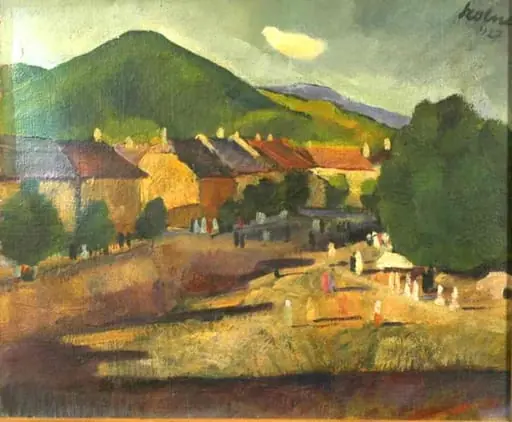
The painting depicts a modest village nestled in early spring, with simple dwellings and a distant church steeple suggesting community and tradition. Bare trees frame the composition, their skeletal forms contrasting with emerging patches of green earth. The absence of human figures invites contemplation of nature’s quiet renewal, framing the scene as a meditation on transience and the gentle return of life after winter.
Technique & Style
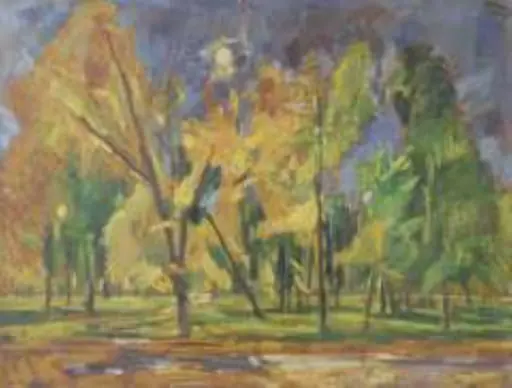
Szolnay employed loose, fluid brushwork to suggest form rather than define it, avoiding sharp outlines or detailed rendering. Soft hues of pale blue, pink, and muted earth tones blend gently across sky and façades, creating a hazy, atmospheric effect. The paint is applied thinly, with minimal texture, reinforcing the sense of delicate light and ephemeral seasonality characteristic of his lyrical approach to landscape.
History & Provenance
Created in 1927, the painting entered the collection of the Museum of Ethnography in Budapest, where it remains today. Its acquisition reflects institutional interest in documenting regional Hungarian and Transylvanian cultural landscapes during the interwar period. No significant changes in ownership are documented, and the work has been consistently associated with Szolnay’s early mature phase.
Context
Szolnay painted this work during a period when many Central European artists turned to rural subjects as a counterpoint to urban modernization. Influenced by Post-Impressionist color studies and regional folk traditions, he sought to preserve the visual character of village life. Primăvară la Baia Mare aligns with broader efforts in Hungary to define a national artistic identity rooted in local scenery and seasonal rhythms.
Legacy
The painting contributes to a body of work that documents Transylvanian villages through a poetic, non-idealized lens. While not widely exhibited outside Hungary, it remains a representative example of Szolnay’s sensitivity to light and place. Its quiet tone and restrained palette continue to inform interpretations of early 20th-century Hungarian landscape painting, particularly in academic and regional museum contexts.
Artist & collection
Artist
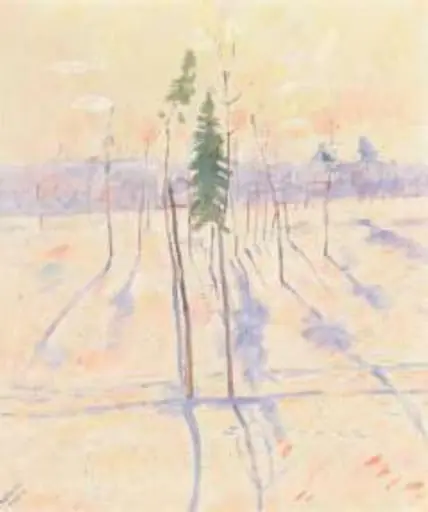
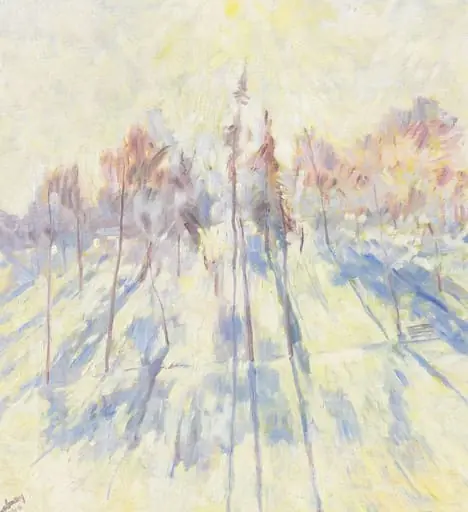
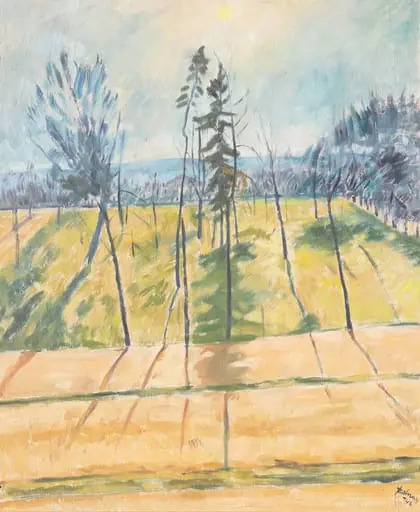
Sándor Szolnay made quiet, wintry landscapes filled with bare trees and soft light.