Artwork
Nottara
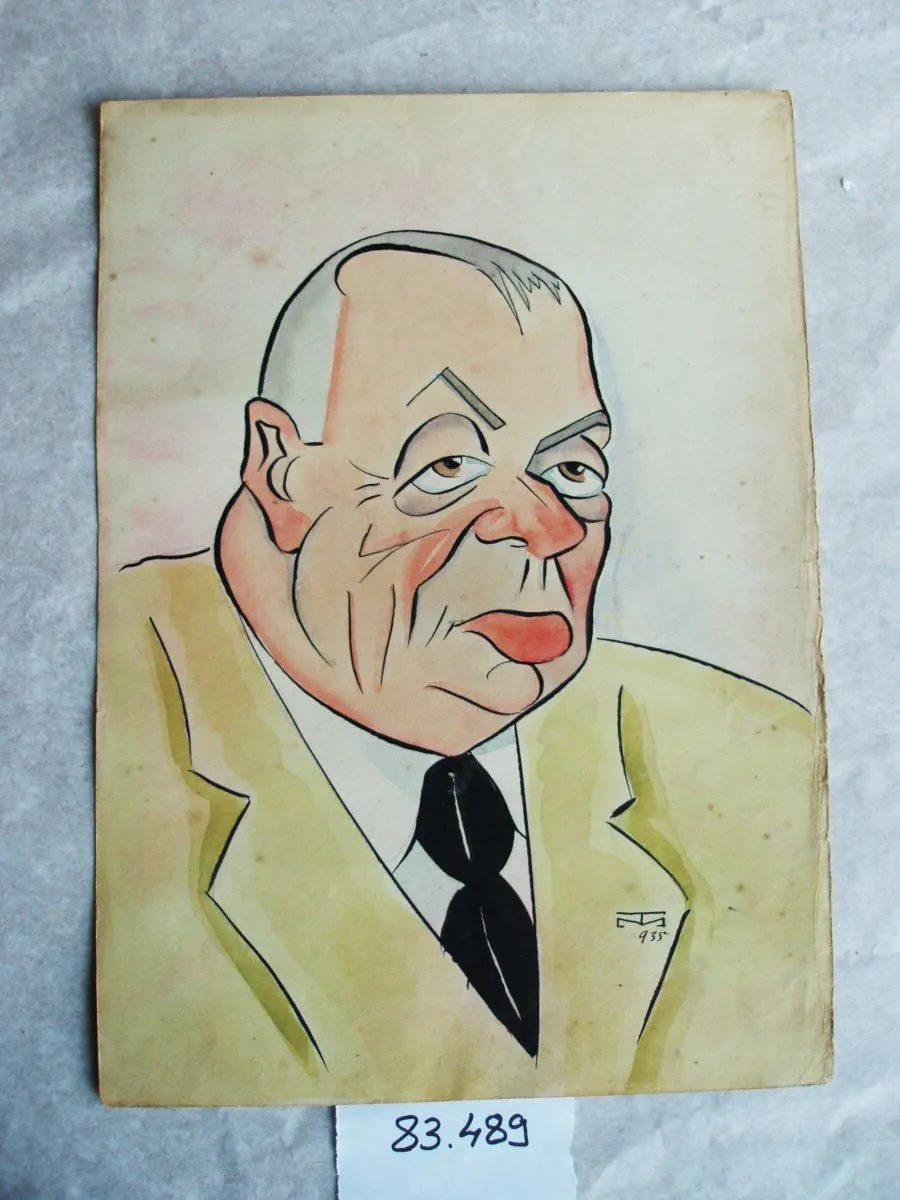
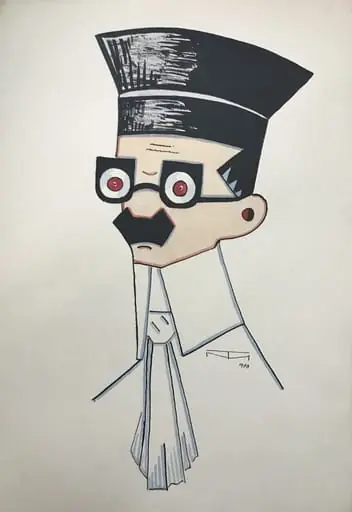
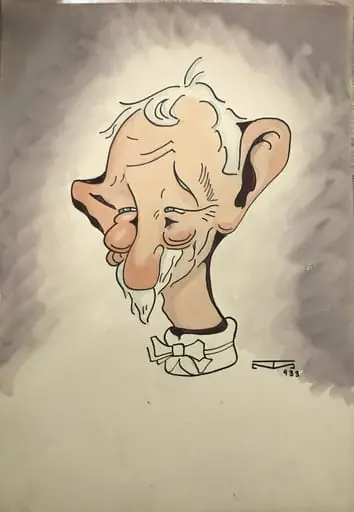
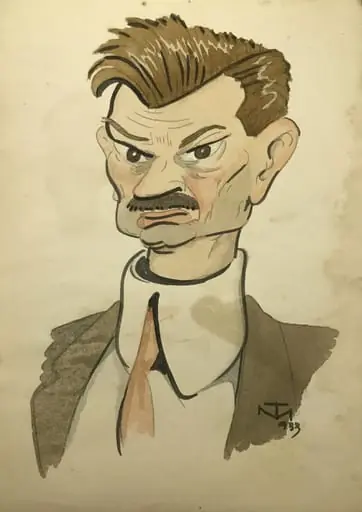
Nottara is an unspecified painting by Mihail Tacorian. It dates from 950 and is held in the collection of the Bucharest Municipality Museum.
About this work
Overview
Nottara, attributed to Mihail Tacorian and dated to around 950, is a modestly sized portrait rendered in a flat, graphic manner. The work is part of the collection of the Museum of Ethnography, where it is displayed as an example of early illustrative portraiture. Its composition centers on a single figure, presented against a plain background.
Subject & Meaning
The image depicts a man dressed in a suit and tie, his rounded face framed by bold eyebrows and a thick moustache. The expression is serious, with the mouth slightly ajar, suggesting a moment of contemplation or speech. The attire and demeanor imply a figure of some social standing, though no specific identity is recorded.
Technique & Style
Tacorian employs clear, strong outlines that define the figure’s silhouette, while large, unmodulated color fields fill the shapes. The palette is limited to pale yellow for the shirt, black for the tie, and muted pinks and blues for the facial features. This approach resembles a sketch or early graphic illustration, emphasizing line over modeling.
History & Provenance
Created in the mid‑10th century, Nottara entered the Museum of Ethnography’s holdings through an acquisition whose details remain undocumented. Its survival through more than a millennium suggests it was valued as a cultural artifact, likely preserved within a private or institutional collection before its museum accession.
Context
The work belongs to a period when portraiture was often functional, serving as a record of individuals rather than an exploration of psychological depth. The flat, outline‑driven style aligns with contemporaneous visual traditions that prioritized recognizability and symbolic representation over realistic rendering.
Artist & collection
Artist
Mihail Tacorian’s prints and drawings capture mid-1930s Bucharest with crisp portraits and politician profiles printed on verso pages.
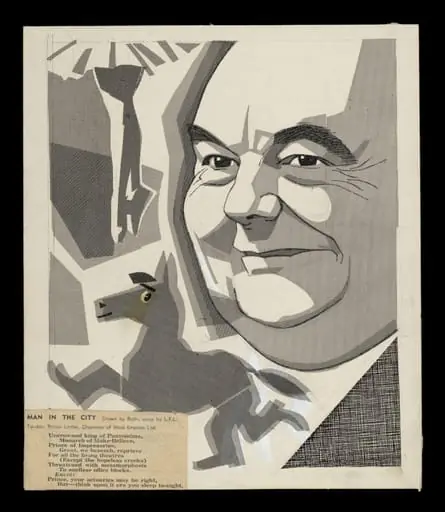 Prince Frank Littler (1901-1973). Print reflecting ballet and pantomime, major interests in his business as a theatrical impresario.
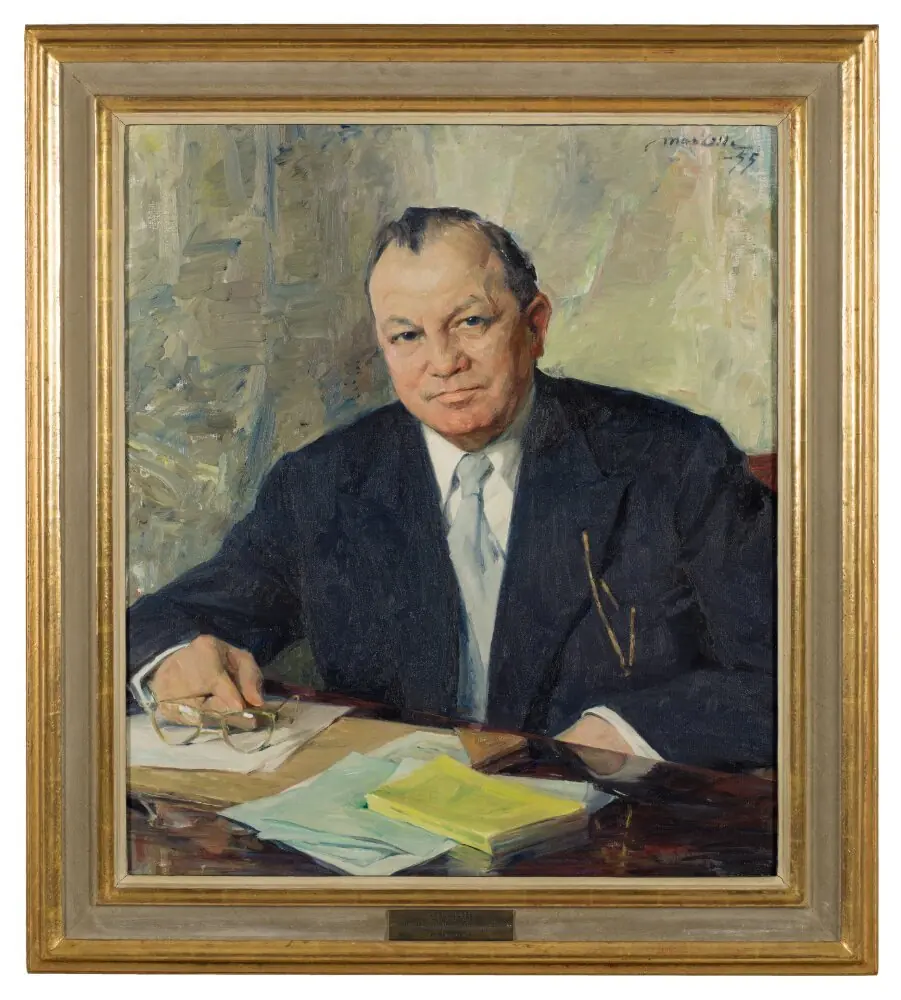 Axel Gjöres
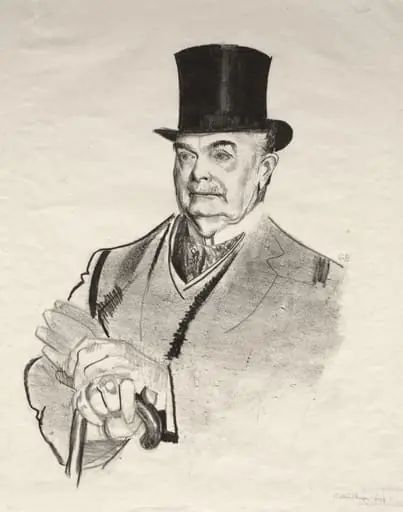 W. E. Story, Esq., first state
 Iuliu Maniu/Dem Dobrescu (verso)
 Untitled
 Liviu Rebreanu
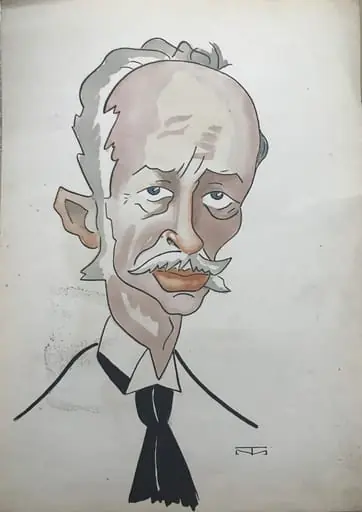 Lascăr Catargiu
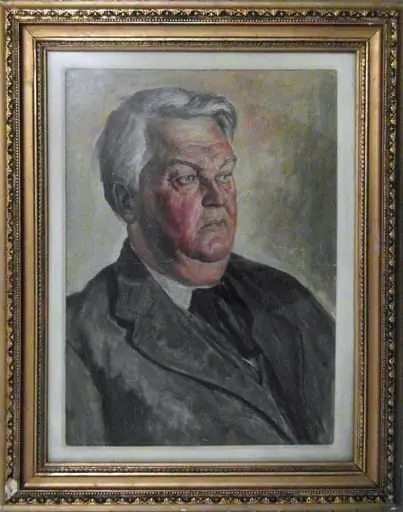 „Portretul scriitorului Mihail Sadoveanu"
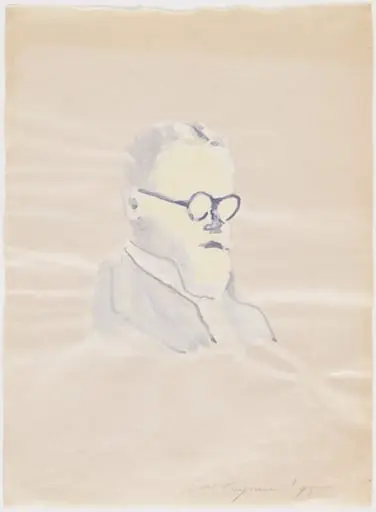 Untitled
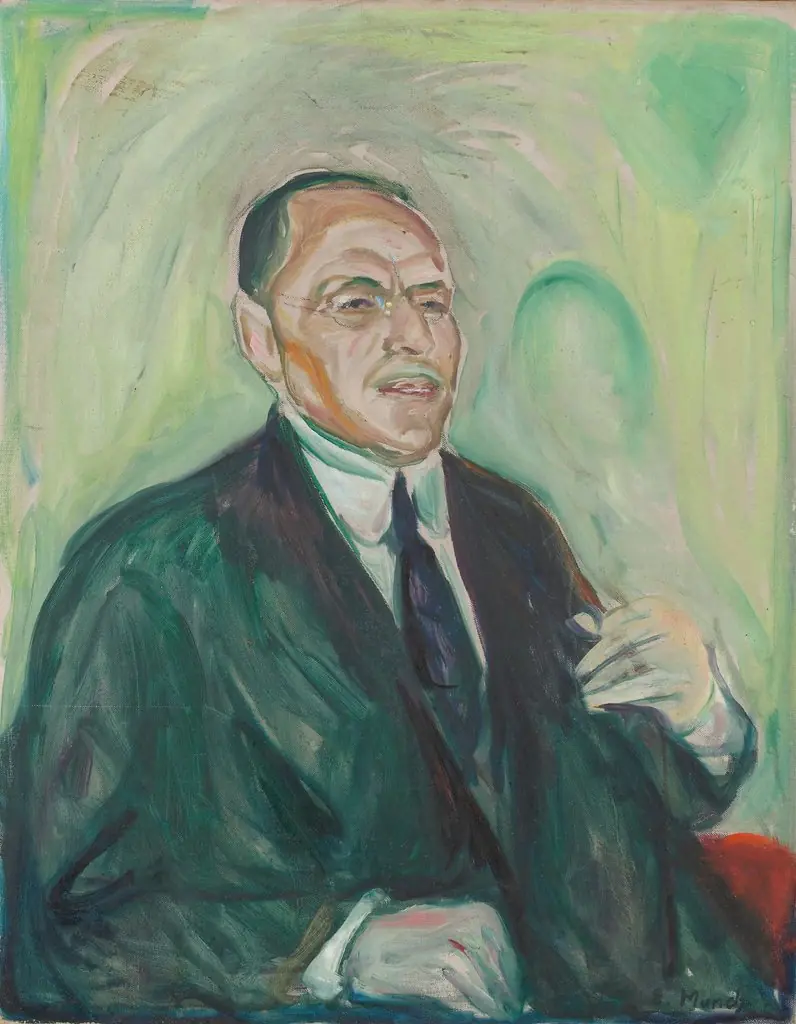 Anton Brünings