Artwork
Untitled
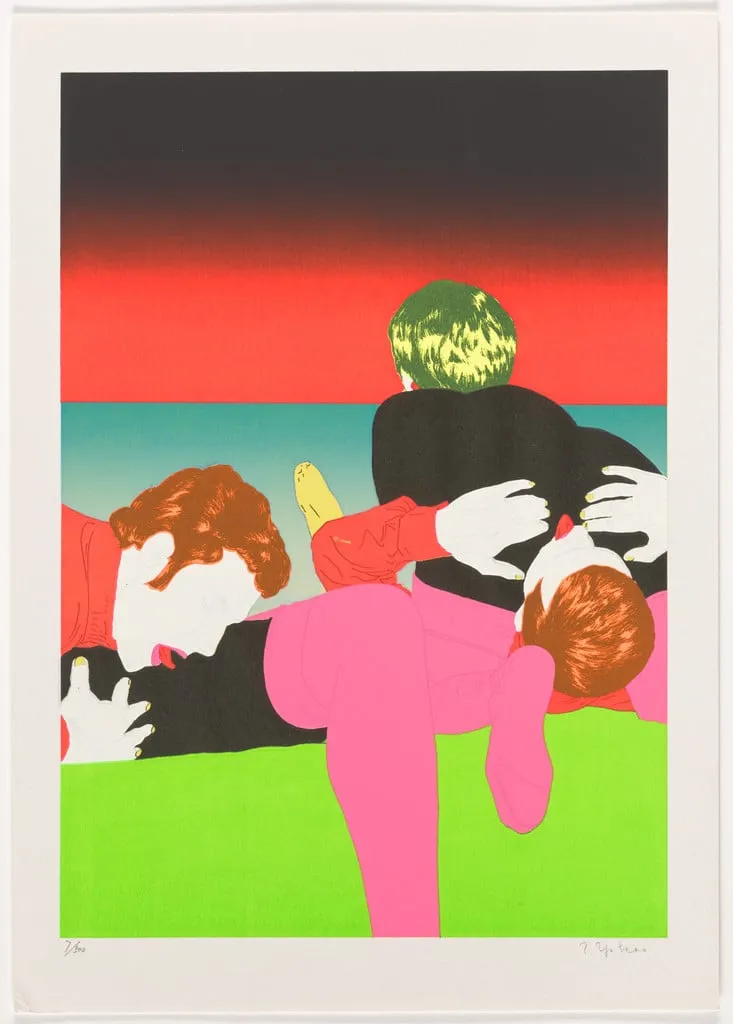
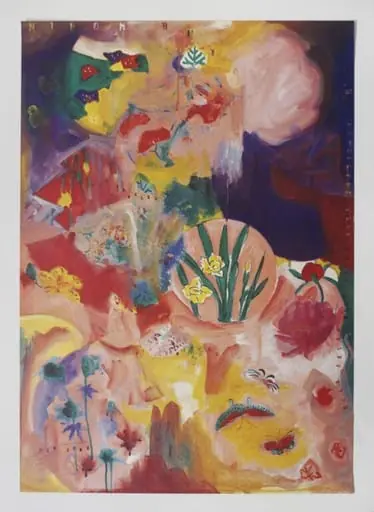
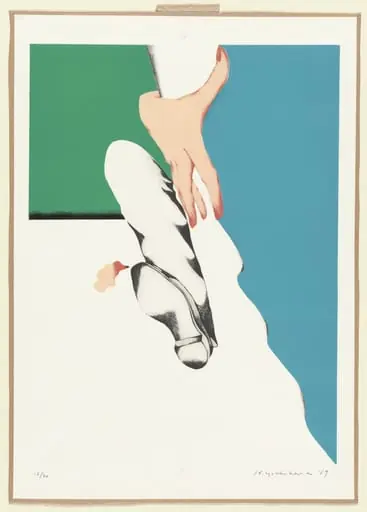
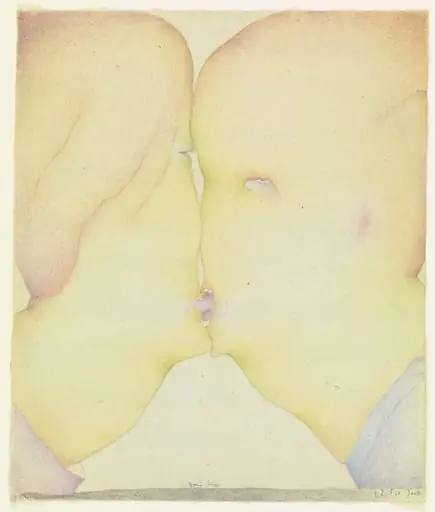
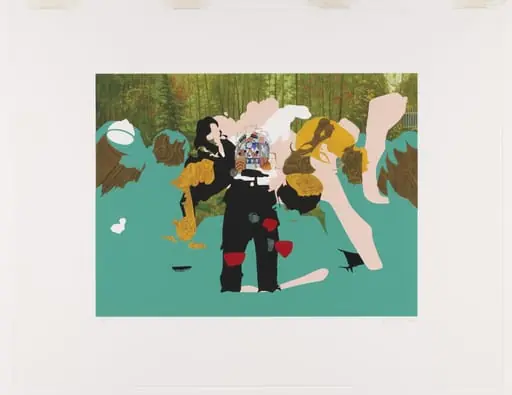
Untitled is an ink print by Tadanori Yokoo. It dates from 1970 and is held in the collection of the Museum of Modern Art.
About this work
Overview
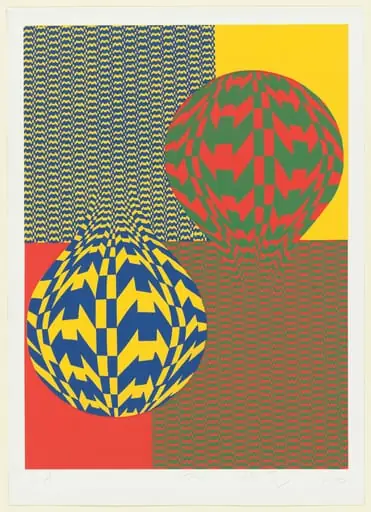
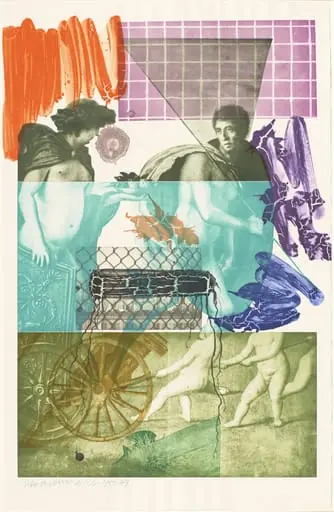
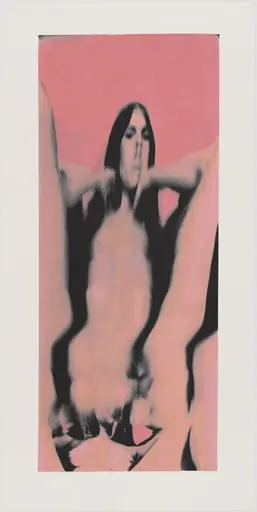
Created in 1970, this screenprint by Tadanori Yokoo is part of a limited portfolio containing one original print and eight reproductions.
Created in 1970, this screenprint by Tadanori Yokoo is part of a limited portfolio containing one original print and eight reproductions. It resides in the collection of The Museum of Modern Art. The work presents a stylized group of four figures in a field, rendered with sharp contours and unmodulated hues. Its composition leans toward graphic design rather than naturalistic representation, reflecting Yokoo’s engagement with commercial visual culture and postwar Japanese aesthetics.
Subject & Meaning
Four individuals sit closely in a grassy space, their gestures ambiguous—hands raised or resting—suggesting quiet communion or collective stillness. The sky is divided into three horizontal bands: dark, red, and blue-green, creating a non-naturalistic atmosphere. The figures’ simplified faces and vivid clothing imply symbolic roles rather than individual identities. The scene evokes emotional resonance without narrative clarity, inviting interpretation through color and arrangement rather than detail.
Technique & Style
Yokoo employed screenprinting to achieve flat, saturated color fields and crisp, unbroken outlines. The absence of shading or texture reinforces a graphic, almost poster-like quality. Forms are reduced to essential shapes, resembling cut-paper silhouettes or commercial illustrations. This approach aligns with his background in graphic design and his interest in blending pop imagery with traditional Japanese motifs, resulting in a visual language that is both accessible and enigmatic.
History & Provenance
Produced in 1970, the print was included in a small portfolio that combined original screenprints with reproductions, a strategy common among artists exploring mass reproduction. It entered The Museum of Modern Art’s collection shortly after its creation, reflecting institutional recognition of Yokoo’s role in redefining Japanese printmaking. Its presence in a major Western museum underscores its significance in cross-cultural dialogues of postwar visual art.
Context
Emerging in Japan during a period of rapid modernization and cultural flux, Yokoo’s work responded to the saturation of media imagery and the blending of Eastern and Western visual traditions. This print reflects the influence of psychedelic design, advertising, and traditional ukiyo-e, while rejecting Western realism. It aligns with a generation of Japanese artists who used bold aesthetics to question identity, consumerism, and the legacy of war.
Legacy
Yokoo’s use of color, flatness, and symbolic form influenced later generations of Japanese designers and contemporary printmakers. His integration of commercial techniques into fine art challenged hierarchies between high and low culture. This print remains a reference point for its synthesis of pop sensibility and psychological ambiguity, contributing to broader discussions on the role of graphic art in postwar modernism.
Artist & collection
Artist
Tadanori Yokoo is a Japanese graphic designer, illustrator, printmaker and painter. Yokoo's signature style of psychedelia and pastiche engages a wide span of modern visual and cultural phenomena from Japan and around the world.