Artwork
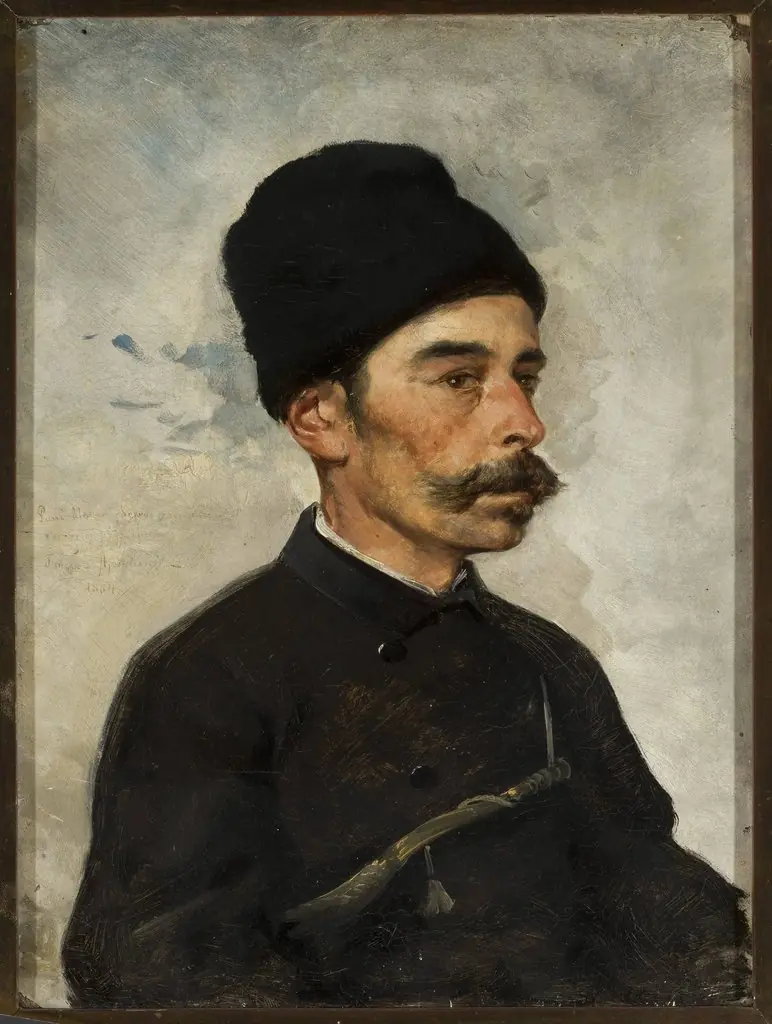
Portrait of a young Highlander
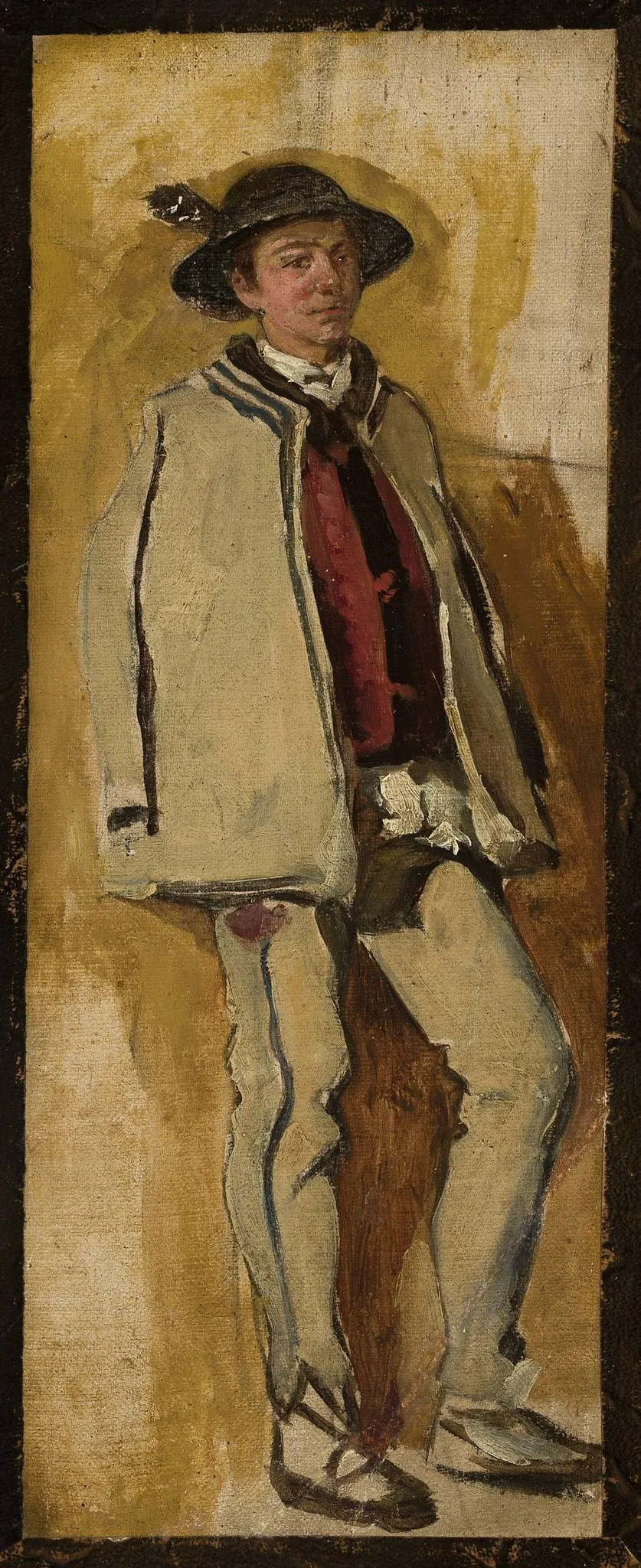
Portrait of a young Highlander is an unspecified painting by Tadeusz Ajdukiewicz. It dates from 1894 and is held in the collection of the National Museum in Warsaw.
About this work
Overview
Ajdukiewicz, trained in Kraków under Austrian Partition-era academic traditions, focused on realistic depictions of people and scenes.
Painted in 1894 by Polish artist Tadeusz Ajdukiewicz, this portrait captures a young man in traditional Highland attire. Ajdukiewicz, trained in Kraków under Austrian Partition-era academic traditions, focused on realistic depictions of people and scenes. The work is part of the National Museum in Warsaw’s collection, reflecting his interest in cultural identity and regional dress during a period of national introspection in partitioned Poland.
Subject & Meaning
The subject is a young man dressed in Highland garments, likely representing a regional identity from the Scottish Highlands, though the artist was Polish. His poised, relaxed stance and direct gaze suggest dignity and quiet self-assurance. The clothing, rendered with attention to texture and detail, may symbolize cultural pride or serve as an ethnographic study, aligning with 19th-century European interests in folk traditions amid rising nationalism.
Technique & Style
Ajdukiewicz employed precise brushwork and naturalistic lighting to render fabric, skin, and shadow with clarity. The warm golden background isolates the figure, enhancing three-dimensionality without distraction. The costume’s layered textures—striped jacket, red vest, feathered hat—are rendered with careful observation, reflecting academic training and a commitment to realism over romantic idealization.
History & Provenance
The painting was completed in 1894 and entered the collection of the National Museum in Warsaw, where it remains today. While specific details of its commission or early ownership are unrecorded, its presence in a major national institution suggests it was acquired as part of a broader effort to document cultural and artistic heritage during Poland’s period of foreign rule.
Context
In the late 19th century, artists across Europe turned to regional dress and folk customs as expressions of identity, especially in nations without political sovereignty. Ajdukiewicz, though Polish, depicted Highland attire, possibly reflecting broader European fascination with Celtic cultures or serving as a metaphor for resilience. His choice may also reflect the cosmopolitan nature of art training under the Austrian Partition.
Legacy
Though not among Ajdukiewicz’s most widely known works, the portrait exemplifies his skill in capturing individual character through costume and posture. It contributes to the historical record of how 19th-century artists engaged with cultural representation, offering a quiet, unembellished view of identity that resonates with later ethnographic portraiture practices.
Artist & collection
Artist
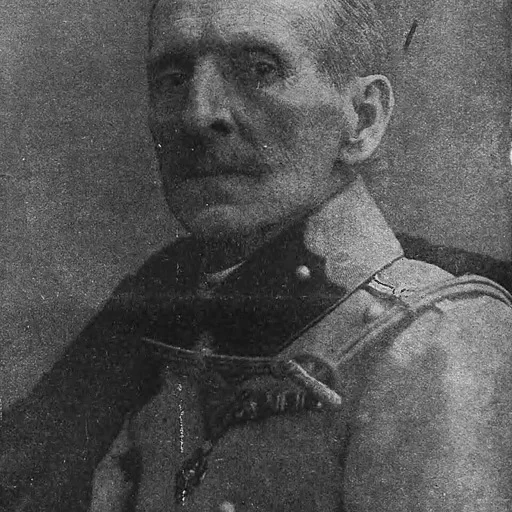
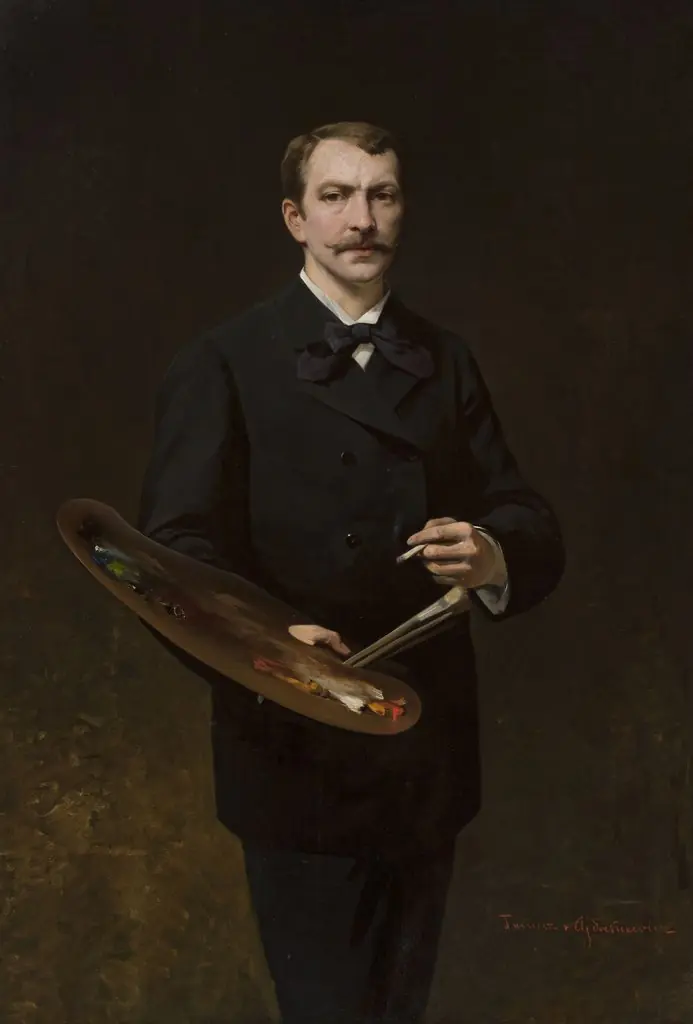
Tadeusz Ajdukiewicz (1852 – 9 January 1916) was a Polish realist painter best known for his battle-scenes, portraits, landscapes and paintings of horses.

 Dr van Hoorn
 Arrangement in Grey and Green. Portrait of John James Cowan
 Woman's head in a cap, back view, study for the painting “Defence of Olsztyn by Karliński”
 History: Study for the Boy
 Eberhard Grisebach
 Woman in Grey
 Study for "The Dancing Lesson": The Boy
 Untitled
 Death at the Ball
 Self-portrait in a white coat
 Jens Thiis (Painting)
 Portrait of Professor Carl Lorentzen (1860-1932)