Artwork
Hawking Party
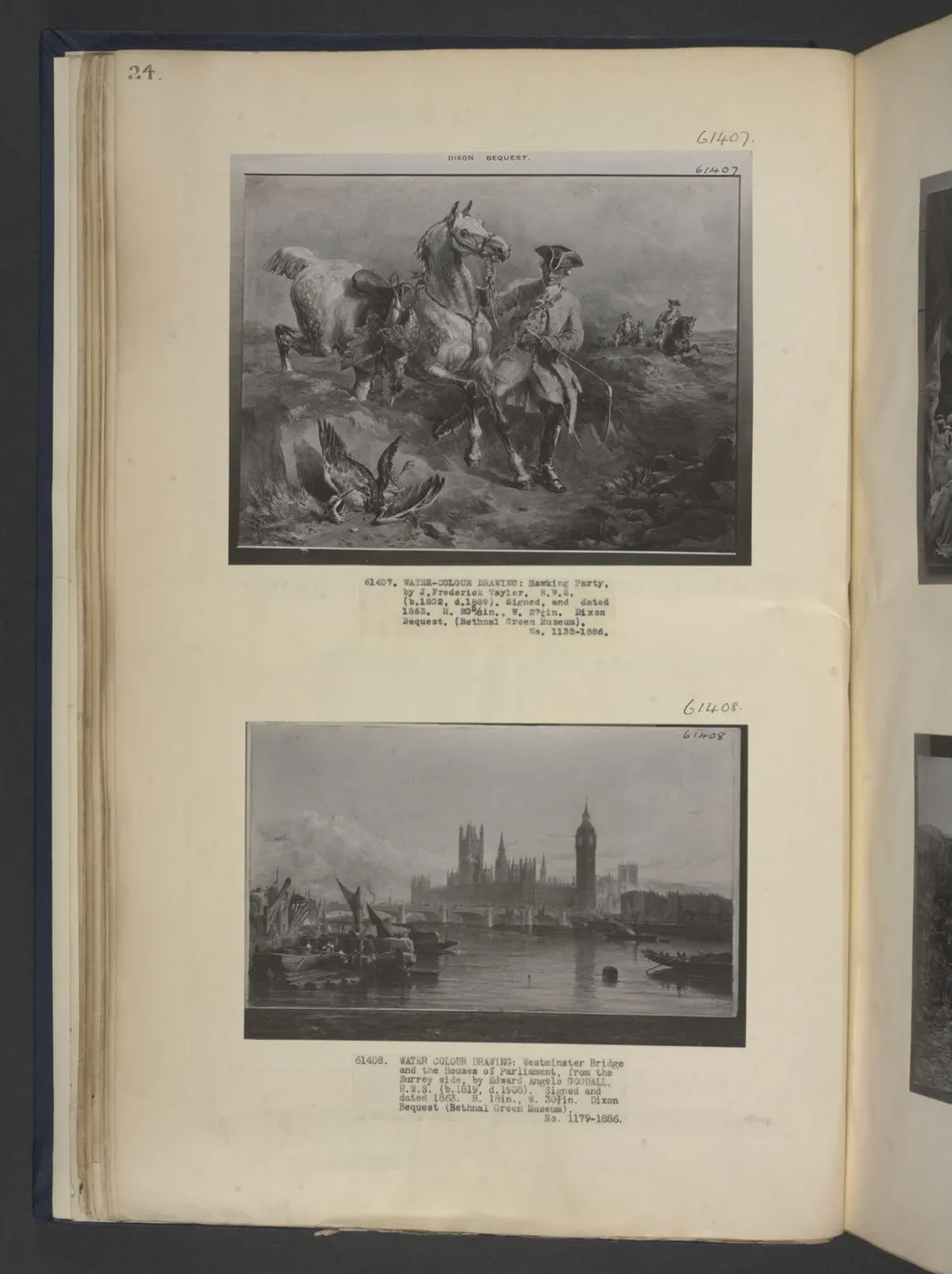
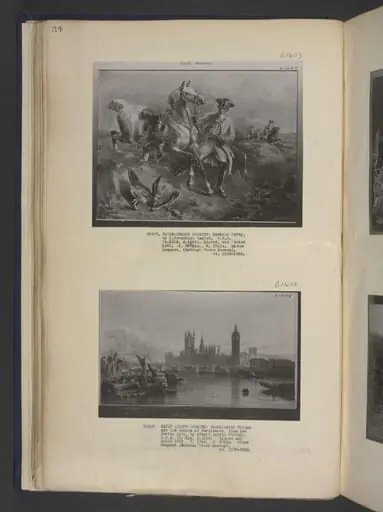
Hawking Party is a watercolor work on paper by the British Romanticist artist Tayler. It dates from 1863 and is held in the collection of the Victoria and Albert Museum.
About this work
Overview
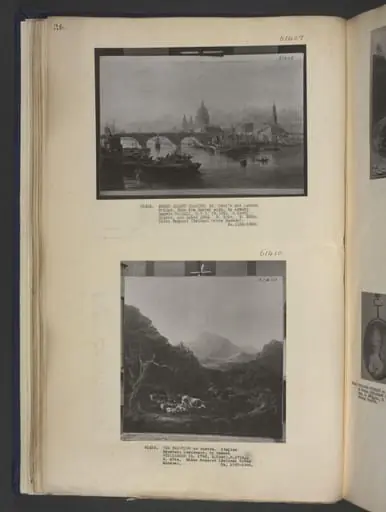
Painted in 1863, this watercolour by Tayler captures a hawking expedition unfolding against a turbulent coastal landscape. The work is signed and dated by the artist, affirming its origin. Executed in transparent washes, it conveys motion and atmospheric tension through fluid pigment application, typical of 19th-century British watercolour practice.
Subject & Meaning
The scene portrays a rider on a rearing horse amid a flock of birds, suggesting the moment of release or pursuit in hawking. Behind them, vessels battle heavy seas, linking the hunt to broader themes of human struggle against nature. The composition implies a transient, precarious balance between control and chaos, common in Victorian depictions of rural sport.
Technique & Style
Tayler employed layered watercolour washes to build depth in the stormy sky and churning waves. Dark, broken strokes define the rocky cliffs and foaming surf, while lighter tones suggest fleeting light breaking through clouds. The loose, energetic brushwork enhances the sense of movement, avoiding fine detail in favor of atmospheric effect.
History & Provenance
The painting entered the Victoria and Albert Museum’s collection as part of its 19th-century British watercolour holdings. Its provenance traces to private British collections, consistent with the genre’s popularity among amateur and professional artists of the period. No record of public exhibition prior to museum acquisition is documented.
Context
Hawking remained a symbolic pursuit in Victorian England, evoking aristocratic tradition even as its practical use declined. Coastal landscapes with stormy weather were favored subjects, reflecting Romantic-era interests in nature’s power. Tayler’s work aligns with contemporaries who merged topographical accuracy with emotional intensity.
Legacy
Though not widely reproduced, the painting contributes to the archive of British watercolours that documented rural life and natural forces. It exemplifies how lesser-known artists engaged with popular themes, preserving a visual record of seasonal pursuits and maritime challenges in mid-19th-century Britain.
Artist & collection