Artwork
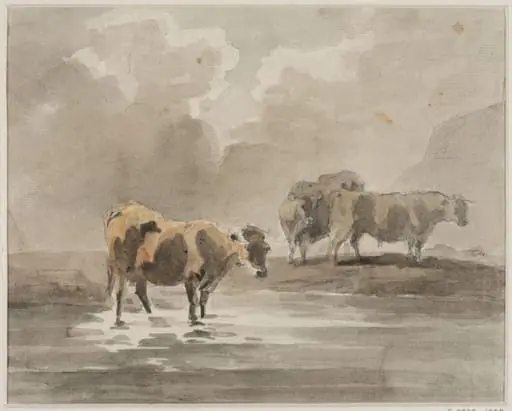
Cattle at a Pool
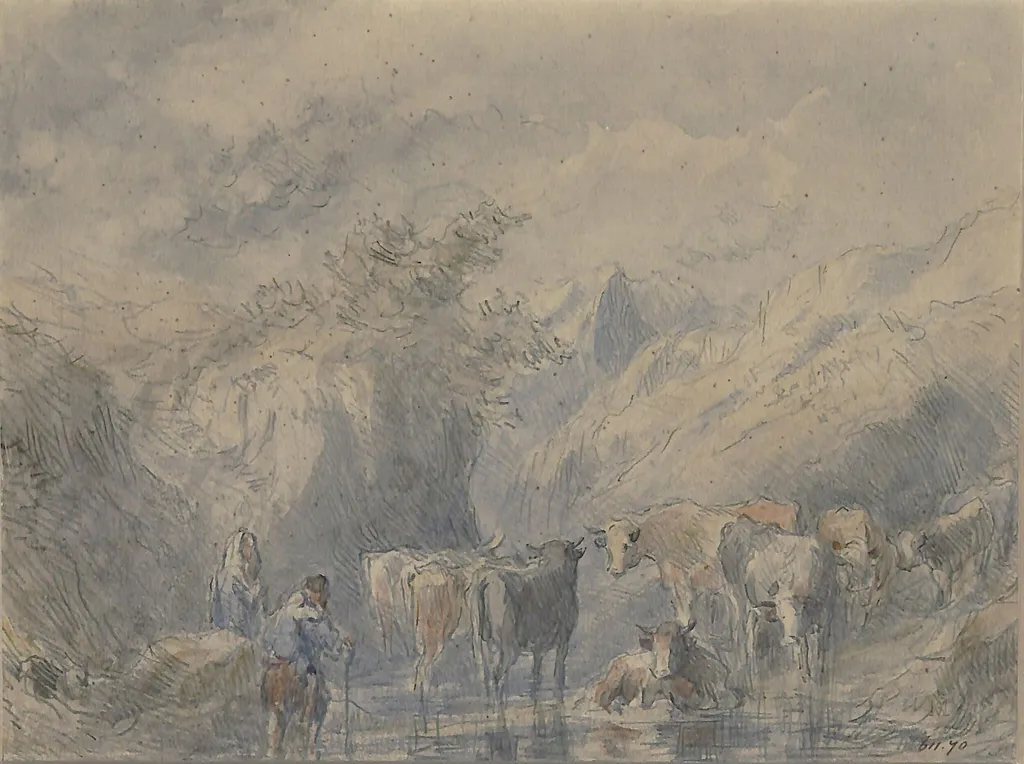
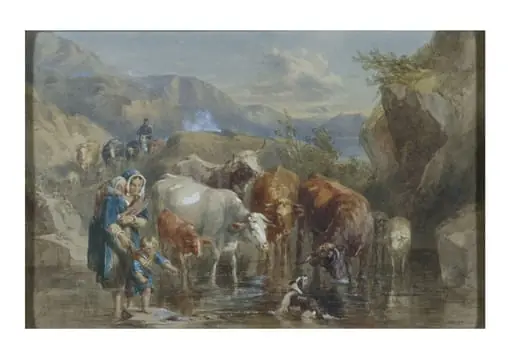
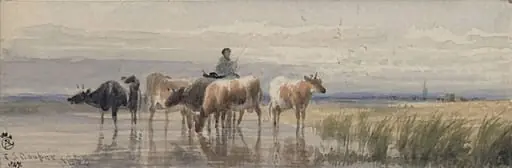
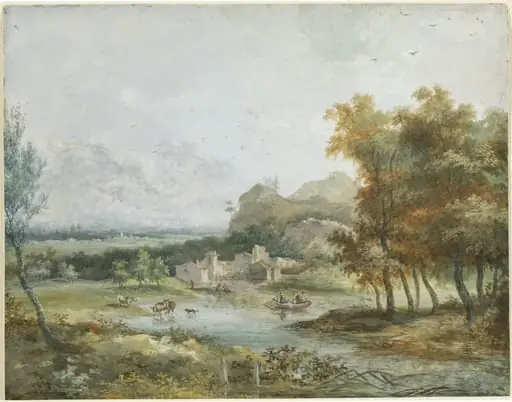
Cattle at a Pool is a watercolor work on paper by the British Romanticist artist Tayler. It dates from 1820 and is held in the collection of the Victoria and Albert Museum.
About this work
Overview
Executed with fluid washes, the painting conveys a sense of quiet movement and temporal stillness, typical of early 19th-century British landscape studies.
Created in 1820, Cattle at a Pool is a watercolour by the artist Tayler, capturing a tranquil rural moment. The work is part of the Victoria and Albert Museum’s collection, where it is valued for its atmospheric quality rather than detailed realism. Executed with fluid washes, the painting conveys a sense of quiet movement and temporal stillness, typical of early 19th-century British landscape studies.
Subject & Meaning
The scene depicts two figures guiding a small group of cattle toward a shallow pool in a grassy field. The figures are not central but integrated into the landscape, suggesting harmony between human activity and the natural environment. The absence of dramatic action or narrative emphasis invites contemplation, framing the moment as an observation of everyday rural life rather than a staged event.
Technique & Style
Tayler employed light, translucent watercolour washes to build form without defined outlines. The brushwork is loose and rapid, with subtle gradations of tone suggesting distance and atmosphere. Details of the cattle and figures are implied rather than rendered, allowing the eye to complete the scene. This approach prioritizes mood over precision, aligning with the tradition of topographical watercolour sketching.
History & Provenance
The painting entered the Victoria and Albert Museum’s collection as part of its broader acquisition of British watercolours from the 19th century. Its origins prior to museum acquisition are not well documented, but its style and date suggest it was likely made as a personal study or travel sketch, common among artists documenting the English countryside during this period.
Context
In the early 1800s, watercolour was increasingly used for landscape studies outside formal studio practice. Artists like Tayler contributed to a growing interest in capturing transient effects of light and weather. Cattle at a Pool reflects this trend, aligning with contemporaneous works that valued immediacy and emotional resonance over academic finish.
Legacy
Though not widely exhibited or reproduced, the painting remains a representative example of modest, observational watercolour from the period. It contributes to the understanding of how British artists engaged with the natural world through informal, intimate modes of representation—valued today for their quiet sincerity rather than technical showmanship.
Own this work as a print
Artist & collection