Artwork
Allegorical Composition
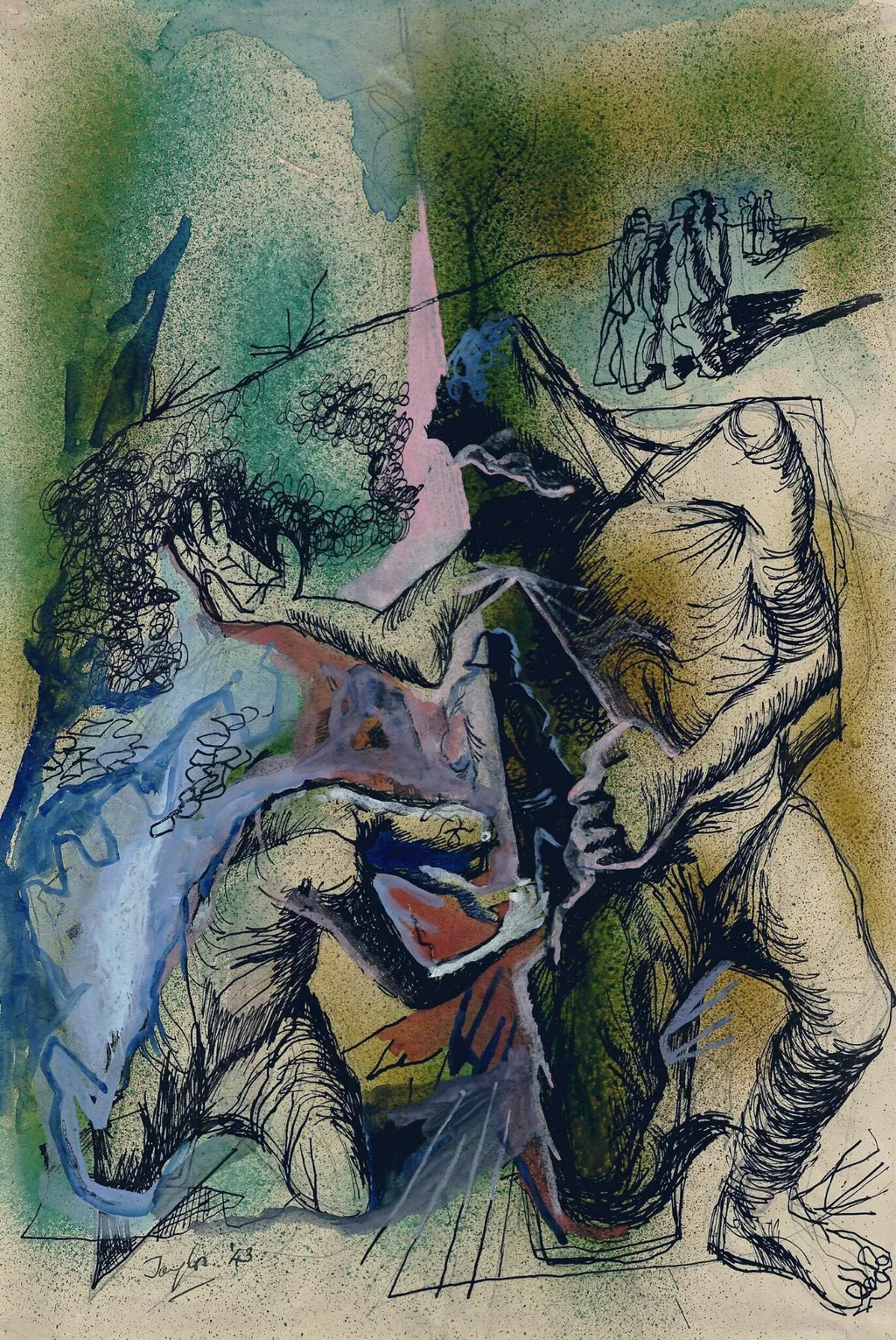
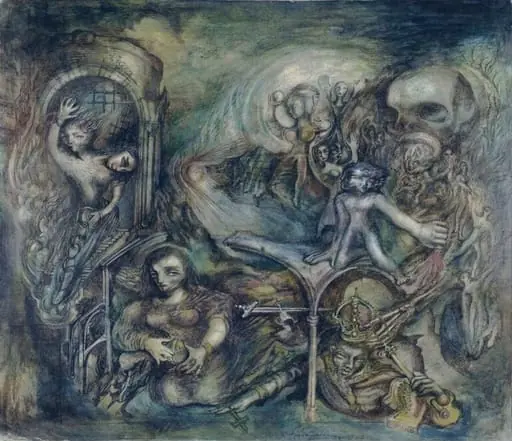
Allegorical Composition is a watercolor work on paper by the Abstract Expressionist artist Ray Taylor. It dates from 1943 and is held in the collection of the Victoria and Albert Museum.
About this work
Overview
Created in 1943 by Ray Taylor, this watercolour work presents an abstract allegory through layered figures and fluid colour fields. The composition avoids literal narrative, instead using gestural forms and a dynamic arrangement to suggest collective action. The medium’s transparency allows underlying washes to interact, enhancing the sense of motion and ambiguity in the scene.
Subject & Meaning
The central figure, arms outstretched, is encircled by others in varied postures, implying interaction without clear context. No identifiable symbols or textual clues define the allegory, leaving interpretation open. The grouping may evoke themes of unity, struggle, or ritual, but the work resists fixed meaning, inviting viewers to respond to emotional tone rather than coded content.
Technique & Style
Taylor employed watercolour with gouache to build opaque accents over translucent layers, creating contrast between solid forms and atmospheric backgrounds. Bold strokes and overlapping shapes convey movement, while a palette of green, blue, yellow, white, and black grounds the composition in non-naturalistic tones. The style leans toward expressive abstraction, prioritizing rhythm over realism.
History & Provenance
The work originates from Ray Taylor’s output during the early 1940s, a period when he explored allegorical themes through experimental media. No documented exhibition or ownership history is publicly available prior to its current record. Its survival as a single known piece suggests limited circulation, possibly tied to private or regional circles rather than institutional exposure.
Context
Made during wartime, the painting reflects broader artistic trends in Britain toward abstraction and symbolic representation, even as figurative traditions persisted. Taylor’s approach aligns with contemporaries who used non-literal forms to process collective experience. The work stands apart from overtly political art of the era, favoring introspective symbolism over direct commentary.
Legacy
Ray Taylor’s Allegorical Composition remains a singular example of his engagement with abstract allegory in watercolour. It contributes to a lesser-known strand of mid-20th-century British art that valued emotional resonance over narrative clarity. Though not widely exhibited, it offers insight into artists who navigated abstraction without abandoning human form.
Artist & collection
Artist
Ray Taylor painted small, thoughtful watercolors in the 1940s. In Allegorical Composition from 1943, muted colors and layered shapes suggest a quiet story without spelling it out. His work sits between folk art and the…

![The Great Anxiety (Self-Portrait in Three-Quarter Profile to the Right) (Die große Angst [Selbstportrat, Kopf im Halbprofil nach rechts]), by Walter Gramatté](https://artifactworldgallery.com/img/walter-gramatte--the-great-anxiety-self-portrait-in-three-quarter-profile-to--63ac613b6681a15e-w320.webp)