Artwork
Waiting For Relief
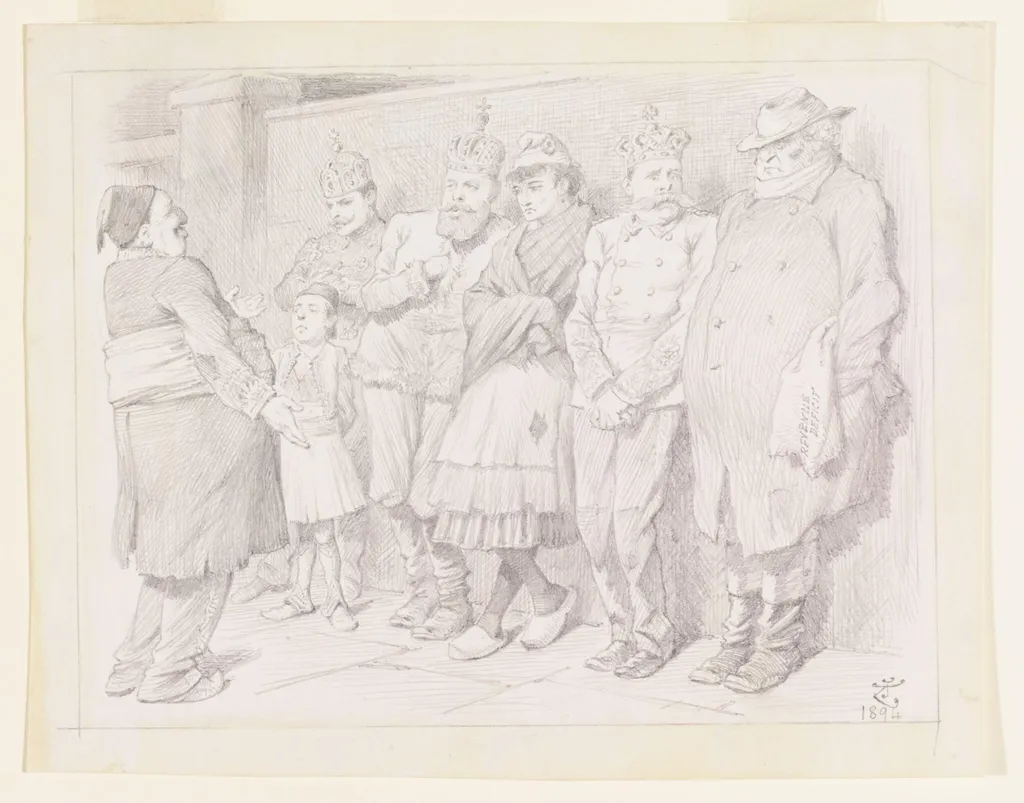
Waiting For Relief is a drawing by the Impressionist artist John Tenniel. It dates from 1894 and is held in the collection of the Victoria and Albert Museum.
About this work
” Tenniel published this in *Punch* magazine, poking fun at Luke Fildes’s serious 1869 print *Houseless and Hungry*.
Sir John Tenniel’s cartoon *Waiting For Relief* uses sharp lines to mock the 1894 economic crisis. It shows people in rags—Britain among them—lining up like beggars for poor relief. The caption makes Turkey joke that he’s been poor forever, now stuck sharing a Workhouse “Casual Ward.”
Tenniel published this in *Punch* magazine, poking fun at Luke Fildes’s serious 1869 print *Houseless and Hungry*. The joke stings harder when you know real families faced hunger and job loss back then.
Check out the original at the Victoria and Albert Museum.
Overview
Sir John Tenniel’s 1894 drawing 'Waiting for Relief' appeared in Punch as a political satire responding to widespread economic distress in Europe. Rendered in ink with precise linework, it reimagines Luke Fildes’s somber depiction of poverty as a darkly comic scene. The image mocks the desperation of nations, including Britain, forced to seek state aid, casting them as indigent applicants in a workhouse setting.
Subject & Meaning
The drawing portrays European nations as destitute figures lining up for poor relief, with Turkey, long marginalized in European politics, sarcastically remarking he has been 'a Casual for years.' The joke inverts sympathy: Turkey, often portrayed as backward, claims precedence in suffering, implicating wealthier nations in their own decline. The work critiques the failure of state systems and the moral hypocrisy of imperial powers facing domestic hardship.
Technique & Style
Tenniel employs crisp, controlled pen lines to define ragged clothing and hunched postures, emphasizing the physical toll of poverty. The composition mirrors Fildes’s original but strips away emotional gravity, replacing it with ironic detachment. Facial expressions are exaggerated yet restrained, allowing the caption to carry the satire. The monochrome medium enhances the starkness of the scene, aligning with Punch’s tradition of sharp, readable editorial illustration.
History & Provenance
Created for the January 27, 1894, issue of Punch, the drawing was one of over 2,000 political cartoons Tenniel produced for the magazine over nearly fifty years. It directly references Fildes’s 1869 graphic and 1874 painting, both widely known for their humanitarian tone. The original drawing is held in the Victoria and Albert Museum’s collection, preserved as part of Britain’s visual political record from the late Victorian era.
Context
In 1894, Britain and other European nations faced industrial decline, unemployment, and rising public debt. The Poor Law system, designed to assist the destitute, was widely criticized for its cruelty and inefficiency. Tenniel’s cartoon reflects public anxiety over national decline and the erosion of imperial prestige, using the workhouse—a symbol of societal failure—as a metaphor for geopolitical vulnerability.
Legacy
Tenniel’s work helped define the visual language of Victorian political commentary. While his Alice illustrations remain more widely recognized, his cartoons like 'Waiting for Relief' reveal his mastery in distilling complex social issues into accessible, biting imagery. The drawing endures as a document of how satire was used to interrogate national identity and economic policy during a period of profound uncertainty.
Artist & collection
Artist
John Tenniel drew like he was arguing with his own pencil—always precise, sometimes dry, never flashy.

 Soudais Deposition (Déposition Soudais)
 C'est tout de même flatteur d'avoir fait tant d'élèves!...
 Papa, Carry Me—Take Me Up in Your Arms
 An Illustration
 Ou peut on être mieux ...
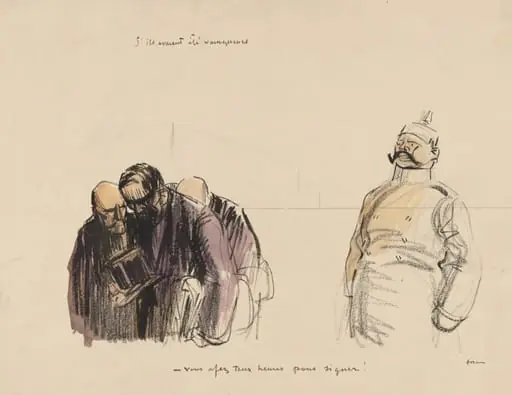 If they had been victorious - "You Have Two Hours in which to Sign"
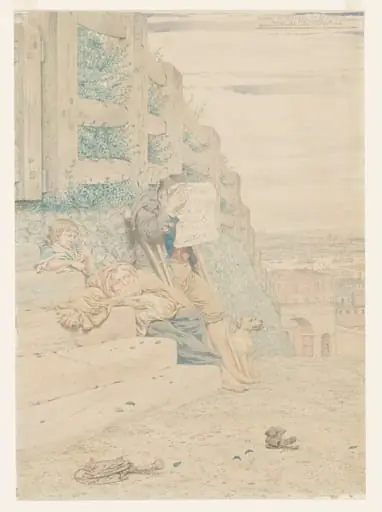 Sketch to illustrate the Passions: Want
 Untitled
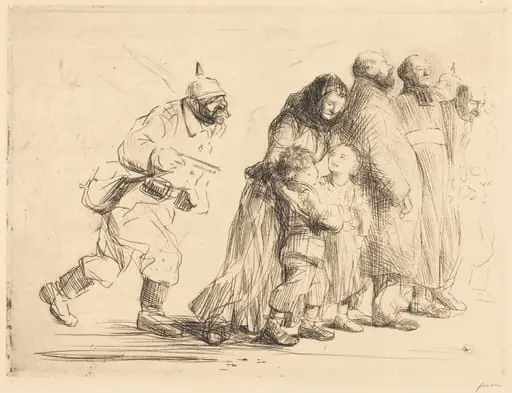 Les notables (grande planche) (The Notables) (large plate)
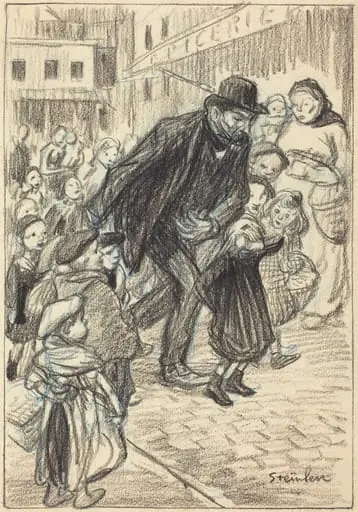 A Man on a City Street, Surrounded by Children (Un Père)
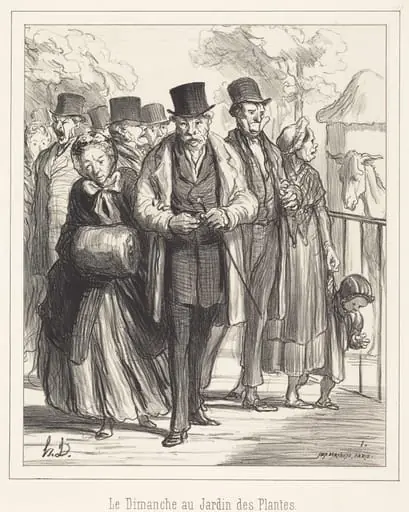 Le Dimanche au Jardin des Plantes
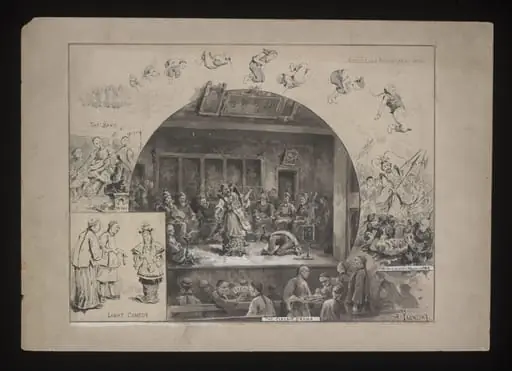 Untitled