Artwork
Pygmalion and the statue
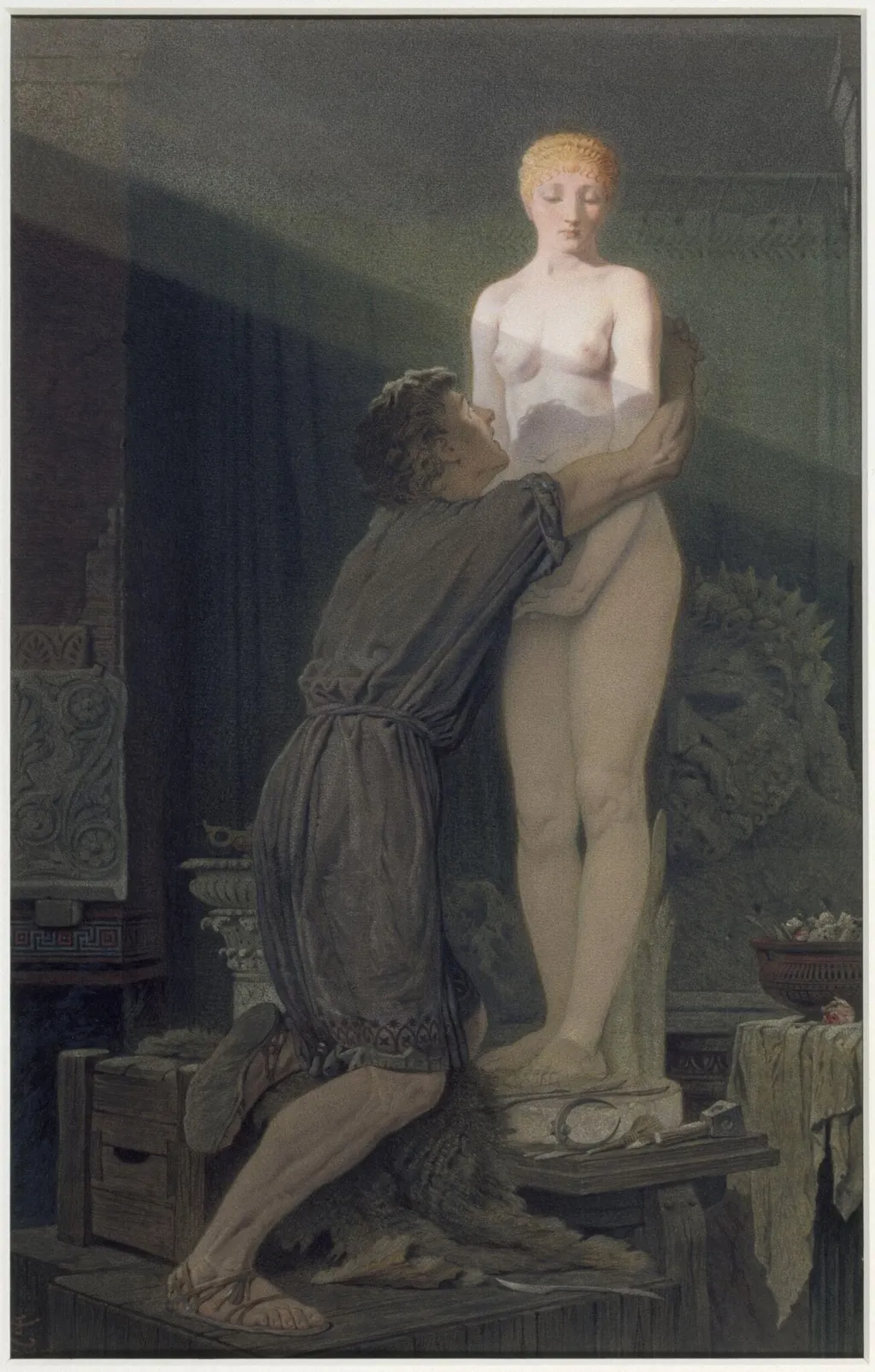
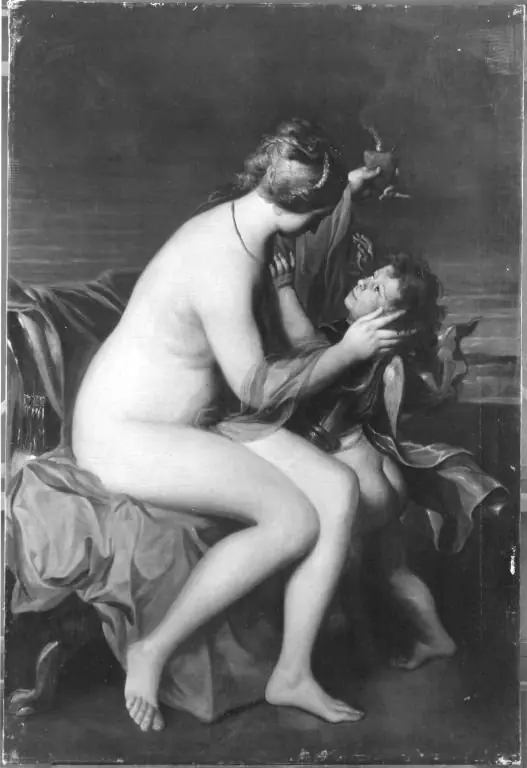
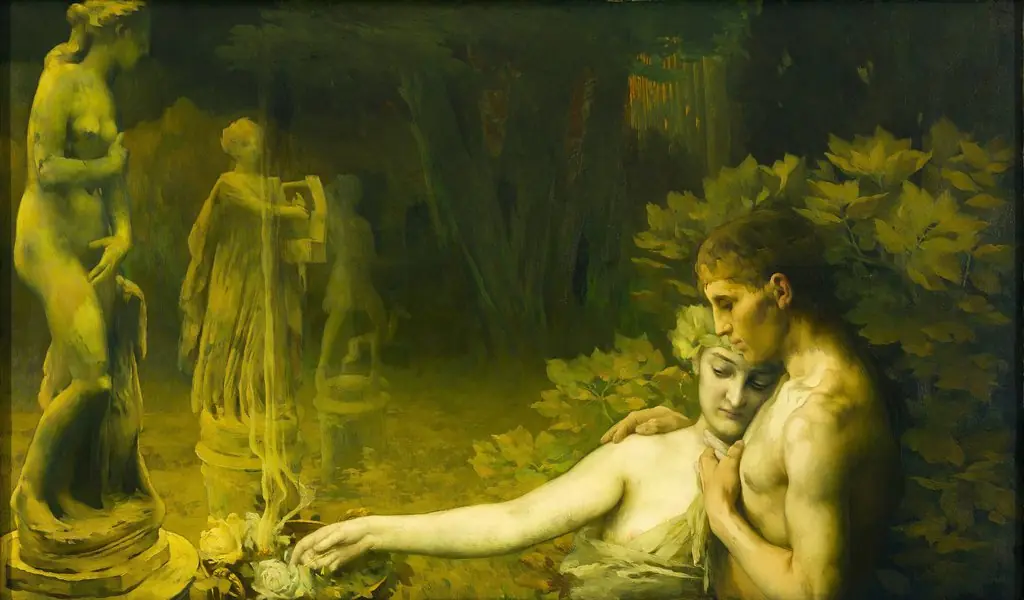
Pygmalion and the statue is a watercolor work on paper by the Impressionist artist John Tenniel. It dates from 1878 and is held in the collection of the Victoria and Albert Museum. This watercolour illustrates a moment from Ovid’s Metamorphoses, depicting Pygmalion’s sculpture coming to life under the gaze of Aphrodite.
About this work
Overview
This watercolour illustrates a moment from Ovid’s Metamorphoses, depicting Pygmalion’s sculpture coming to life under the gaze of Aphrodite.
This watercolour illustrates a moment from Ovid’s Metamorphoses, depicting Pygmalion’s sculpture coming to life under the gaze of Aphrodite. The scene captures the transition from inert material to sentient being, rendered with delicate tonal shifts and subdued lighting. The composition centers on the intimate proximity between the sculptor and his creation, emphasizing the psychological weight of the moment rather than dramatic action.
Subject & Meaning
The work explores the tension between artistic creation and the objectification of the female form. Pygmalion’s reverent posture and the statue’s passive stance reflect a narrative in which life is granted by male will, not female agency. The blush on her skin suggests awakening, yet her stillness and modest framing reinforce Victorian norms that associate femininity with quiet, controlled transformation.
Technique & Style
The artist employs smooth, layered watercolour washes to create a luminous effect, with the statue’s pale form emerging from a dim, shadowed interior. Subtle gradations of tone model the figure’s contours without harsh lines, enhancing the illusion of soft flesh emerging from stone. The background remains muted, directing focus to the interplay of light and skin, while scattered objects ground the scene in a domestic, studio-like space.
History & Provenance
The watercolour was produced in the 19th century, during a period when classical myths were frequently revisited in British art to explore themes of desire, creation, and gender. Though its exact origin is unrecorded, its style aligns with academic illustrators of the time who favored intimate, narrative-driven compositions. It likely circulated in private collections before entering institutional holdings.
Context
This image reflects broader 19th-century cultural anxieties about art, gender, and autonomy. The myth of Pygmalion was often invoked to justify idealized femininity, where women were seen as vessels for male imagination. The quietness of the scene mirrors contemporary aesthetic values that prized restraint and emotional subtlety over overt expression.
Legacy
The work contributes to a visual tradition in which female figures are defined by their relationship to male creators. While it avoids overt sensationalism, its quiet intensity reveals enduring assumptions about artistic authority and the passive role assigned to women in myth and representation. It remains a quiet testament to how classical narratives were reshaped to suit Victorian sensibilities.
Artist & collection
Artist
John Tenniel drew like he was arguing with his own pencil—always precise, sometimes dry, never flashy.