Artwork
Untitled
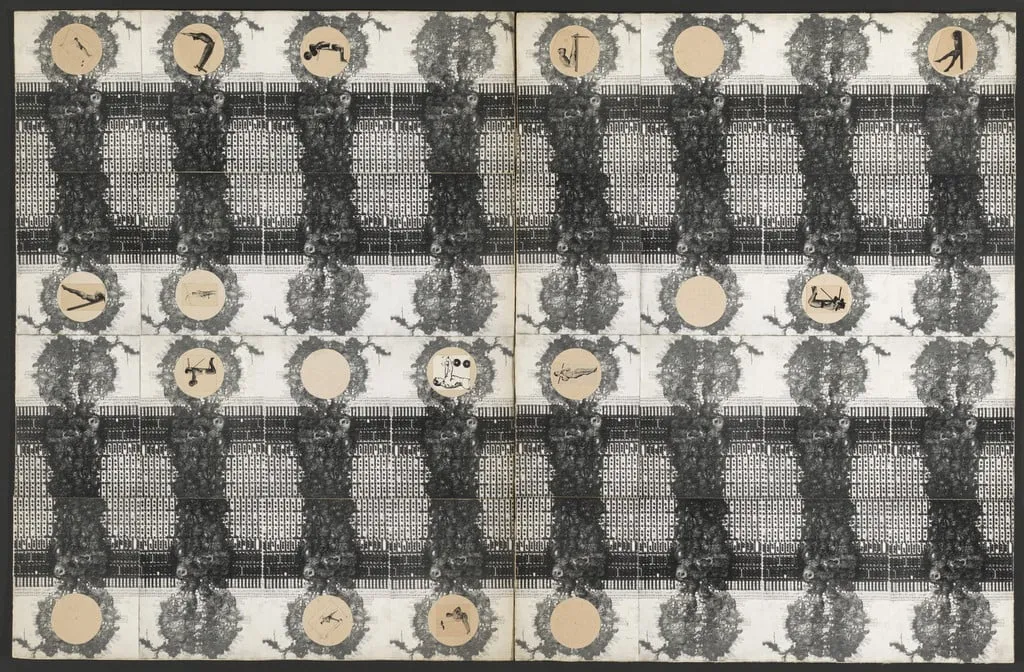
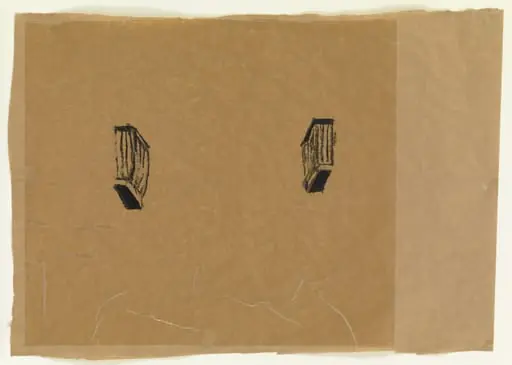
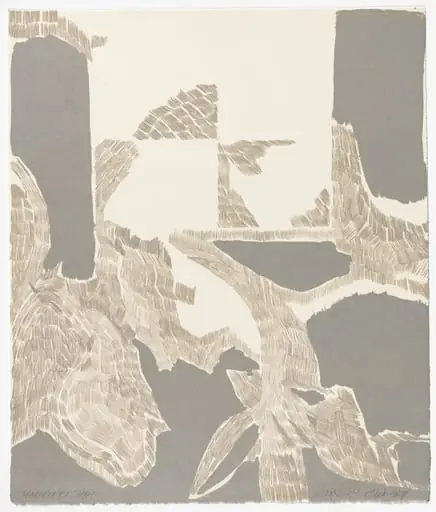
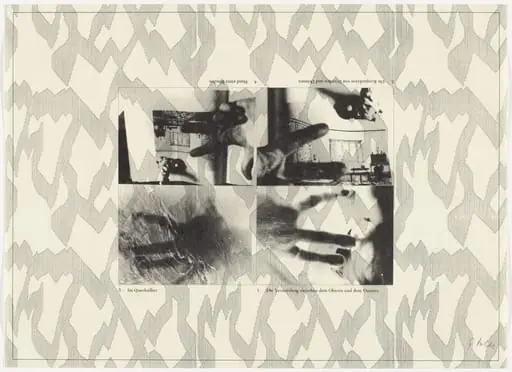
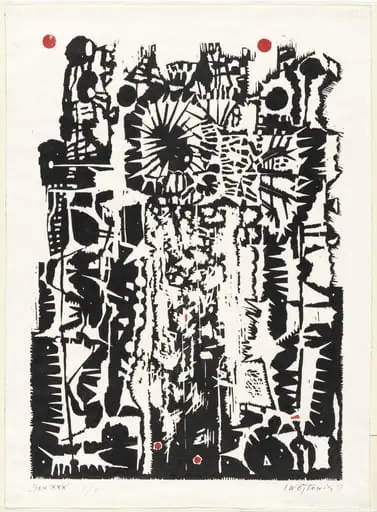
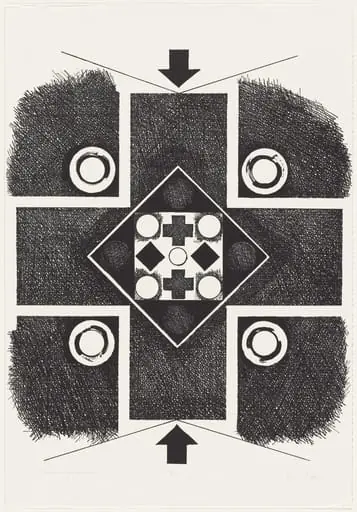
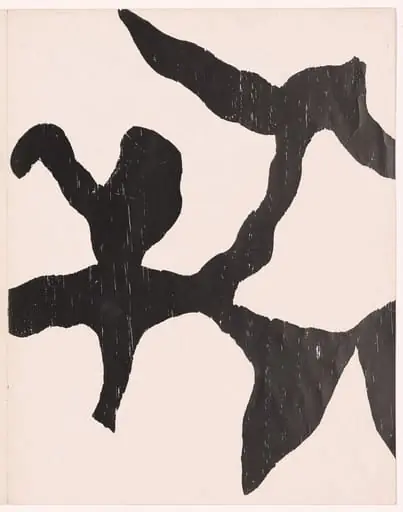
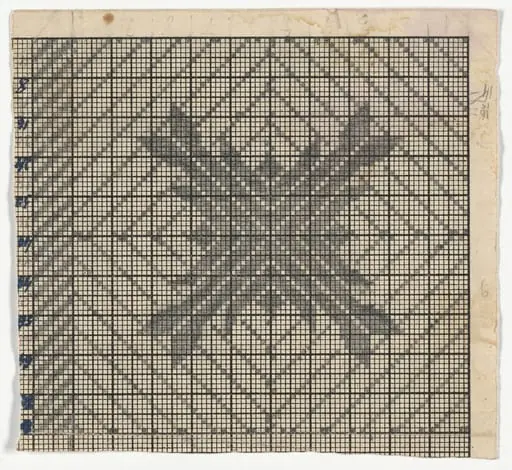
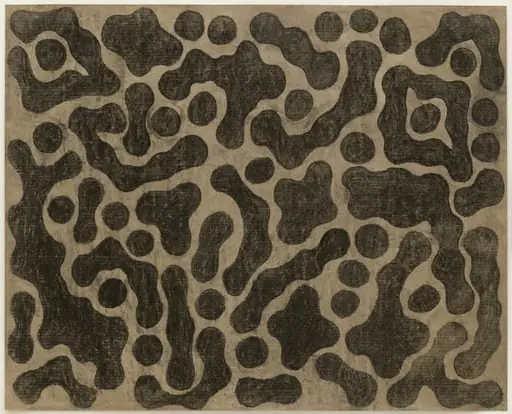
Untitled is a drawing by Tetsumi Kudo. It dates from 1961 and is held in the collection of the Museum of Modern Art.
About this work
Overview
The composition arranges small rectangular units into a grid, each filled with varying combinations of found imagery and manual marks.
Created in 1961, this untitled work by Tetsumi Kudo is a mixed-media drawing composed of cut-and-pasted printed paper on paperboard. The composition arranges small rectangular units into a grid, each filled with varying combinations of found imagery and manual marks. The surface is deliberately fragmented, emphasizing materiality over polish, and reflects a process rooted in collage and accumulation rather than traditional drawing techniques.
Subject & Meaning
Scattered within the grid are faint circular motifs containing simplified figures or abstract symbols—stick-like forms, dots, and ambiguous shapes—that contrast with the surrounding chaos of ink splatters and scribbles. These isolated elements suggest microcosms of activity or thought, possibly referencing the human condition within a disordered environment. The work resists clear narrative, instead evoking a sense of fragmented consciousness or bureaucratic absurdity.
Technique & Style
Kudo assembled the piece from printed ephemera and hand-applied ink, layering cut paper fragments to build texture and depth. The black-and-white palette and irregular edges reinforce a raw, improvisational aesthetic. Hand-drawn marks overlap and obscure printed images, creating visual tension between reproduction and spontaneity. The method prioritizes tactility and chance, aligning with postwar experimental practices that rejected refined finish.
History & Provenance
The work was produced in Tokyo during Kudo’s early career, a period marked by his engagement with avant-garde circles and the Gutai group’s ethos of material experimentation. It entered The Museum of Modern Art’s collection in the 1970s as part of a broader reassessment of Japanese postwar art. Its preservation reflects its significance within the international dialogue on non-traditional drawing practices of the era.
Context
Emerging in early 1960s Japan, this piece responds to rapid urbanization, media saturation, and the collapse of traditional artistic hierarchies. Kudo’s use of mass-produced printed matter alongside gestural marks mirrors the intrusion of commercial imagery into daily life. The work aligns with contemporaneous movements in Europe and America that embraced collage and assemblage as tools for critiquing modernity’s fragmentation.
Legacy
This work contributed to Kudo’s reputation as a pioneer of material-based art in postwar Japan. Its influence extends to later generations of artists exploring collage, institutional critique, and the intersection of the bodily and the mechanical. Though not widely exhibited, it remains a key example of how Japanese artists redefined drawing through non-Western, anti-aesthetic strategies during the 1960s.
Artist & collection

Artist
Tetsumi Kudо̄ was a Japanese avant-garde artist whose multidisciplinary practice included painting, performance, installation and sculpture.