Artwork
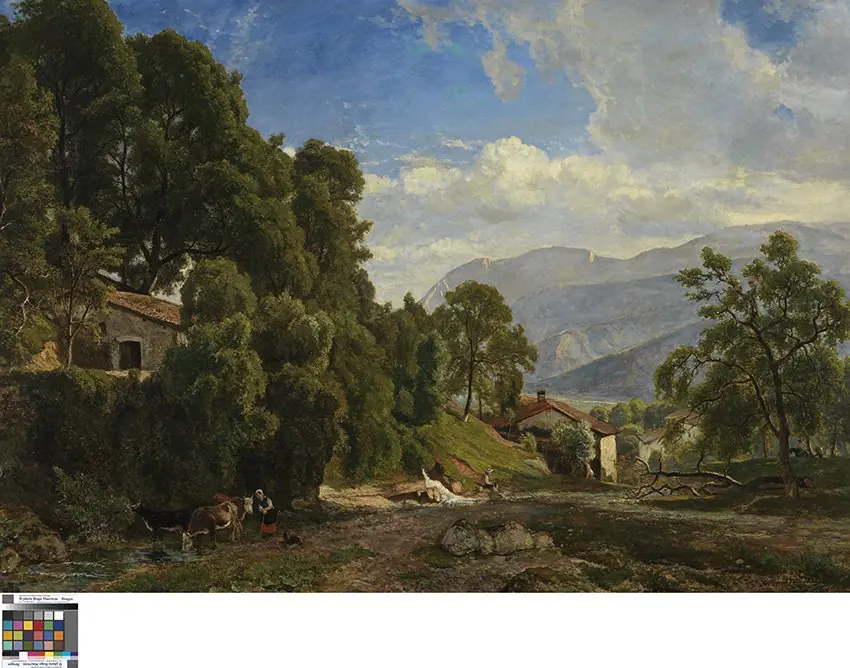
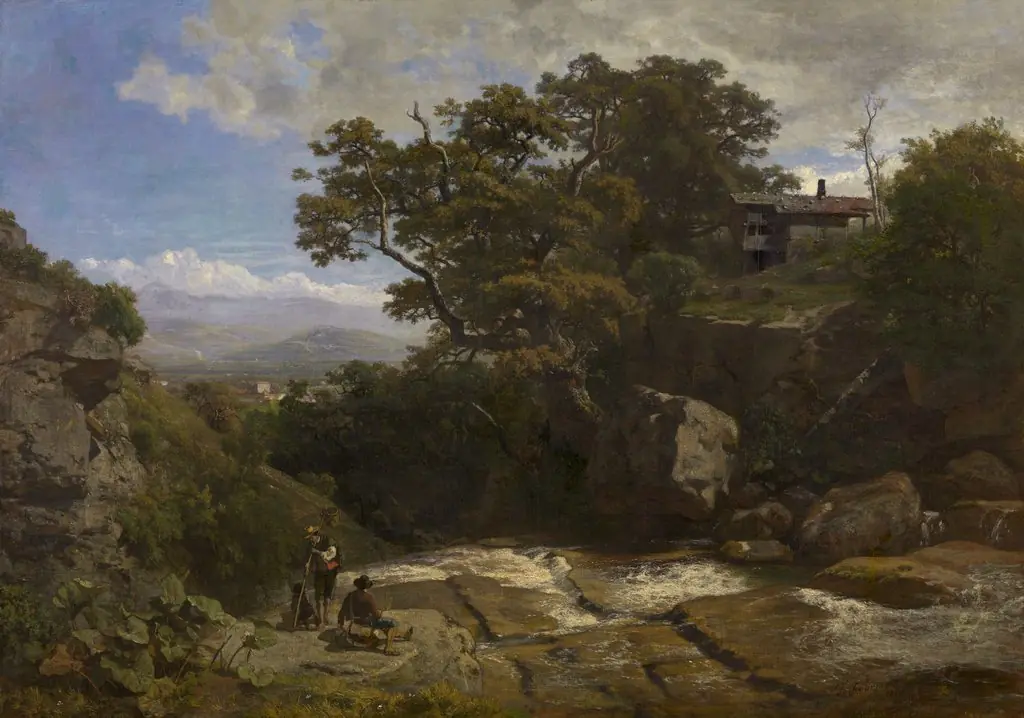
Berglandschap in Voreppe, Dauphiné
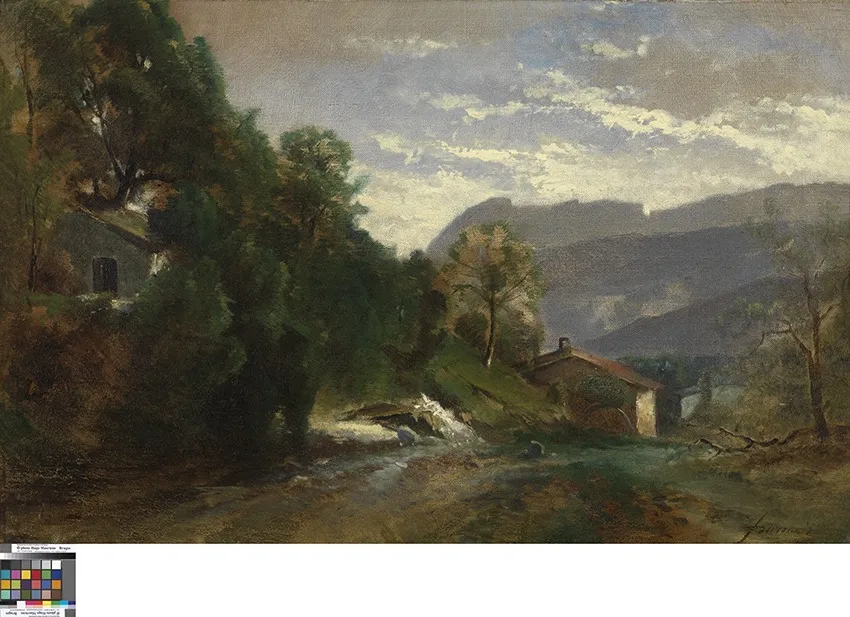
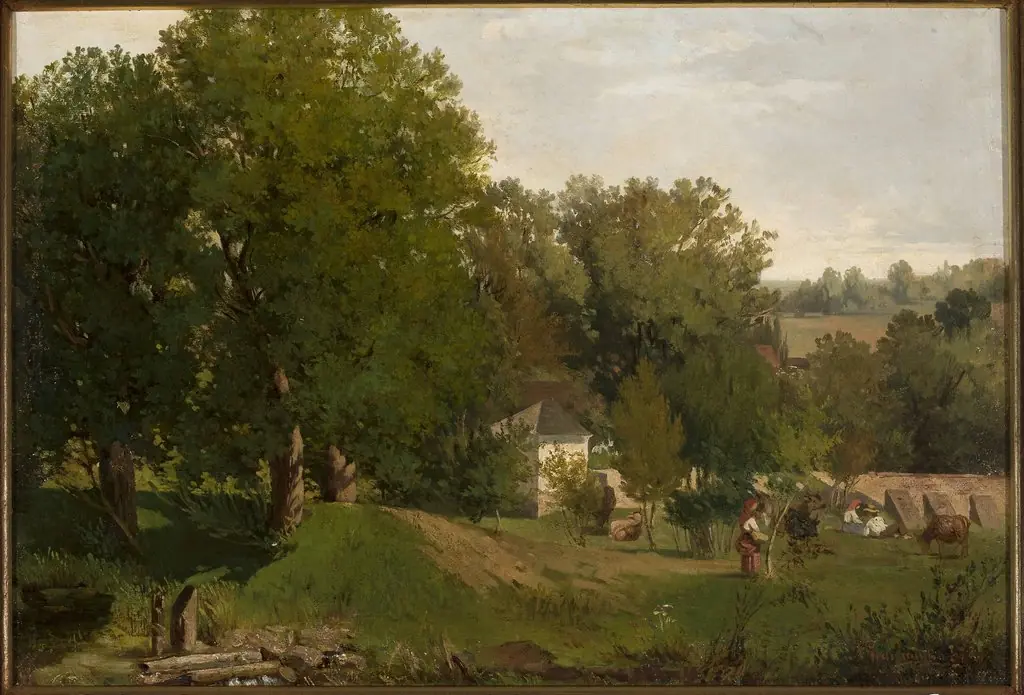
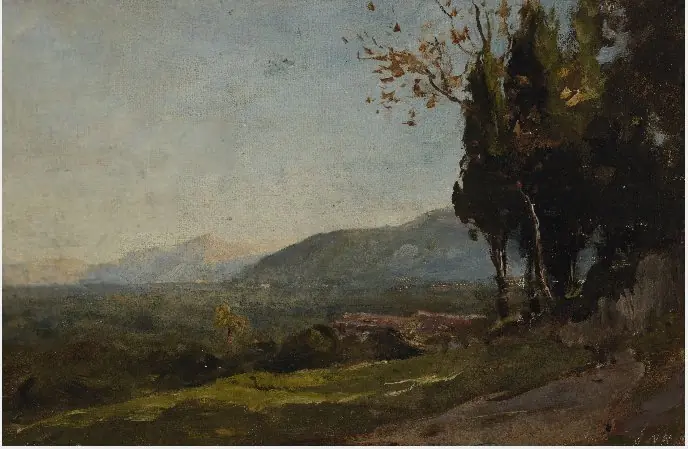
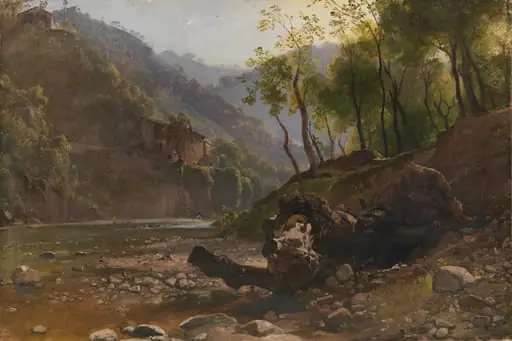
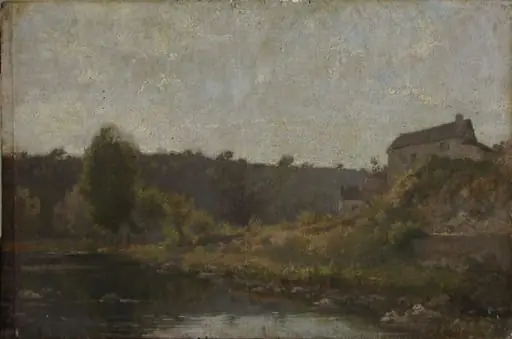
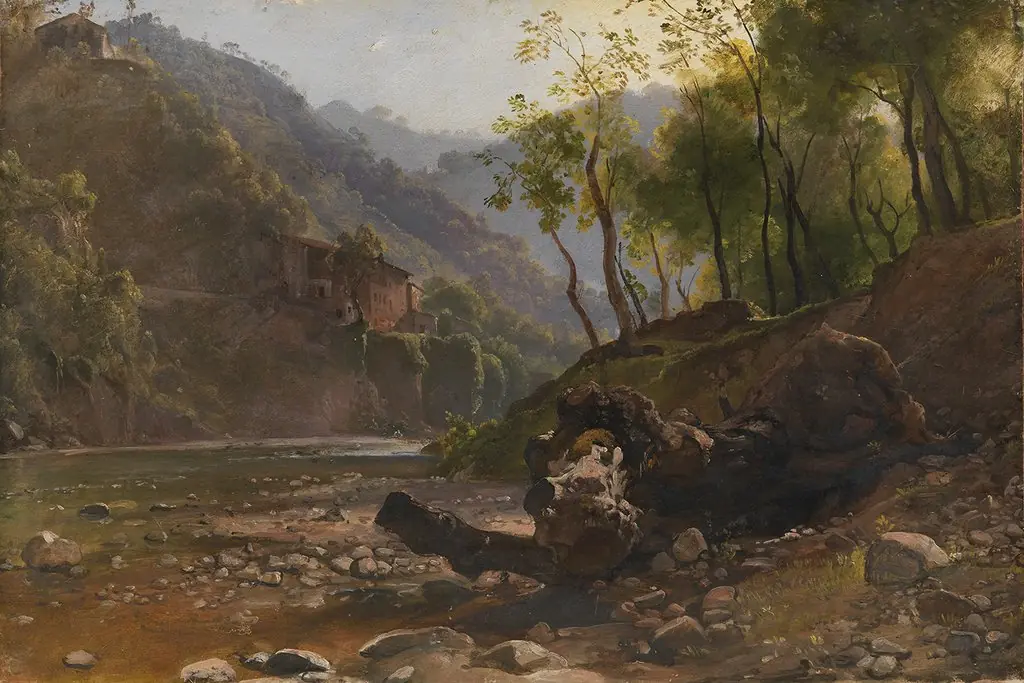
Berglandschap in Voreppe, Dauphiné is an oil painting by the Barbizon school artist Théodore Fourmois. It dates from 1850 and is held in the collection of the Groeningemuseum.
About this work
Overview
The work reflects his engagement with rural landscapes and aligns with the observational approach of the Barbizon School.
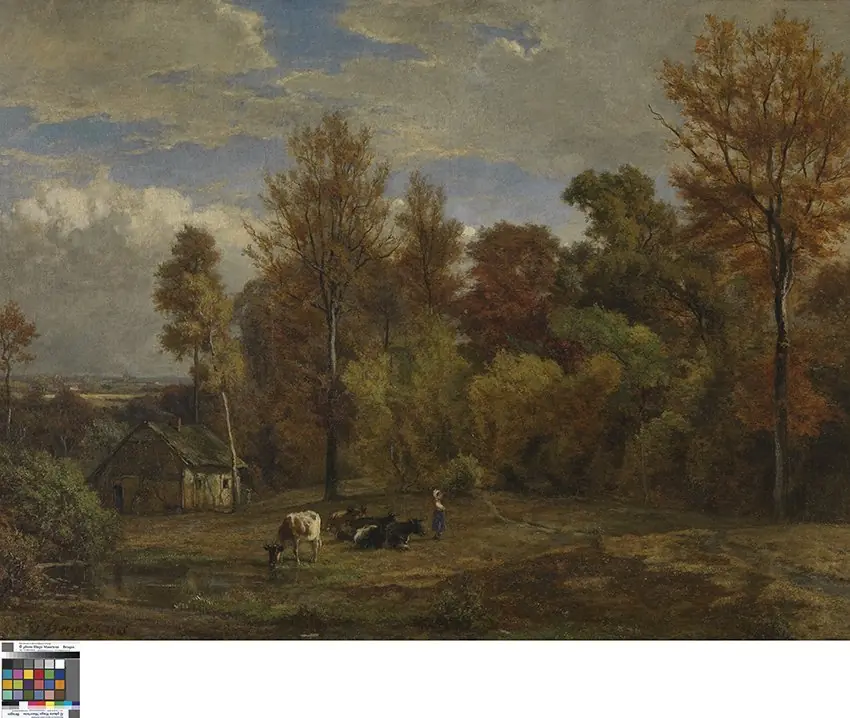
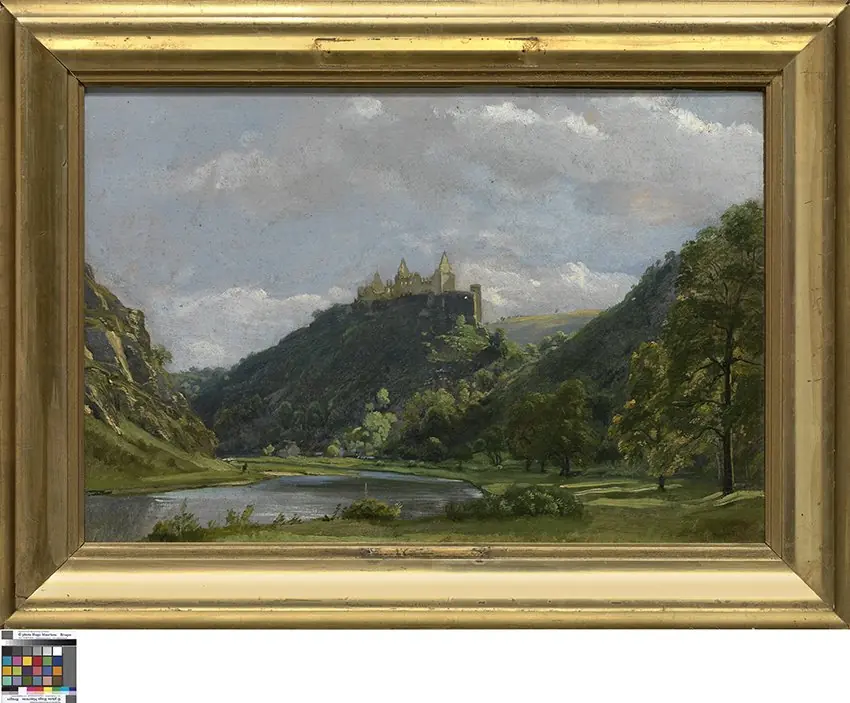
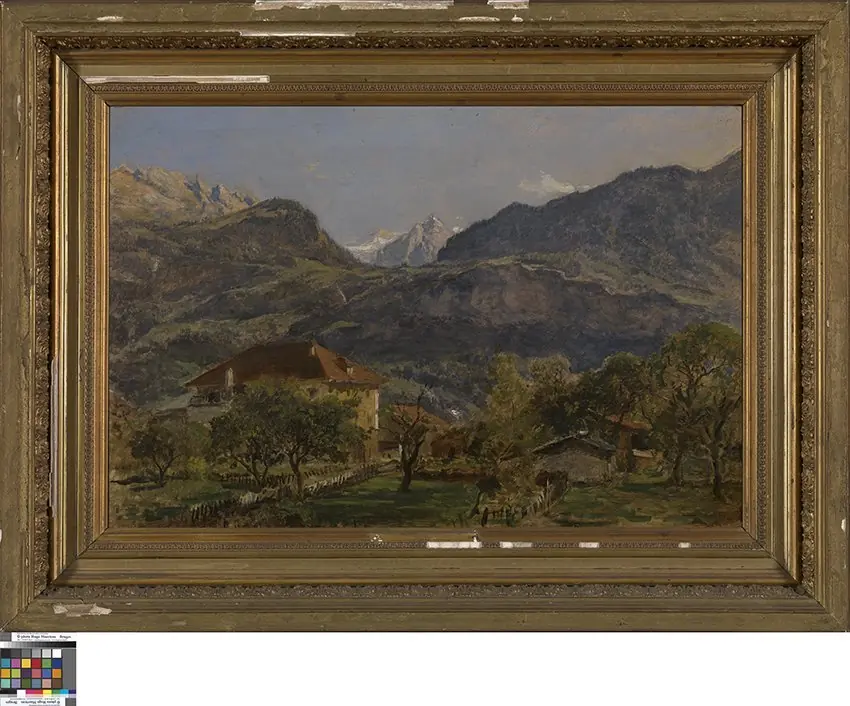
Théodore Fourmois, a Belgian artist trained in lithography, painted *Berglandschap in Voreppe, Dauphiné* circa 1850 during a period of focused study in southeastern France. The work reflects his engagement with rural landscapes and aligns with the observational approach of the Barbizon School. It is part of a broader body of work documenting the Dauphiné region, now held in the Groeningemuseum’s collection.
Subject & Meaning
The painting presents a tranquil valley near Voreppe, featuring two modest stone dwellings, a leafy tree, and a winding stream. The scene conveys quietude rather than narrative, emphasizing the harmony between human habitation and natural topography. Distant mountains and a luminous sky suggest the passage of time and the subtle rhythms of rural life, without idealization or drama.
Technique & Style
Fourmois employed loose, fluid brushwork to blend tones of green, ochre, and blue, creating a sense of atmospheric depth. Light falls gently across the hills and water, enhancing the naturalism of the scene. The soft transitions between shadow and highlight reflect an interest in optical effects, though without the stark contrasts of chiaroscuro. The sky, rendered with delicate strokes, contributes to the painting’s serene, almost ethereal mood.
History & Provenance
Created around 1850, the painting emerged from Fourmois’s travels in the Dauphiné region and was later acquired by the Groeningemuseum. He exhibited at the Exposition Universelle in Paris in 1855 and 1867, gaining recognition for his landscape studies. His works also entered the Royal Museums of Fine Arts of Belgium, indicating his standing within 19th-century Belgian and French art circles.
Context
Fourmois worked alongside artists who sought to depict nature without romantic embellishment, influenced by the Barbizon School’s emphasis on direct observation. His focus on modest, unpopulated landscapes reflected a broader 19th-century shift toward realism in rural scenes. Unlike urban or historical subjects, his works captured the quiet dignity of everyday terrain, aligning with contemporary interests in regional identity and environmental authenticity.
Legacy
Though not widely known today, Fourmois’s landscapes contributed to the development of Belgian and French plein air painting. His attention to light and topography helped bridge academic traditions with emerging naturalist practices. The persistence of his works in institutional collections underscores their role as thoughtful records of 19th-century rural Europe, valued for their sincerity rather than spectacle.
Artist & collection
Artist
Théodore Fourmois (14 October 1814 in Presles – October 1871 in Ixelles) was a Belgian landscape painter and printmaker.