Artwork
A Swamp in the Landes
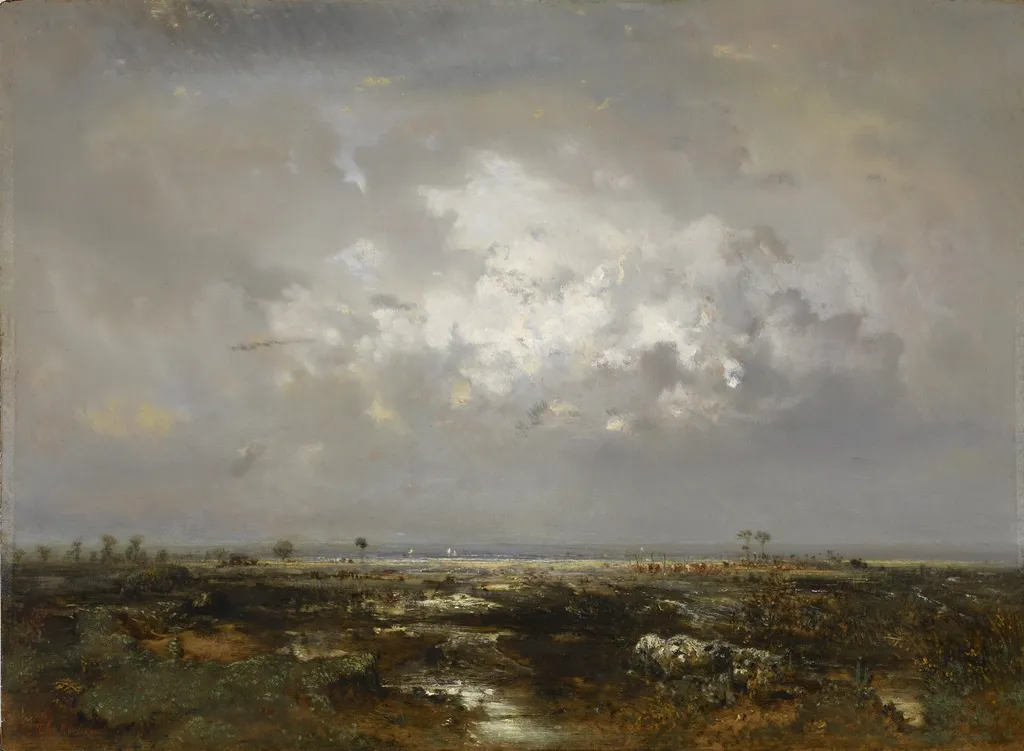
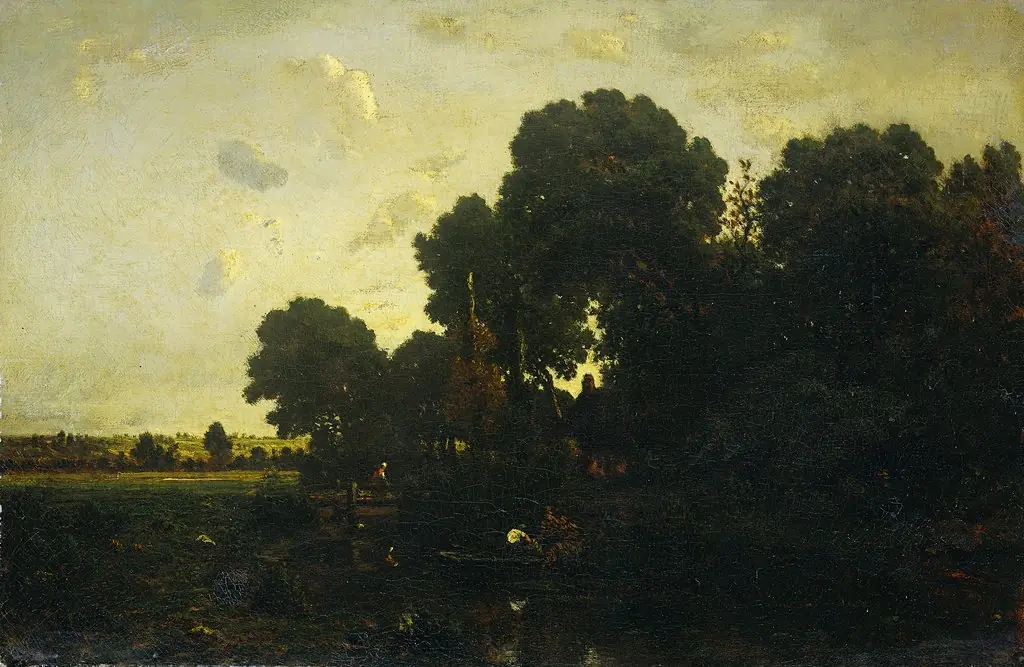
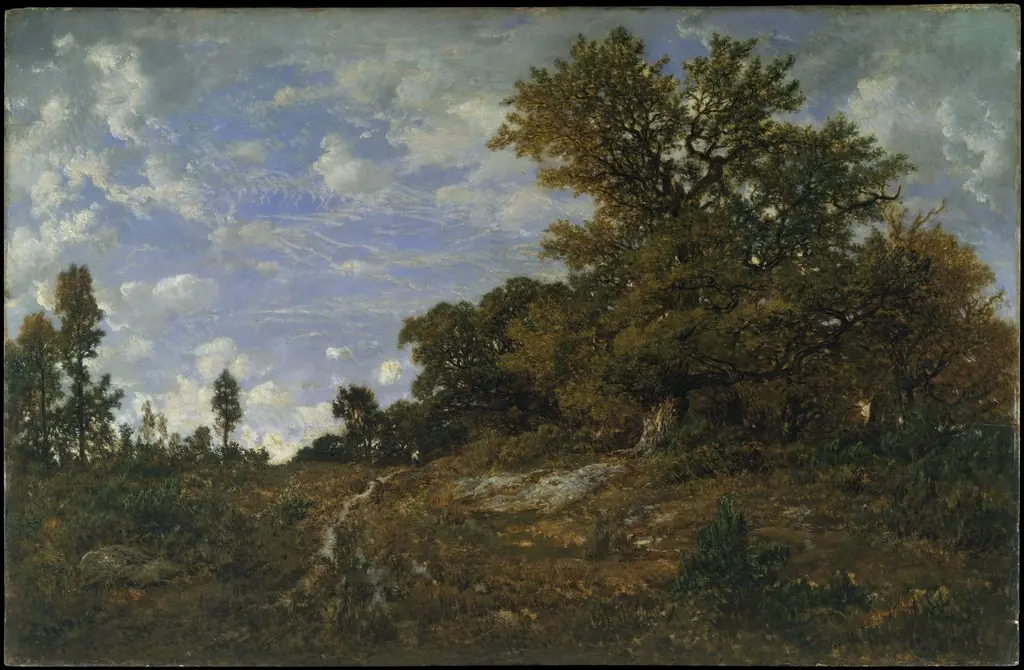
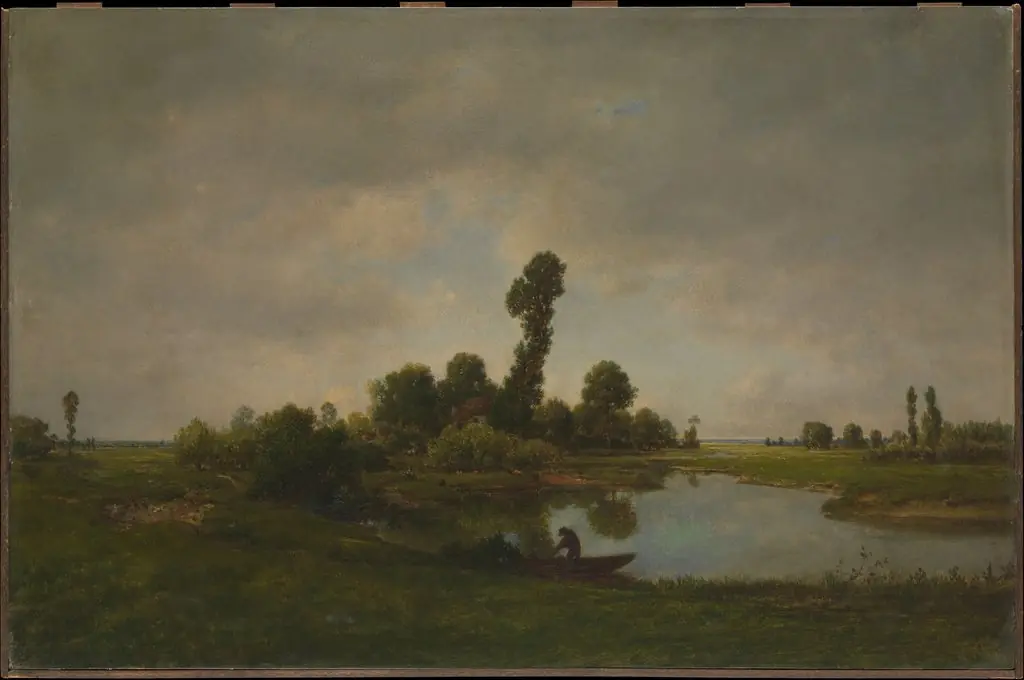
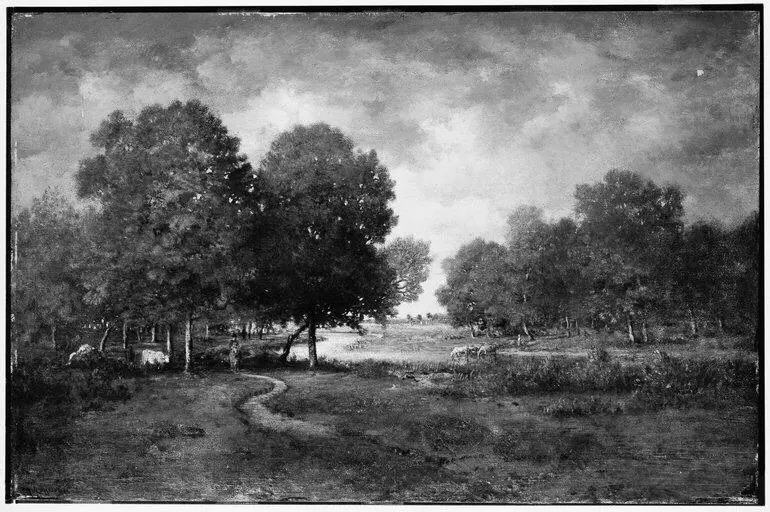
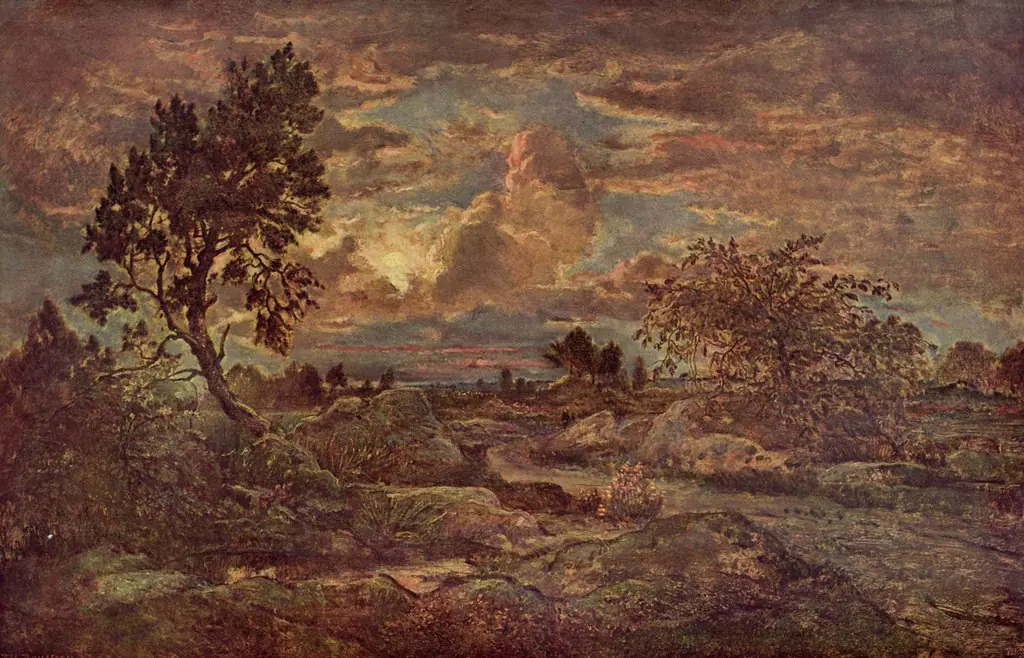
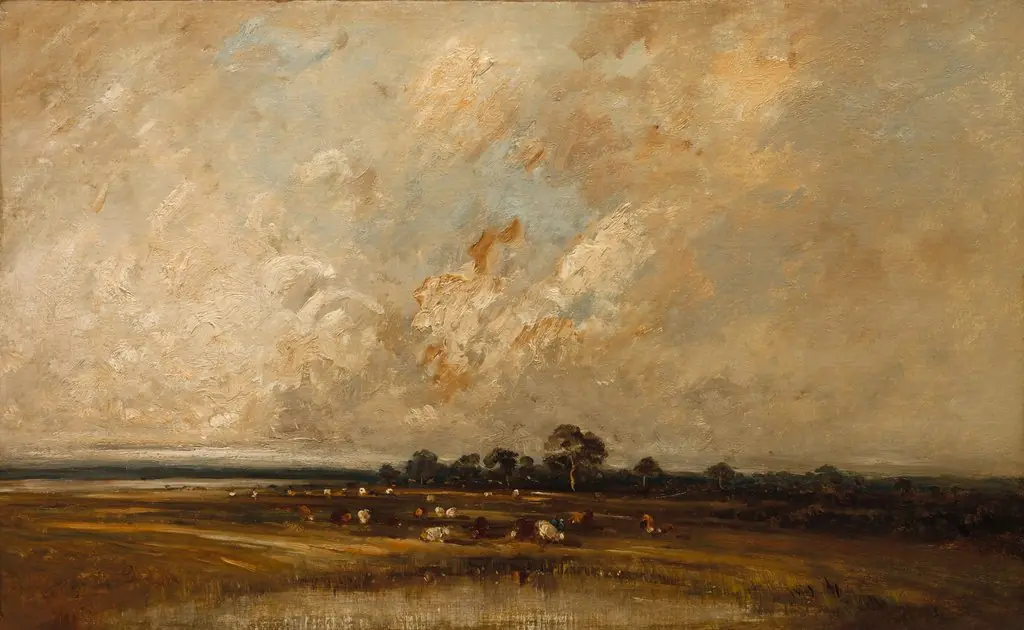
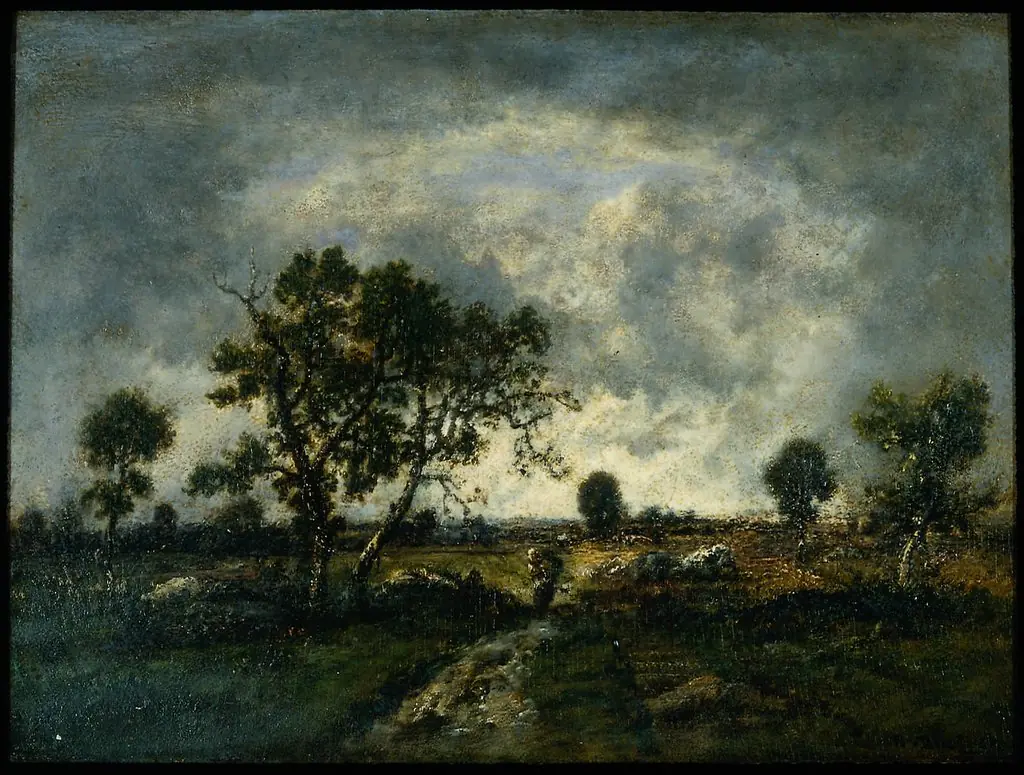
A Swamp in the Landes is an oil painting by the Barbizon school artist Théodore Rousseau. It dates from 1844 and is held in the collection of the Walters Art Museum.
About this work
Overview
Théodore Rousseau painted *A Swamp in the Landes* in 1844 using oil on canvas. The work belongs to the Barbizon school, a mid‑19th‑century French movement that emphasized direct observation of the countryside. Today the painting is part of the Walters Art Museum’s collection.
Subject & Meaning
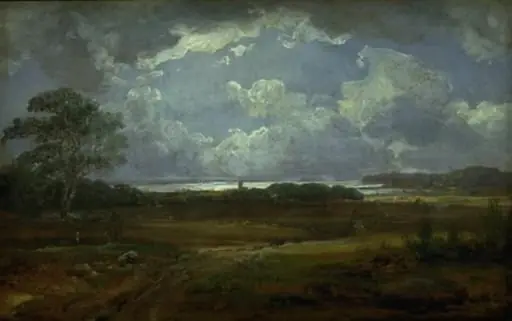
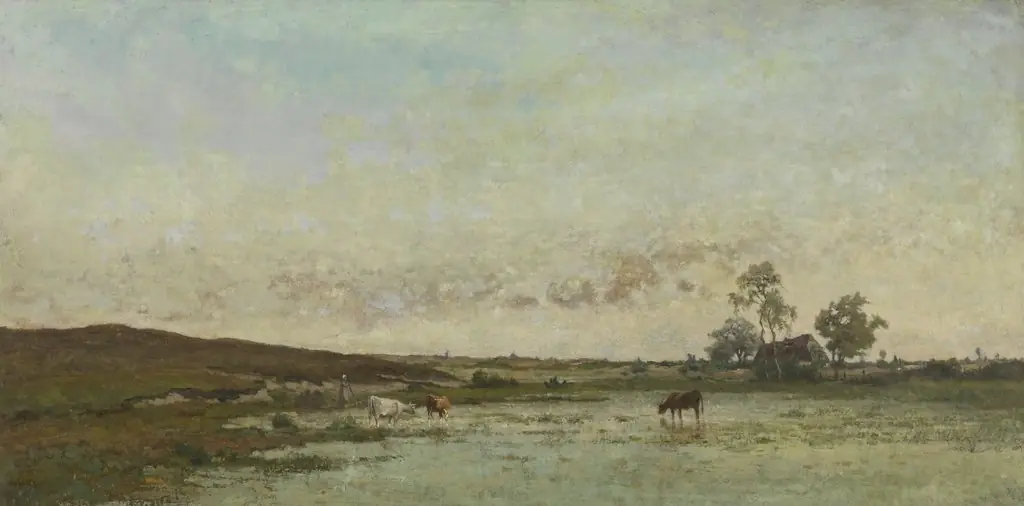
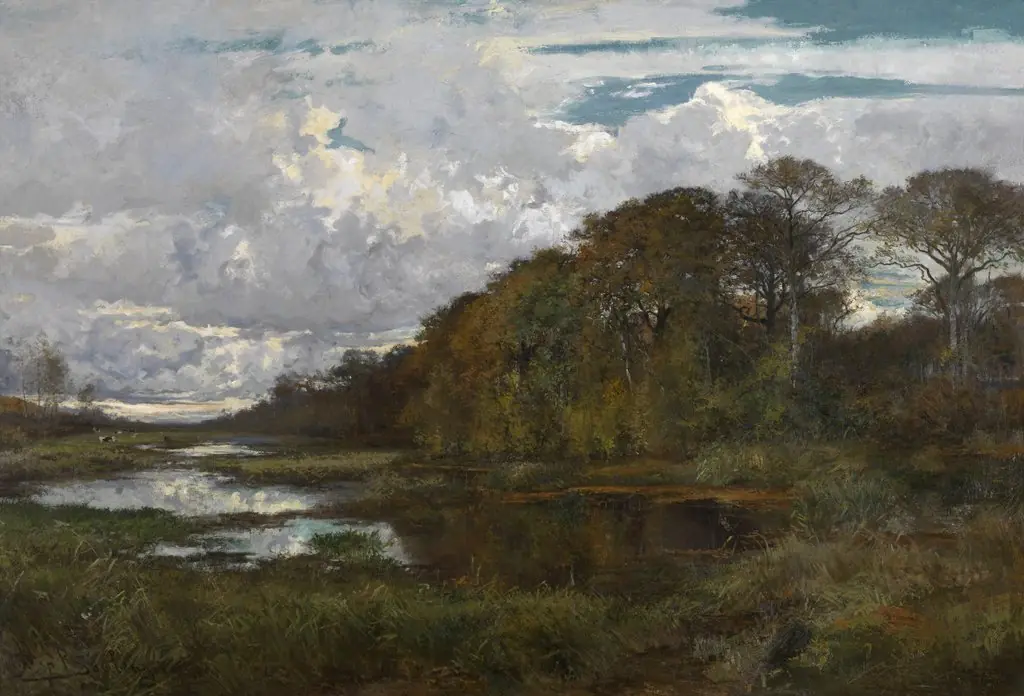
The canvas depicts an extensive wetland under a cloud‑filled sky. A brown‑green marsh spreads across the foreground, punctuated by scattered trees and shrubs. Small sailboats appear on the distant water, providing a sense of scale and suggesting human activity within the otherwise natural setting.
Technique & Style
Rousseau employs a muted palette of earth tones—browns, greens, and grays—combined with loose, expressive brushwork that conveys atmospheric movement. Strong chiaroscuro contrasts the dark silhouettes of trees and clouds with the lighter sky and water, enhancing the scene’s depth and drama.
History & Provenance
Created during the height of Rousseau’s involvement with the Barbizon circle, the painting later entered the Walters Art Museum’s holdings. Its acquisition reflects the museum’s broader interest in 19th‑century European landscape painting.
Own this work as a print
Artist & collection
Artist
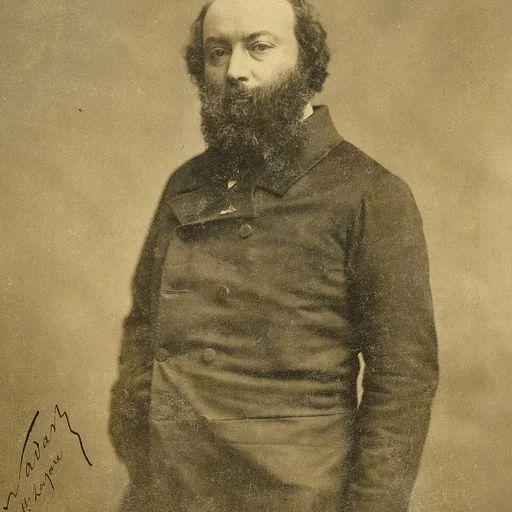
Étienne Pierre Théodore Rousseau (French pronunciation: ; 15 April 1812 – 22 December 1867) was a French painter of the Barbizon school.