Artwork
A View in the Landes, near Bordeaux
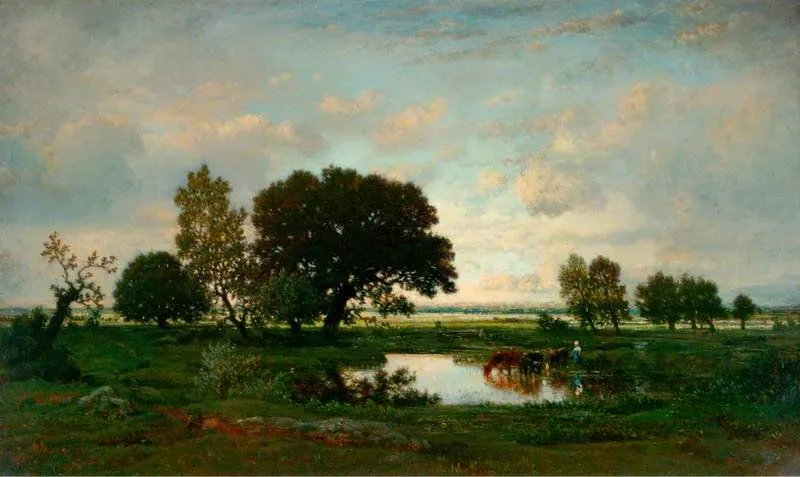
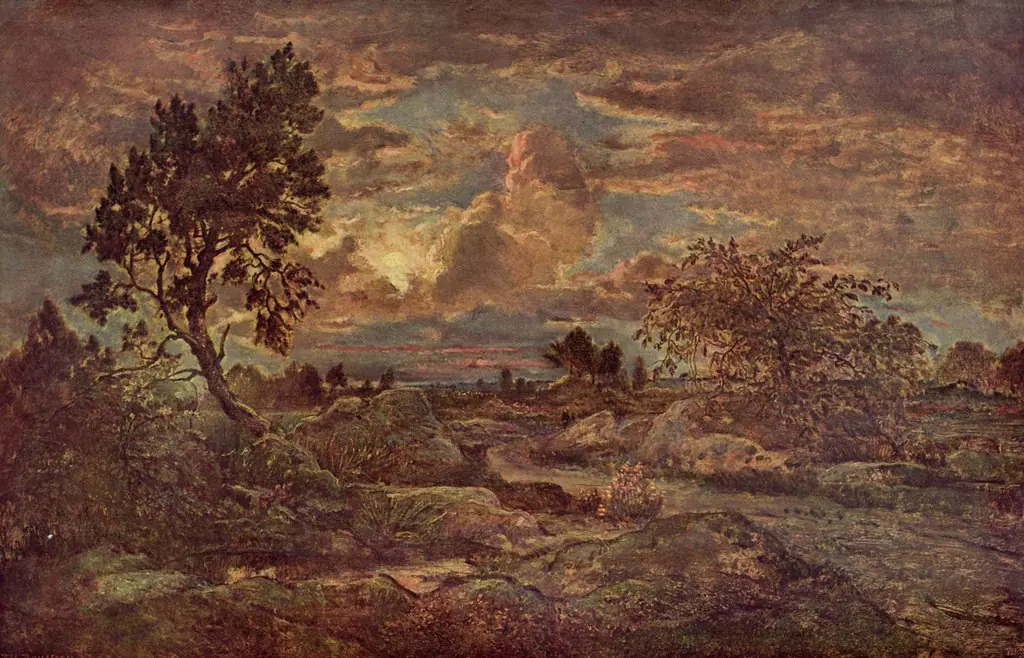
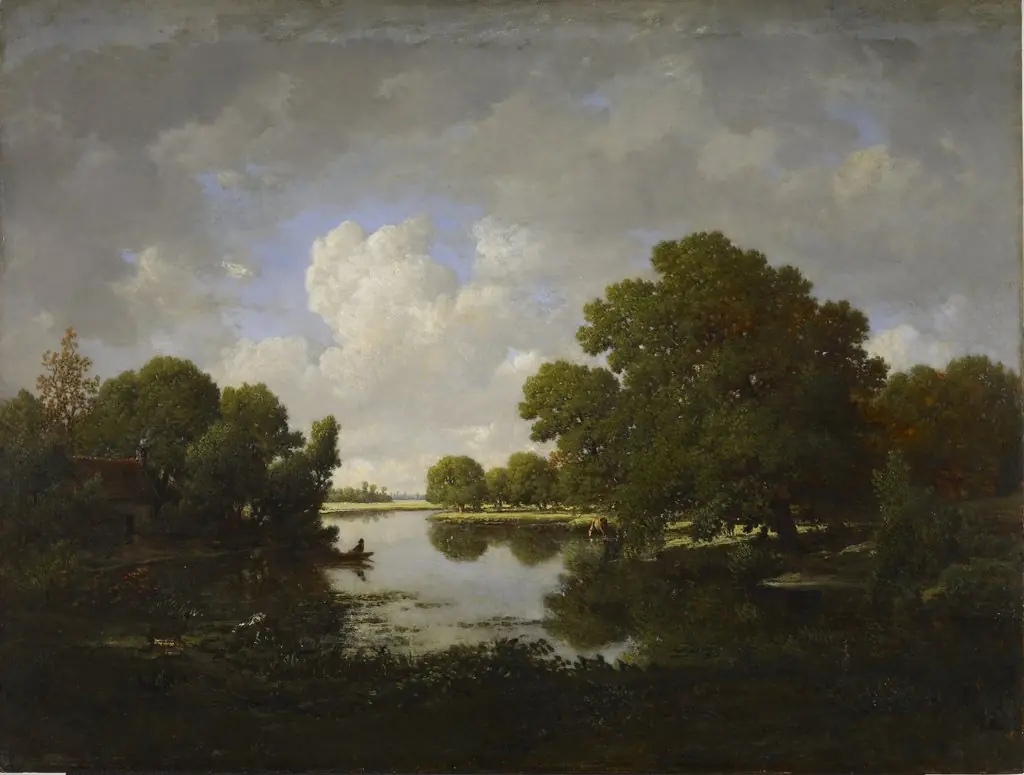
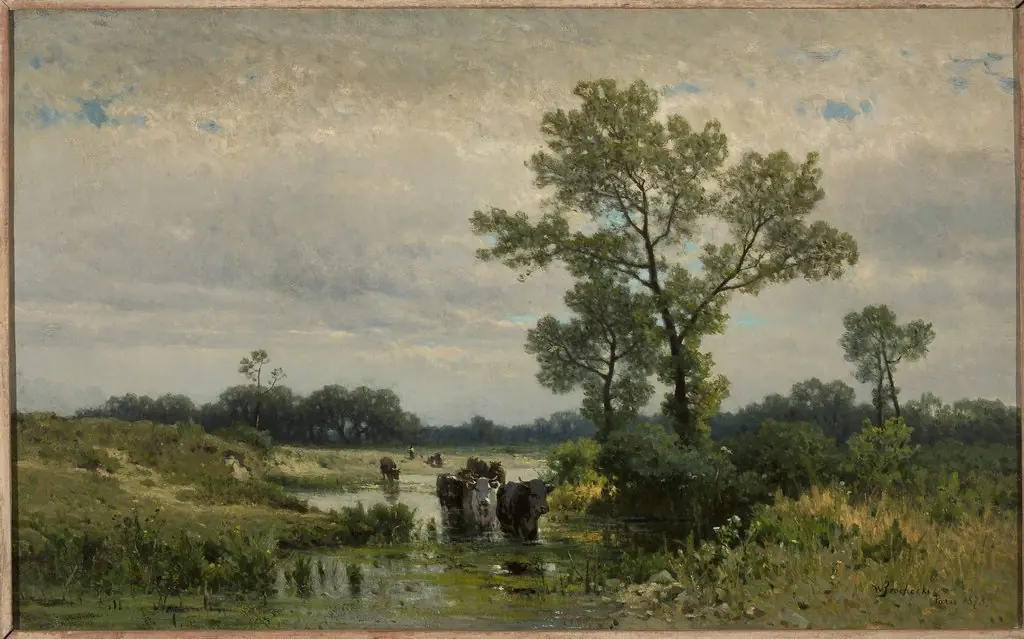
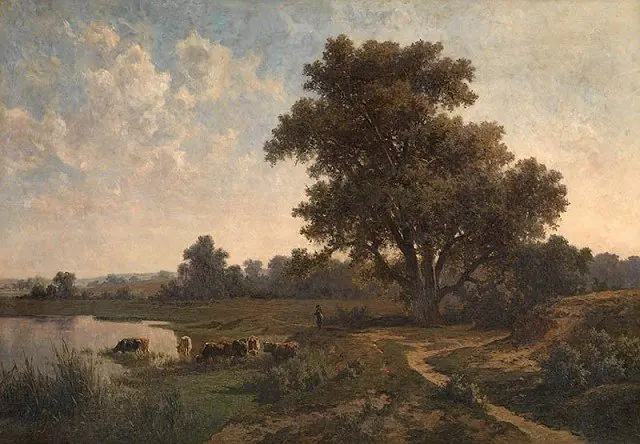
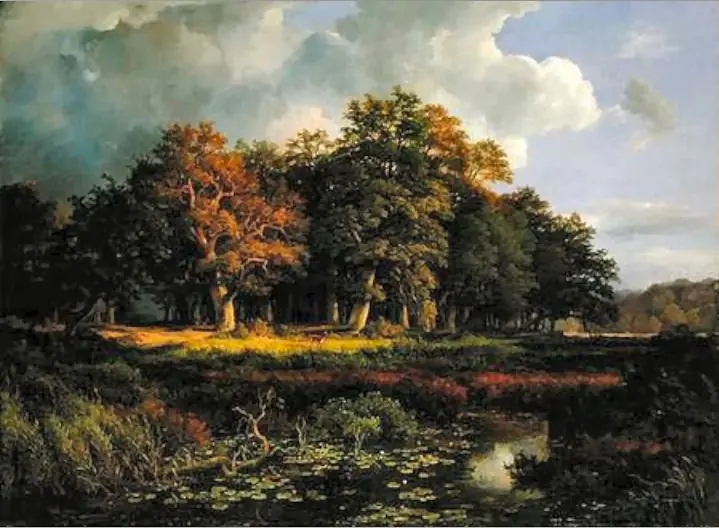
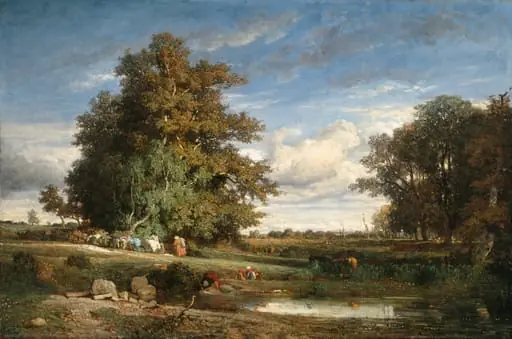
A View in the Landes, near Bordeaux is an oil painting by the Barbizon school artist Théodore Rousseau. It dates from 1855 and is held in the collection of the Victoria and Albert Museum.
About this work
Overview
Painted in 1855, *A View in the Landes, near Bordeaux* is an oil-on-canvas landscape by Théodore Rousseau, a central figure in the Barbizon school.
Painted in 1855, *A View in the Landes, near Bordeaux* is an oil-on-canvas landscape by Théodore Rousseau, a central figure in the Barbizon school. The work captures a quiet rural scene in southwestern France, emphasizing the natural world without idealization. It resides in the Victoria and Albert Museum’s collection, representing a key example of mid-19th-century French landscape painting rooted in direct observation of nature.
Subject & Meaning
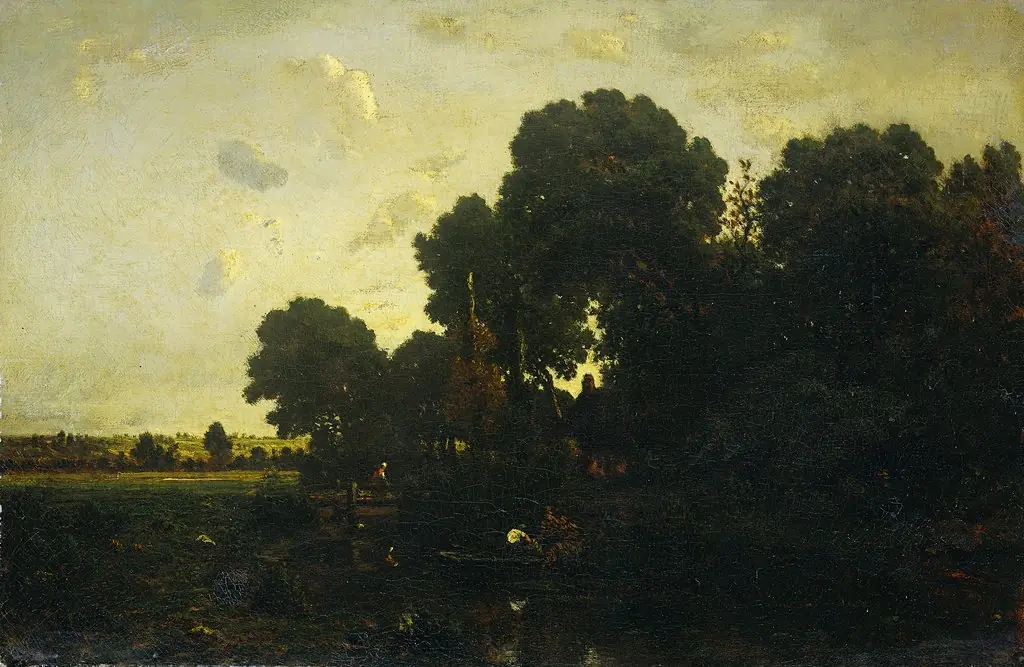
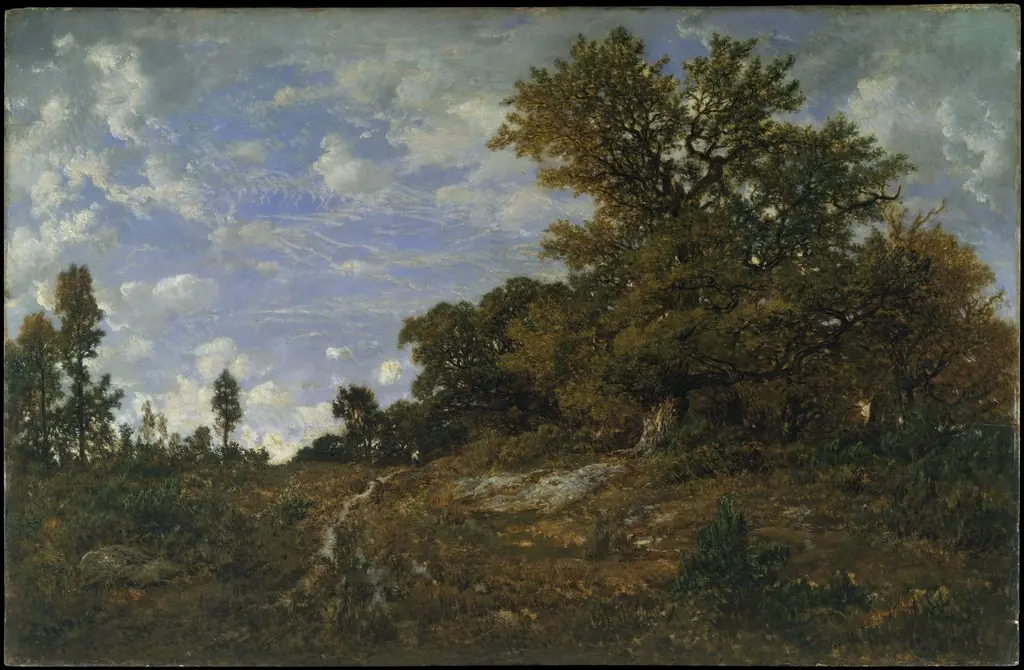
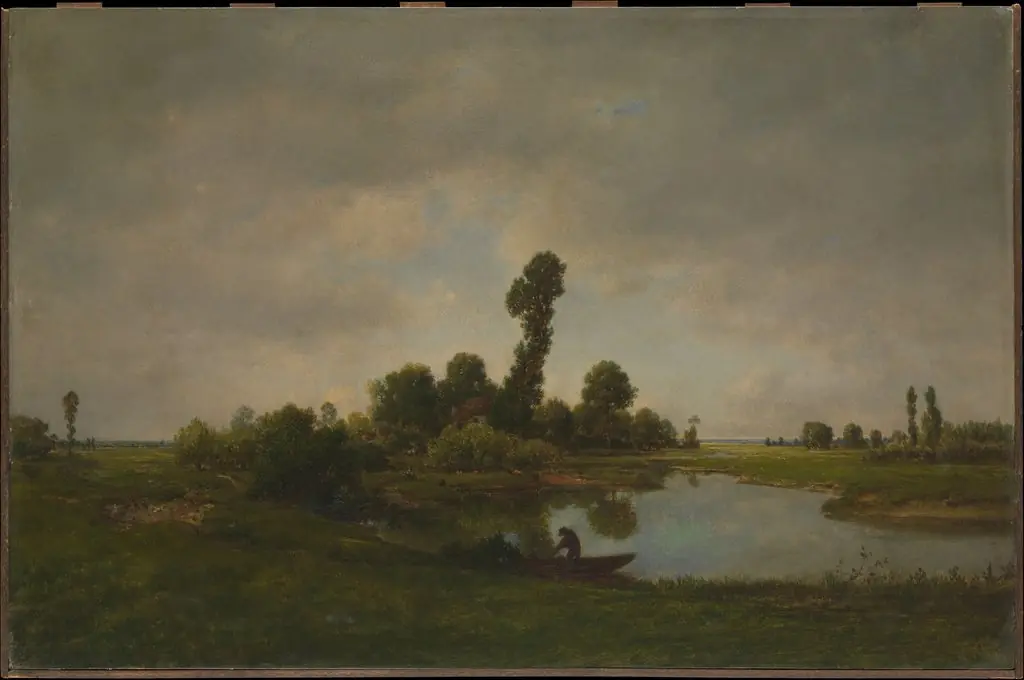
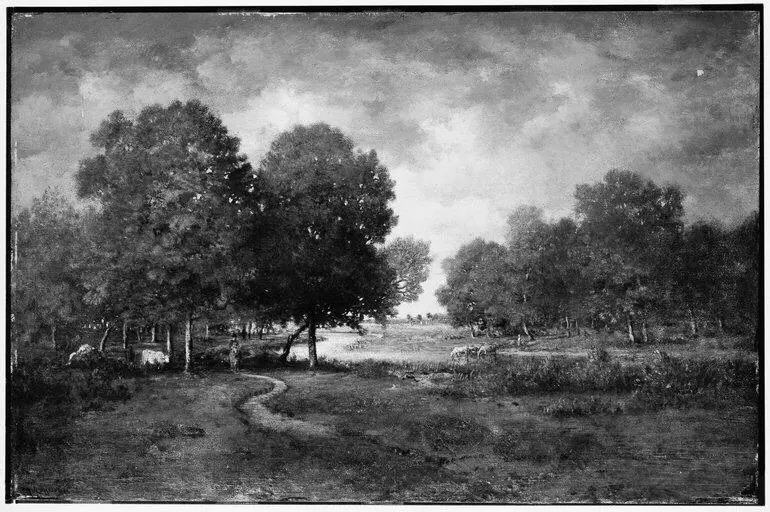
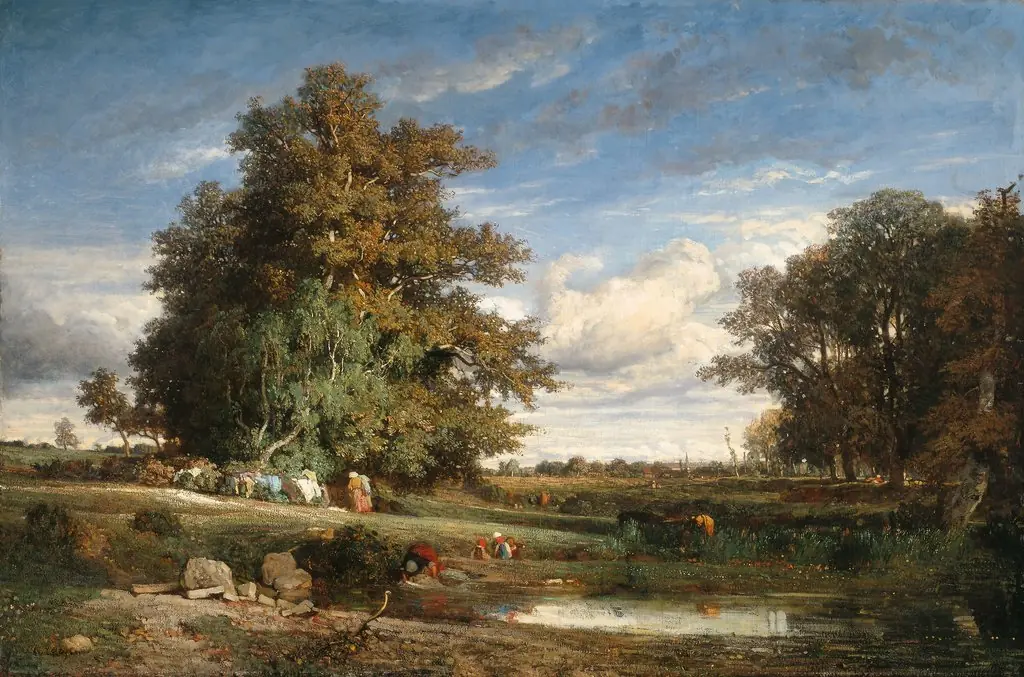
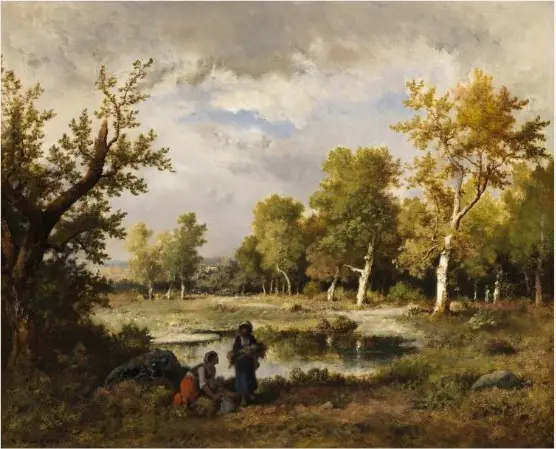
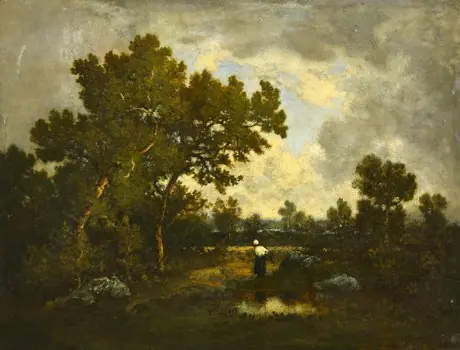
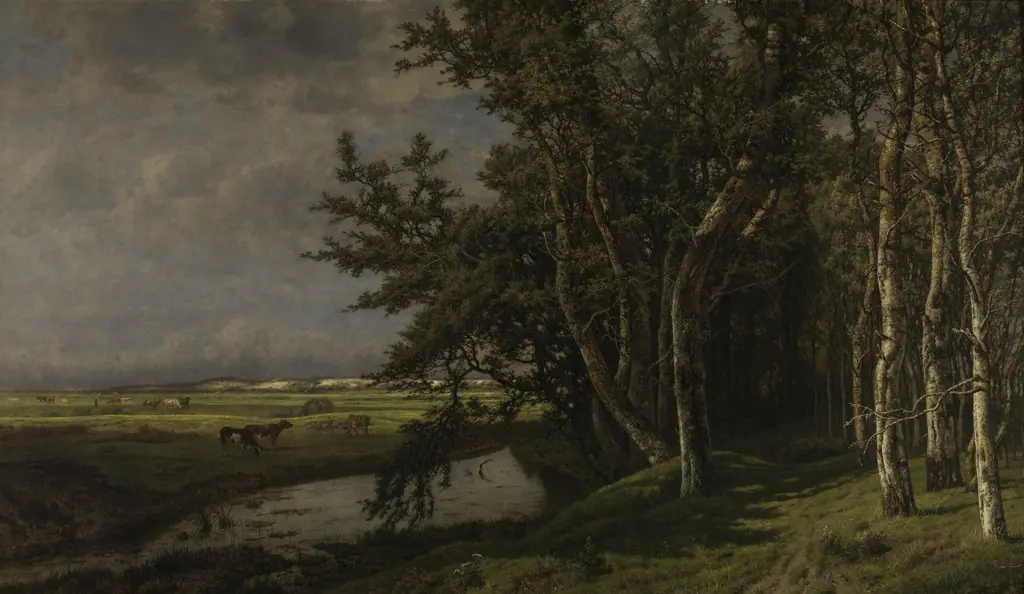
The painting depicts a tranquil stretch of the Landes region, featuring a dominant tree on the left, its limbs arching over a still pond. Distant trees form a horizontal line against a soft sky, suggesting the quiet expansiveness of the French countryside. There is no human presence, reinforcing the Barbizon emphasis on nature as a subject worthy of contemplation in its own right, free from narrative or symbolism.
Technique & Style
Rousseau employed a restrained palette of greens, browns, and muted blues to evoke the subdued tones of the wetlands. His brushwork is deliberate yet unobtrusive, building texture through layered strokes. Light filters through the canopy, casting subtle shadows that model form and enhance spatial depth. The effect, achieved through careful modulation of tone rather than sharp contrast, reflects a sensitivity to atmospheric conditions.
History & Provenance
Created in 1855, the painting was likely made during Rousseau’s travels in southwestern France, a region he frequently visited for its unspoiled terrain. It entered the Victoria and Albert Museum’s collection in the late 19th century, part of a broader effort to acquire significant works by contemporary European artists. Its preservation reflects early institutional recognition of landscape painting as a serious artistic pursuit.
Context
Rousseau worked alongside other Barbizon painters who rejected academic idealism in favor of painting outdoors, or *plein air*. Their focus on ordinary rural scenes aligned with broader cultural shifts toward naturalism and a growing interest in the French countryside as a site of authenticity. This painting reflects that movement’s commitment to recording nature as it appeared, without embellishment.
Legacy
Though less widely known than some of his contemporaries, Rousseau’s work influenced later generations of landscape painters, including the Impressionists, through his emphasis on light, atmosphere, and direct observation. *A View in the Landes* exemplifies his quiet, persistent approach to nature, contributing to the redefinition of landscape as a legitimate and emotionally resonant genre in 19th-century art.
Artist & collection
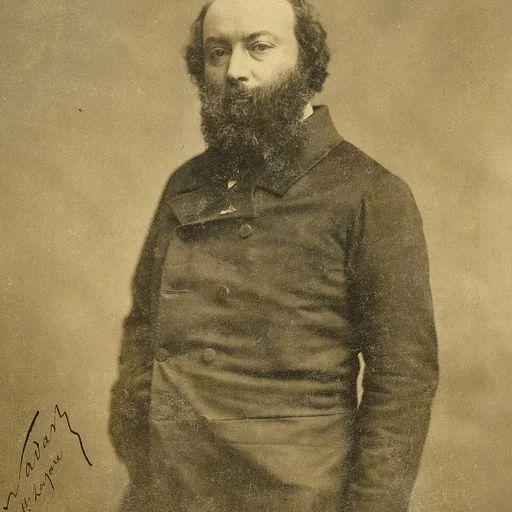
Artist
Étienne Pierre Théodore Rousseau (French pronunciation: ; 15 April 1812 – 22 December 1867) was a French painter of the Barbizon school.