Artwork
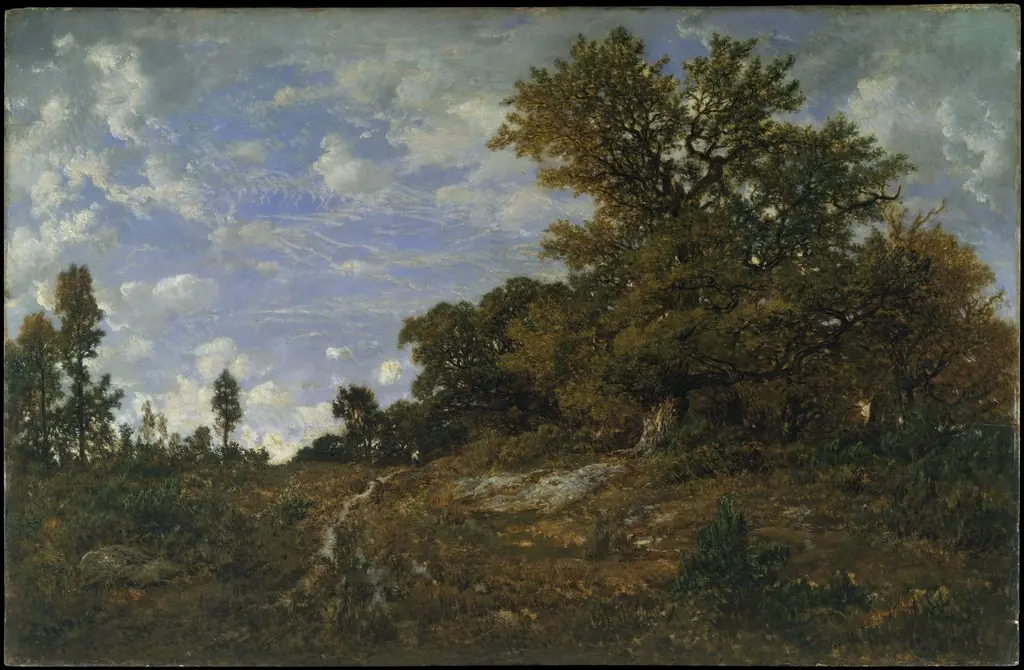
Forest of Fontainebleau, Cluster of Tall Trees Overlooking the Plain of Clair-Bois at the Edge of Bas-Bréau
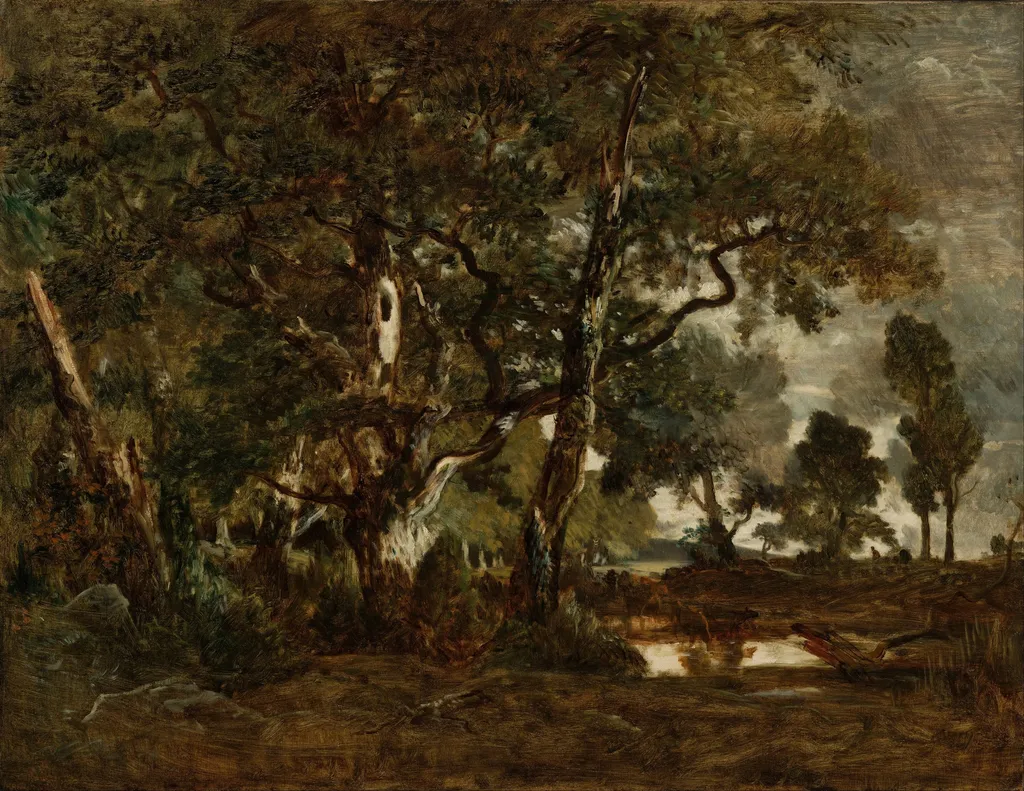
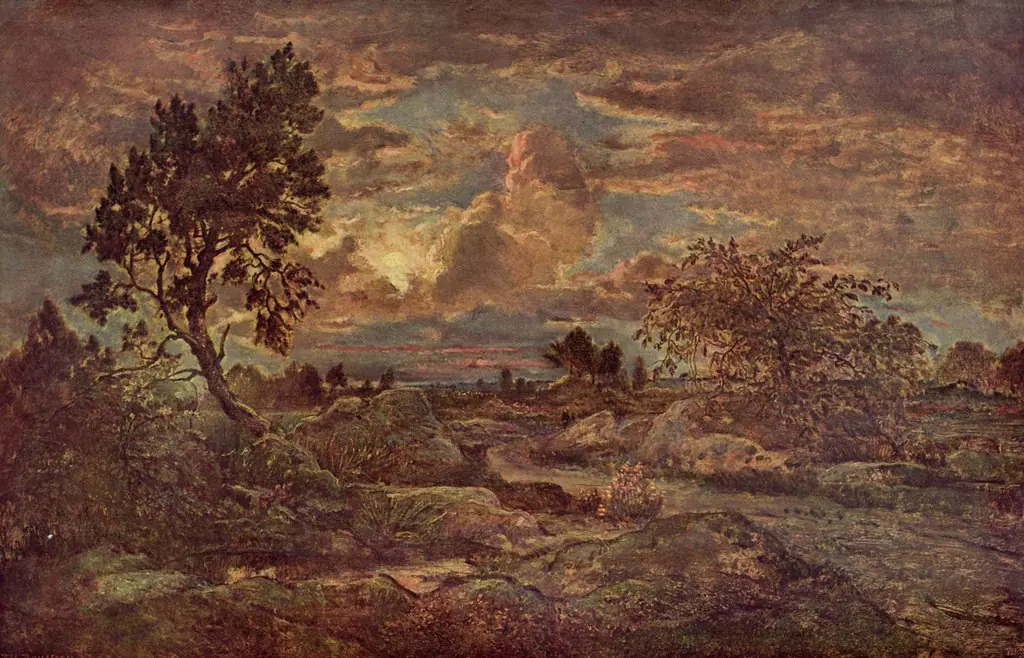
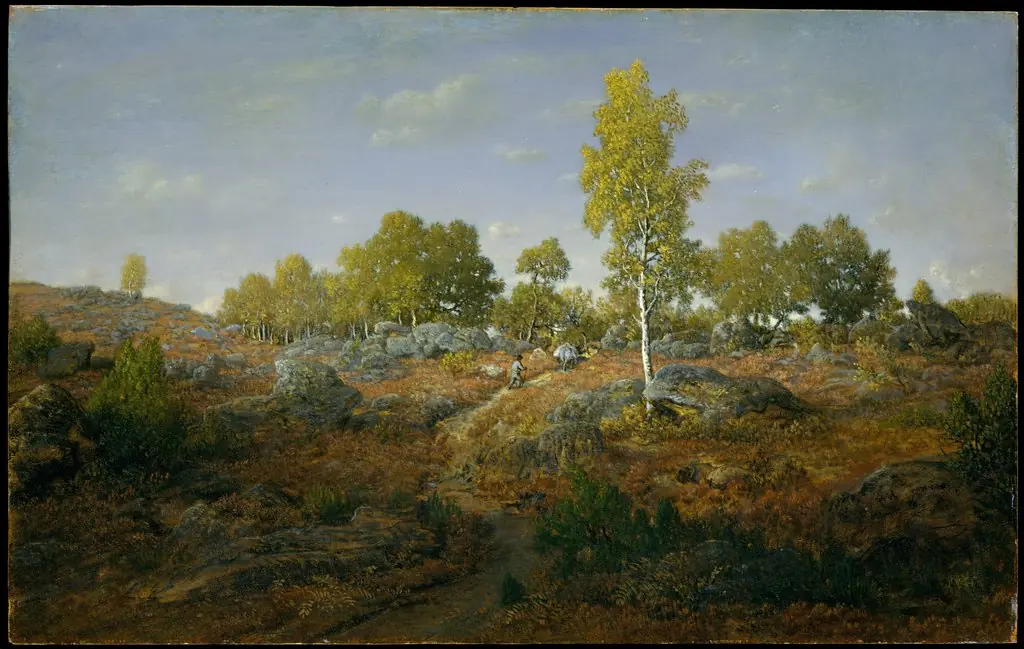
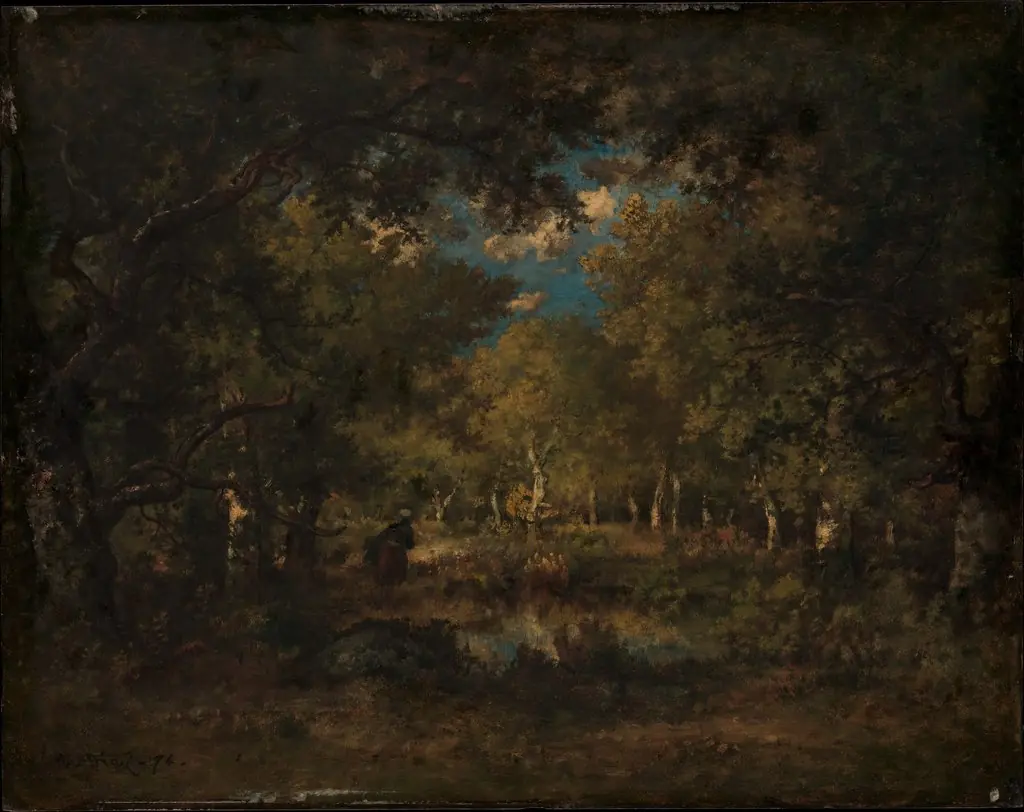
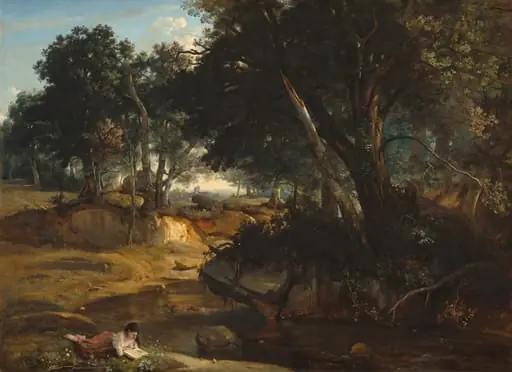
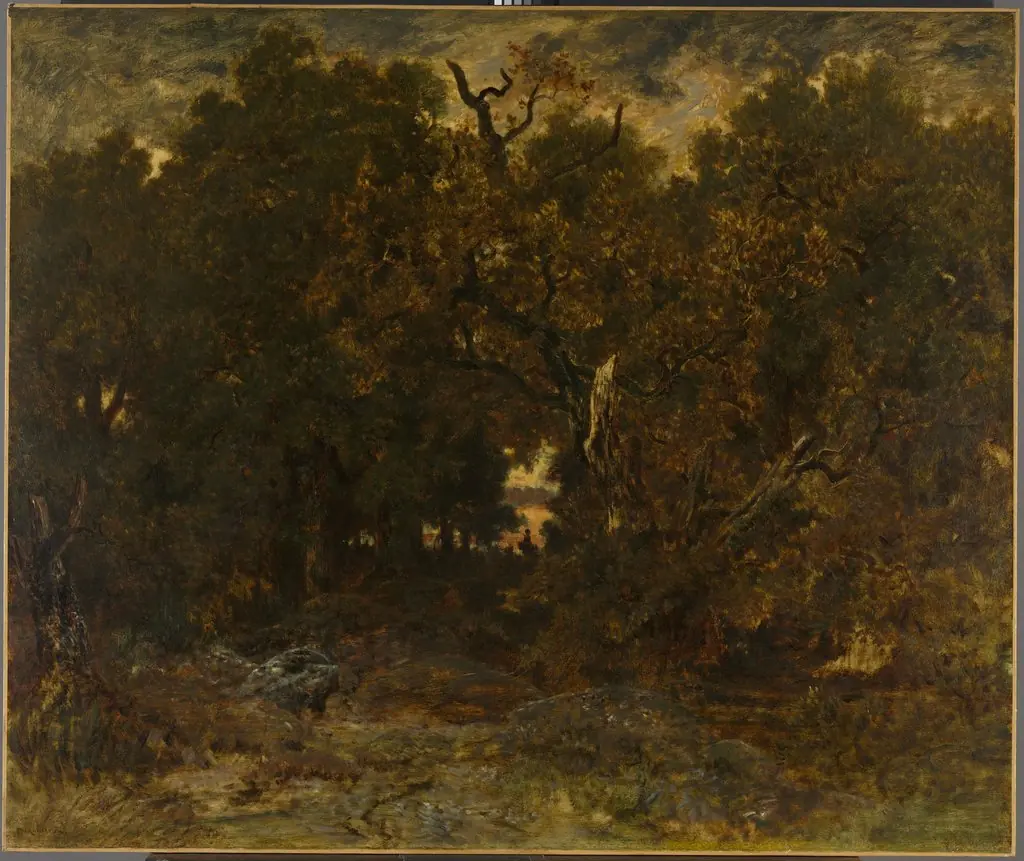
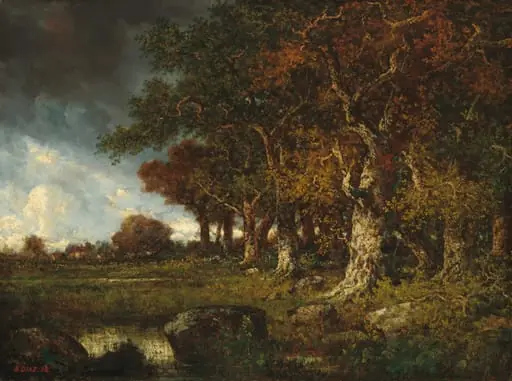
Forest of Fontainebleau, Cluster of Tall Trees Overlooking the Plain of Clair-Bois at the Edge of Bas-Bréau is an oil painting by the Barbizon school artist Théodore Rousseau. It dates from 1850 and is held in the collection of the J. Paul Getty Museum.
About this work
Overview
It belongs to a body of work centered on the natural world, produced by artists who sought to depict rural France beyond idealized or mythologized settings.
Painted around 1850, this oil-on-canvas work by Théodore Rousseau captures a section of the Forest of Fontainebleau near Bas-Bréau. It belongs to a body of work centered on the natural world, produced by artists who sought to depict rural France beyond idealized or mythologized settings. The painting’s scale and attention to ecological detail reflect Rousseau’s commitment to observing nature directly, rather than composing it in the studio.
Subject & Meaning
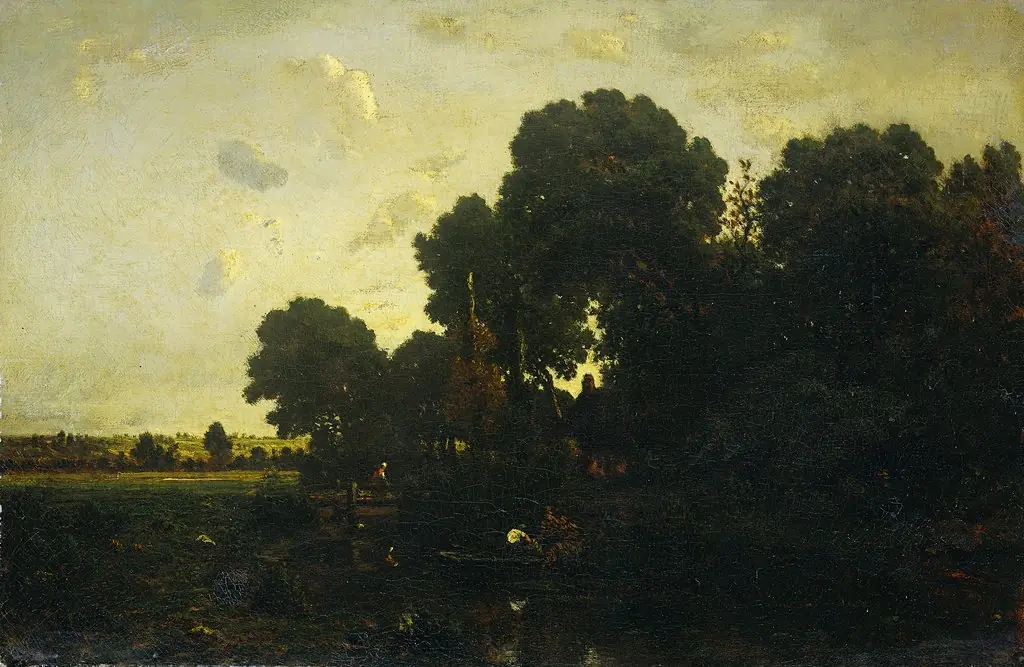
The composition centers on a dense cluster of tall trees, their vertical forms dominating the foreground and contrasting with the open, flat expanse of the Clair-Bois plain in the distance. The looming trees suggest both the majesty and quiet dominance of the forest, while the muted sky and scattered distant trees evoke a sense of solitude. There is no human presence; the landscape stands as an autonomous, enduring entity.
Technique & Style
Rousseau employed layered oil paint to build texture in bark and foliage, using varied brushwork to distinguish between the rough trunks and the soft, overlapping leaves. The palette is restrained—greens, grays, and muted browns—enhancing the atmospheric mood. Light filters diffusely through the clouds, creating subtle shifts in tone that guide the eye from the foreground trees toward the hazy horizon.
History & Provenance
The painting entered the collection of the J. Paul Getty Museum after passing through private hands in France and the United States. It was acquired in the late 20th century as part of a broader effort to strengthen the museum’s holdings of 19th-century French landscape painting. Its provenance aligns with the growing interest in Barbizon artists during the postwar period.
Context
Rousseau worked alongside other artists who settled near Fontainebleau to paint en plein air, rejecting academic conventions in favor of direct observation. The Forest of Fontainebleau, then under threat from logging and development, became a symbolic refuge for artists seeking authenticity. Their work laid groundwork for later movements that valued nature as a subject worthy of serious artistic attention.
Legacy
This painting exemplifies the Barbizon school’s influence on the evolution of landscape painting in Europe. By prioritizing the quiet dignity of unaltered nature, Rousseau and his peers shifted focus away from historical or pastoral idealism. Their approach directly informed the Impressionists’ later studies of light and environment, establishing a new trajectory for modern landscape art.
Own this work as a print
Artist & collection
Artist
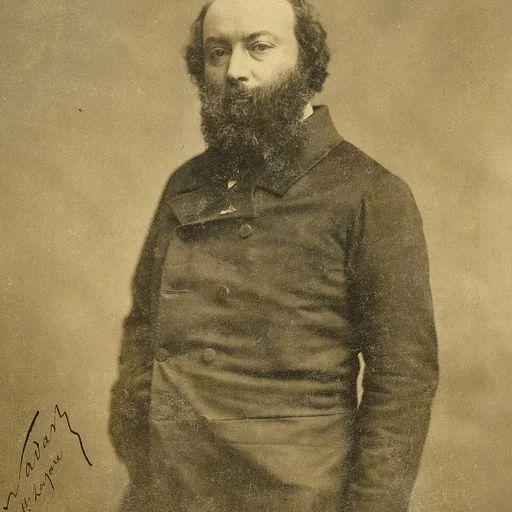
Étienne Pierre Théodore Rousseau (French pronunciation: ; 15 April 1812 – 22 December 1867) was a French painter of the Barbizon school.