Artwork
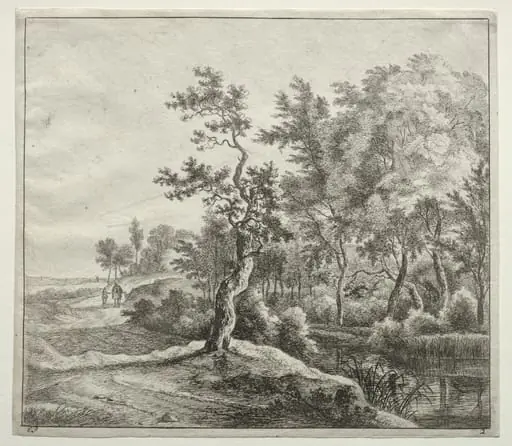
Cherry Tree at Blau
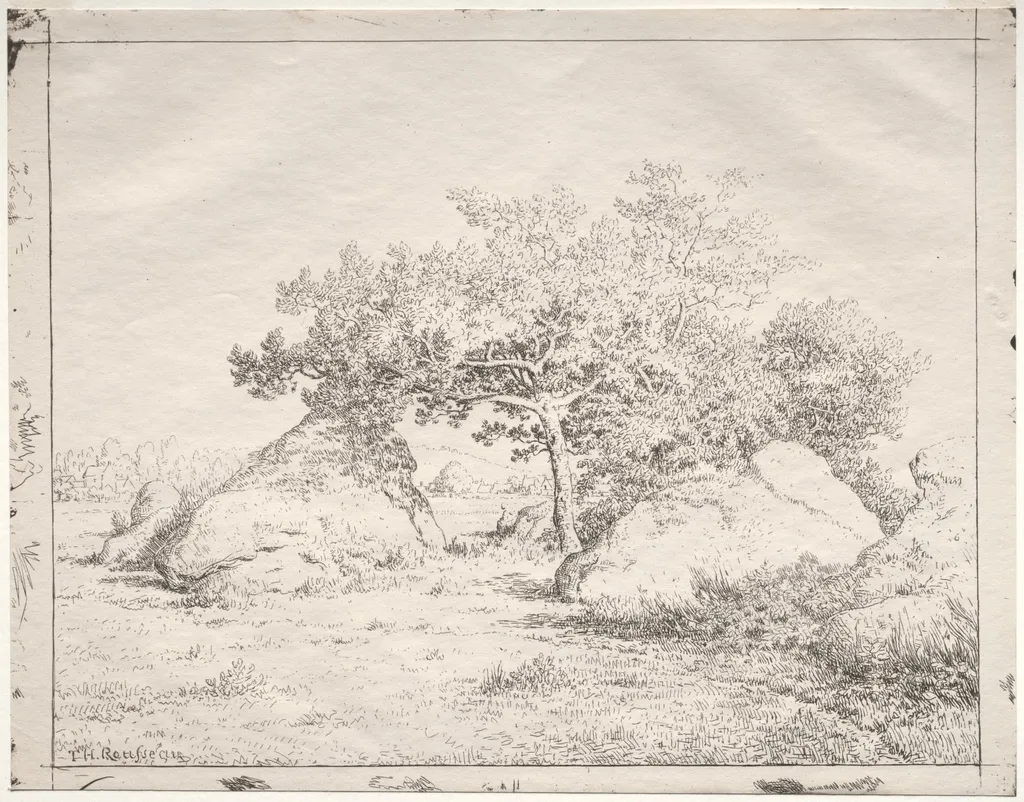
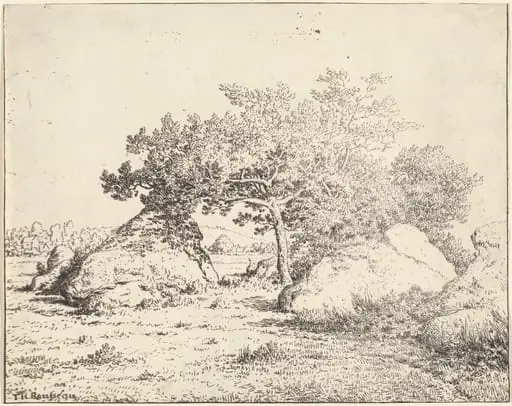
Cherry Tree at Blau is a print by the Romanticist artist Théodore Rousseau. It dates from 1862 and is held in the collection of the Cleveland Museum of Art.
About this work
Overview
Cherry Tree at Blau is a 1862 print by Théodore Rousseau, a key figure of the Barbizon school, characterized by its naturalistic and intimate portrayal of a rural landscape.
Subject & Meaning
The work features a solitary cherry tree on a grassy hillside with scattered bushes, embodying the Barbizon emphasis on detailed, observational depictions of the countryside.
Technique & Style
Executed in loose, expressive black and white strokes, the print explores the interplay of light and shadow, achieving a near three-dimensional effect through varying line weights.
History & Provenance
Created in 1862, the piece reflects Rousseau's en plein air approach, though specific provenance details are not provided in the available information.
Context
Aligned with the Barbizon school's values, the print contrasts with more romanticized or idealized landscape traditions, instead focusing on everyday natural beauty.
Legacy
As part of Rousseau's oeuvre, Cherry Tree at Blau contributes to the Barbizon school's influence on subsequent naturalistic and impressionist movements in European art.
Own this work as a print
Artist & collection
Artist
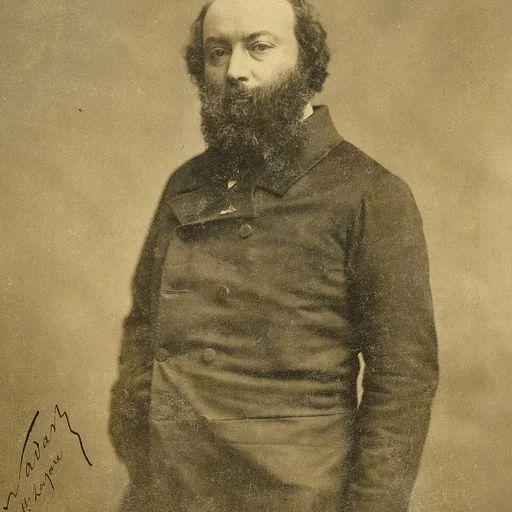
Étienne Pierre Théodore Rousseau (French pronunciation: ; 15 April 1812 – 22 December 1867) was a French painter of the Barbizon school.

 Landscape with Two Trees (Paysage aux deux Arbres)
 Le Cerisier de la Plante a Biau
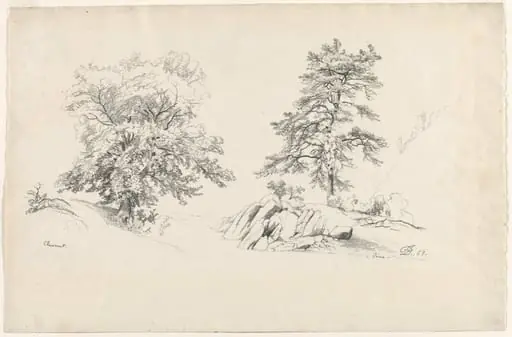 Chestnut and Pine
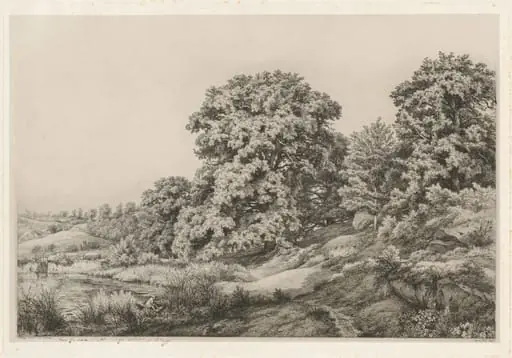 Oaks near a Pond
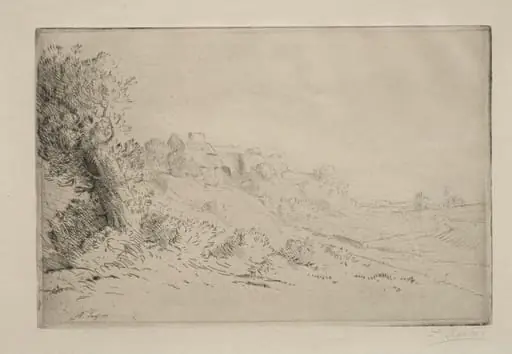 My Farm
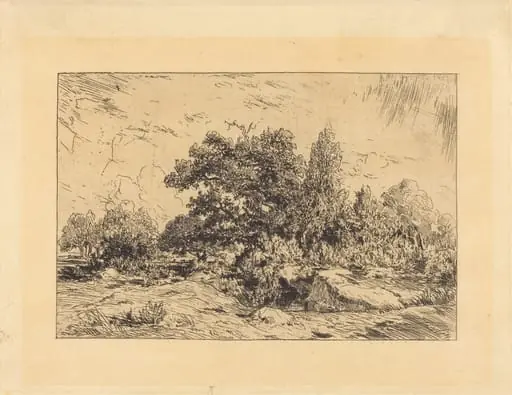 Vue du Plateau de Bellecroix
![Forest on Lago Maggiore [Foresta sul Lago Maggiore], by Giberto Borromeo](https://artifactworldgallery.com/img/giberto-borromeo--forest-on-lago-maggiore-foresta-sul-lago-maggiore--6d25270befdb299f-w320.webp) Forest on Lago Maggiore [Foresta sul Lago Maggiore]
Forest on Lago Maggiore [Foresta sul Lago Maggiore] The Trees, Bedford, New York
 The Road near the Rocks
 Stream through an Ancient Forest
 Hintersee, Germany
 The Serpentine Road