Artwork
Le Cerisier de la Plante a Biau
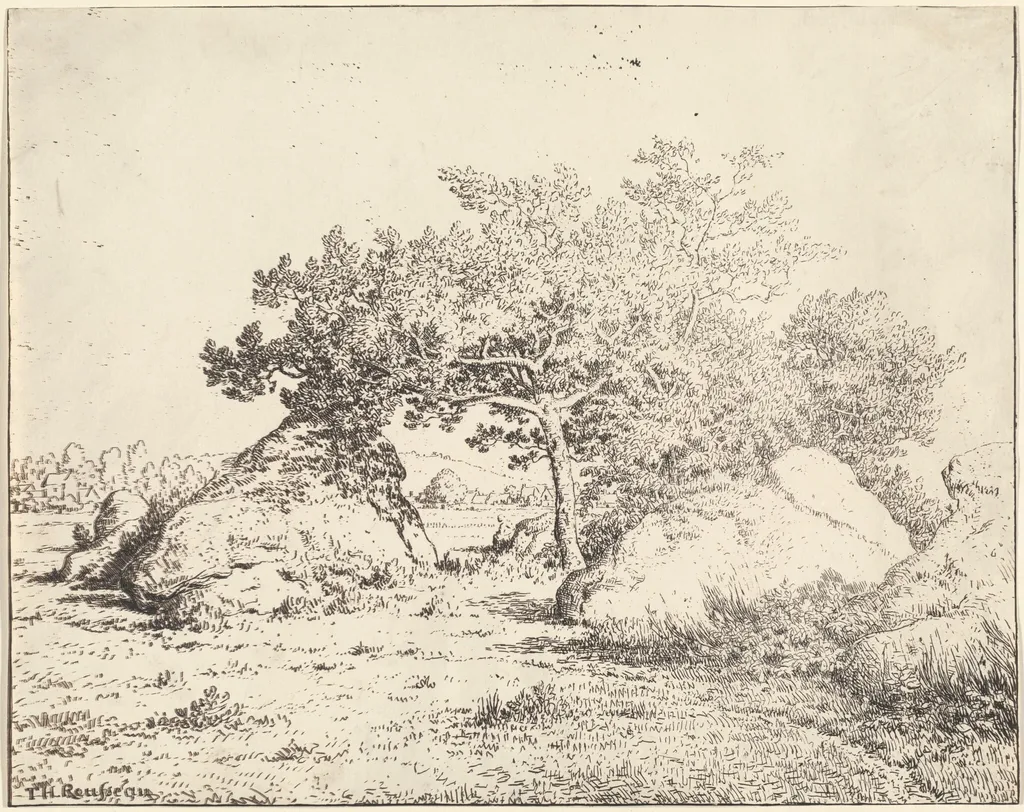
Le Cerisier de la Plante a Biau is a print by the Impressionist artist Théodore Rousseau. It dates from 1855 and is held in the collection of the National Gallery of Art.
About this work
Overview
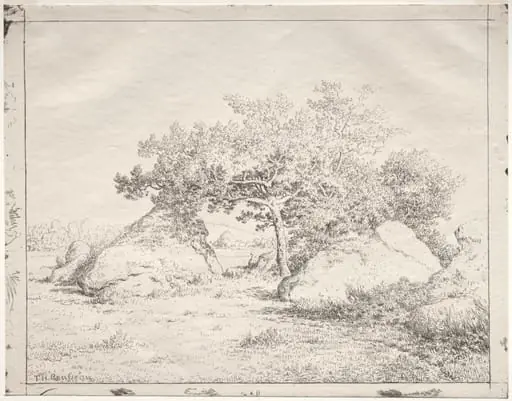
Le Cerisier de la Plante à Biau is a landscape print executed in 1855 by French artist Théodore Rousseau. Produced using the cliché‑verre process, the work presents a tranquil scene of a solitary tree beside a modest stream, rendered in monochrome line work without pigment.
Subject & Meaning
The composition centers on a lone tree whose contorted branches reach across a sky, set against a grassy ground dotted with low bushes. A gentle watercourse winds through the foreground, emphasizing the quiet, uninhabited character of the natural setting.
Technique & Style
Rousseau employed the cliché‑verre method, wherein the image was incised onto a glass plate and then contact‑printed onto paper, producing a photographic‑like effect. This hybrid of drawing and photographic printing was uncommon for landscape subjects in the mid‑nineteenth century, allowing the artist to achieve precise, clean lines while retaining a hand‑drawn quality.
History & Provenance
Created in 1855, the print belongs to the early period of Rousseau’s career, a time when he was exploring experimental printmaking techniques. The work is catalogued among his early sketches, reflecting his interest in capturing the atmosphere of the French countryside through innovative media.
Artist & collection




 Cherry Tree at Blau
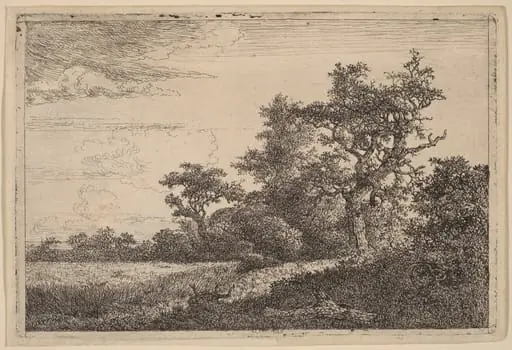 Grain Field at the Edge of a Wood (Corn Field)
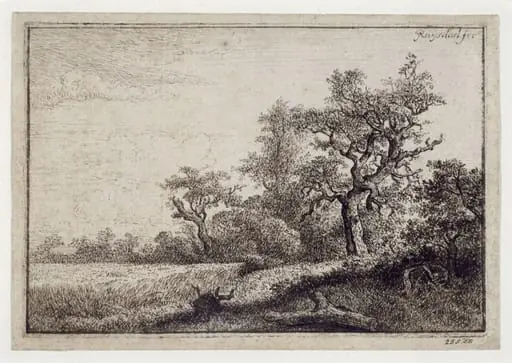 The Wheatfield. After Jacob Ruysdael
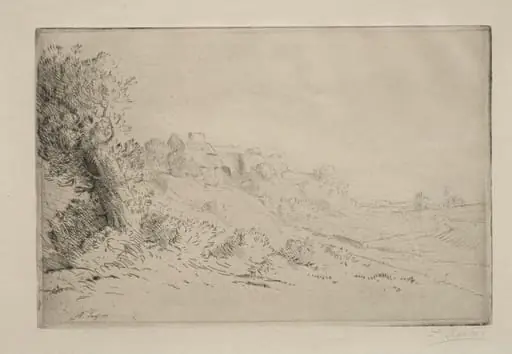 My Farm
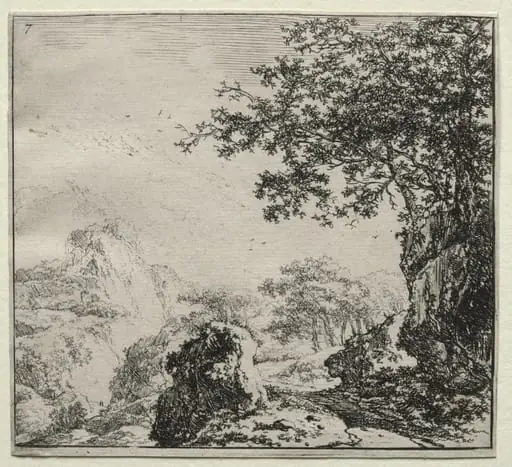 The Road near the Rocks
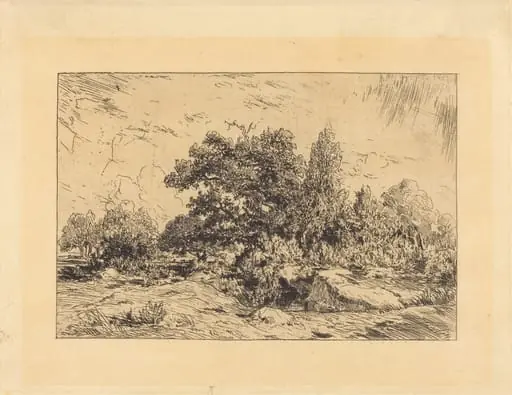 Vue du Plateau de Bellecroix
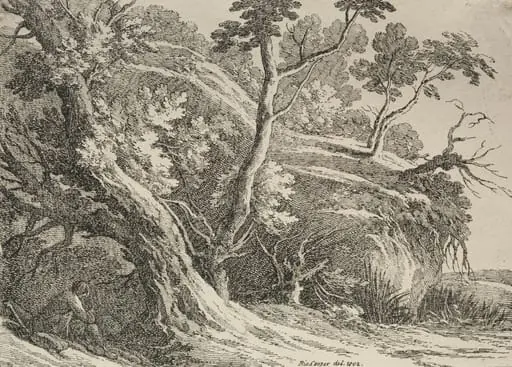 Specimens of Polyautography: Man Seated under an Oak
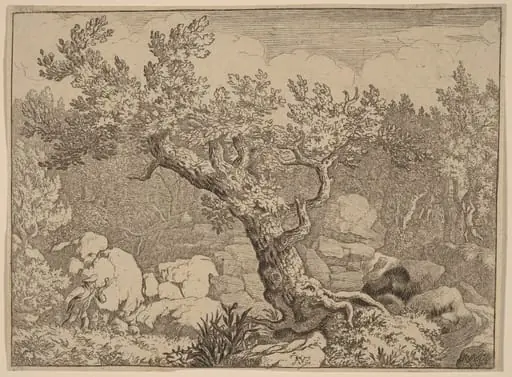 Sportsman near a Large Tree
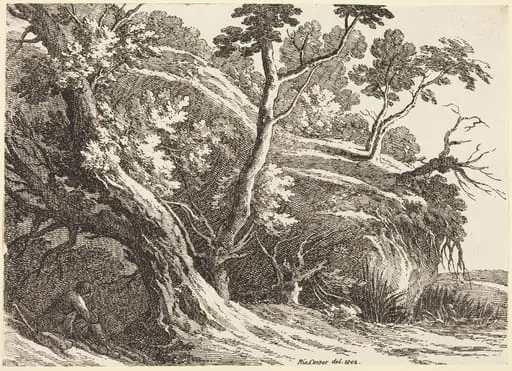 Landscape with Large Trees
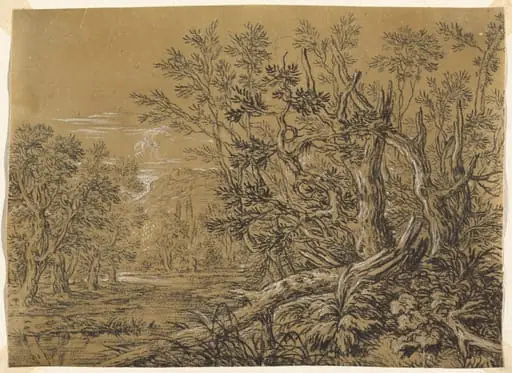 Stream through an Ancient Forest
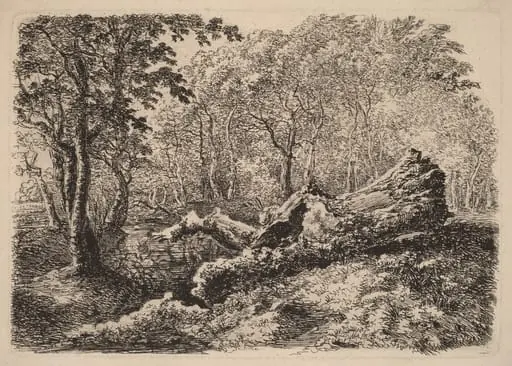 Mouldering Tree Trunk
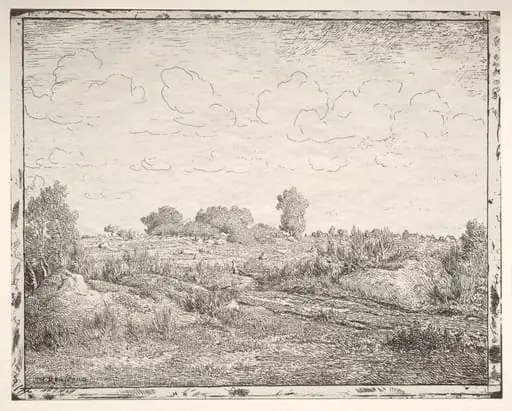 La Plaine de la Plante à Biau