Artwork
Landscape
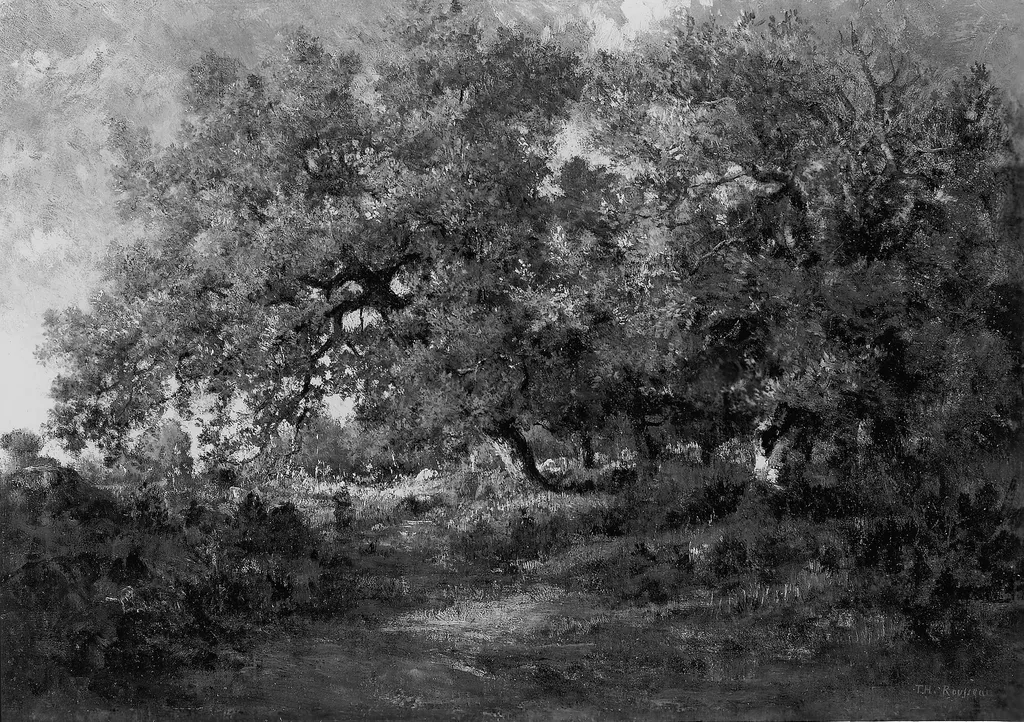
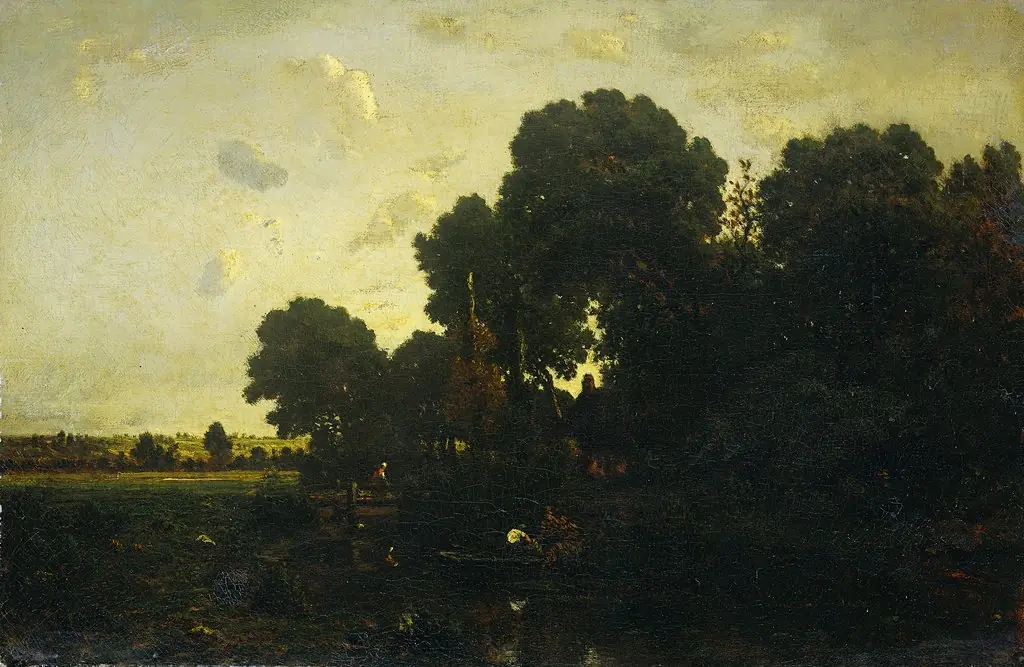
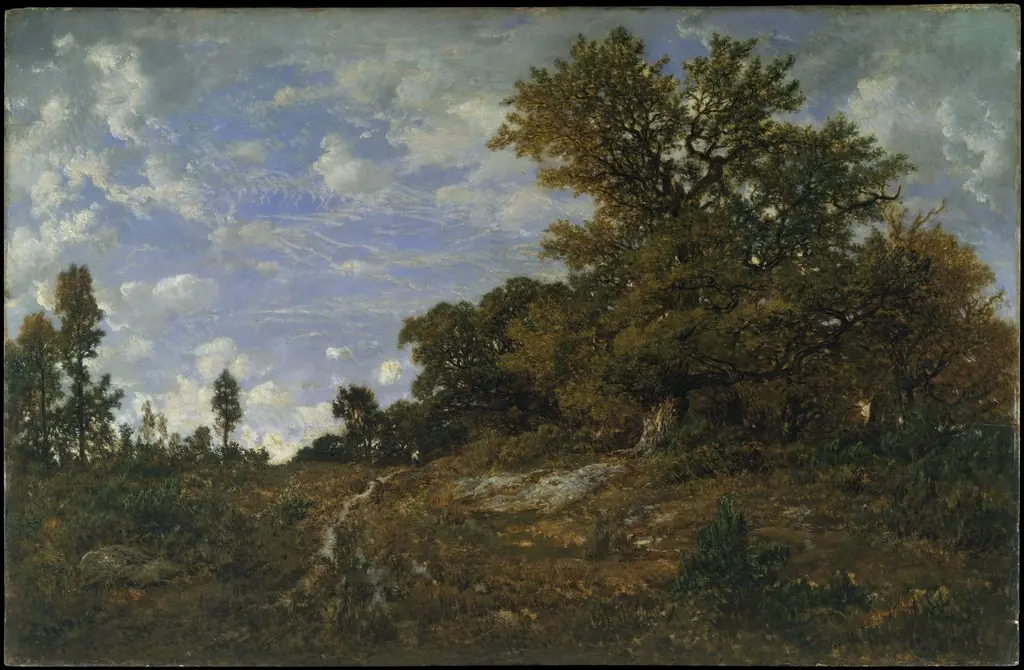
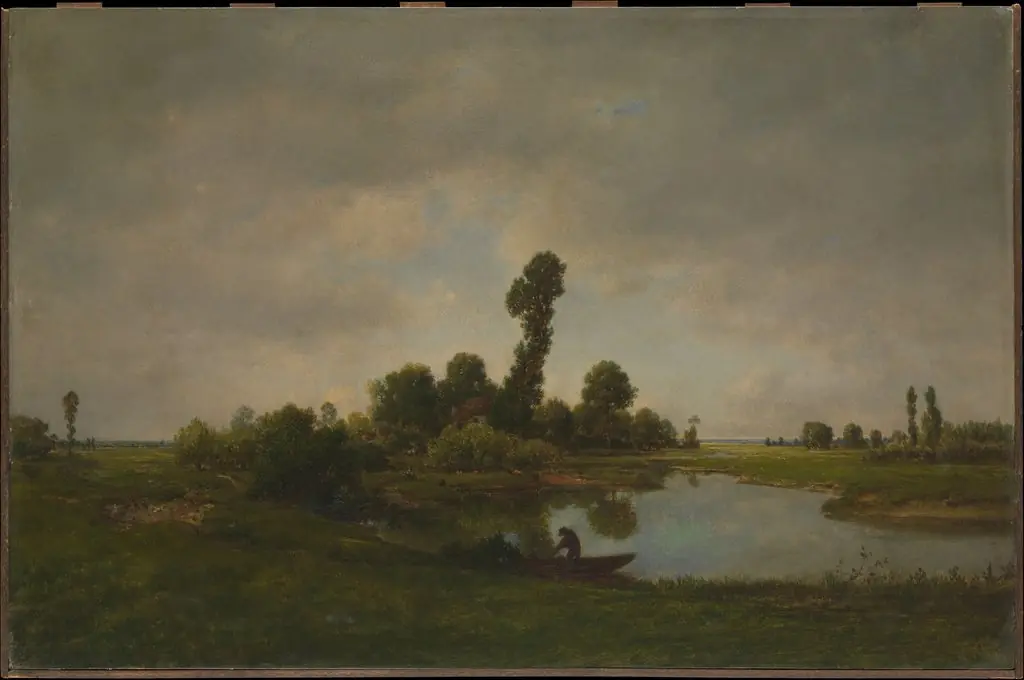
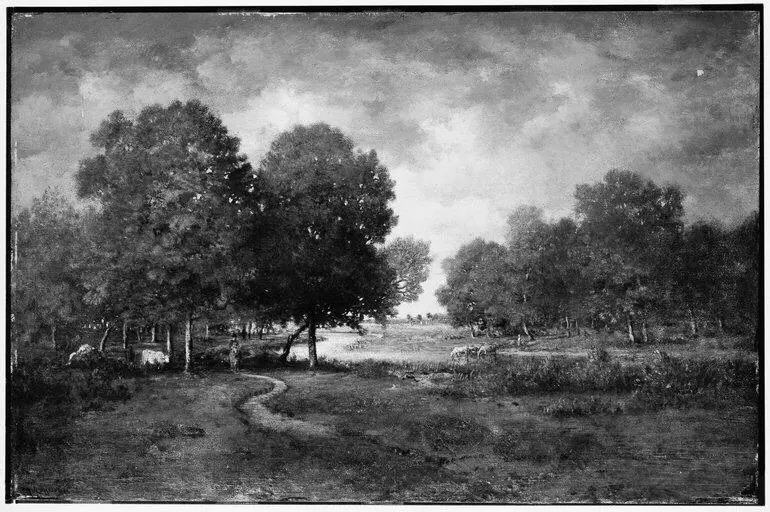
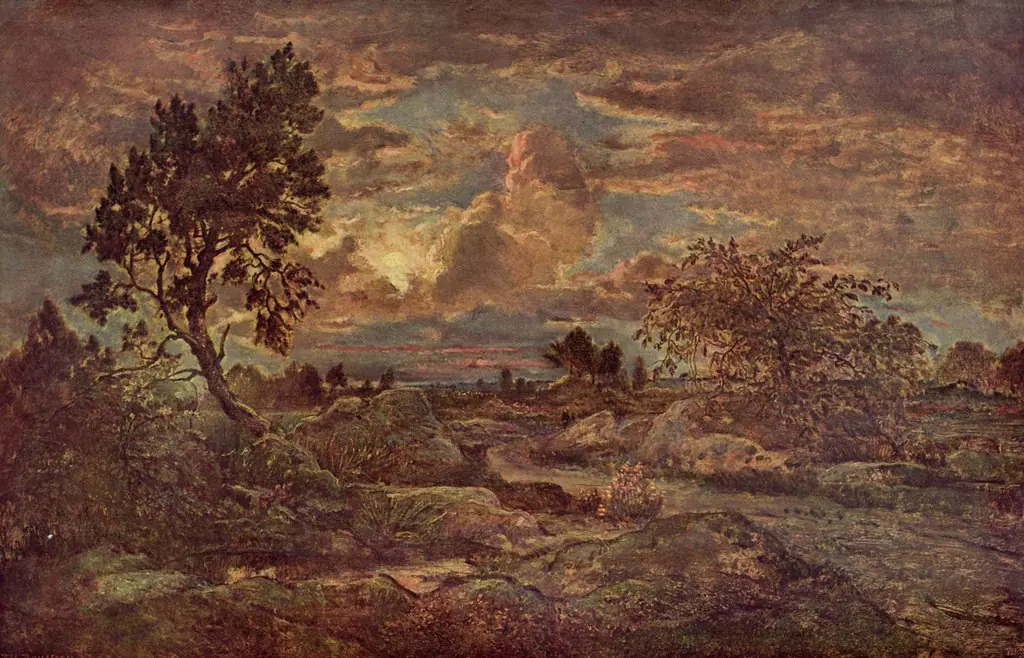
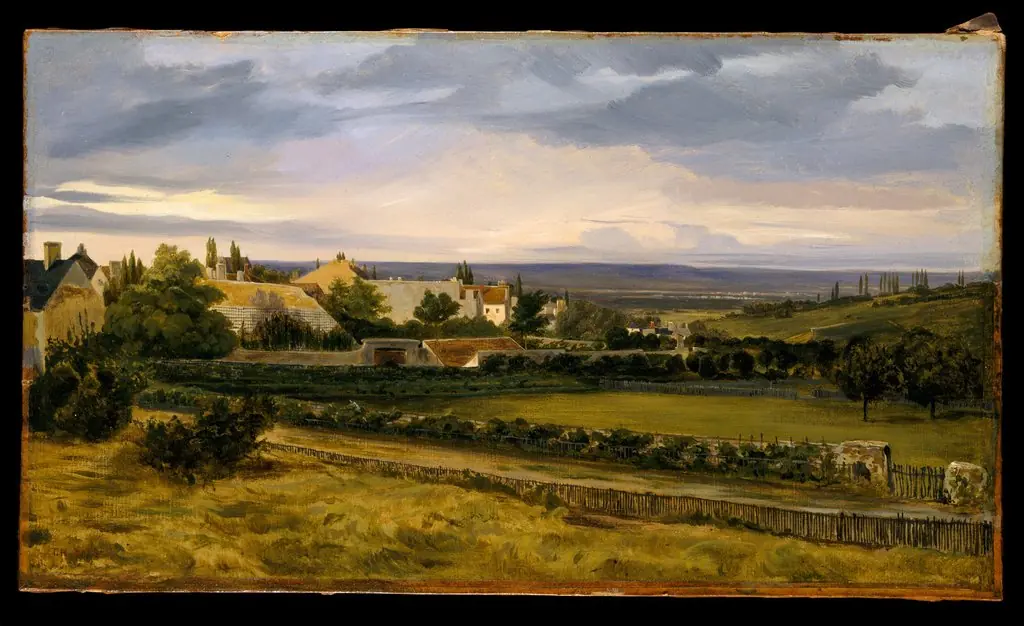
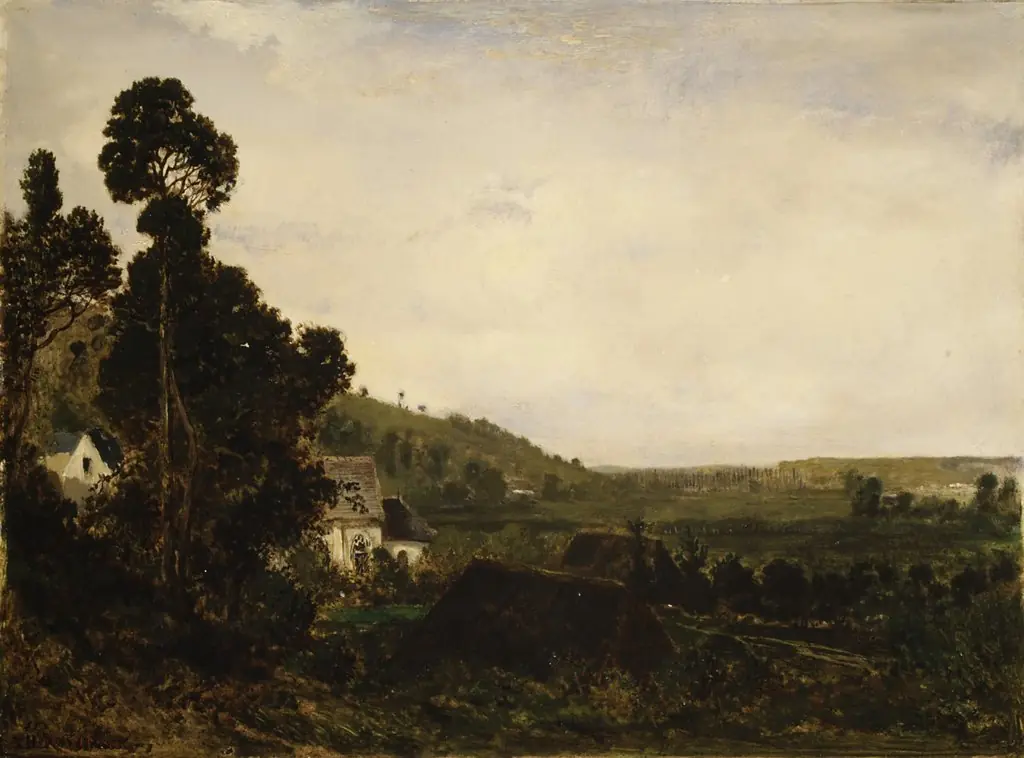
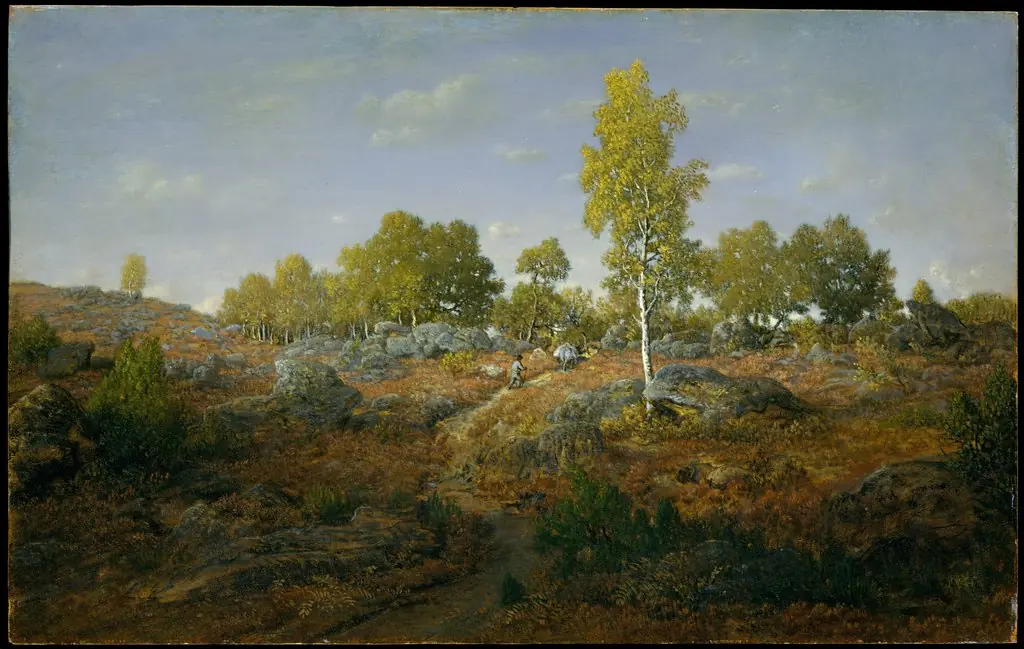
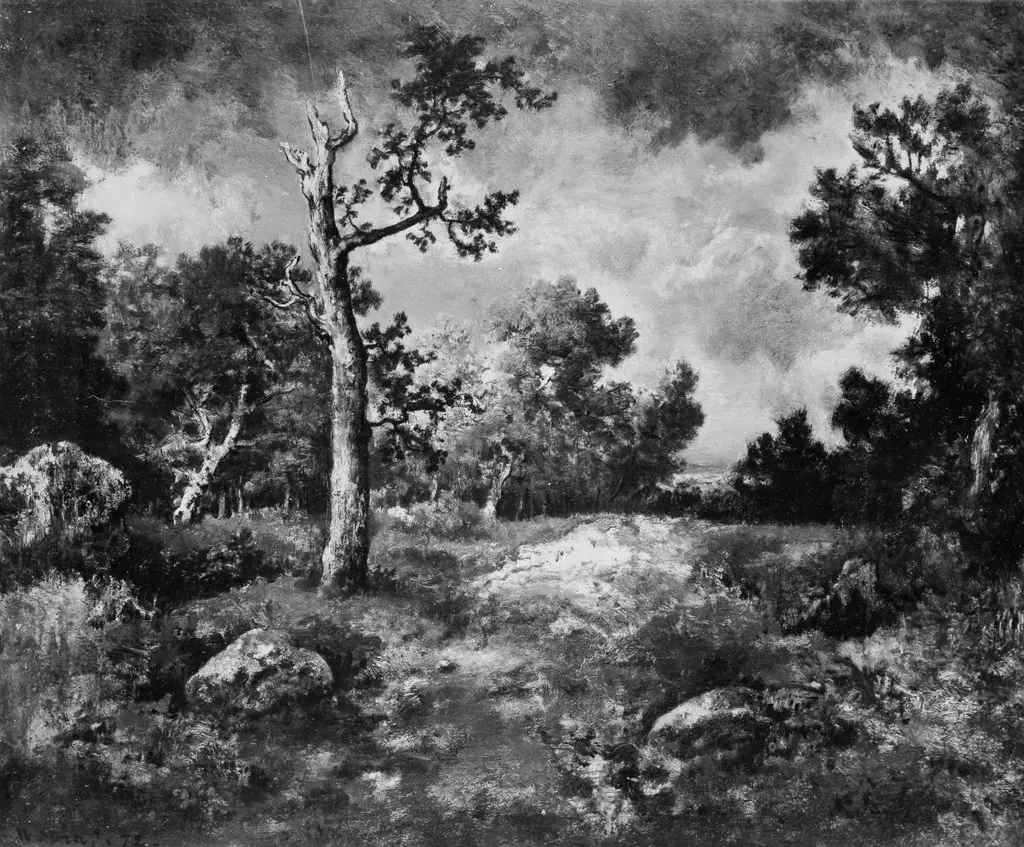
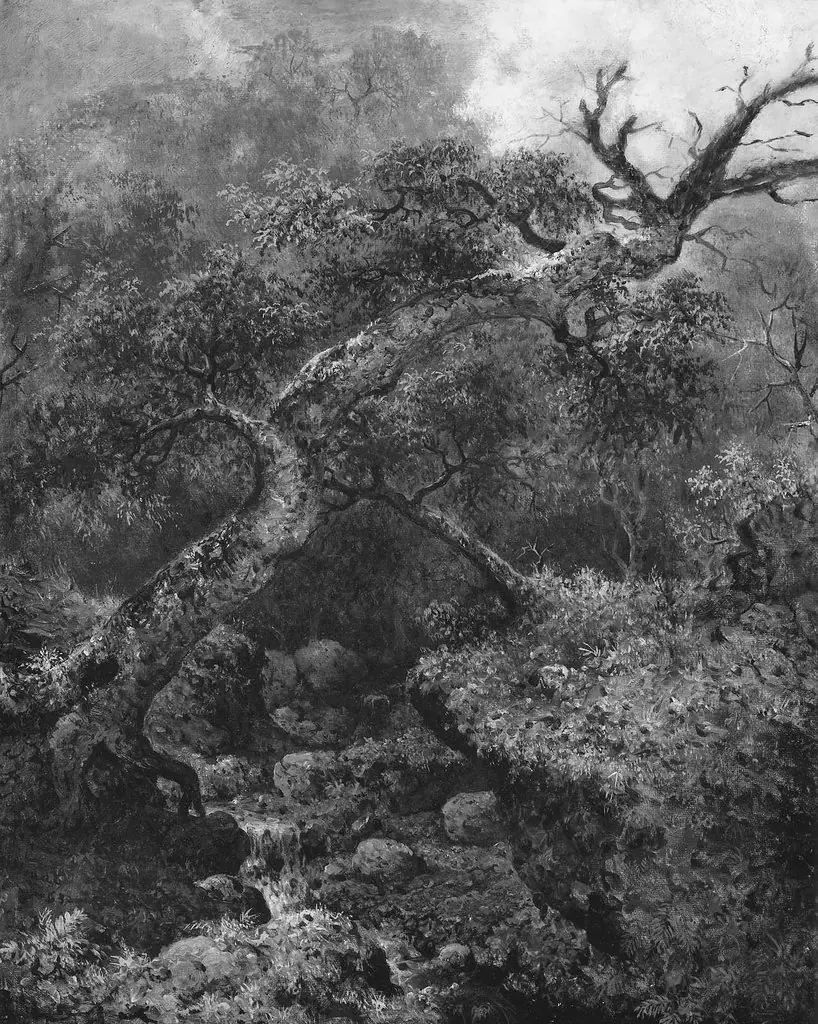
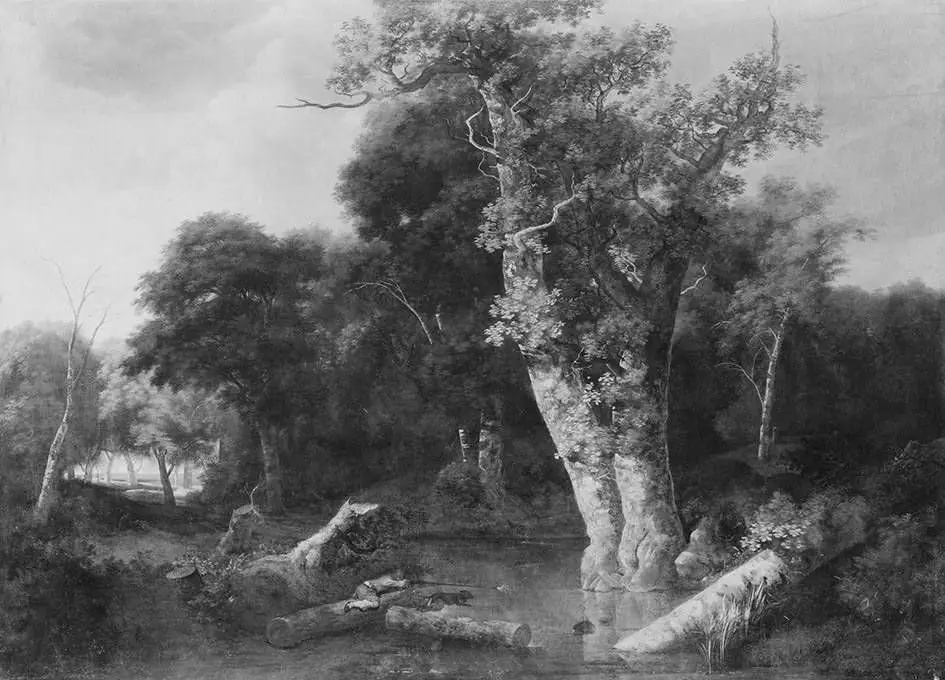
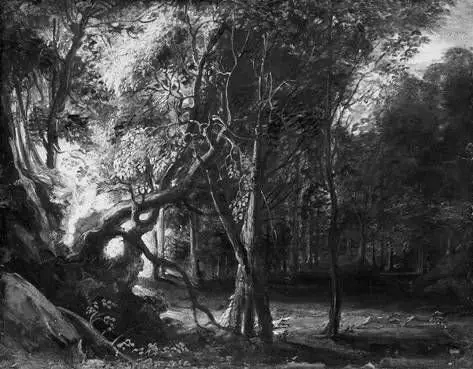
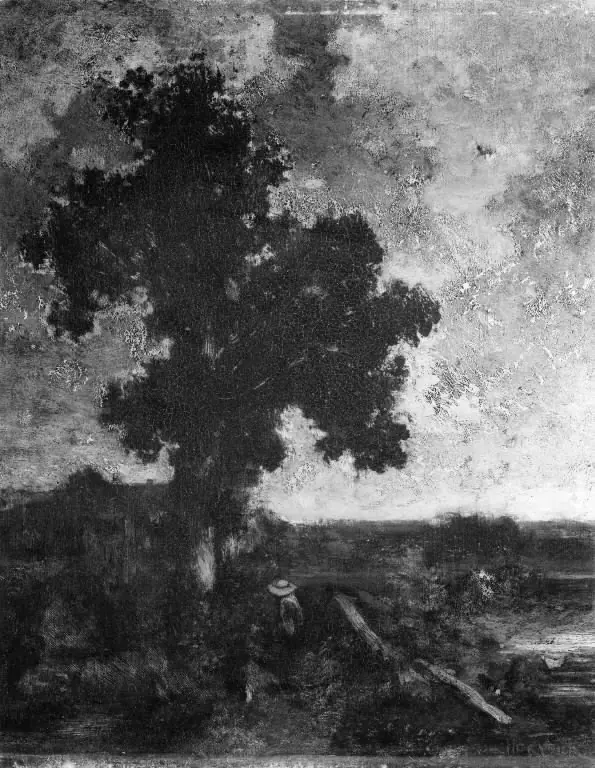
Landscape is an unspecified painting by the Barbizon school artist Théodore Rousseau. It dates from 1860 and is held in the collection of the Art Institute of Chicago.
About this work
Overview
Théodore Rousseau’s 1860 oil painting *Landscape* presents a dense, shadow‑filled forest. The composition is dominated by thick trunks and tangled foliage, with light barely penetrating the canopy. The overall tone is muted, emphasizing deep greys and blacks that convey a sense of wilderness and solitude.
Subject & Meaning
The work depicts an untamed woodland, focusing on the interplay of darkness and the faint glimmers of daylight. By portraying the forest in a near‑obscure state, Rousseau invites contemplation of nature’s raw power and the fleeting moments when light touches the undergrowth.
Technique & Style
Rousseau employs rapid, visible brushstrokes that build texture in a sketch‑like manner, giving the trees a lively, almost kinetic quality. The loose handling of paint, with thick applications that suggest impasto, enhances the tactile impression of bark and leaves, reinforcing the painting’s atmospheric mood.
History & Provenance
Created during Rousseau’s mature period within the Barbizon school, the painting reflects the group’s dedication to naturalistic, outdoor scenes. *Landscape* entered the Art Institute of Chicago’s collection, where it remains part of the museum’s European 19th‑century holdings.
Context
The Barbizon movement, emerging in mid‑19th‑century France, sought to move beyond idealized landscapes toward realistic depictions of rural environments. Rousseau’s focus on light, shadow, and texture aligns with the school’s emphasis on observing nature directly, often en plein air, and translating those observations into emotive, atmospheric canvases.
Own this work as a print
Artist & collection
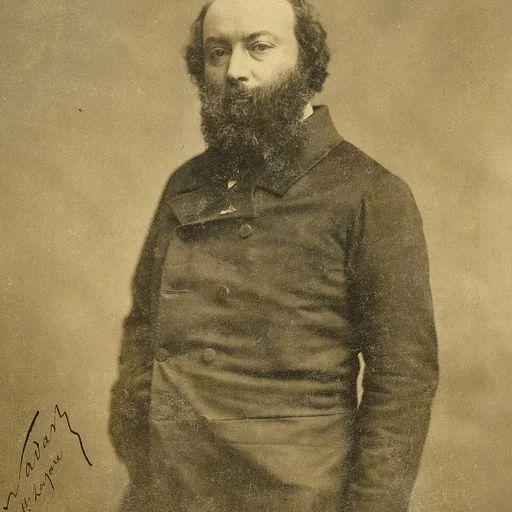
Artist
Étienne Pierre Théodore Rousseau (French pronunciation: ; 15 April 1812 – 22 December 1867) was a French painter of the Barbizon school.