Artwork
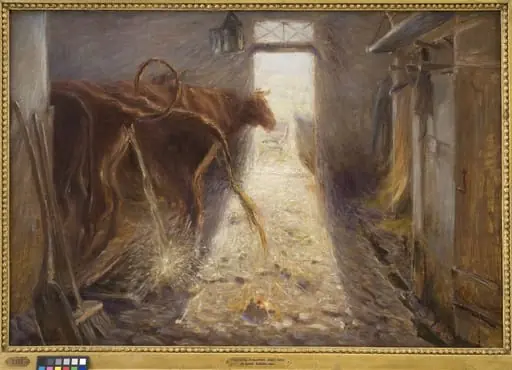
Cowshed on the Island of Saltholm
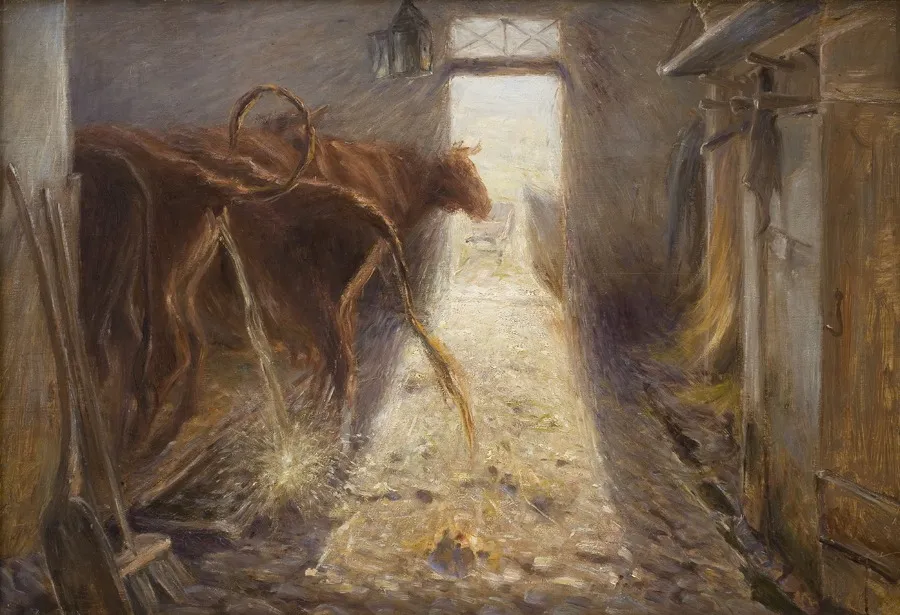
Cowshed on the Island of Saltholm is an oil painting by the Impressionist artist Theodor Philipsen. It dates from 1896 and is held in the collection of the Statens Museum for Kunst.
About this work
Overview
Theodor Philipsen painted *Cowshed on the Island of Saltholm* in 1896 using oil on canvas. A Danish artist of Jewish heritage, he focused on rural life and animal subjects, often capturing quiet moments in nature. This work belongs to a series of observations made on the small island near Copenhagen, where Philipsen frequently traveled to study light and atmosphere in unspoiled settings.
Subject & Meaning
Rather than idealizing farm life, Philipsen emphasizes the quiet dignity of labor and the physical presence of the animal within its environment.
The painting presents a solitary cow standing in a modest wooden shed, its neck bound by a simple rope. Surrounding tools and the uneven dirt floor suggest daily agricultural use. The dim interior, illuminated by a single source of light, conveys stillness and solitude. Rather than idealizing farm life, Philipsen emphasizes the quiet dignity of labor and the physical presence of the animal within its environment.
Technique & Style
Philipsen employed chiaroscuro to model form and space, using subtle gradations of light and shadow to define the cow’s muscular bulk and the weathered wood of the shed. Brushwork is precise yet unobtrusive, rendering textures—dust on hooves, grain in timber, the sheen of hide—with quiet realism. While influenced by Impressionist concerns with natural light, the composition retains a grounded, observational tone, avoiding overt stylistic flourish.
History & Provenance
Created during Philipsen’s mature period, the painting was acquired by the Statens Museum for Kunst in Copenhagen shortly after its completion. It has remained in the museum’s collection since, reflecting its significance in Danish art of the late 19th century. No record suggests it was exhibited widely beyond Denmark, but its quiet intensity earned it a place among the institution’s core holdings of naturalist painting.
Context
In the 1890s, Danish artists increasingly turned to rural and coastal scenes as industrialization reshaped society. Saltholm, a remote island used for grazing, offered a retreat from urban life. Philipsen’s focus on ordinary farm structures and animals aligned with broader European trends toward realism and the poetic depiction of working landscapes, distinguishing his work from romanticized pastoral traditions.
Legacy
Though not widely known outside Denmark, Philipsen’s work influenced later generations of Nordic painters interested in light and rural authenticity. *Cowshed on the Island of Saltholm* exemplifies his commitment to observing nature without embellishment. The painting endures as a quiet testament to the dignity of everyday life, valued for its restraint and perceptiveness rather than dramatic impact.
Artist & collection
Artist
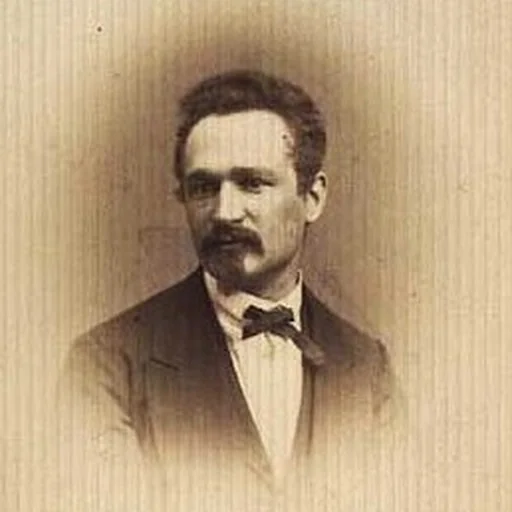
Theodor Esbern Philipsen (10 June 1840 – 3 March 1920) was a Danish painter of Jewish ancestry, known for landscapes and animal portraits. He also did small figures in wax and clay.

 Cowshed on the Island of Saltholm
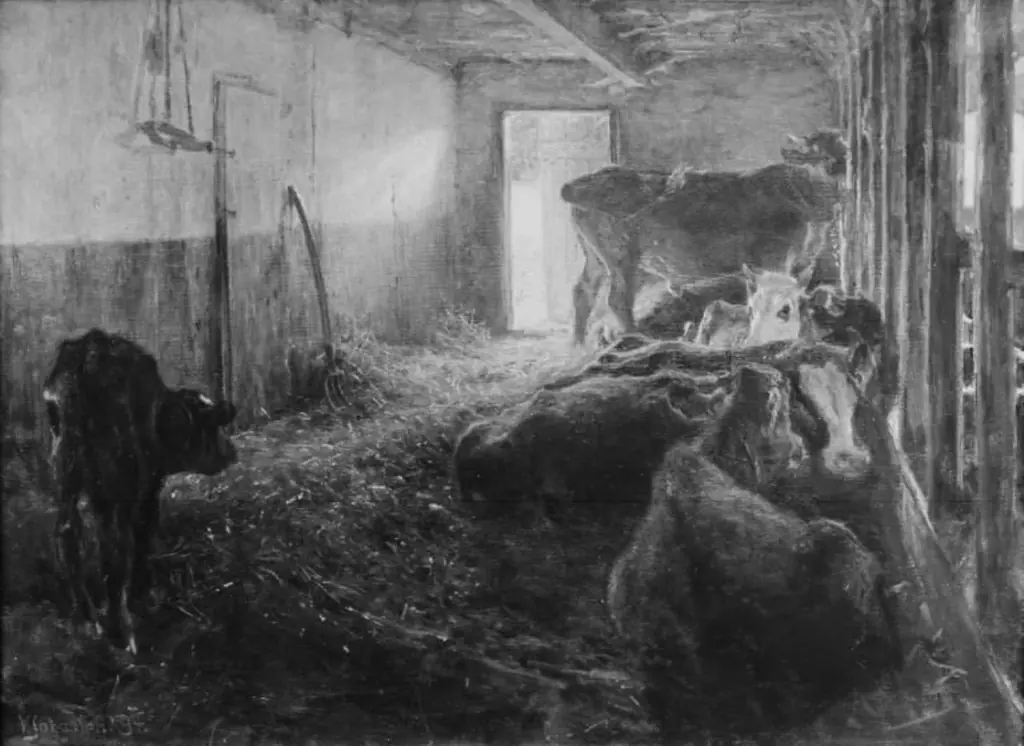 A Cowshed
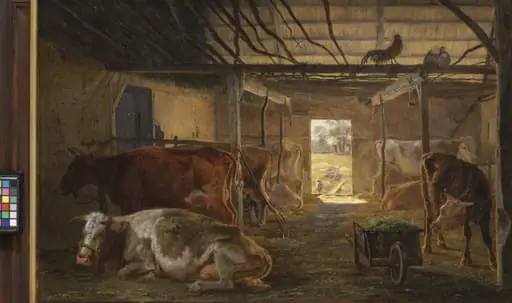 A Cowshed on a Farm at Vejby, Zealand
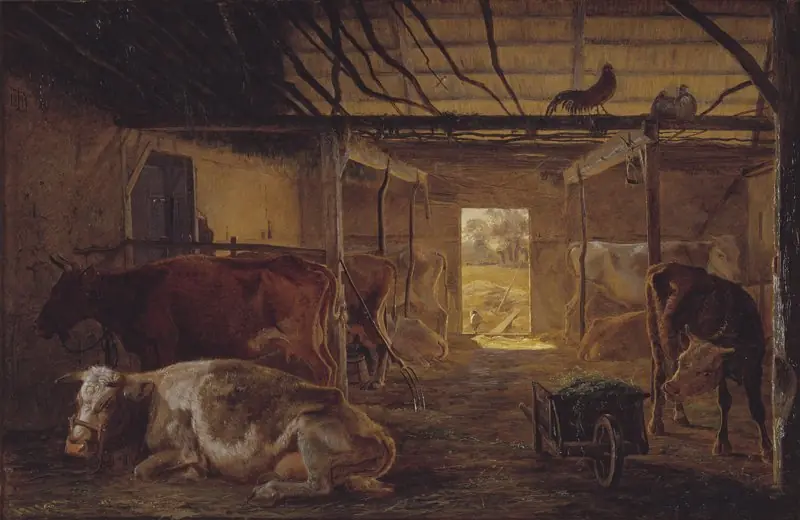 A Cowshed on a Farm at Vejby, Zealand
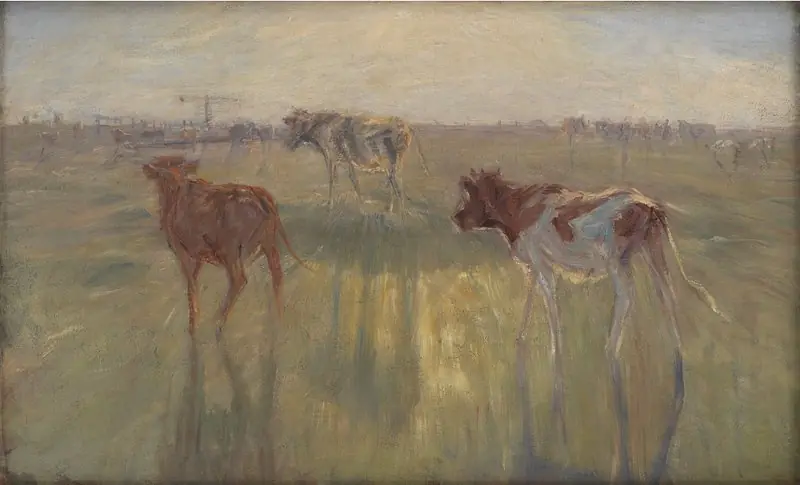 Cattle Seen against the Sun on the Island of Saltholm
 Cattle Seen against the Sun on the Island of Saltholm
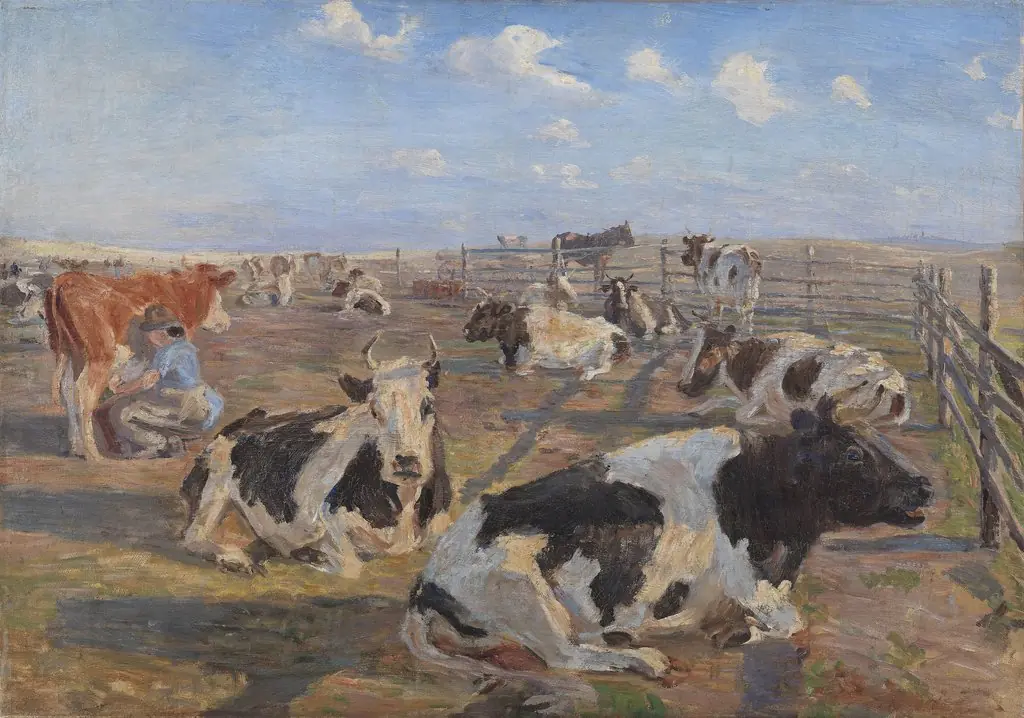
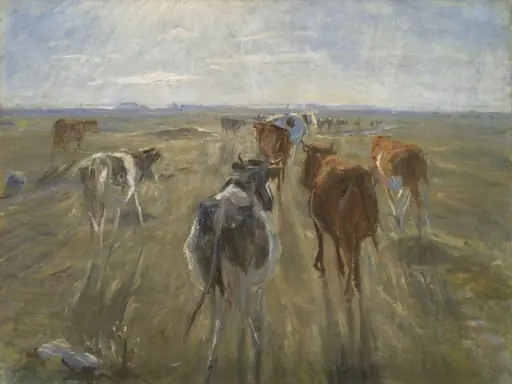 Long Shadows. Cattle on the Island of Saltholm
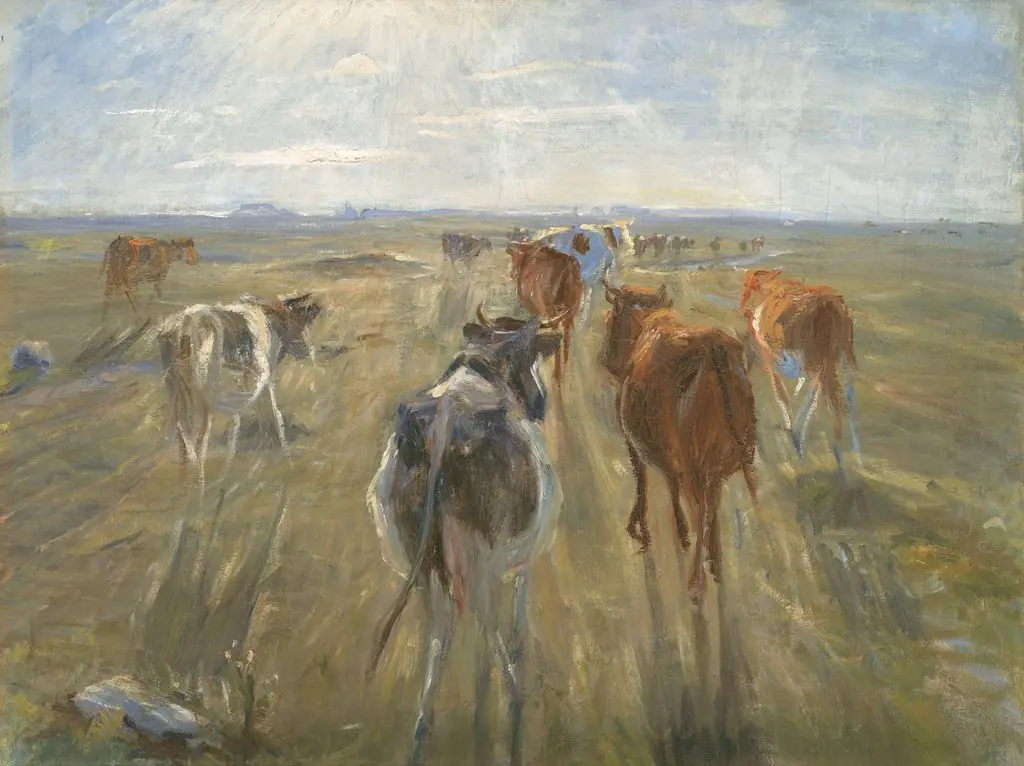 Long Shadows. Cattle on the Island of Saltholm