Artwork
Vas cu flori
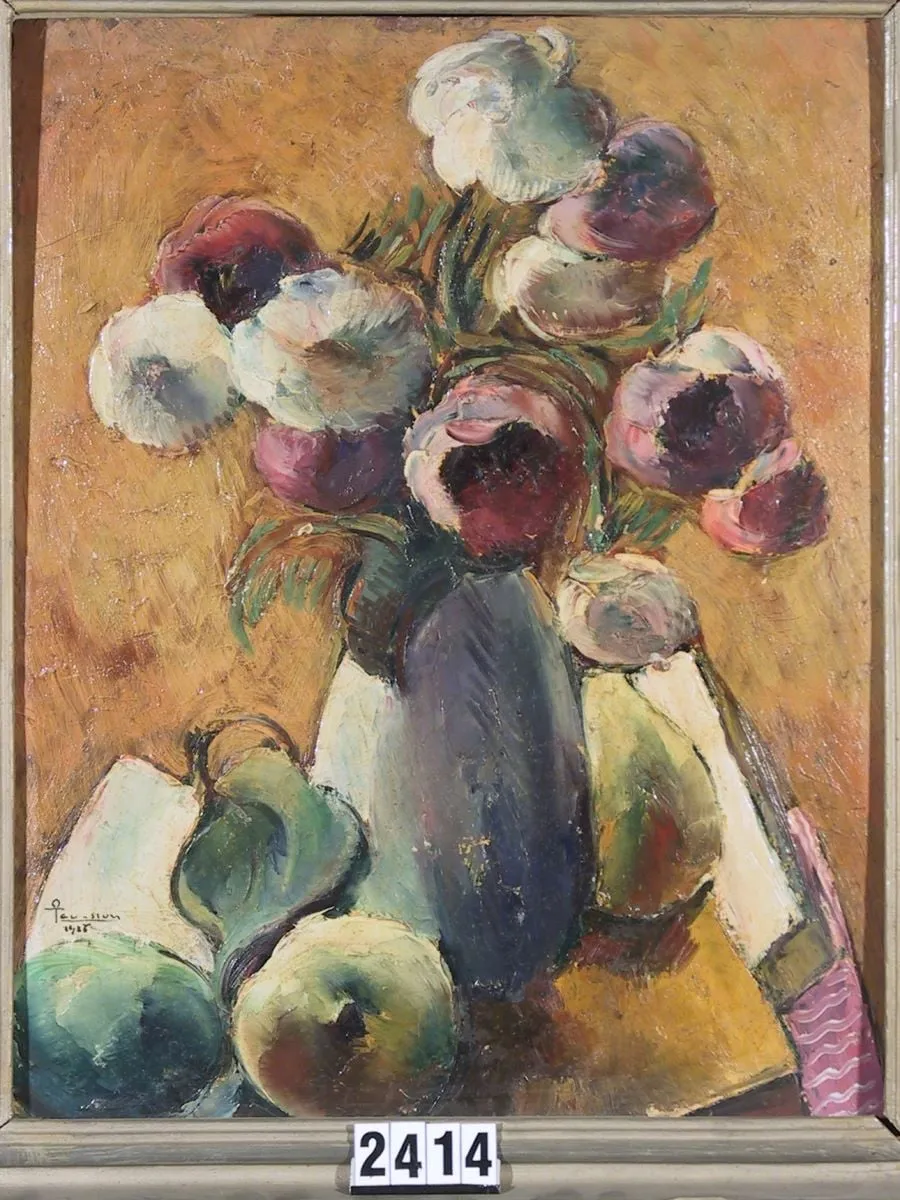
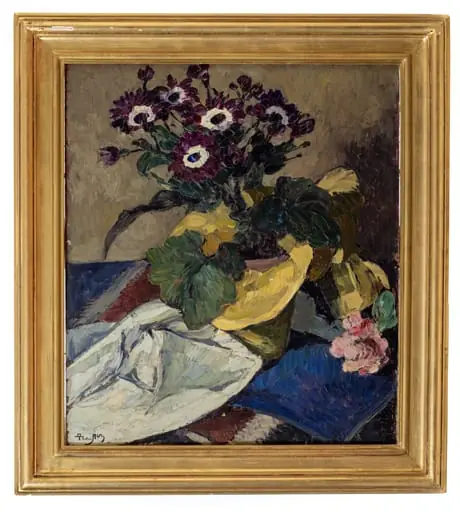
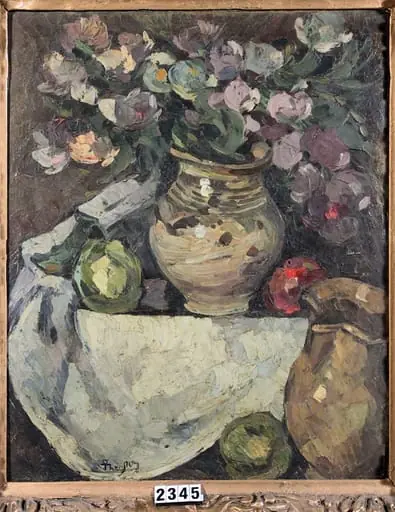
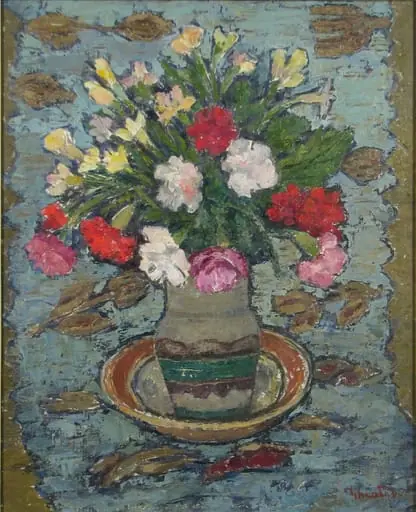
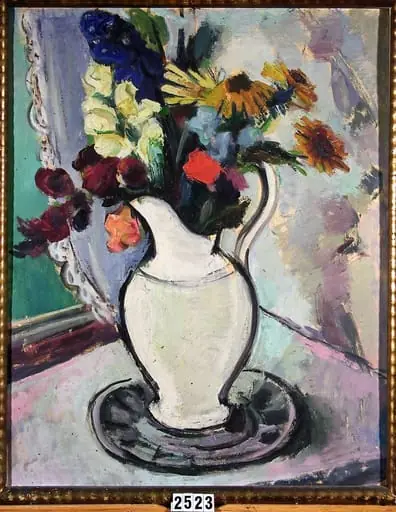
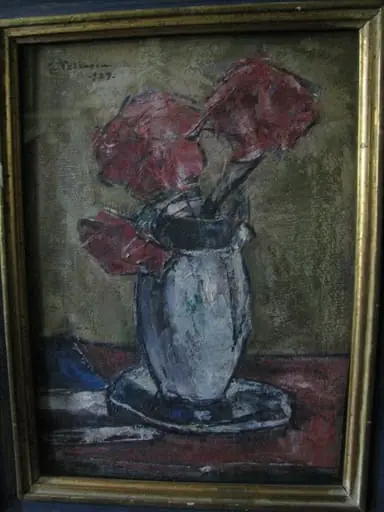
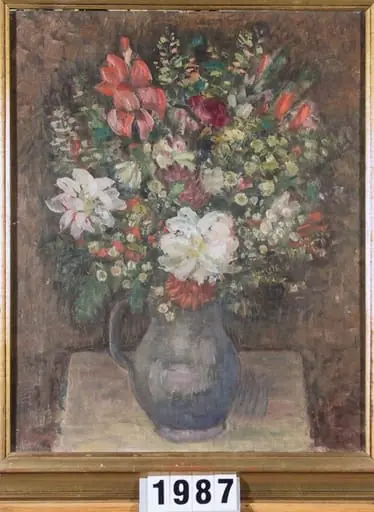
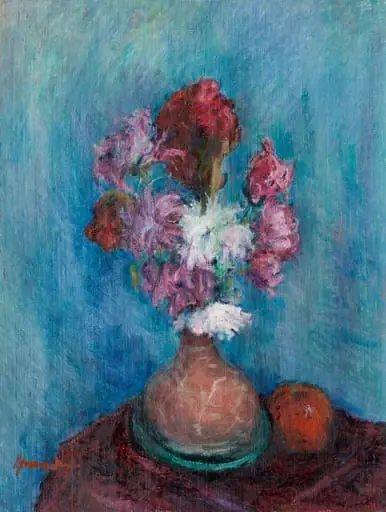
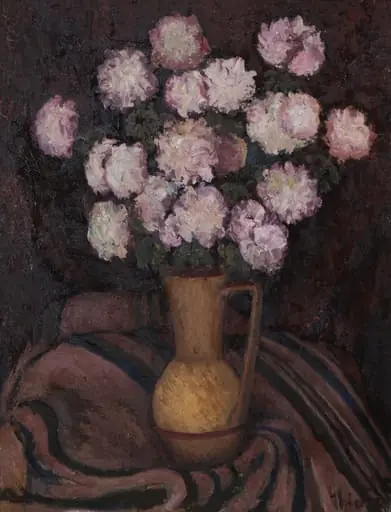
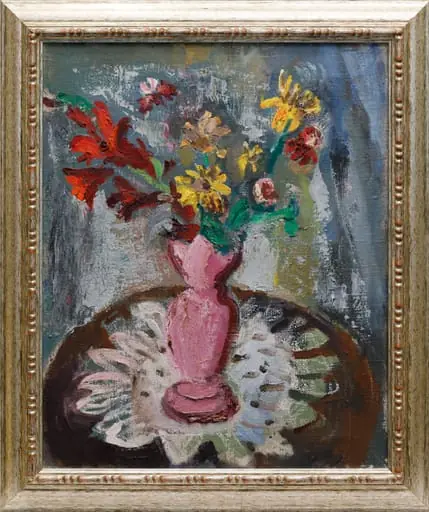
Vas cu flori is a print by Ion Theodorescu-Sion. It dates from 1920 and is held in the collection of the Brukenthal National Museum.
About this work
Overview
This work exemplifies his synthesis of expressive form and restrained subject matter.
Painted around 1920 by Romanian artist Ion Theodorescu-Sion, *Vas cu flori* is a still life that reflects his evolving engagement with modern European styles while remaining rooted in local sensibilities. Though trained academically, Theodorescu-Sion absorbed diverse influences—from Impressionism to Cubism—yet consistently returned to themes of nature and spiritual quietude. This work exemplifies his synthesis of expressive form and restrained subject matter.
Subject & Meaning
The painting centers on a simple vase filled with an abundance of flowers, a motif Theodorescu-Sion revisited throughout his career. The blooms—predominantly white and deep red, accented with purple and green—suggest vitality and transience. The dark, unadorned vessel contrasts with the riot of color, drawing attention to the flowers’ organic energy. The composition evokes contemplation rather than decoration, hinting at themes of life, decay, and sacred stillness.
Technique & Style
Theodorescu-Sion applied paint with thick, textured brushwork, using impasto to give the flowers a tactile, almost sculptural presence. Colors are applied boldly against a warm, peach-toned background, enhancing their luminosity. The rough handling of pigment and simplified forms reflect post-Impressionist and Fauve tendencies, while the flattened space and rhythmic arrangement suggest a quiet nod to Synthetism. The technique prioritizes emotional resonance over naturalistic detail.
History & Provenance
Created during a period of intense artistic experimentation in interwar Romania, *Vas cu flori* emerged from Theodorescu-Sion’s personal studio practice rather than public commissions. Little is documented about its early ownership, but it aligns with his broader body of work from the 1910s–1920s, when he distanced himself from academic norms to pursue a more introspective, spiritually inflected modernism. The painting remains within Romanian institutional collections today.
Context
In early 20th-century Romania, artists like Theodorescu-Sion navigated between Western modernism and a growing interest in national identity. While Parisian avant-gardes explored abstraction and fragmentation, he turned to humble subjects—flowers, peasants, religious icons—infusing them with expressive intensity. *Vas cu flori* reflects this tension: a quiet rebellion against academic convention, grounded in local visual traditions and personal symbolism.
Legacy
Though not widely exhibited internationally, *Vas cu flori* contributes to the understanding of Romanian modernism as a distinct, inward-looking current. Theodorescu-Sion’s fusion of primitivist forms with expressive brushwork influenced later generations of Romanian painters seeking authenticity beyond imported styles. His still lifes, including this one, are now recognized as meditative anchors in a period of rapid cultural change.
Artist & collection
Artist
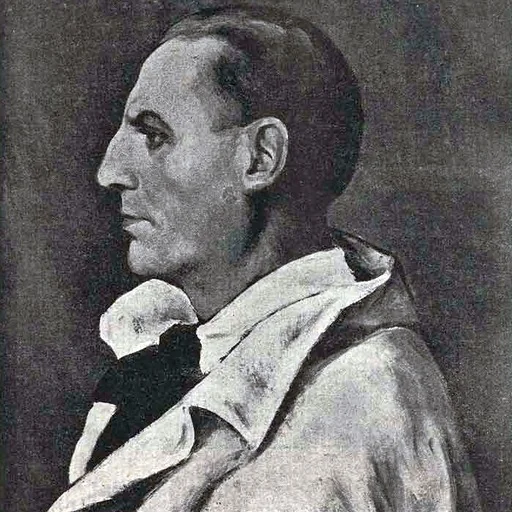
Ion Theodorescu-Sion (Romanian pronunciation: ; also known as Ioan Theodorescu-Sion or Teodorescu-Sion; January 2, 1882 – March 31, 1939) was a Romanian painter and draftsman, known for his contributions to modern art…