Artwork
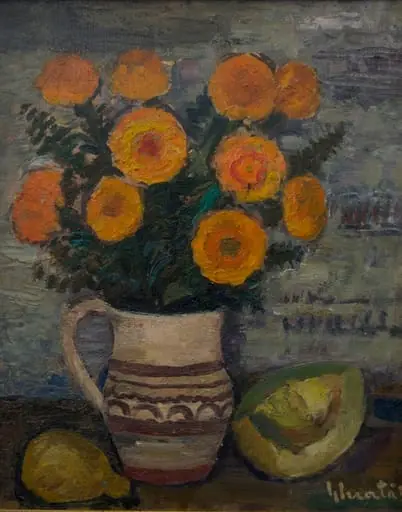
Flori (Vas cu flori)
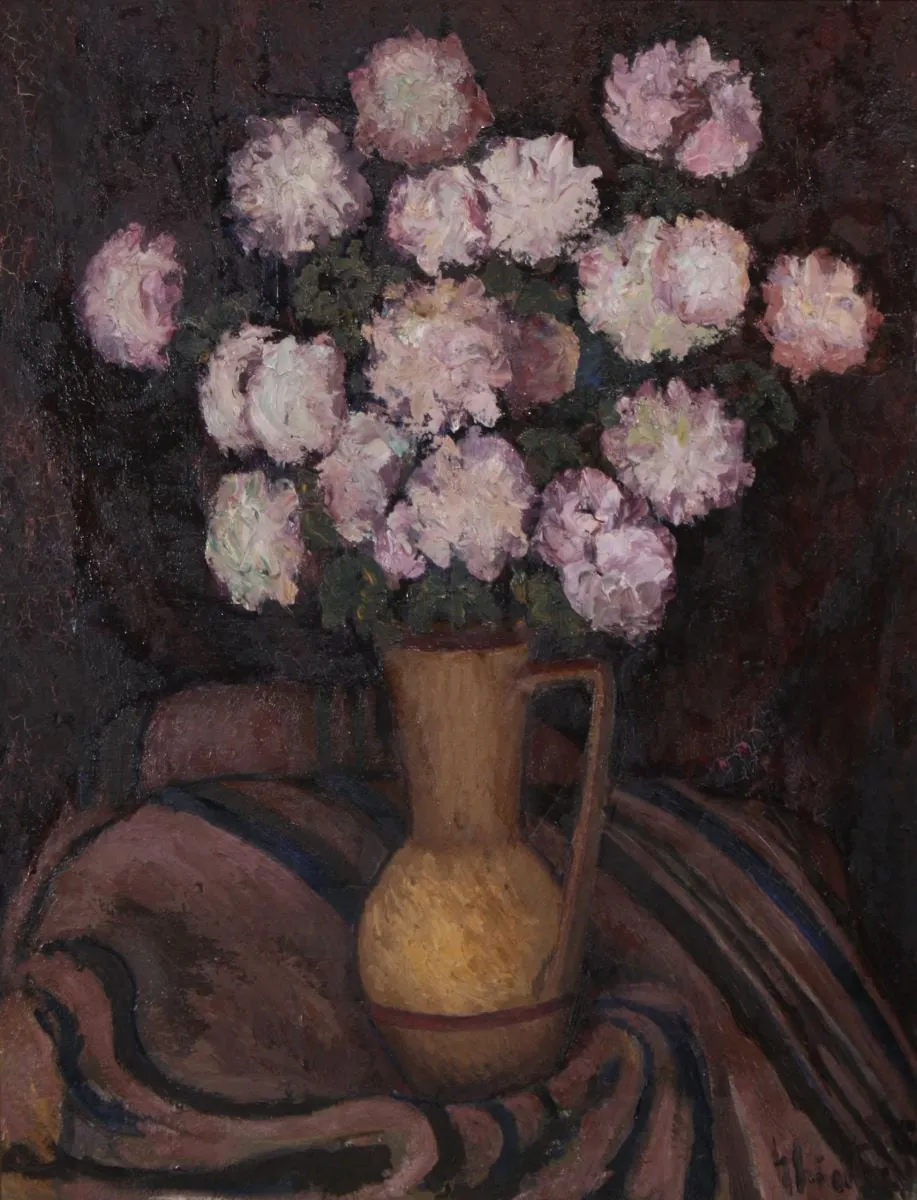
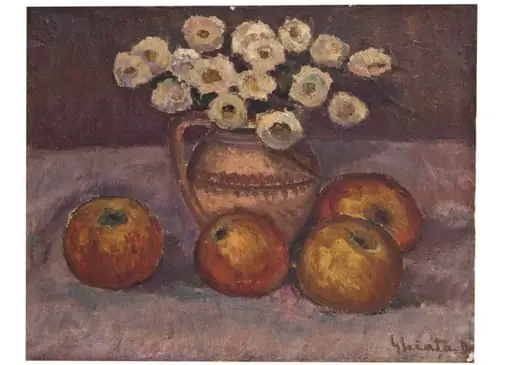
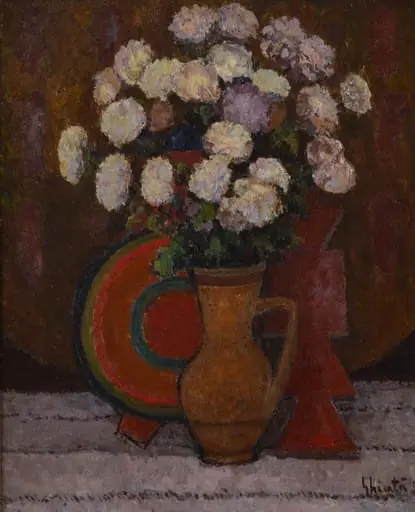
Flori (Vas cu flori) is a print by Dumitru Ghiață. It dates from 1938 and is held in the collection of the Visual Art Museum Galați.
About this work
Overview
Dumitru Ghiață, a Romanian painter born in 1888, produced *Flori (Vas cu flori)* circa 1938 as part of his sustained focus on still life.
Dumitru Ghiață, a Romanian painter born in 1888, produced *Flori (Vas cu flori)* circa 1938 as part of his sustained focus on still life. The work belongs to the Museum of Ethnography’s collection and exemplifies his preference for unadorned, earth-toned compositions. Rather than idealizing his subjects, Ghiață rendered them with a directness that aligned with rural Romanian visual sensibilities, avoiding ornamental excess in favor of structural clarity.
Subject & Meaning
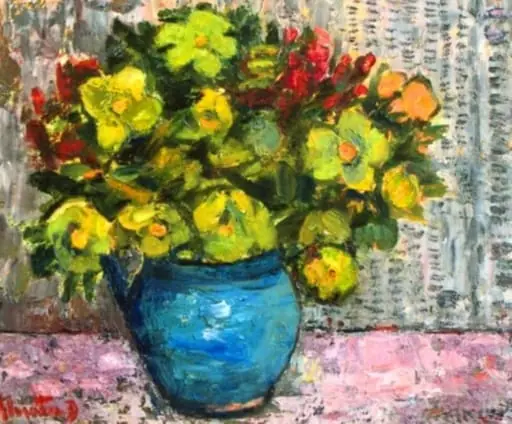
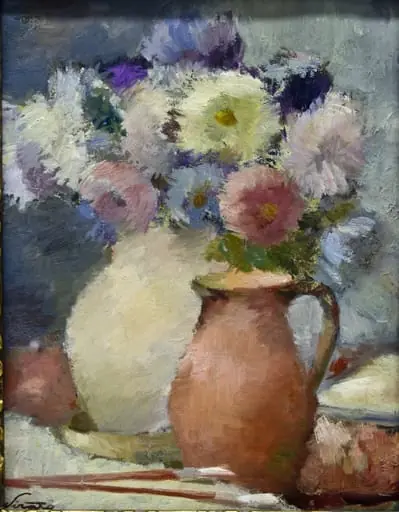
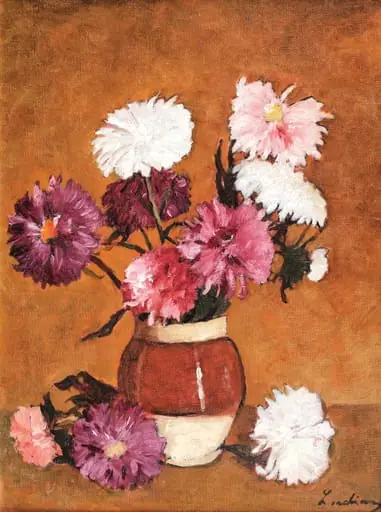
The painting depicts a simple clay vessel holding a modest arrangement of pale pink flowers, their stems loosely intertwined. There is no narrative or symbolic intent beyond the quiet presence of domestic flora. The choice of humble materials—a common vase and wild-style blooms—reflects an appreciation for everyday beauty, rooted in the rhythms of rural life rather than urban refinement or floral convention.
Technique & Style
Ghiață applied paint with thick, uneven brushstrokes, creating a tactile surface that emphasizes texture over precision. The petals are softly modeled, edges blurred to suggest movement or fading light, while the background recedes into shadow, isolating the bouquet. This approach, neither fully realistic nor abstract, leans toward a synthetic drawing style—reducing forms to essential shapes through bold, gestural marks.
History & Provenance
Created in the late 1930s, *Flori* entered the Museum of Ethnography’s holdings during a period when Romanian cultural institutions were actively documenting vernacular artistic expression. Its inclusion reflects institutional interest in artists who translated folk aesthetics into fine art, positioning Ghiață’s work as a bridge between rural tradition and modernist simplification within national art discourse.
Context
In interwar Romania, many artists sought to define a national visual identity by drawing from peasant culture. Ghiață’s still lifes aligned with this movement, rejecting academic realism in favor of forms that echoed folk pottery, embroidery, and woodcarving. His work stood apart from European modernism by prioritizing material honesty and local subject matter over stylistic innovation for its own sake.
Legacy
Ghiață’s *Flori* remains a quiet reference point in Romanian art history for its unembellished treatment of domestic objects. While not widely known beyond national circles, it exemplifies a regional tendency to merge observation with intuitive form. Later artists and curators have cited his work as an example of how simplicity, when grounded in authentic experience, can carry enduring visual weight.
Artist & collection
Artist
Dumitru Ghiață (22 September 1888 – 3 July 1972) was a Romanian landscape painter.