Artwork
Omakuva
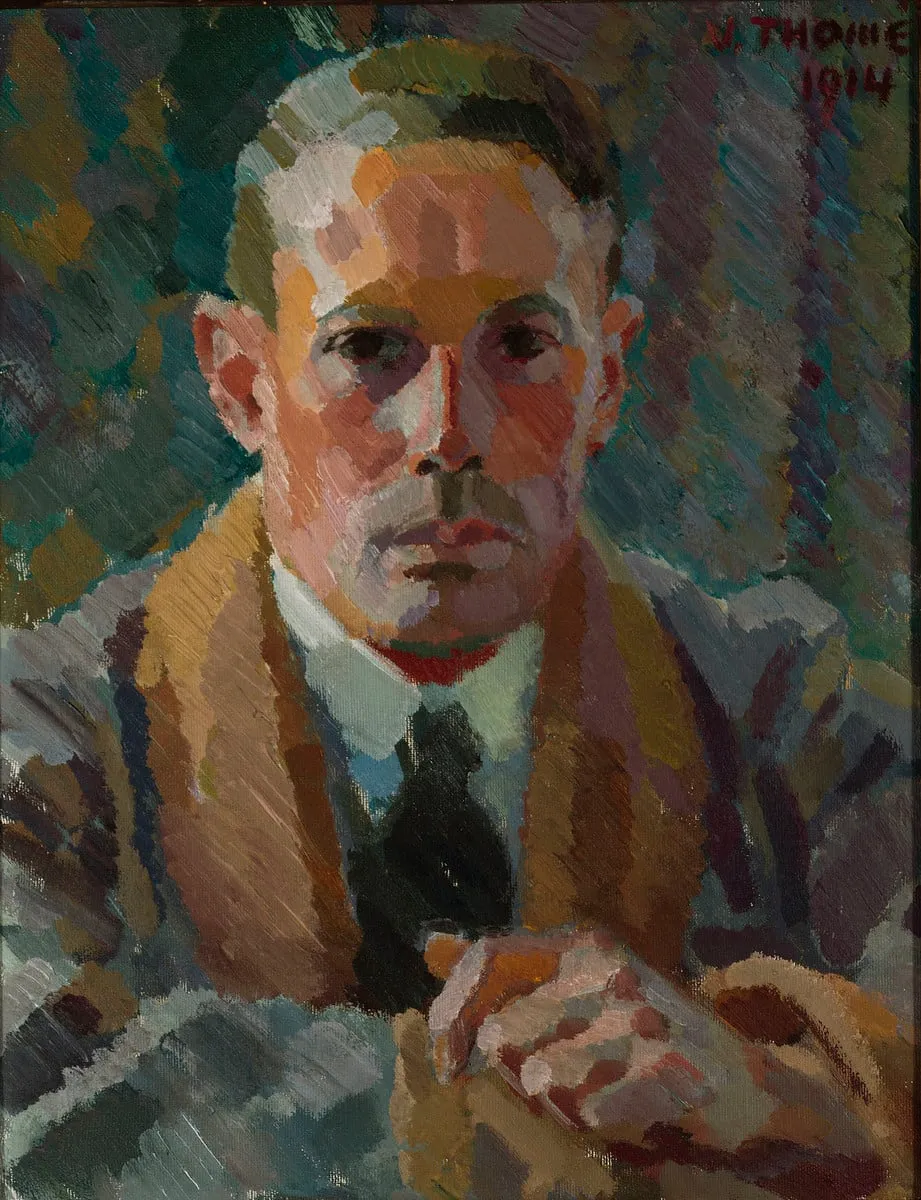
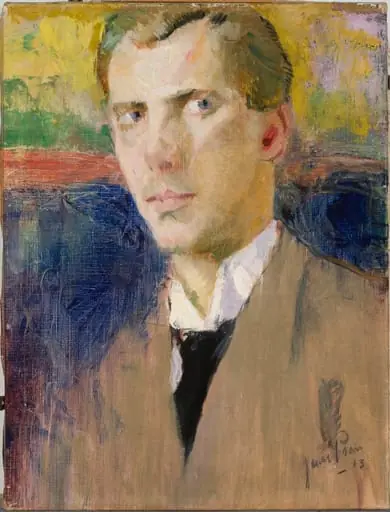
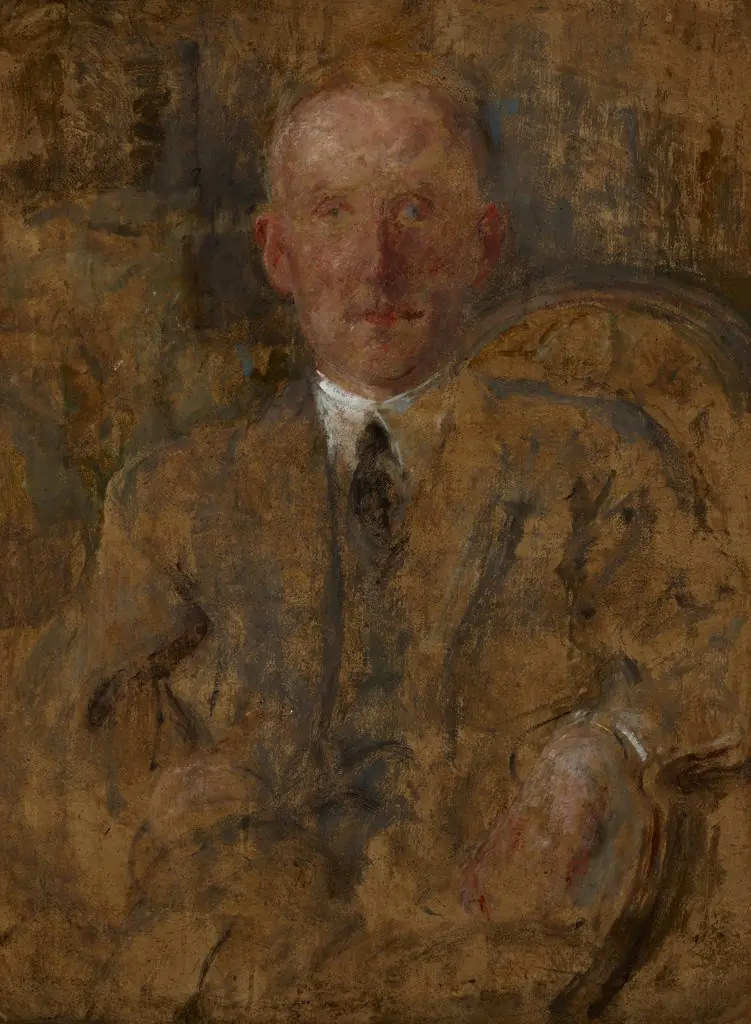
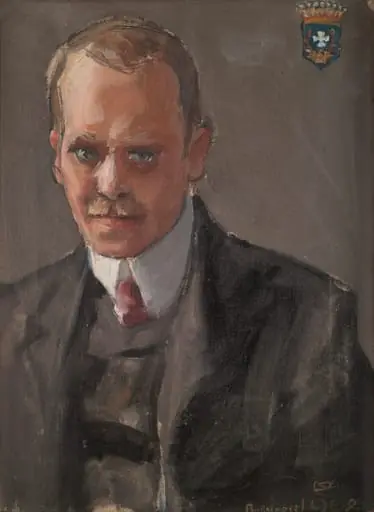
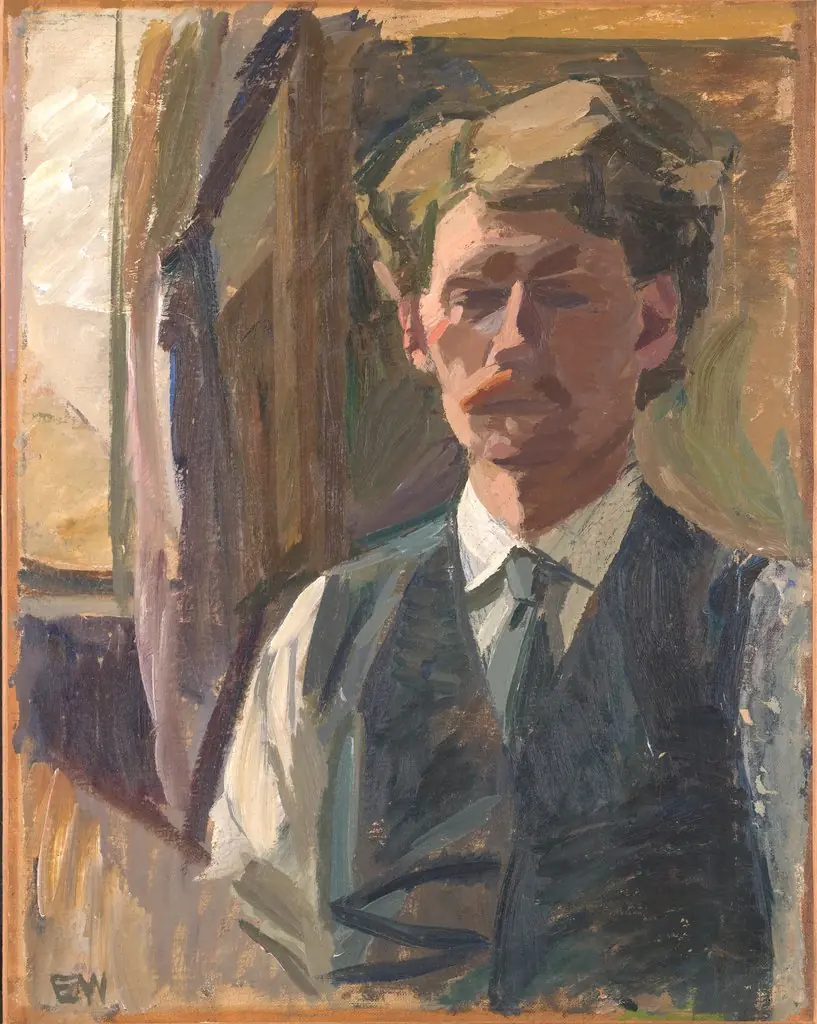
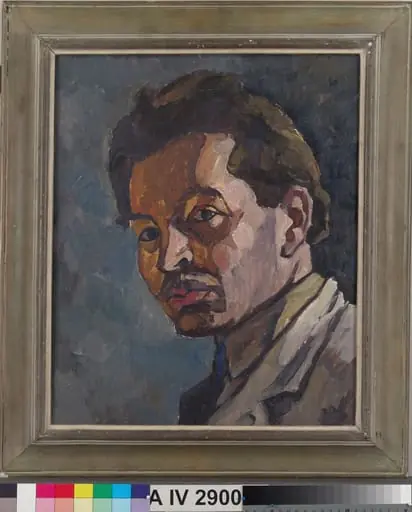
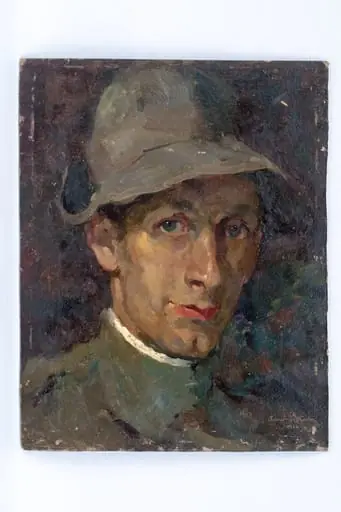
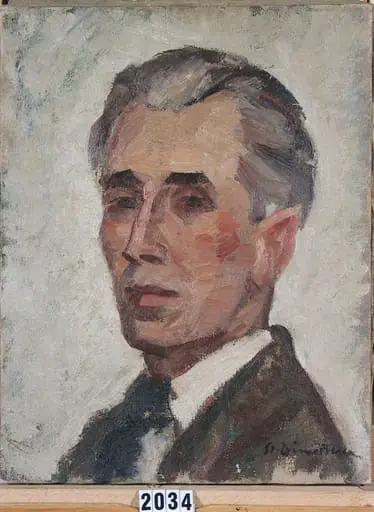
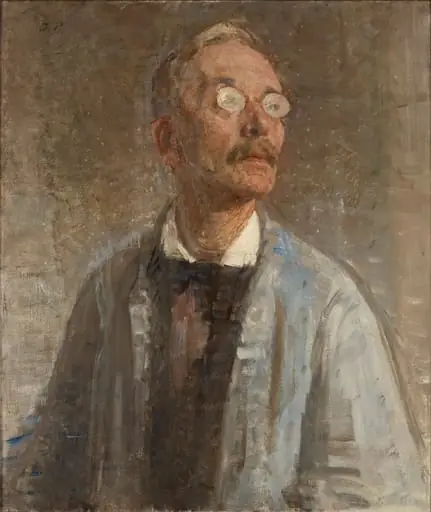
Omakuva is an unspecified painting by Verner Thomé. It is held in the collection of the Finnish National Gallery.
About this work
Overview
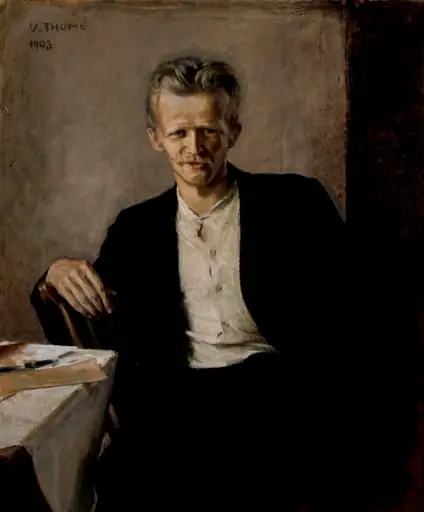
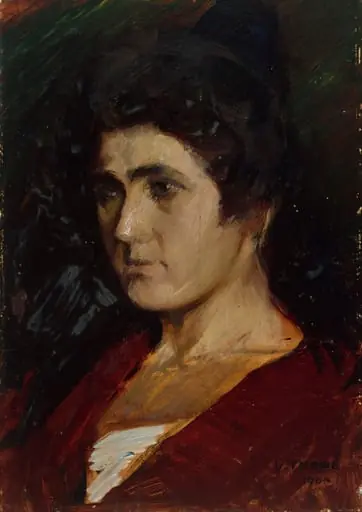
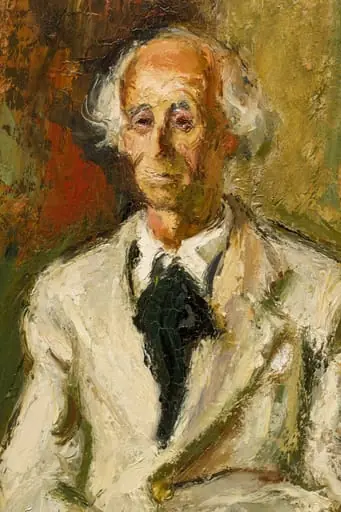
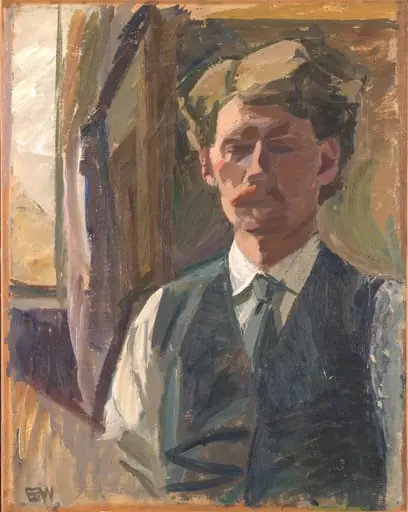
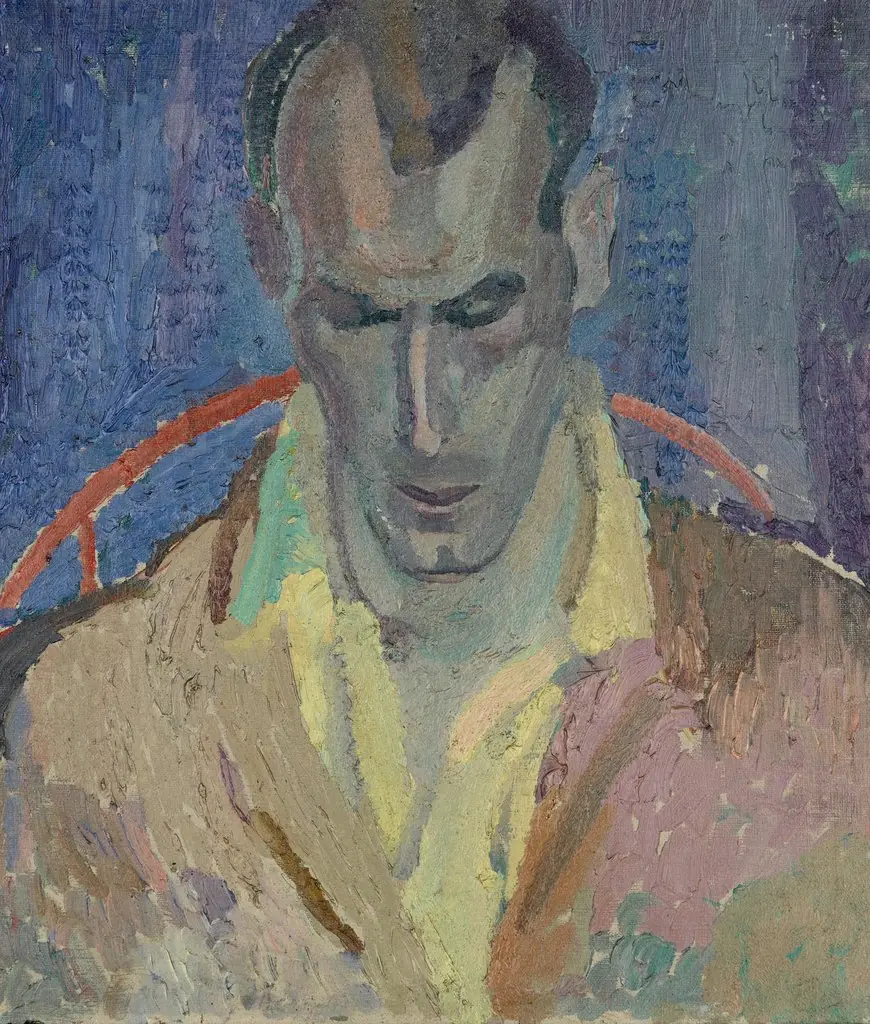
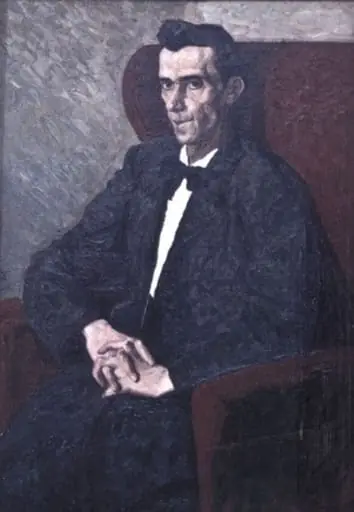
Omakuva is a close‑up portrait rendered in oil on canvas, depicting a man with short hair, a light sweater, and a dark tie. The sitter’s expression is serious, his hands placed calmly on his lap. The composition isolates the figure, allowing the facial features to dominate the visual field.
Technique & Style
The artist employs a vigorous impasto technique, applying thick, textured brushstrokes that remain visible across the surface. Bright accents of yellow, green, and blue are interspersed unevenly, creating a lively contrast against the more muted tones of the clothing. The overall handling suggests a rapid, almost spontaneous execution, likely completed in a single sitting.
Subject & Meaning
The portrait presents a straightforward, unembellished representation of an individual, emphasizing the sitter’s seriousness through direct gaze and restrained posture. The juxtaposition of vivid color patches with the subdued figure may hint at an inner tension or a desire to convey emotional depth beyond the literal likeness.
Context
While the work’s title, Omakuva, offers no immediate reference, the use of impasto and bold color juxtaposition aligns it with early‑20th‑century modernist experiments that favored expressive surface treatment over detailed realism. The painting’s focus on a single figure reflects a tradition of portraiture that seeks psychological insight through simplified composition.
Legacy
Omakuva stands as an example of how thick paint application can convey immediacy and tactile presence, illustrating the lasting influence of impasto techniques on contemporary portraiture. Its vivid color interplay continues to inform discussions of painterly gesture and the balance between representation and abstraction.
Artist & collection
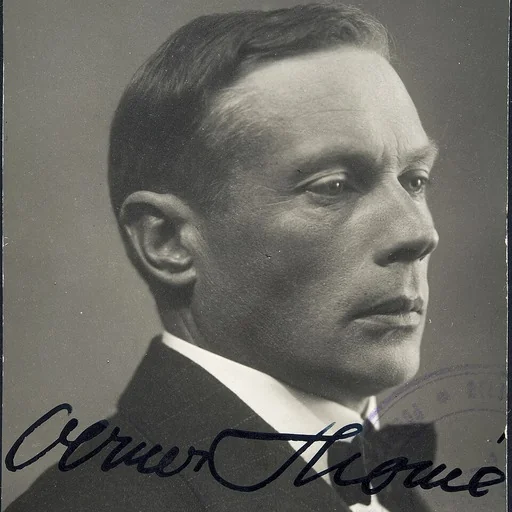
Artist
Verner Thomé (4 July 1878 – 1 June 1953) was a Finnish Post-Impressionist graphic artist. He was influenced by Vitalism a German-Scandinavian movement that incorporated Nietzsche's philosophy.