Artwork
Istuva poika
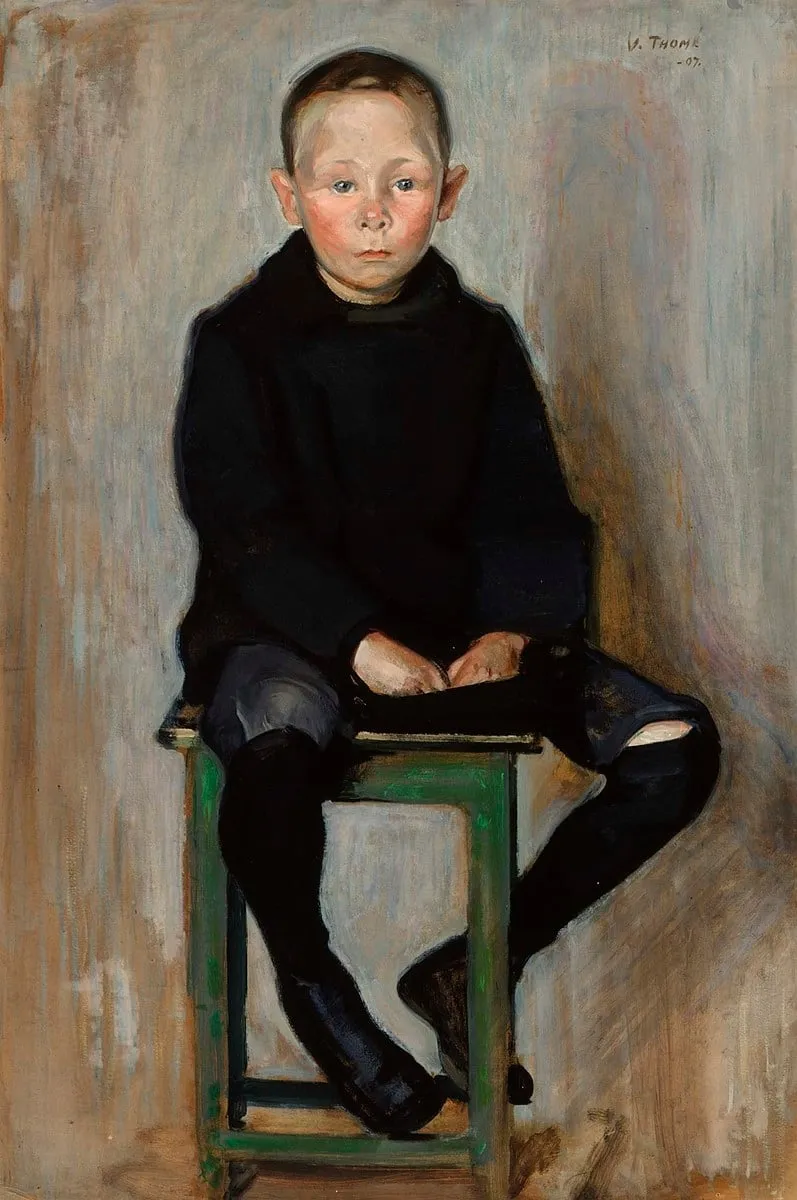
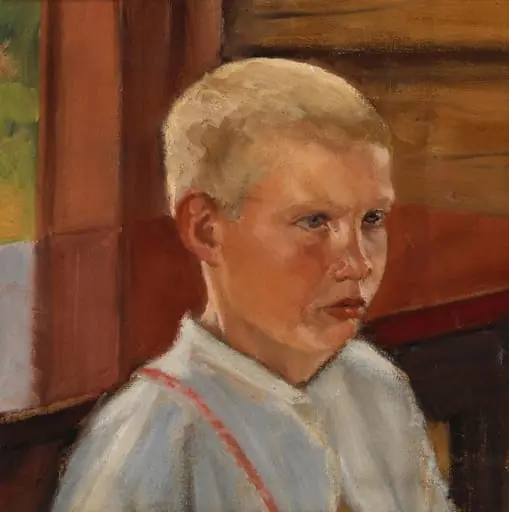
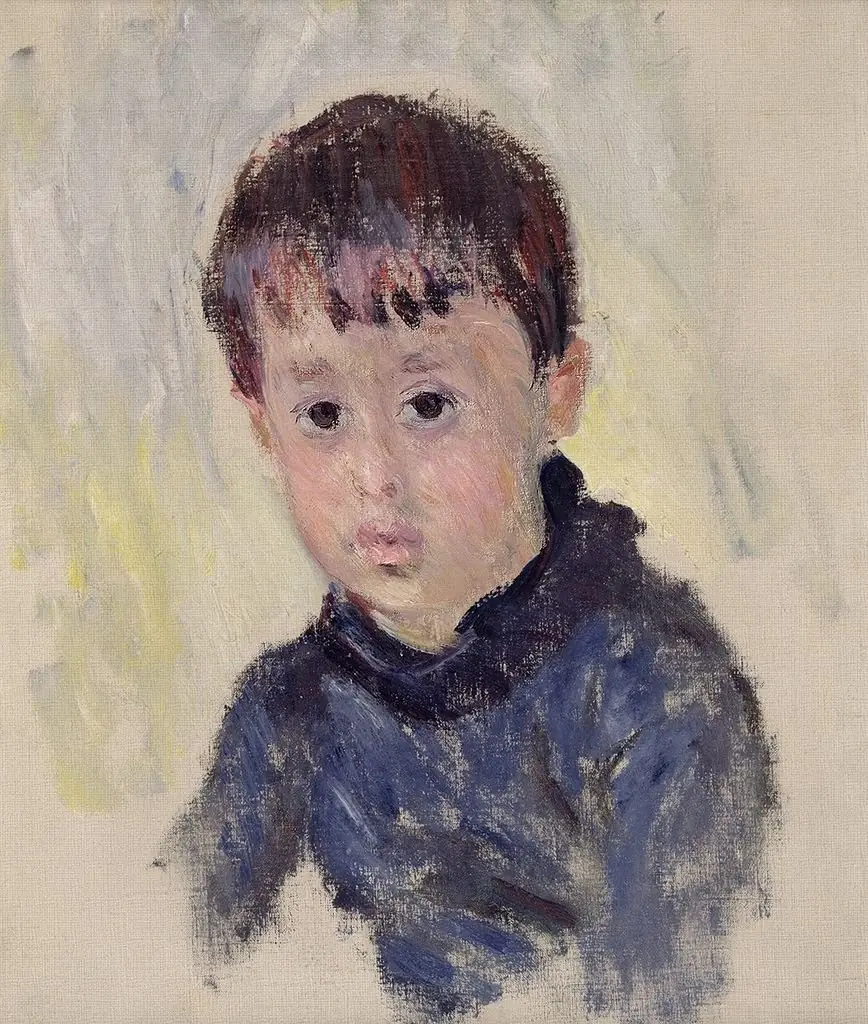
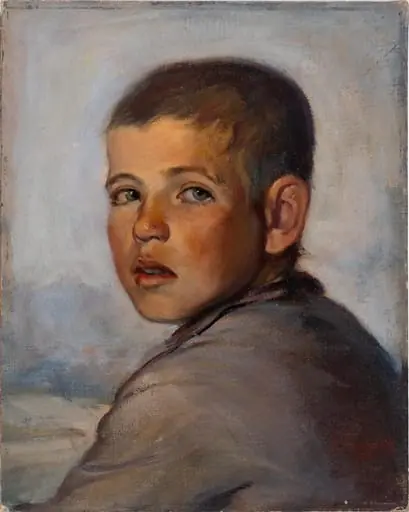
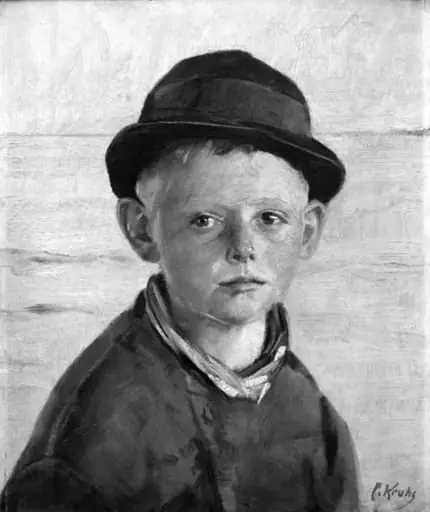
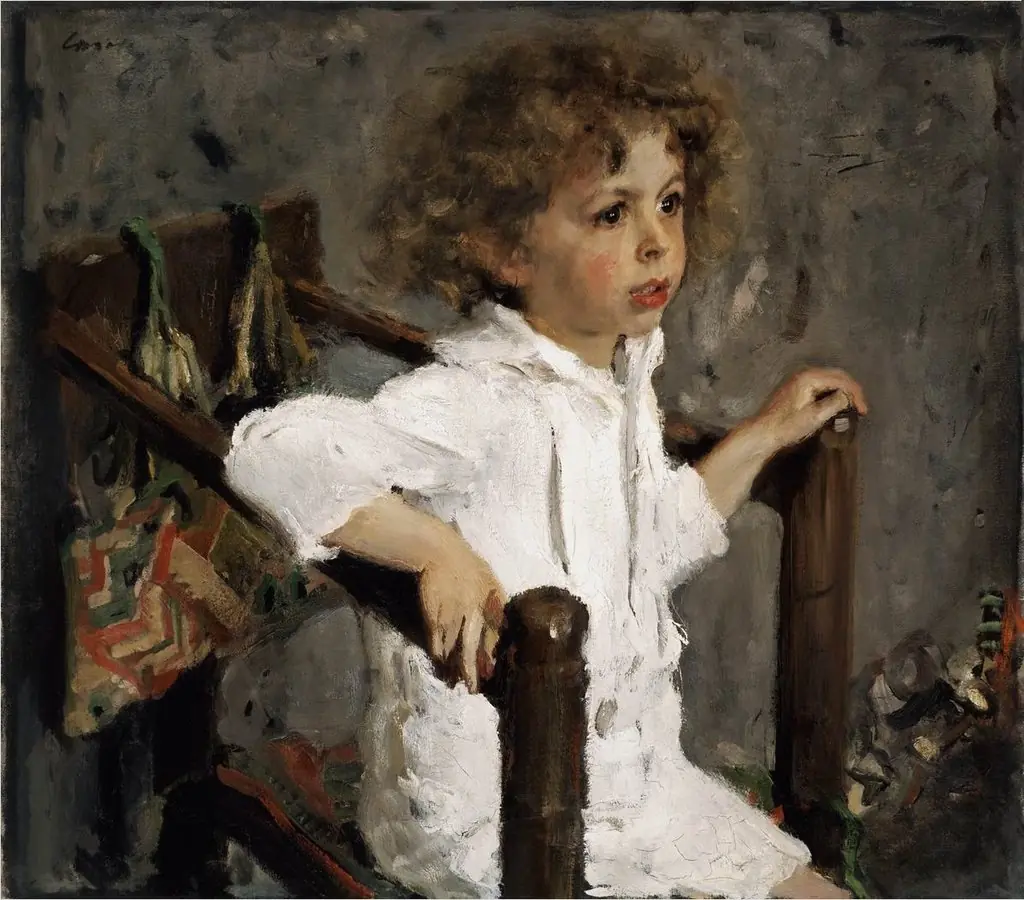
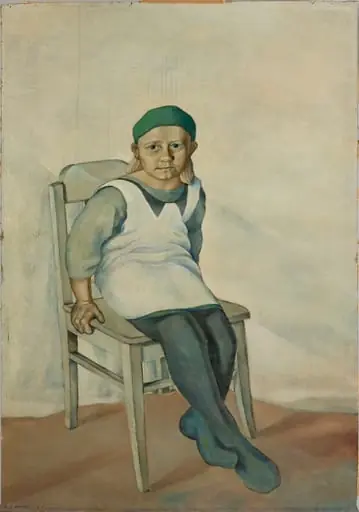
Istuva poika is an unspecified painting by Verner Thomé. It is held in the collection of the Finnish National Gallery. This portrait depicts a boy seated, gazing directly at the viewer with a quiet demeanor.
About this work
Overview
The minimal background and restrained composition draw attention to the subject’s expression and attire, emphasizing presence over narrative.
This portrait depicts a boy seated, gazing directly at the viewer with a quiet demeanor. Executed in oil on cardboard, the work stands out for its unconventional support, diverging from the traditional canvas. The minimal background and restrained composition draw attention to the subject’s expression and attire, emphasizing presence over narrative. The choice of material suggests a pragmatic or experimental approach by the artist.
Subject & Meaning
The boy’s stillness and direct gaze create an intimate, unmediated encounter. His calm expression and simple clothing suggest an ordinary moment, free from idealization or theatricality. The absence of context or symbolic elements invites focus on his individuality rather than any broader allegory. The portrait feels observational, capturing a fleeting sense of quiet introspection.
Technique & Style
Oil paint applied to cardboard results in a slightly absorbent, less flexible surface than canvas, affecting brushwork and drying time. The artist’s handling appears restrained, avoiding heavy impasto or visible texture, which enhances the portrait’s subdued tone. The medium’s limitations may have influenced the flat, even application of color, contributing to the work’s understated realism.
History & Provenance
Details regarding the artist’s identity and the painting’s early ownership remain undocumented. Its survival suggests it was preserved despite the fragility of cardboard as a support, which is prone to warping and decay. The lack of exhibition history or documented collection records implies it may have been a private study or lesser-known work, not widely circulated during its time.
Context
In the late 19th or early 20th century, some artists experimented with non-traditional supports due to cost, availability, or a desire for immediacy. Cardboard was occasionally used for sketches or studies, but less commonly for finished portraits. This work reflects a quiet rebellion against academic norms, favoring simplicity and material honesty over grandeur.
Legacy
Though not widely recognized, the painting contributes to a broader understanding of artists’ material choices beyond conventional media. Its preservation highlights the value placed on modest, unassuming works that capture human presence without embellishment. It remains a quiet example of how everyday materials can sustain expressive intent.
Artist & collection
Artist
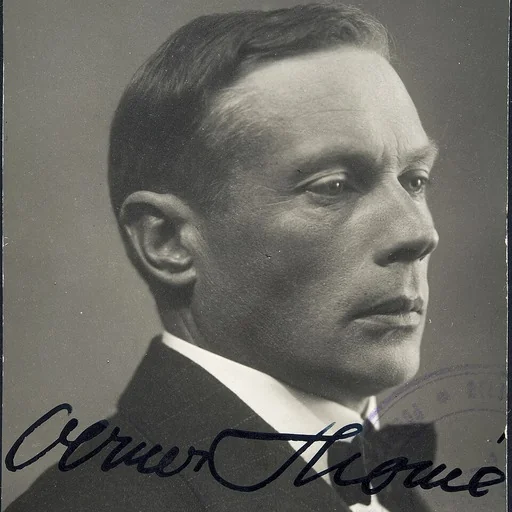
Verner Thomé (4 July 1878 – 1 June 1953) was a Finnish Post-Impressionist graphic artist. He was influenced by Vitalism a German-Scandinavian movement that incorporated Nietzsche's philosophy.