Artwork
Königstein, Saxony
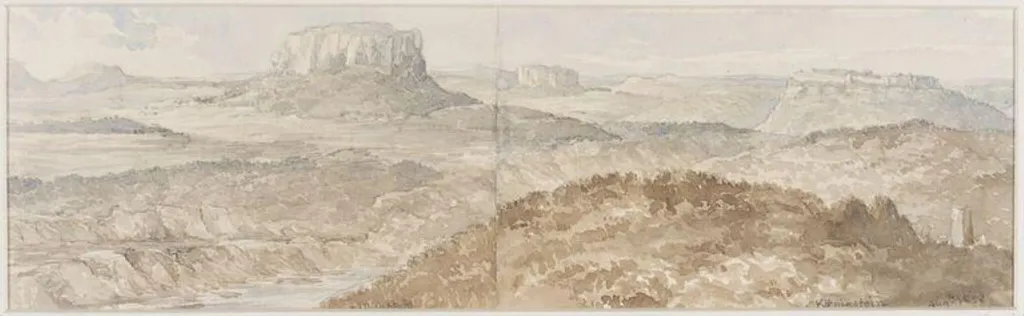
Königstein, Saxony is a watercolor work on paper by the Impressionist artist Thomas Brittain Vacher. It dates from 1858 and is held in the collection of the Victoria and Albert Museum.
About this work
Overview
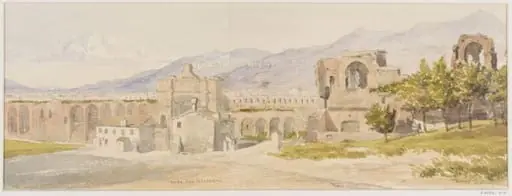
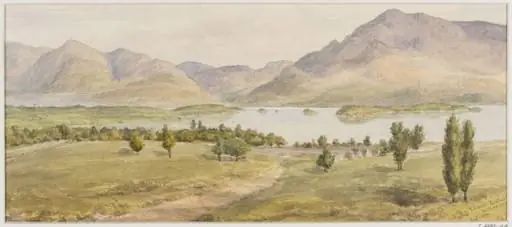
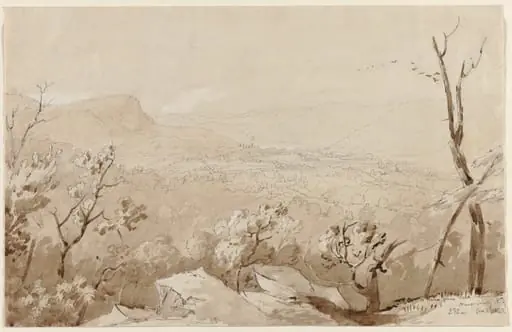
Thomas Brittain Vacher’s 1858 watercolor depicts the Königstein fortress set within a broad, gently undulating Saxon landscape. A river winds through the foreground, while distant hilltops rise behind a prominent flat‑topped rock. The palette of muted browns, grays and pale blues creates a calm, mist‑laden atmosphere, emphasizing the tranquil character of the scene.
Subject & Meaning
The work focuses on the historic Königstein stronghold, situating it within its natural surroundings rather than highlighting architectural detail. By presenting the fortress amid rolling terrain and water, Vacher underscores the relationship between human construction and the surrounding environment, inviting contemplation of the site’s integration into the Saxon countryside.
Technique & Style
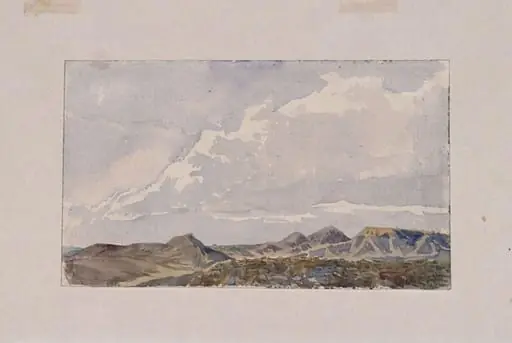
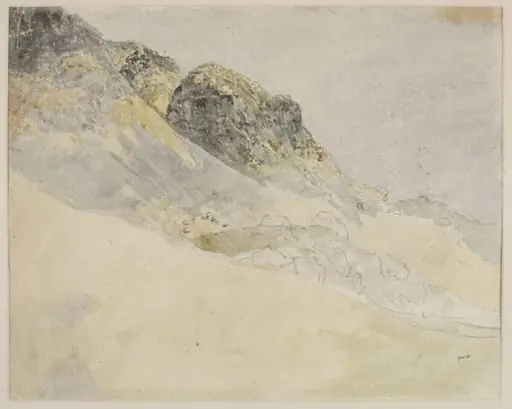
Executed in watercolor, the piece balances loose, sketch‑like strokes with careful observation of texture. Rough, grainy areas convey the rocky outcrop, while smoother washes render the river and sky. The subdued tonal range and atmospheric perspective reflect a realist approach, capturing the fleeting qualities of light and mist without overt dramatization.
History & Provenance
Created in 1858, the watercolor is part of Vacher’s series of topographical studies produced during a period of heightened interest in documenting German landscapes. The work has remained in private collections before entering a museum holding focused on 19th‑century European watercolors, where it serves as an example of mid‑century topographic art.
Artist & collection
Artist
Thomas Brittain Vacher painted watercolours of skies, city streets and lakes in the 1800s.