Artwork
Romantic Landscape with a Temple
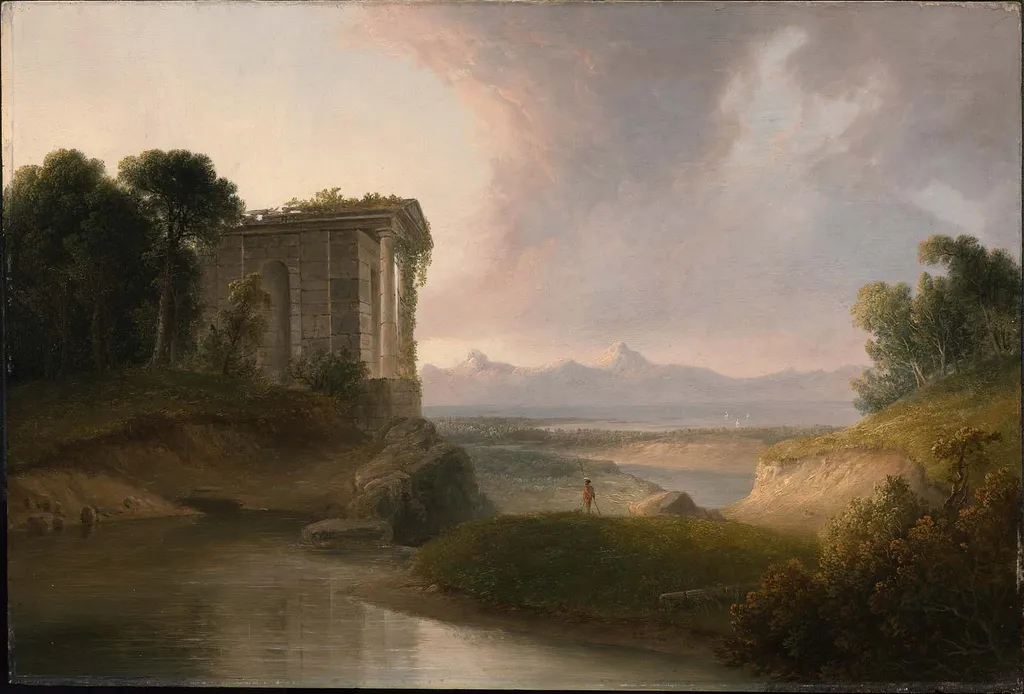
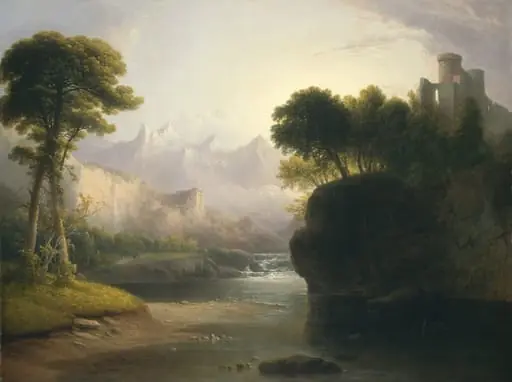
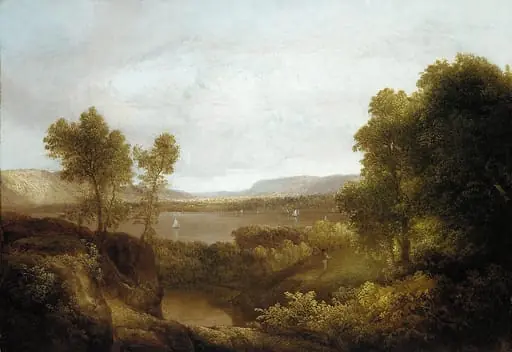
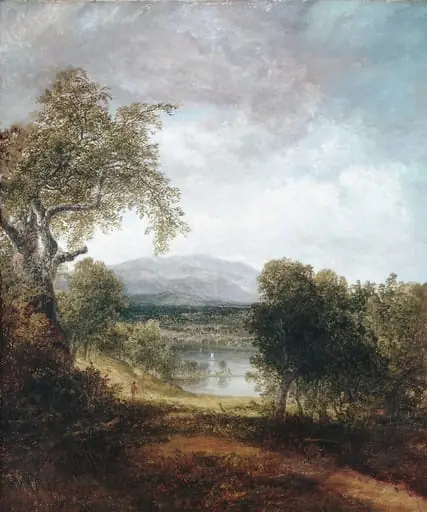
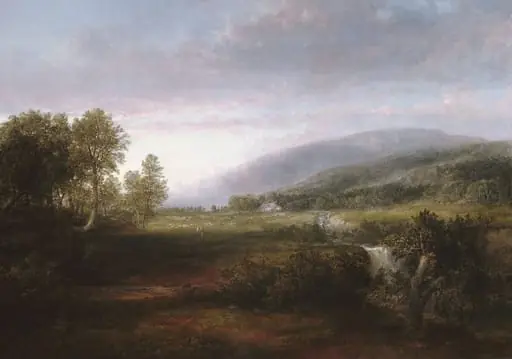
Romantic Landscape with a Temple is an unspecified painting by Thomas Doughty. It dates from 1834 and is held in the collection of the Museum of Fine Arts Boston.
About this work
Overview
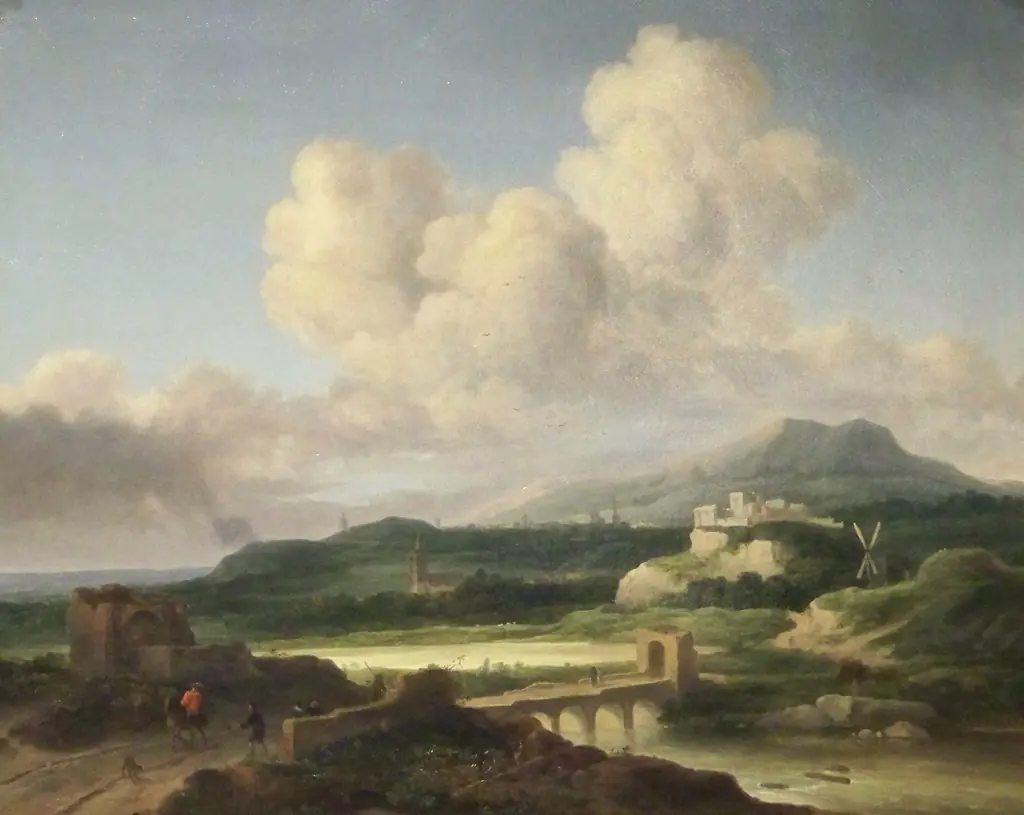
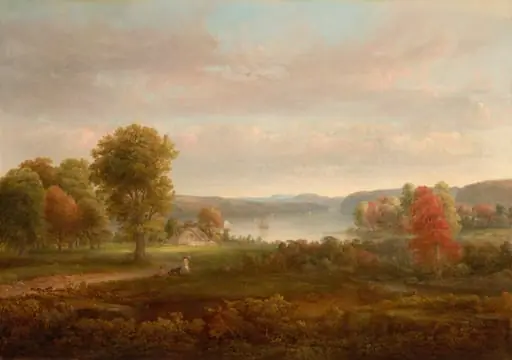
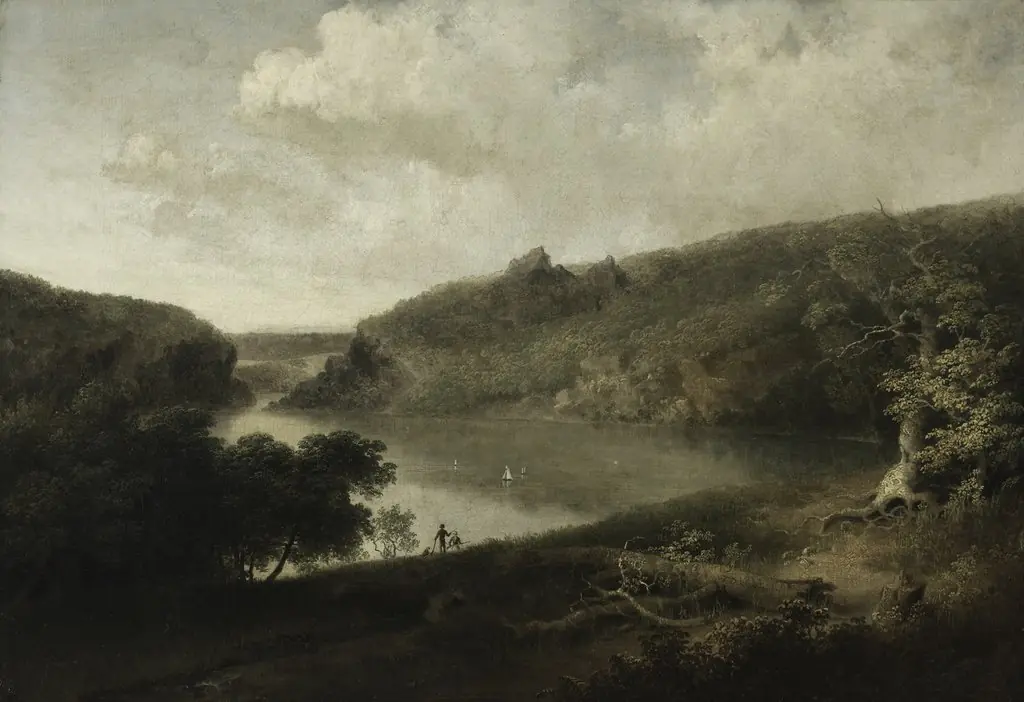
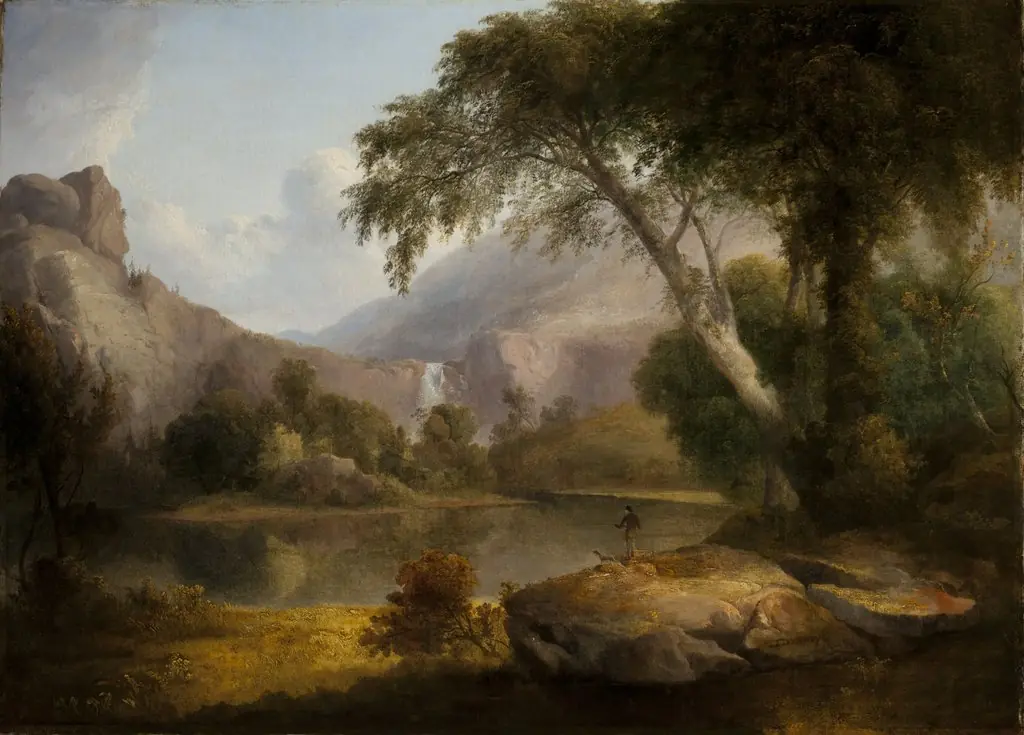
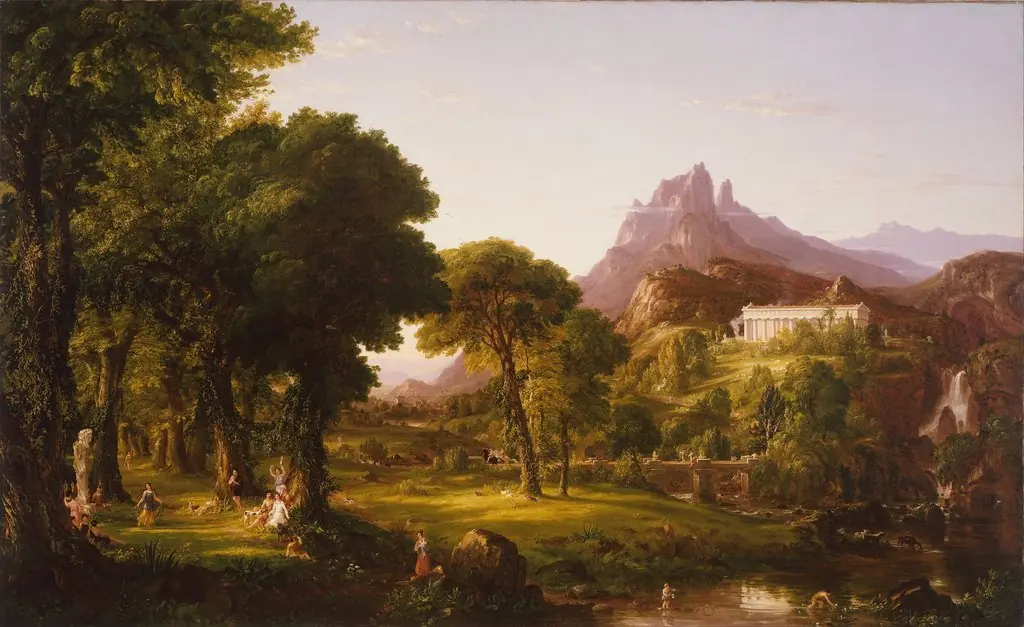
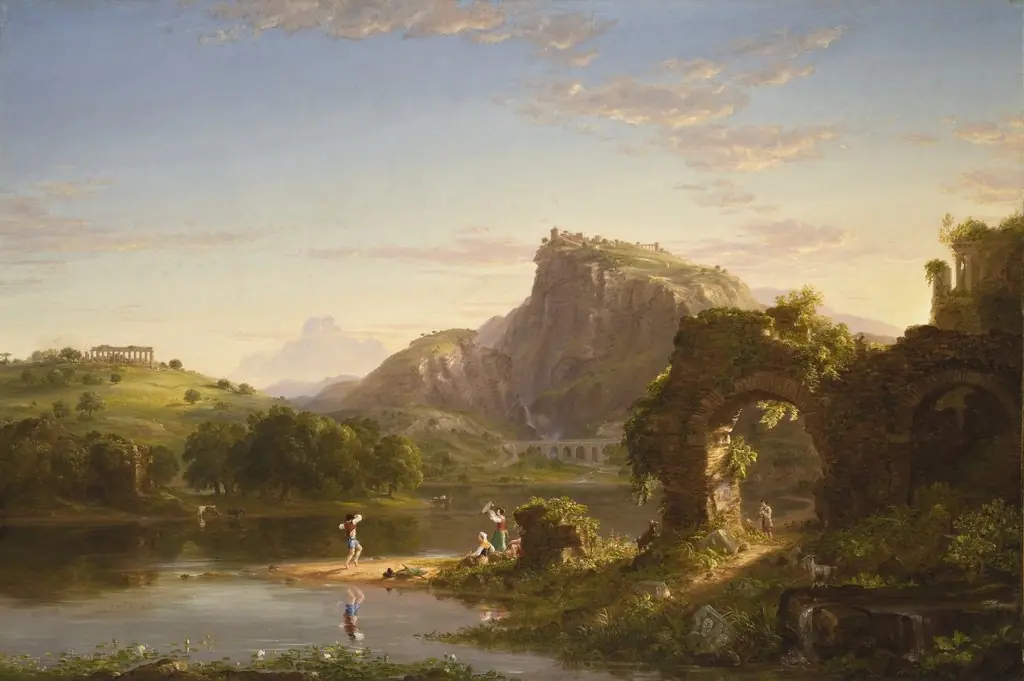
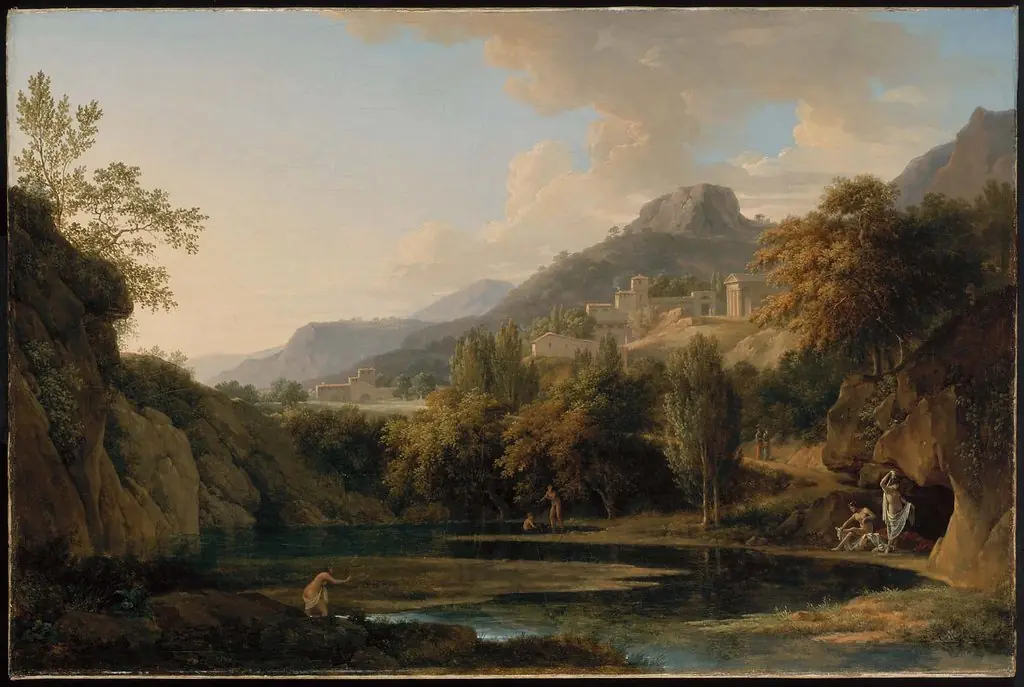
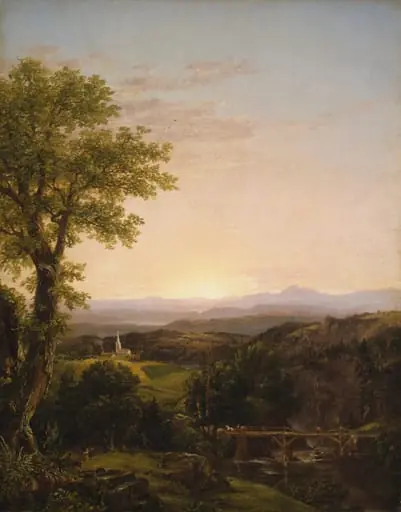
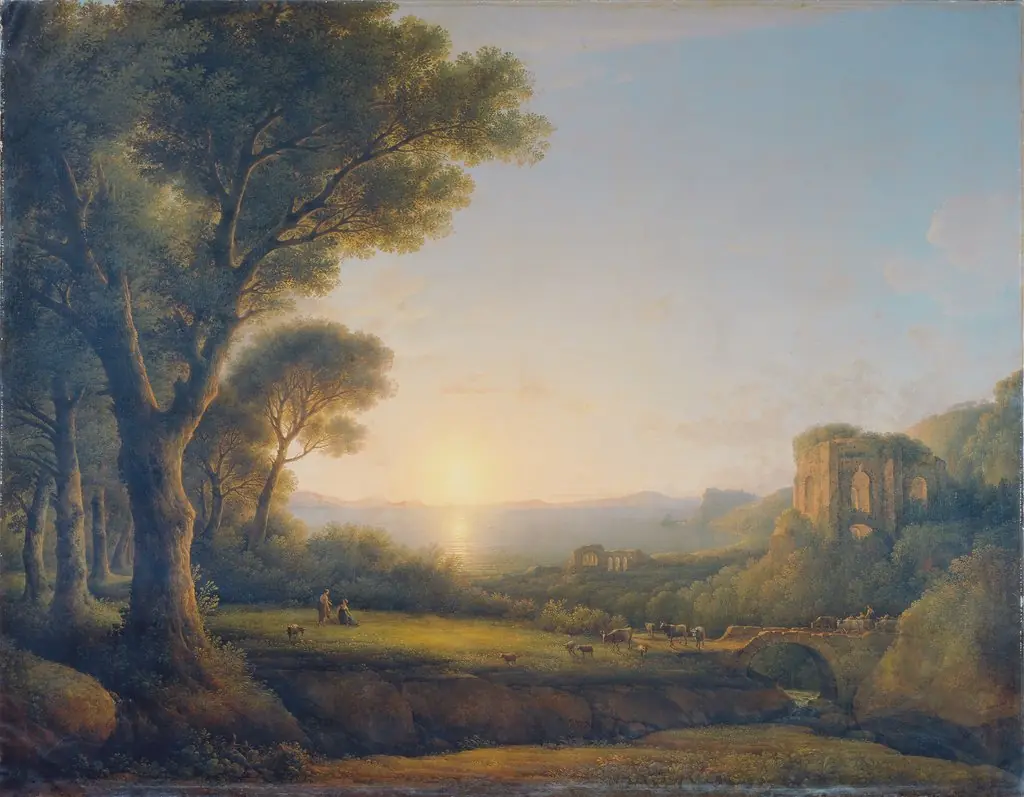
Painted in 1834 by Thomas Doughty, this landscape depicts a quiet, contemplative scene featuring a classical temple perched on a distant hill.
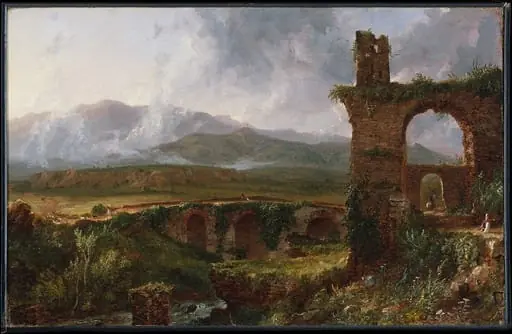
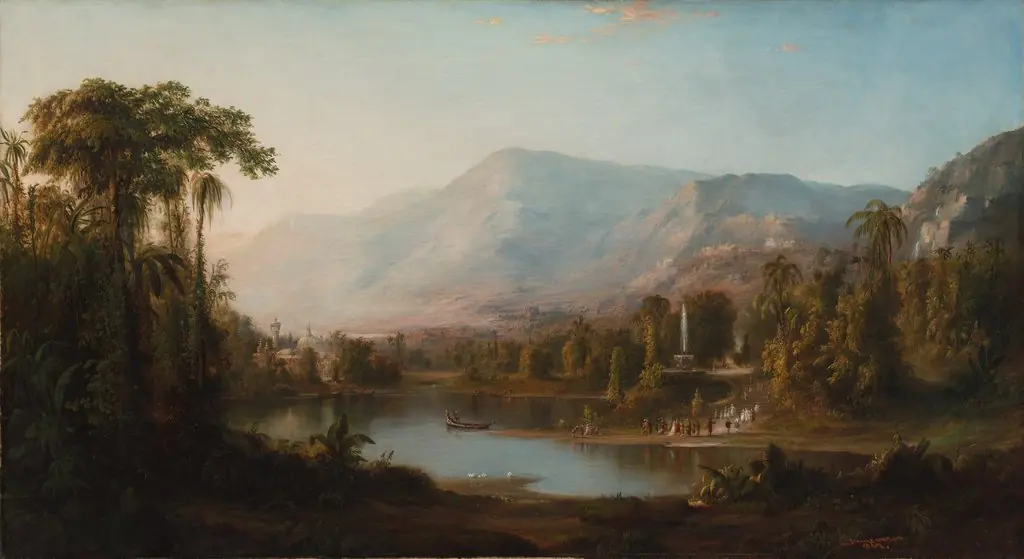
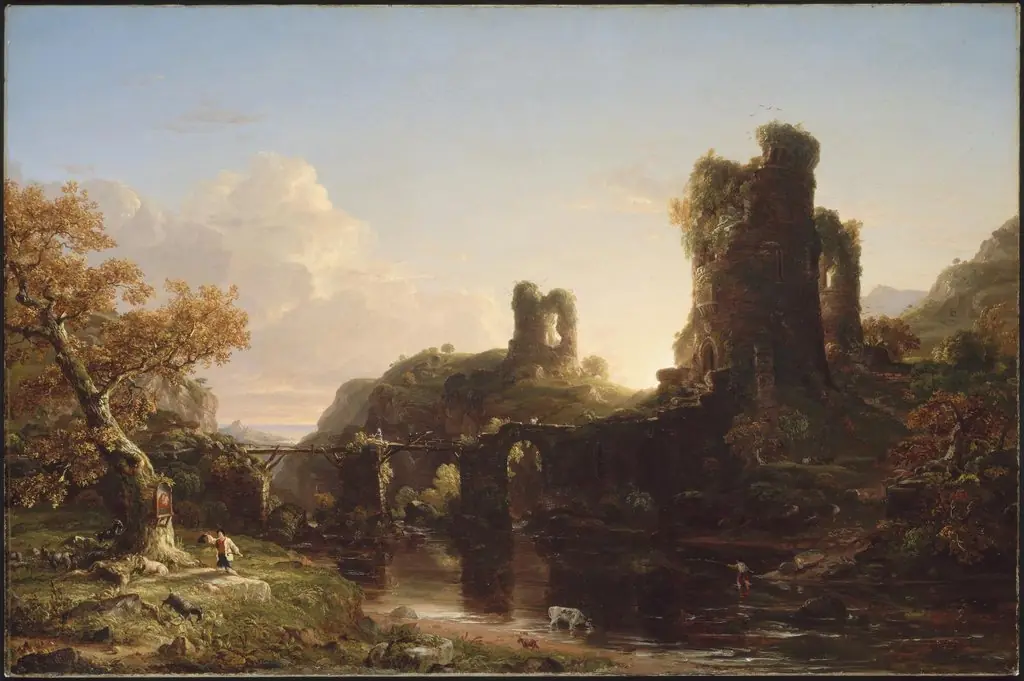
Painted in 1834 by Thomas Doughty, this landscape depicts a quiet, contemplative scene featuring a classical temple perched on a distant hill. The composition balances natural elements—trees, water, and sky—with a subtle architectural presence. The work exemplifies the American Hudson River School’s interest in nature as a space for reflection, rendered with atmospheric precision and muted tonal harmony.
Subject & Meaning
A solitary figure stands at the water’s edge, gazing toward the temple, suggesting a moment of personal contemplation. The temple, though distant and partially obscured, evokes classical antiquity and spiritual aspiration. The stillness of the scene, combined with the soft light, invites quiet introspection rather than narrative drama, aligning with 19th-century ideals of nature as a moral and emotional refuge.
Technique & Style
Doughty employs subtle gradations of light and shadow to model form and suggest depth, using a restrained palette of earth tones and soft blues. The sky, layered with diffused clouds, casts a warm, even glow that unifies the composition. Brushwork is deliberate but unobtrusive, prioritizing atmospheric cohesion over detail, a hallmark of his approach to landscape painting.
History & Provenance
Created during Doughty’s most active period, the painting entered the Museum of Fine Arts, Boston’s collection in the early 20th century. It reflects the artist’s shift from commercial portraiture to landscape work, a move aligned with growing American interest in native scenery. The painting has remained in public hands since its acquisition, with no known private ownership after 1900.
Context
Painted in the 1830s, the work emerges alongside the rise of American landscape painting as a distinct genre. Doughty was among the first to focus on the Northeastern U.S. as a subject worthy of artistic treatment, countering European traditions. His scenes, though idealized, drew from direct observation, contributing to a national visual identity rooted in natural grandeur and quiet solitude.
Legacy
Doughty’s influence extended to later Hudson River School artists through his emphasis on mood and light over dramatic spectacle. While less celebrated than contemporaries like Cole or Church, his quieter compositions helped define a more introspective strand of American landscape art. This painting remains a representative example of early 19th-century American sensibility toward nature as a space for stillness and reverence.
Artist & collection