Artwork
View near King's Bromley, on Trent, Staffordshire
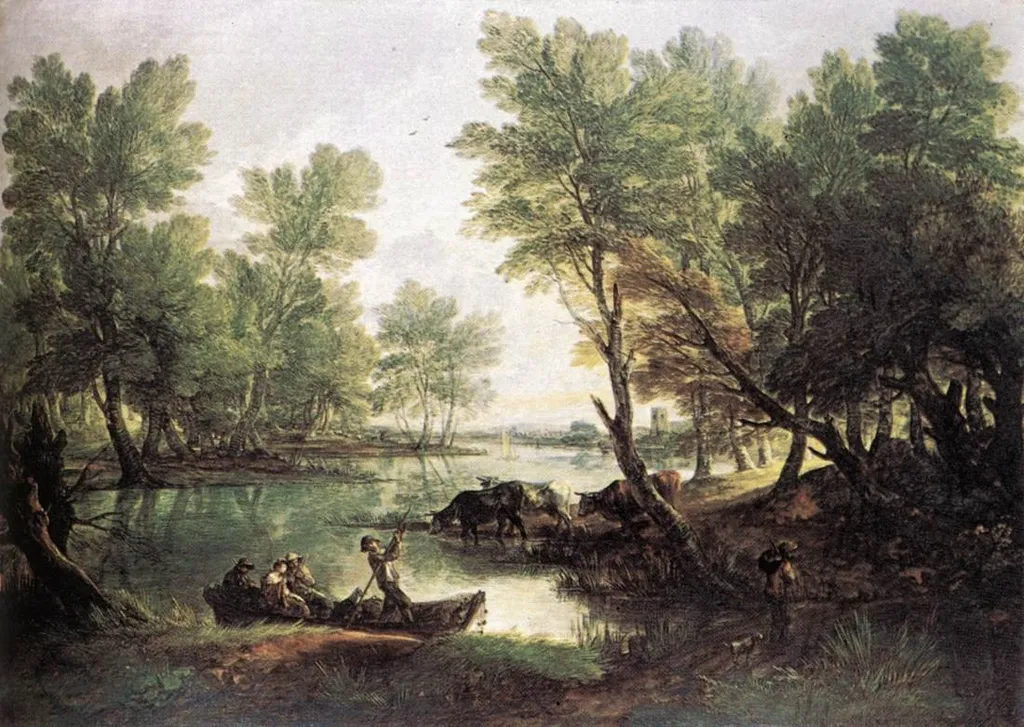
View near King's Bromley, on Trent, Staffordshire is an oil painting by the Rococo painting artist Thomas Gainsborough. It dates from 1769 and is held in the collection of the Philadelphia Museum of Art.
About this work
Overview
Painted in 1769, this oil on canvas landscape by Thomas Gainsborough depicts a quiet stretch of the River Trent near King’s Bromley in Staffordshire.
Painted in 1769, this oil on canvas landscape by Thomas Gainsborough depicts a quiet stretch of the River Trent near King’s Bromley in Staffordshire. It reflects his growing interest in rural scenes during this period, distinct from his more formal portraiture. The work is part of the Philadelphia Museum of Art’s collection and exemplifies his contribution to the evolution of British landscape painting in the late eighteenth century.
Subject & Meaning
The scene captures a tranquil riverside moment: a small boat rests near the left bank, with figures engaged in quiet, everyday activities—standing, sitting, or leaning. No grand narrative is present; instead, the painting conveys stillness and routine. The absence of dramatic action emphasizes harmony between people and their natural surroundings, suggesting a contemplative, almost domestic relationship with the landscape.
Technique & Style
Gainsborough employed soft brushwork and subtle tonal gradations to render the sky, water, and foliage with a gentle realism. Light filters diffusely through wispy clouds, casting delicate shadows that model the forms of trees and figures. Chiaroscuro is used sparingly but effectively to create depth without theatricality, aligning the work with a refined, lyrical interpretation of the English countryside rather than dramatic Romanticism.
History & Provenance
Completed during a period when Gainsborough was increasingly turning from portraiture to landscapes, the painting remained in private hands in England for much of the 19th century. It entered the Philadelphia Museum of Art’s collection in the early 20th century, where it has since been recognized as a representative example of his mature landscape style, though it has never been widely exhibited.
Context
In the 1760s, British artists began to shift focus from idealized classical landscapes toward observed, local scenery. Gainsborough, alongside contemporaries like Richard Wilson, helped elevate landscape painting as a serious genre. This work reflects that trend, capturing a specific, unidealized locale with sensitivity to atmospheric conditions and the rhythms of rural life, distinct from continental traditions.
Legacy
Though less celebrated than his portraits, this painting illustrates Gainsborough’s enduring influence on British landscape art. His ability to infuse ordinary scenes with emotional resonance paved the way for later artists who sought to portray nature with intimacy rather than grandeur. The work stands as a quiet testament to his belief that landscape could convey mood and meaning without narrative spectacle.
Artist & collection
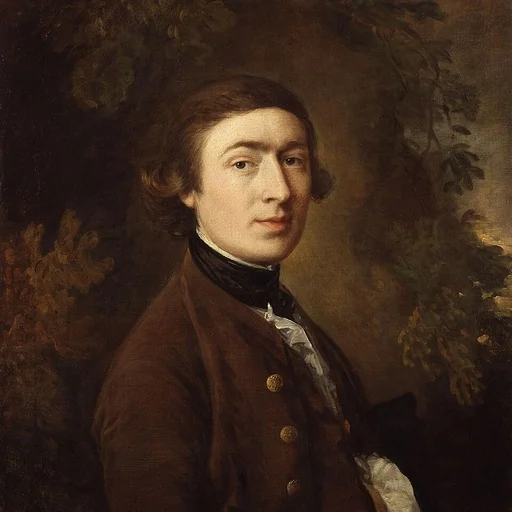
Artist
Thomas Gainsborough (; 14 May 1727 (baptised) – 2 August 1788) was an English painter, draughtsman and printmaker who specialised in portrait and landscape painting.

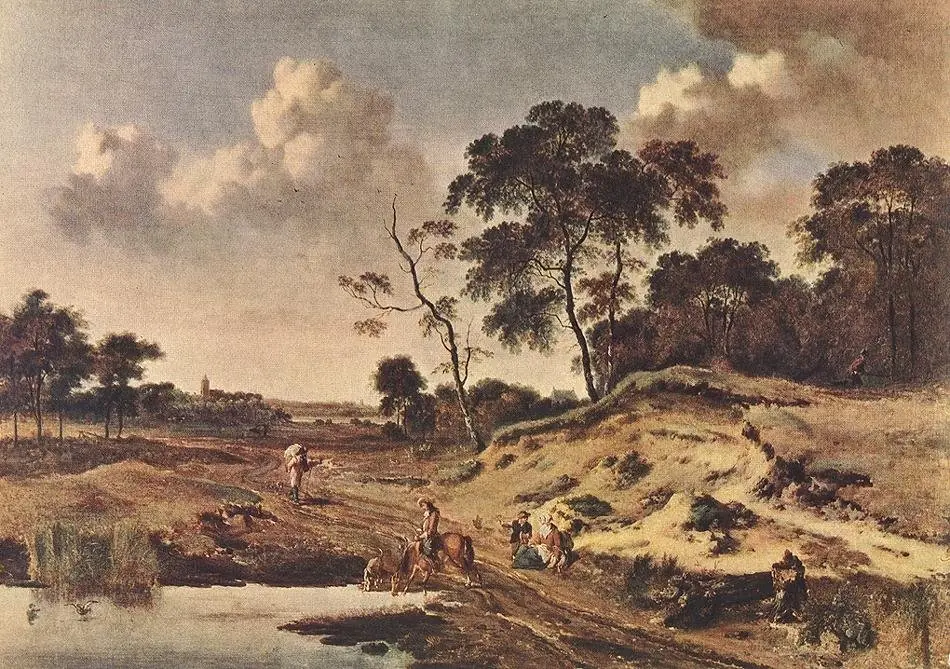 Landscape with Sandy Slope
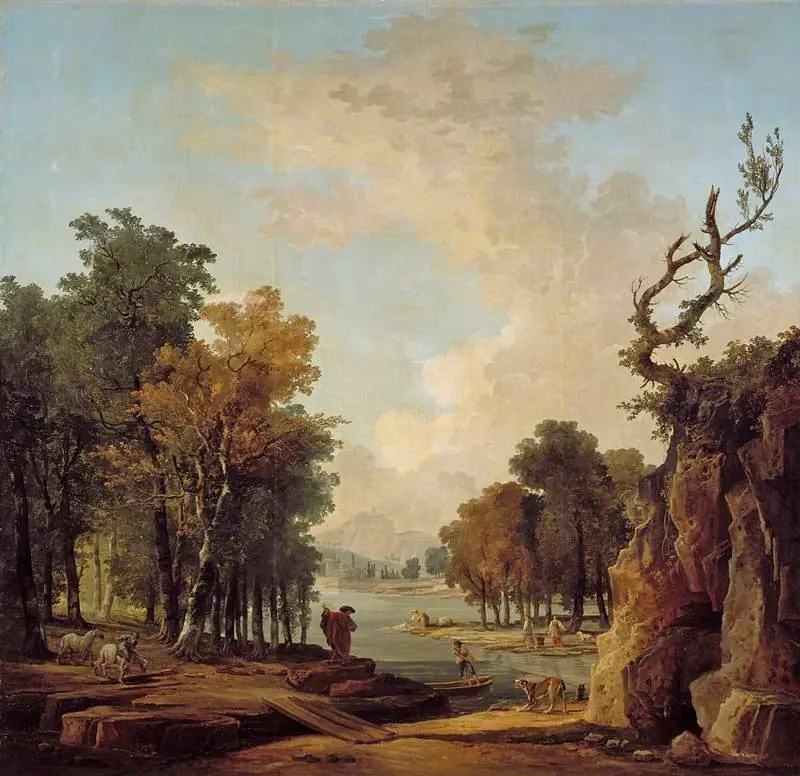 Wooded river landscape with a traveller, a barking dog, a horseman and women washing at an islet
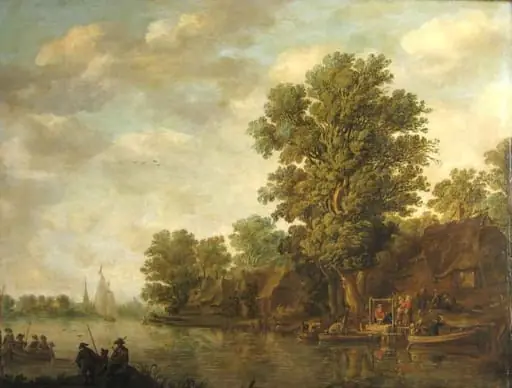 Sat olandez cu râu
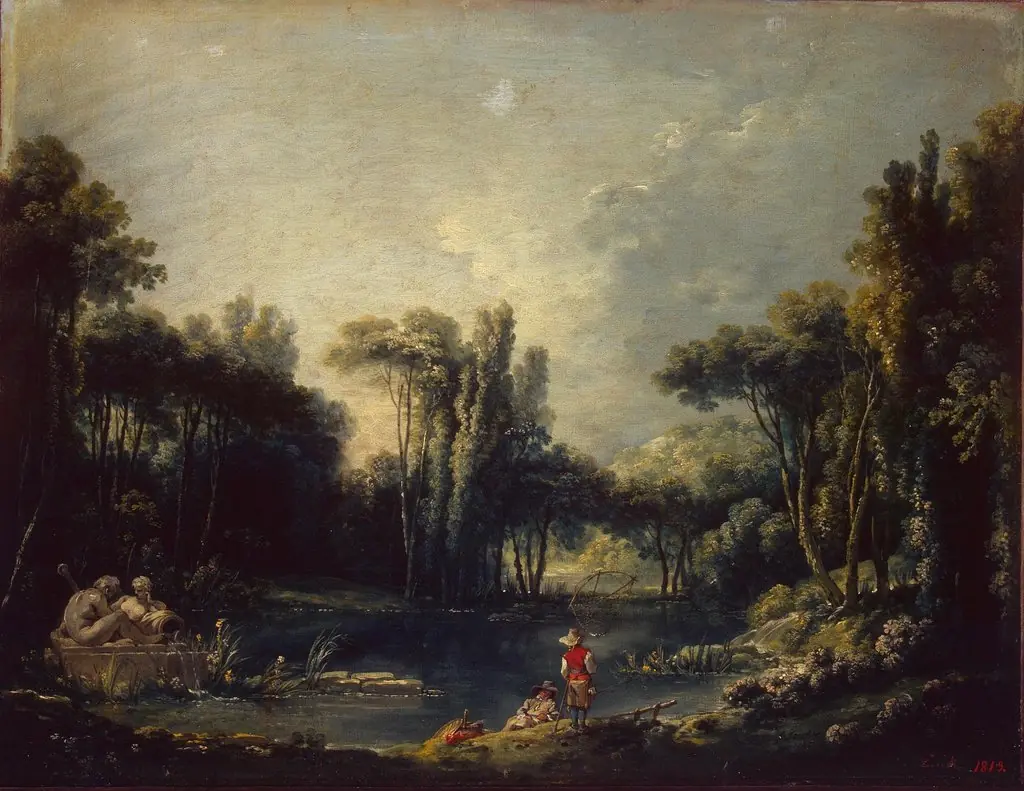 Landscape with a Pond
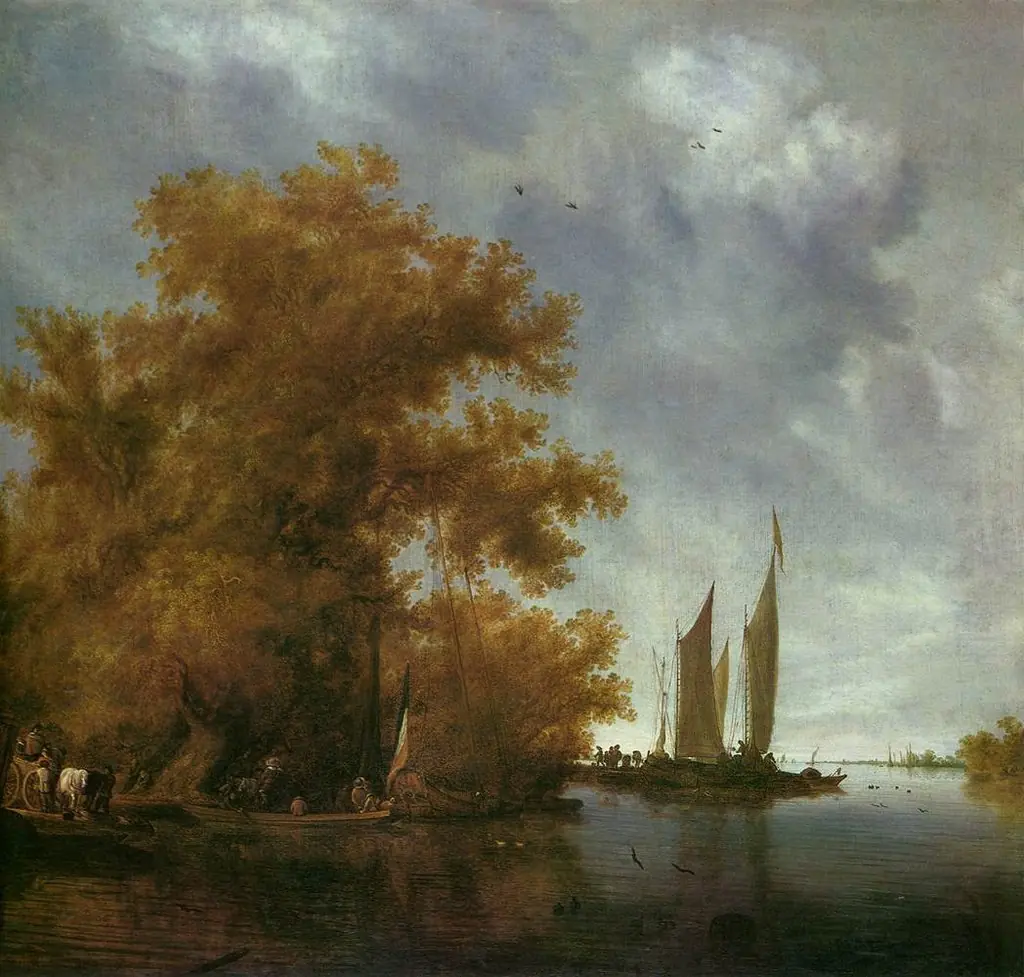 River landscape with boats
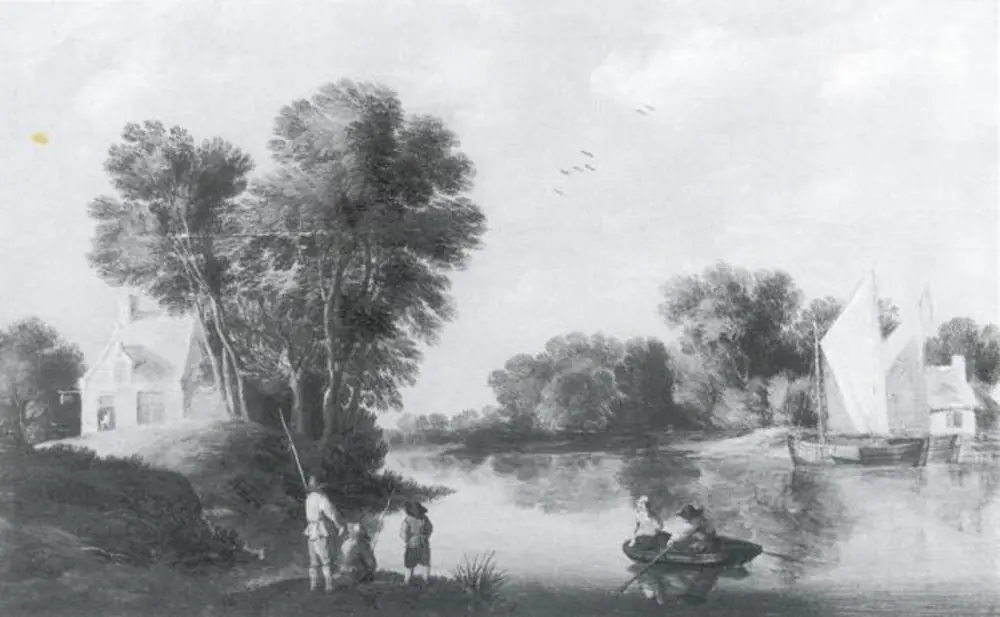 River Landscape
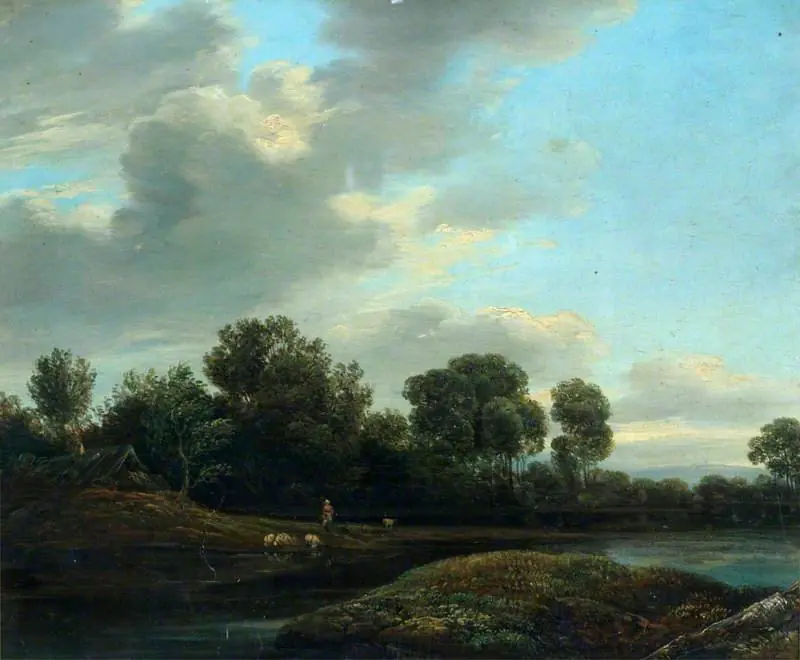 Landscape: The River Bank
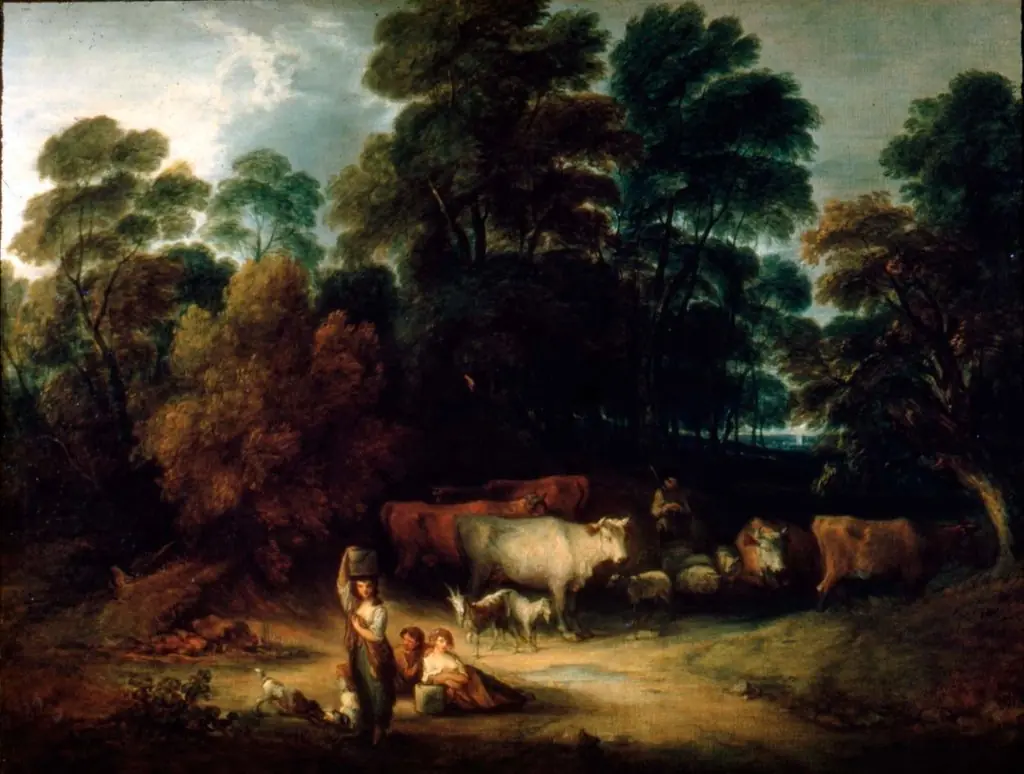 Landscape with Milkmaids and Cattle
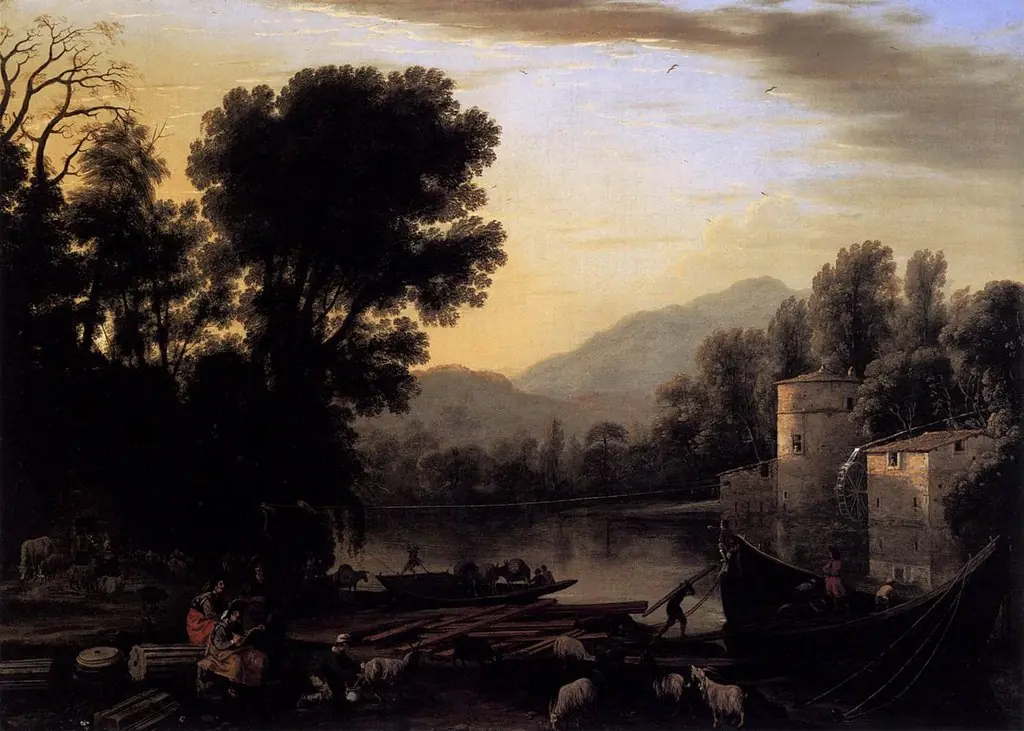 Mill on a River
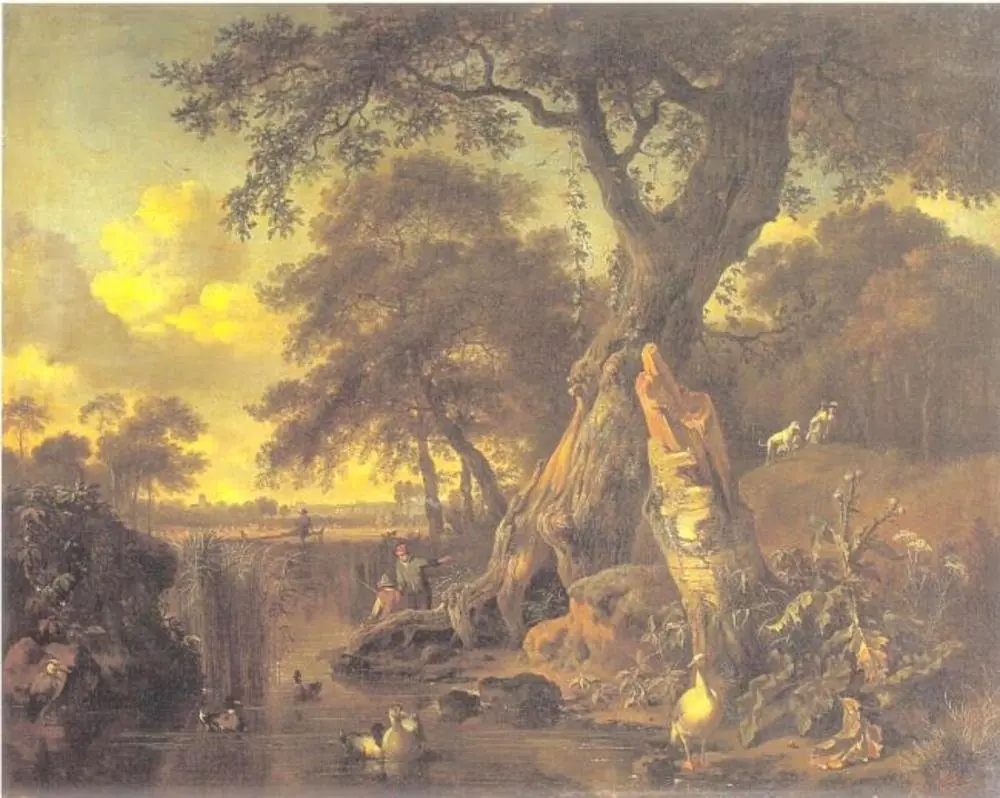 River Landscape with Fisherman and Hunter, 1671
 River Landscape
 Forest Landscape with Cows