Artwork
Wooded river landscape with a traveller, a barking dog, a horseman and women washing at an islet
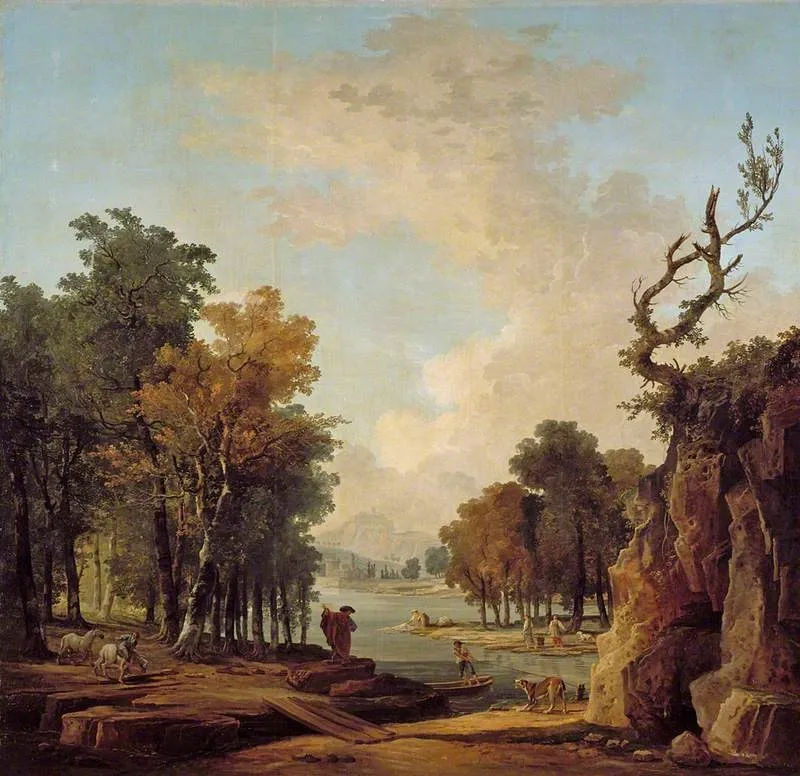
Wooded river landscape with a traveller, a barking dog, a horseman and women washing at an islet is an oil painting by Hubert Robert. It dates from 1800 and is held in the collection of the Fitzwilliam Museum.
About this work
Overview
Painted in 1800 by French artist Hubert Robert, this oil-on-canvas work presents a tranquil riverside scene populated by modest human activity.
Painted in 1800 by French artist Hubert Robert, this oil-on-canvas work presents a tranquil riverside scene populated by modest human activity. It belongs to the landscape tradition, blending observed natural elements with carefully composed narrative details. The painting is part of the Fitzwilliam Museum’s collection and reflects Robert’s enduring interest in harmonious, atmospheric environments that suggest quiet human presence within nature.
Subject & Meaning
The scene depicts a river islet where women wash linens, a traveler accompanied by a barking dog, and a horseman passing nearby. These figures are not idealized but rendered with unobtrusive realism, suggesting daily rural life rather than grand narrative. The composition invites contemplation of solitude and routine, with no overt symbolism—instead, meaning arises from the quiet interplay between people and their natural surroundings.
Technique & Style
Robert employs subtle chiaroscuro to model forms and suggest depth, particularly in the layered foliage and the play of light across the water. Brushwork varies from soft, blended skies to more defined textures in clothing and bark, creating tactile contrast without overt detail. The palette is muted, dominated by greens, browns, and pale blues, reinforcing the painting’s calm, untheatrical tone and atmospheric cohesion.
History & Provenance
Created near the end of Robert’s career, the painting reflects his mature style, developed over decades of studying Italian ruins and French countryside. It entered the Fitzwilliam Museum’s collection in the 19th century, likely through a private acquisition or bequest. No significant alterations or documented restorations are recorded, preserving its original surface and tonal balance.
Context
Robert worked during a period when landscape painting gained renewed interest, moving beyond classical idealism toward more intimate, observed scenes. Though associated with Romanticism, his approach avoided dramatic emotion, favoring quiet observation. This work aligns with contemporaneous French and English landscape traditions that valued serenity and naturalism over narrative spectacle.
Legacy
While not among Robert’s most famous works, this painting exemplifies his consistent focus on harmonious, human-scaled nature. It contributes to the broader understanding of late 18th- and early 19th-century French landscape practice, where everyday moments were rendered with dignity and restraint. Its presence in a major public collection ensures continued scholarly and public engagement with his quieter, reflective vision.
Artist & collection
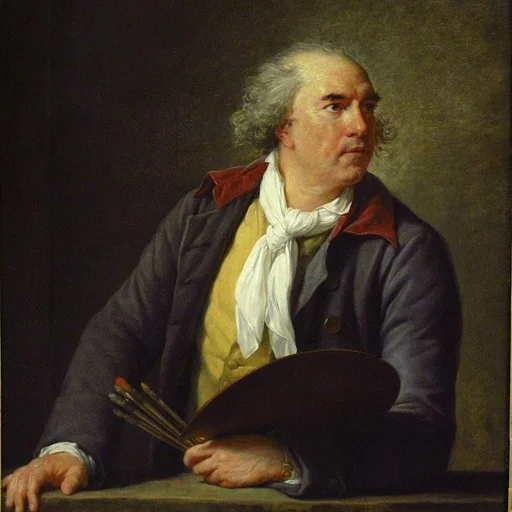
Artist
Hubert Robert (French pronunciation: ; 22 May 1733 – 15 April 1808) was a French painter in the school of Romanticism, noted especially for his landscape paintings and capricci, or semi-fictitious picturesque depictions of ruins in Italy…

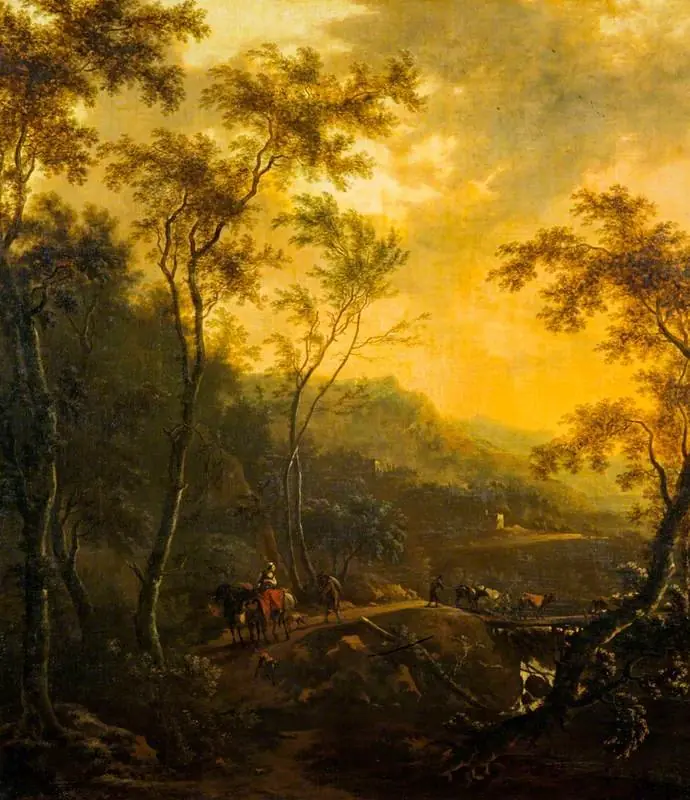 Landscape with Travellers and a Herdsman
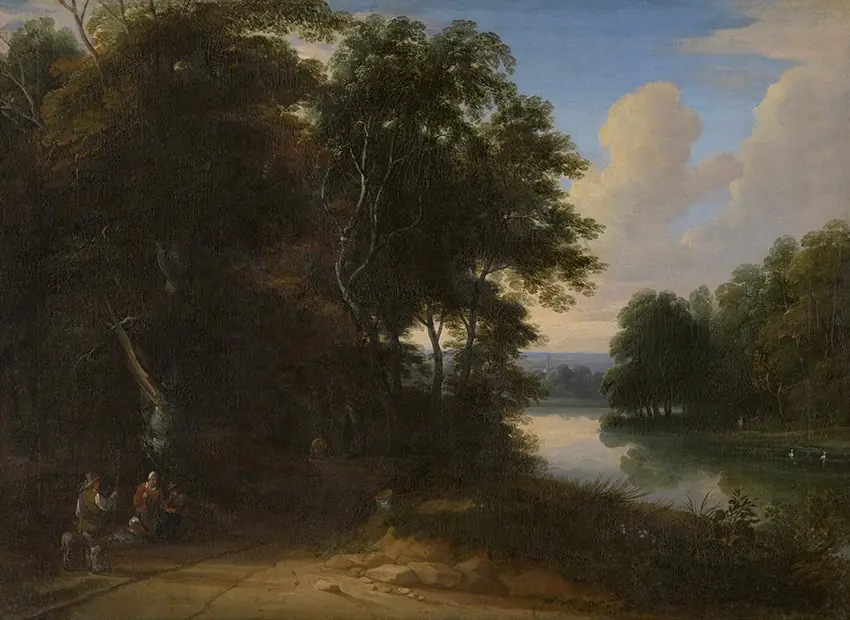 Boslandschap met rivier
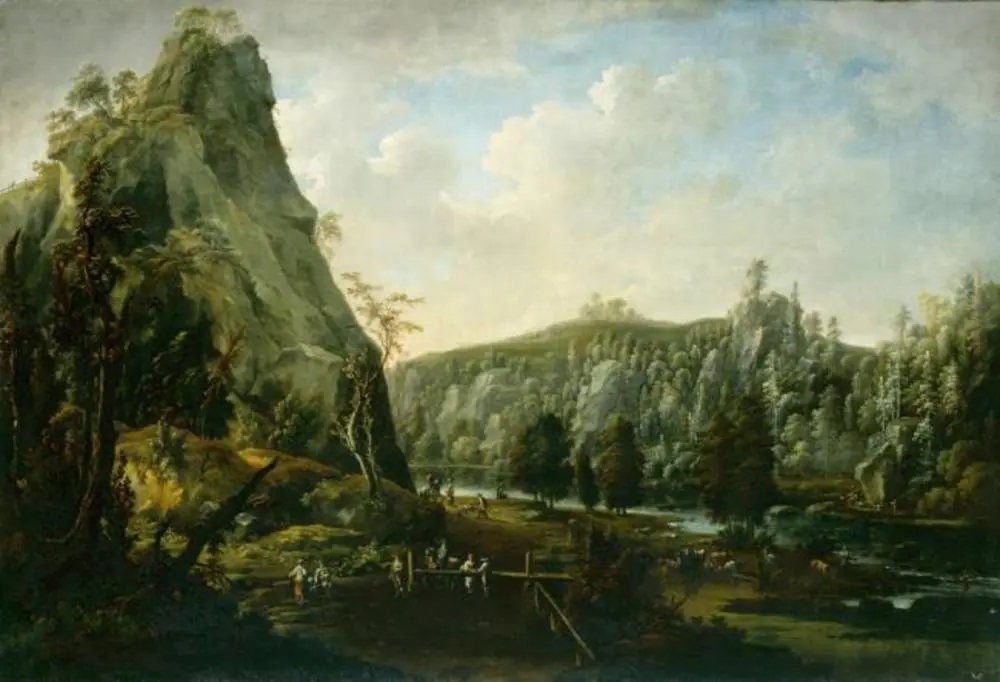 View of the so-called 'Plauensche Grund', a popular place for daytrips near Dresden
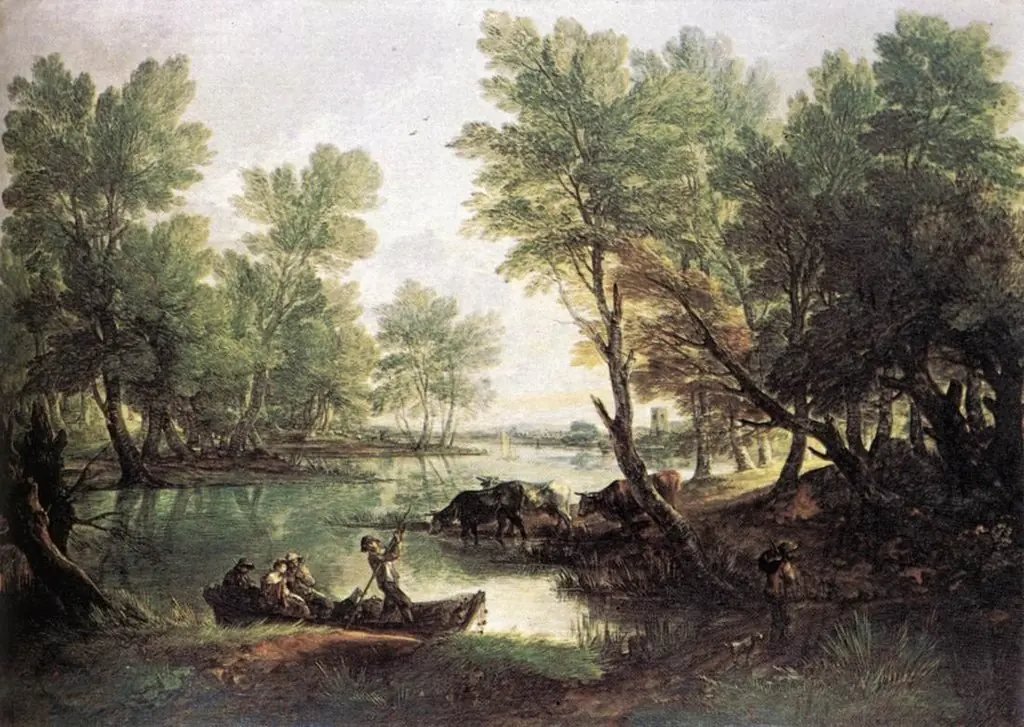 View near King's Bromley, on Trent, Staffordshire
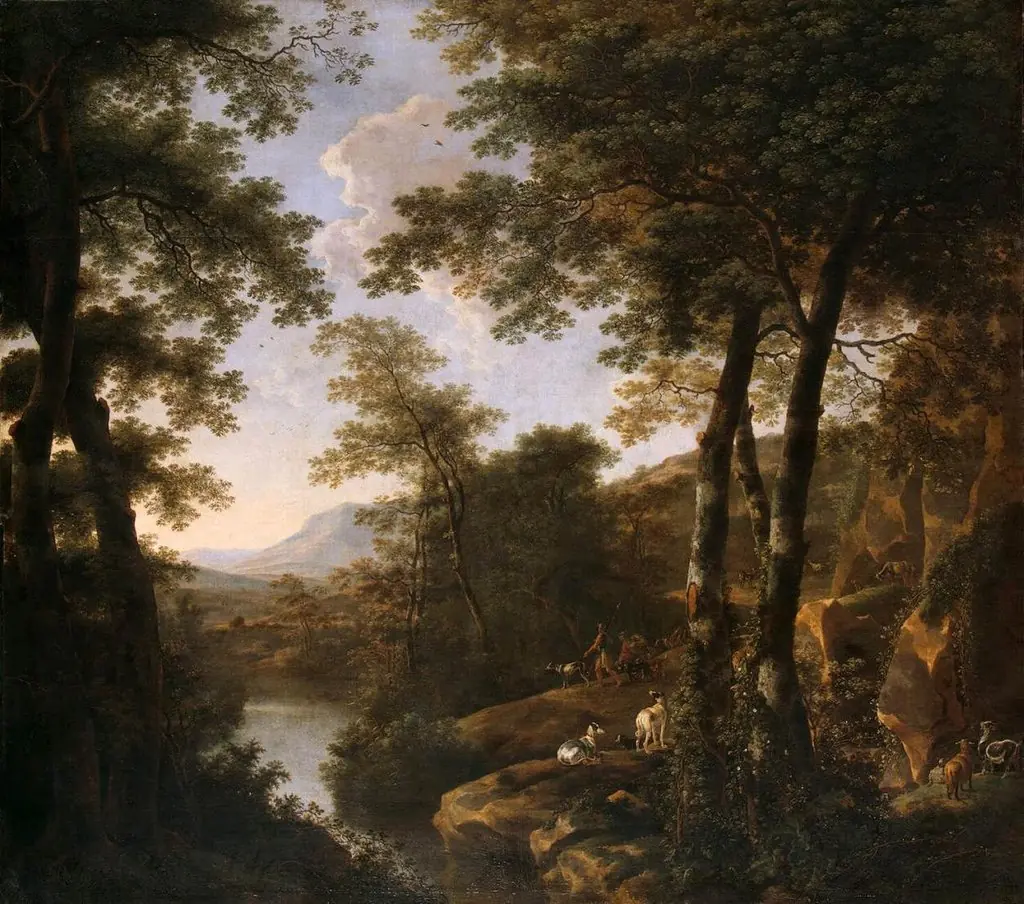 Italian Landscape with Roman Warriors
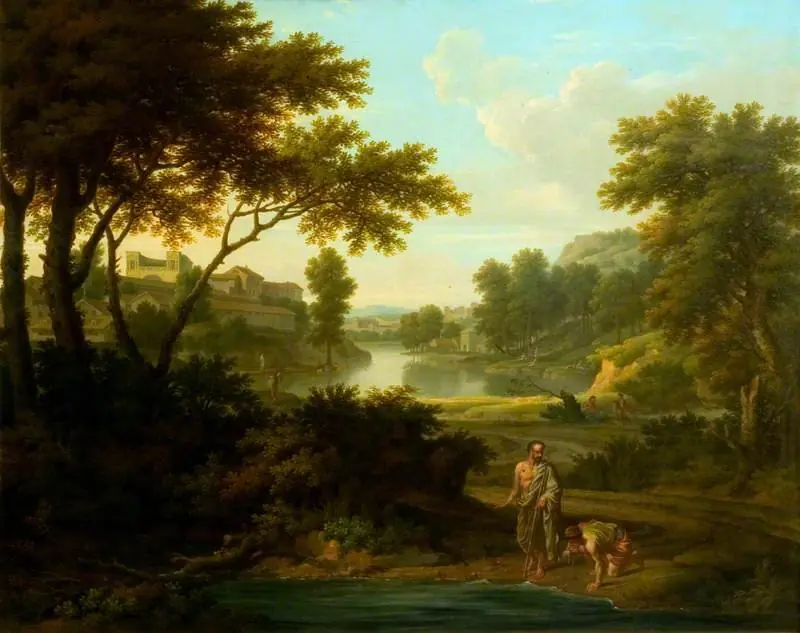 Diogenes Throwing away His Bowl (after Nicolas Poussin)
 Self-Portrait
 River landscape
 View at Hampstead
 Landscape in the Roman Campagna
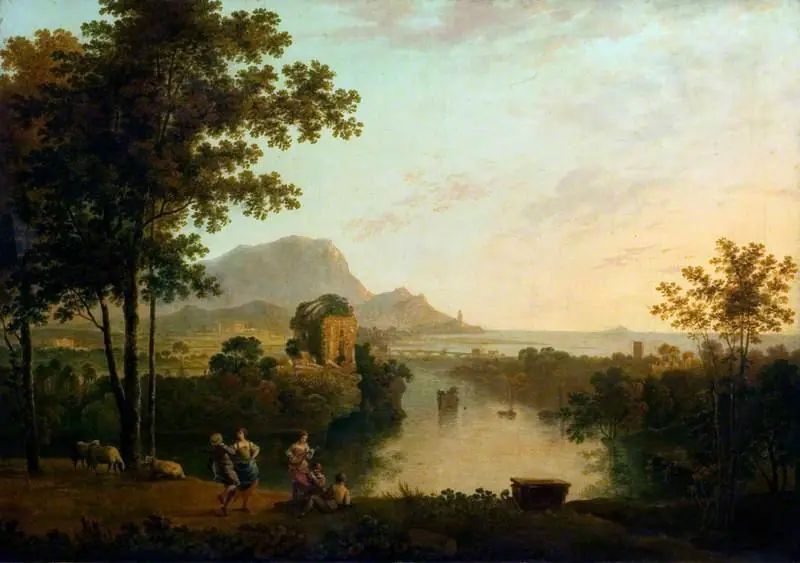 Landscape Composition: River Mouth with Peasants Dancing
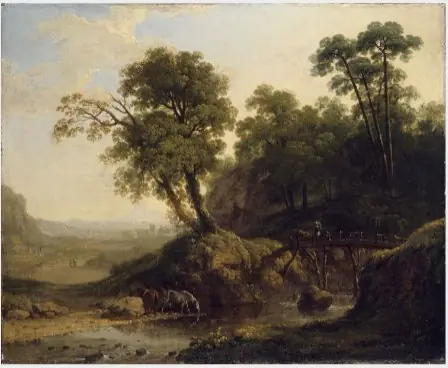 Landscape with a River and Horses by a Wooden Bridge