Artwork
Liber Studorium: Ben Arthur, Scotland
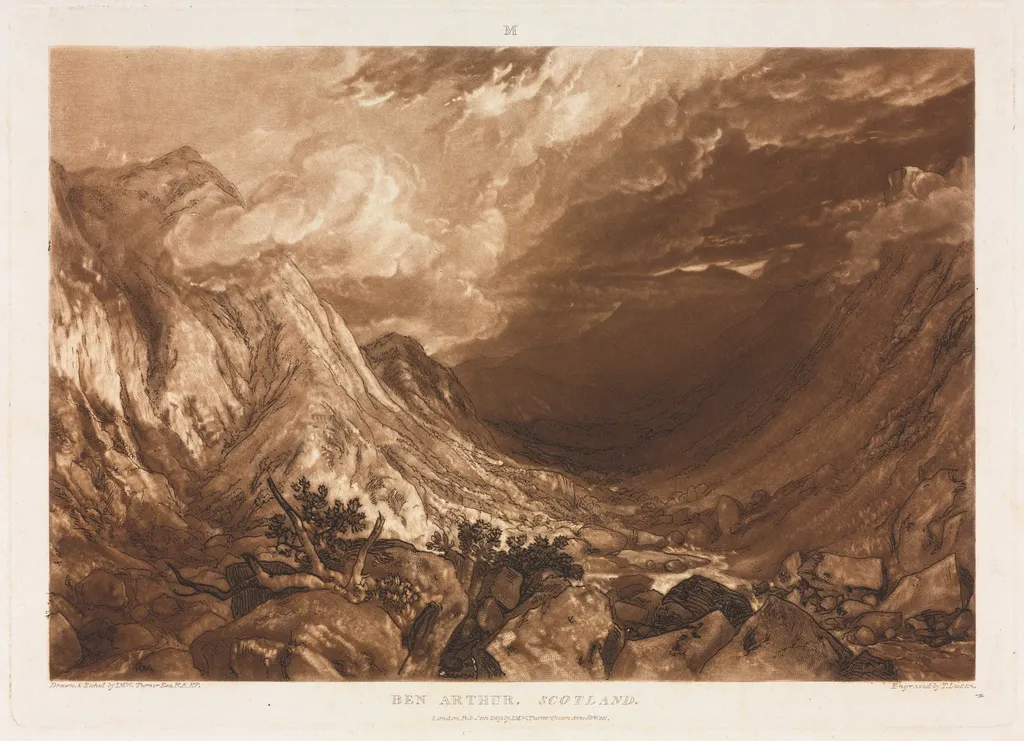
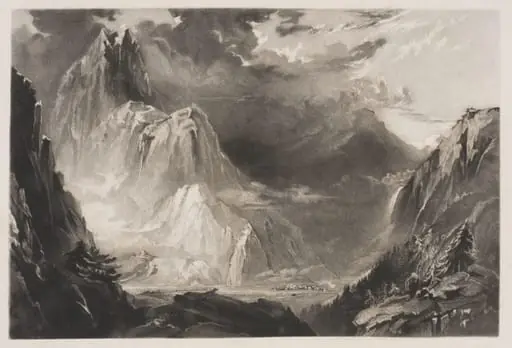
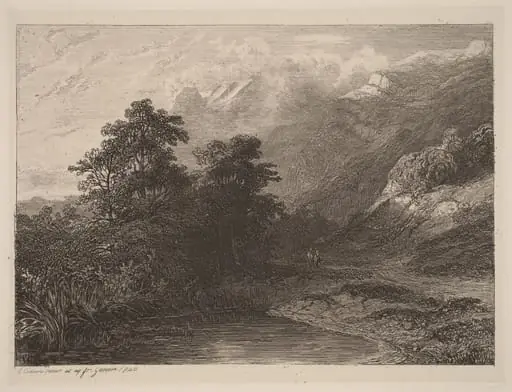
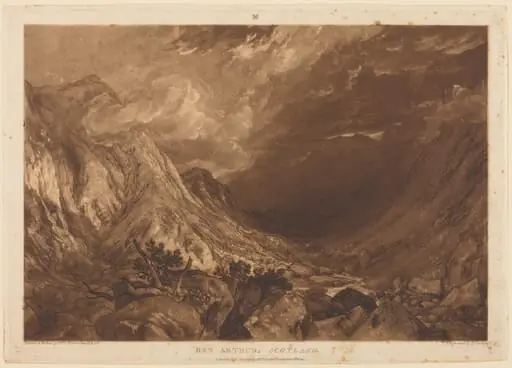
Liber Studorium: Ben Arthur, Scotland is a print by the Romanticist artist Thomas Guff Lupton. It dates from 1818 and is held in the collection of the Cleveland Museum of Art.
About this work
Overview
Created around 1818 by Thomas Guff Lupton, this print depicts the Scottish mountain Ben Arthur, known today as Ben Lomond. Executed in ink with meticulous line work and tonal shading, the piece belongs to the Liber Studiorum series, a collection of landscape prints inspired by Claude Lorrain’s compositional principles. It is currently held in the collection of The Cleveland Museum of Art.
Subject & Meaning
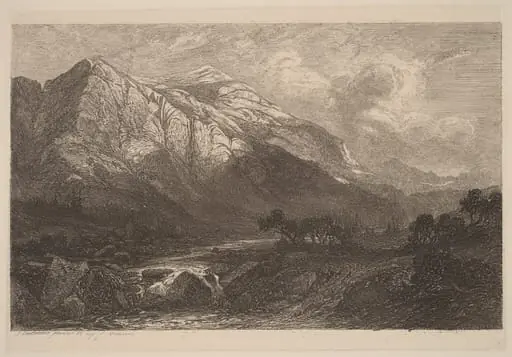
The print portrays a rugged Highland landscape dominated by steep, irregular peaks and uneven terrain. Swirling clouds obscure the upper sky, while sparse vegetation and exposed rock suggest a wild, untamed environment. The scene evokes solitude and elemental force, reflecting Romantic-era interests in nature’s sublime power rather than its picturesque charm.
Technique & Style
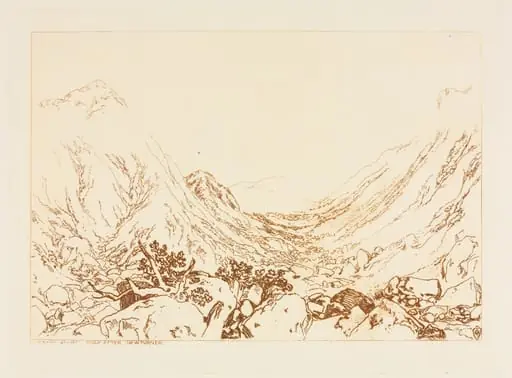
Lupton employed fine, controlled engraving lines to model form and depth, using cross-hatching and varied ink density to suggest volume and atmosphere.
Lupton employed fine, controlled engraving lines to model form and depth, using cross-hatching and varied ink density to suggest volume and atmosphere. The monochromatic palette of grays and browns enhances the somber mood, while the absence of color focuses attention on texture and spatial recession. The technique mirrors the precision of topographical drawing, yet elevates it through expressive tonal gradations.
History & Provenance
The print was produced as part of Lupton’s Liber Studiorum series, a project intended to elevate landscape printmaking through classical composition. It was likely issued in the late 1810s and entered The Cleveland Museum of Art’s collection through documented acquisition, though its earlier ownership history remains unrecorded in public sources.
Context
Lupton’s work emerged during a period when British artists sought to define a national identity through landscape. Inspired by Claude Lorrain and the writings of Edmund Burke on the sublime, he aimed to merge topographical accuracy with emotional resonance. Ben Arthur, a real and recognizable peak, served as both geographic anchor and symbolic vessel for nature’s grandeur.
Legacy
Though less widely known than contemporaries like Turner, Lupton’s prints contributed to the institutionalization of landscape as a serious artistic genre in Britain. His technical discipline and thematic focus influenced later printmakers who sought to balance naturalism with emotional depth, helping to shape 19th-century British print culture.
Own this work as a print
Artist & collection