Artwork
Capriccio with Edinburgh Castle and Arthur's Seat
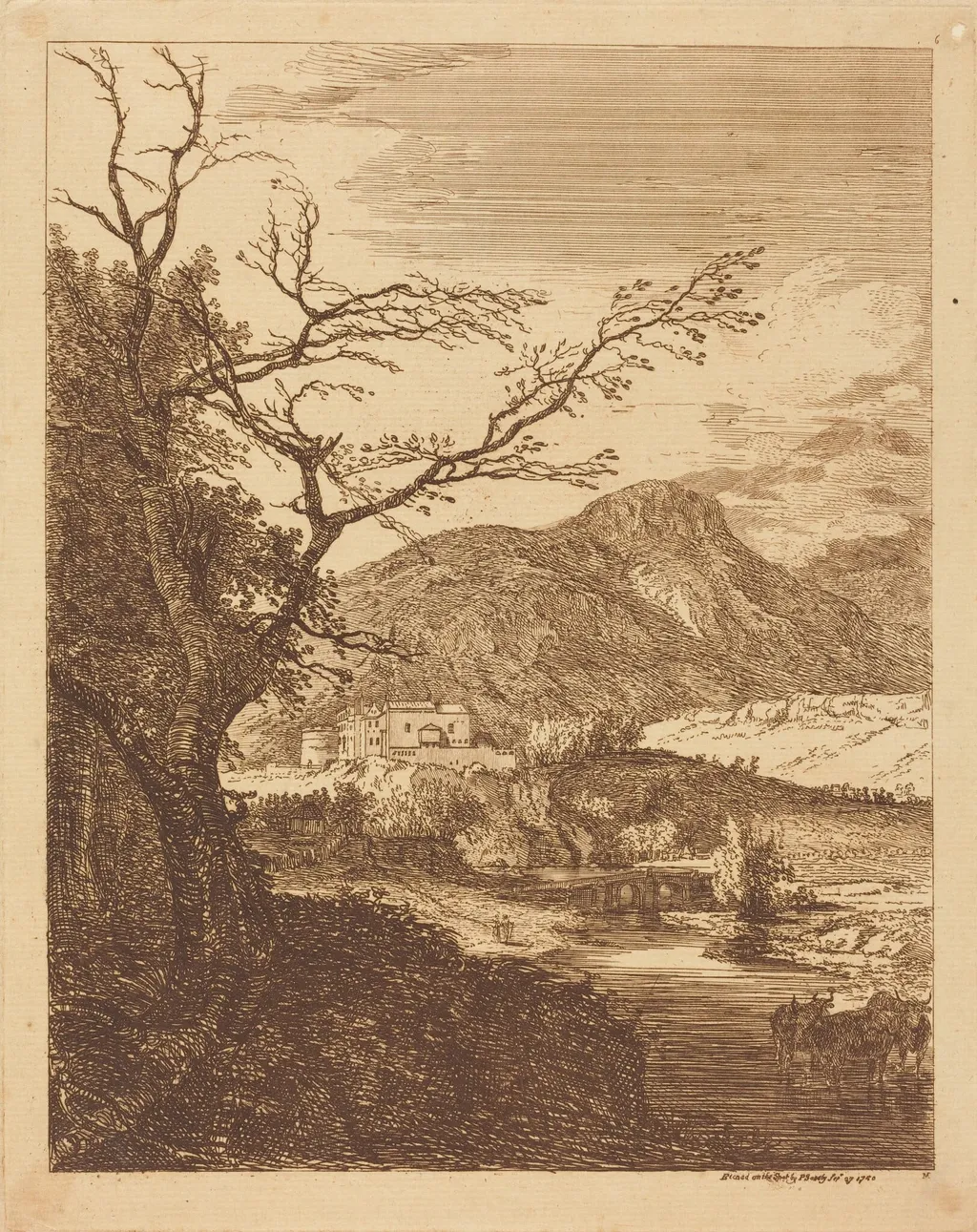
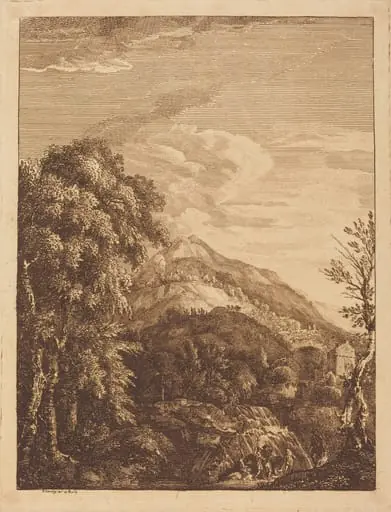
Capriccio with Edinburgh Castle and Arthur's Seat is an ink print by the Romanticist artist Paul Sandby. It dates from 1750 and is held in the collection of the National Gallery of Art.
About this work
Look closely at the shadows on the castle walls to see how he used drypoint, a technique where he scratched lines into the metal plate for fuzzy details.
This etching shows Edinburgh Castle perched on its rocky hill, with Arthur’s Seat rising behind it. The sky is full of swirling clouds, and the castle walls look crumbly but grand.
Paul Sandby made this in 1750. It’s an early example of a “capriccio”—a made-up landscape with real buildings mixed in. Sandby often mixed fact and fancy in his prints.
Look closely at the shadows on the castle walls to see how he used drypoint, a technique where he scratched lines into the metal plate for fuzzy details.
Overview
The 1750 etching titled *Capriccio with Edinburgh Castle and Arthur’s Seat* presents a imagined vista that combines the real silhouette of Edinburgh Castle with the volcanic hill of Arthur’s Seat. Rendered in black ink, the composition balances recognizable architecture against a dramatic sky, inviting viewers to contemplate both the physical site and its romanticized setting.
Subject & Meaning
The print juxtaposes the fortified castle perched on its crag with the looming dome of Arthur’s Seat, suggesting a dialogue between human construction and natural landscape. By placing the two landmarks together in a fanciful arrangement, the artist emphasizes the historic prominence of the castle while evoking the sublime qualities of the surrounding terrain.
Technique & Style
Sandby employed a combination of traditional etching and drypoint on a copper plate, allowing for fine line work alongside softer, velvety shadows where the drypoint burr creates a hazy effect. This hybrid approach yields crisp architectural details contrasted with atmospheric cloud formations, characteristic of the capriccio genre that blends accurate topography with inventive composition.
History & Provenance
Created by the English cartographer and landscape painter Paul Sandby, the work reflects his early interest in merging mapmaking precision with artistic imagination. Sandby later helped found the Royal Academy in 1768, and the etching remains documented in several British print collections, illustrating his contribution to 18th‑century printmaking.
Context
During the mid‑1700s, capriccio prints enjoyed popularity among travelers and collectors seeking picturesque representations of foreign locales. Sandby’s choice of Edinburgh—a city of growing interest to the British elite—aligns with this trend, offering a stylized yet recognizable image that catered to both topographical curiosity and the era’s taste for the picturesque.
Artist & collection
Artist
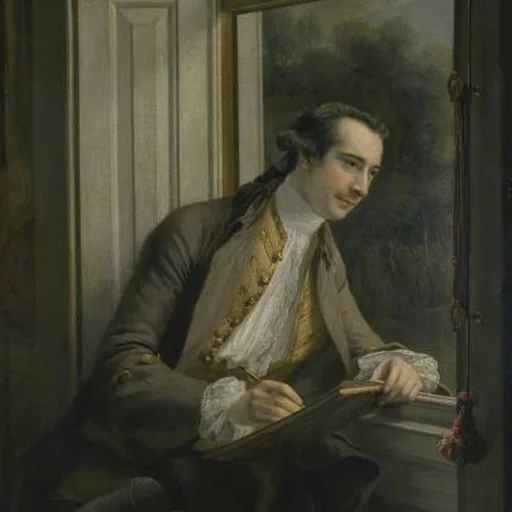
Paul Sandby, (1731 – 7 November 1809) was an English mapmaker and painter who specialised in landscape art. Along with his older brother Thomas Sandby, he was one of the founding members of the Royal Academy in 1768.

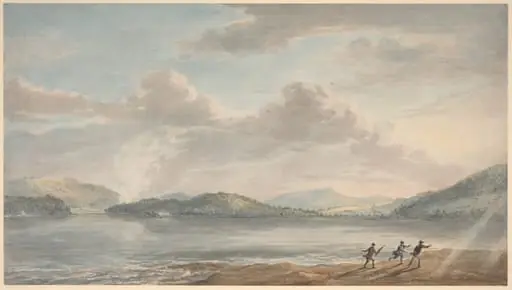
![Girl with a Bonnet Reclining [verso], by Paul Sandby](https://artifactworldgallery.com/img/paul-sandby--girl-with-a-bonnet-reclining-verso--0928b033ed2f6a70-w320.webp)
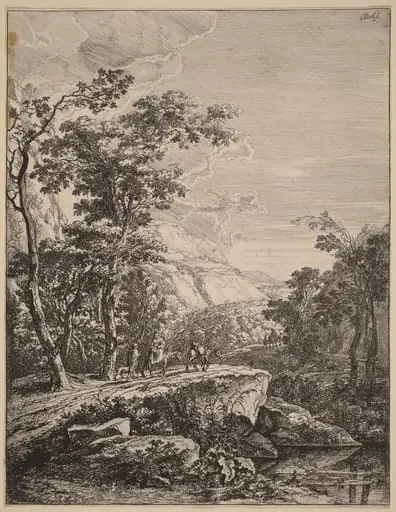 The Woman on the Hinny
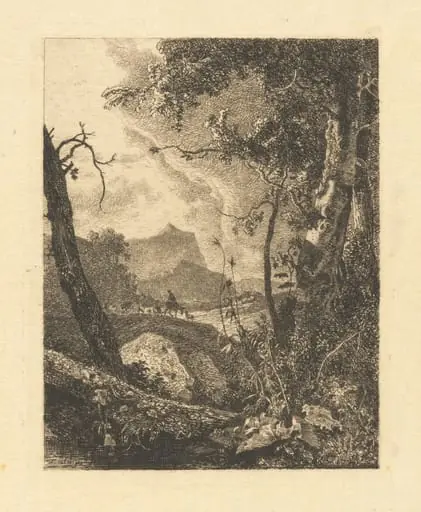 Italian Landscape
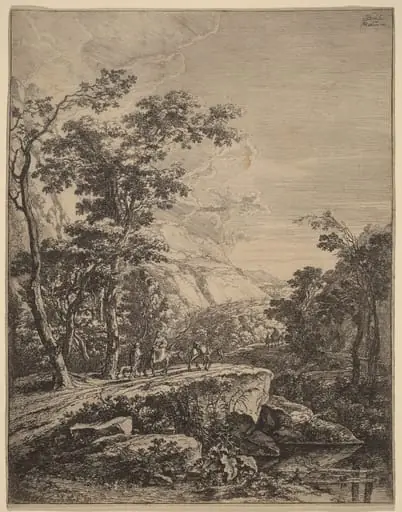 The Woman on the Hinny
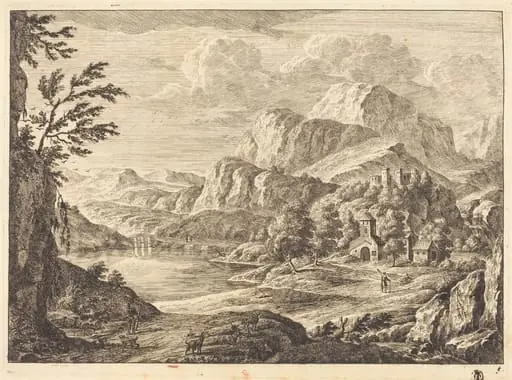 Mountainous Landscape with a Ruined Castle and an Arched Bridge in the Distance
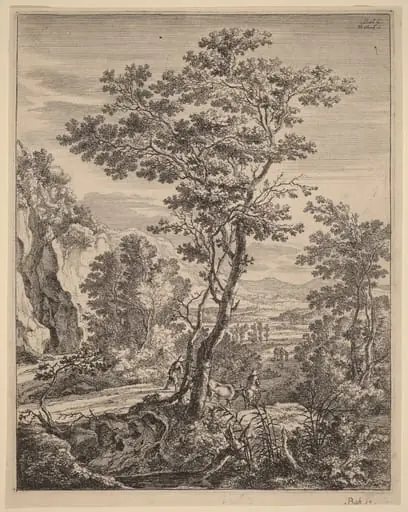 The Large Tree
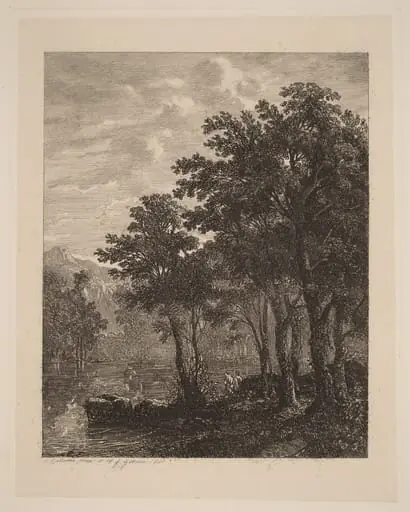 Trees by a River
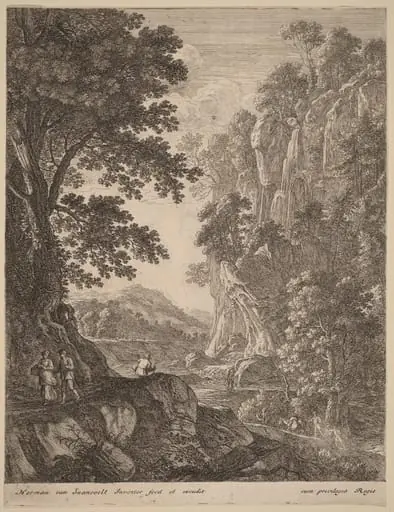 The Large Cascade
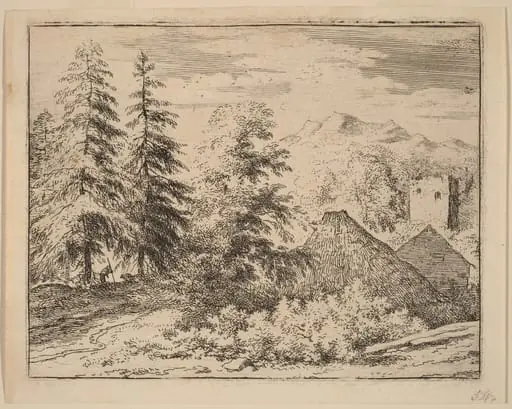 Man between Two Fir Trees
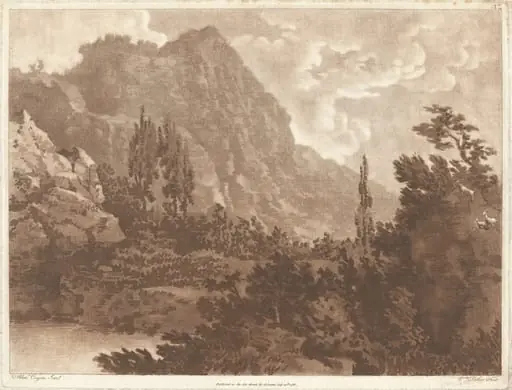 A second drawing done from the same blot
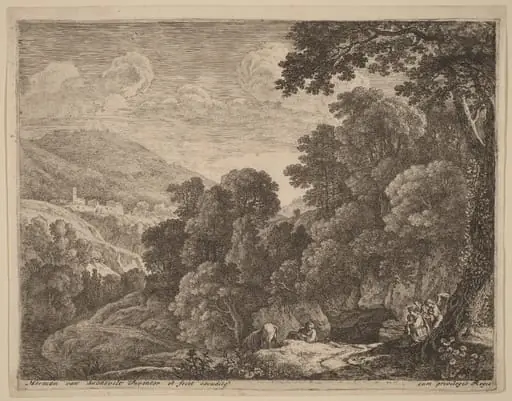 The Cave
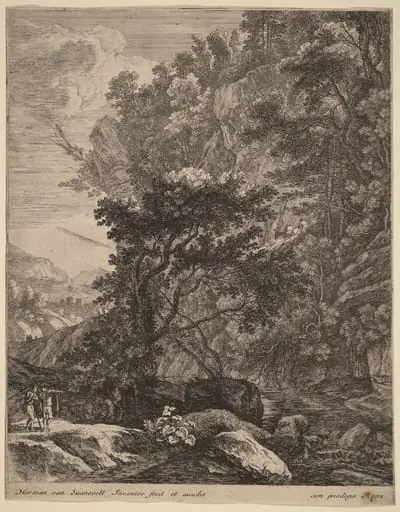 The Mountain
 Mountainous Landscape with a Waterfall, Round Tower, Castle, and Banditti