Artwork
Untitled
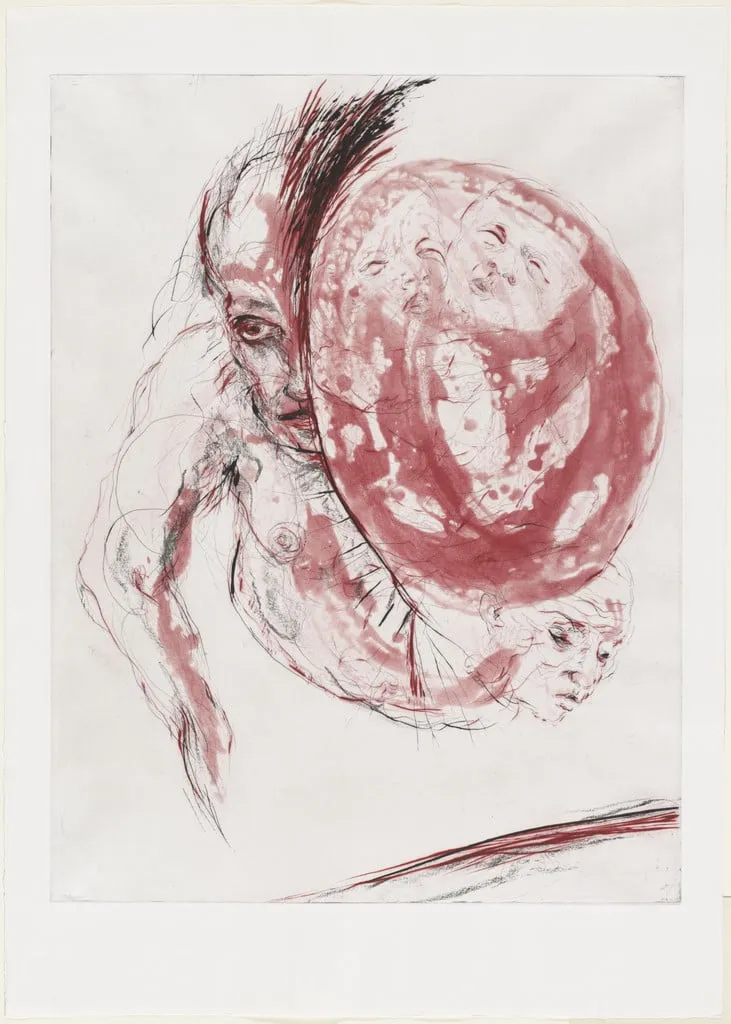
Untitled is an ink print by Thomas Lüchinger. It dates from 1987 and is held in the collection of the Museum of Modern Art.
About this work
Overview
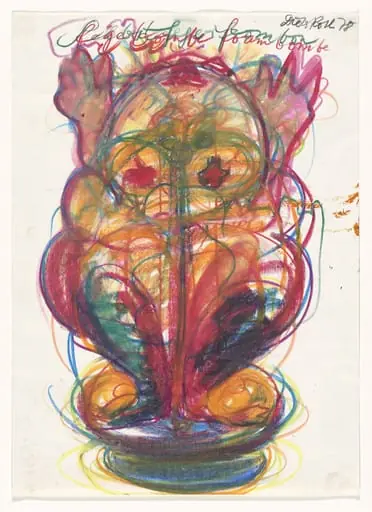
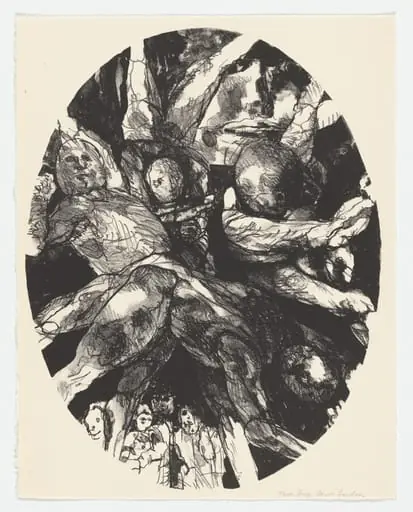
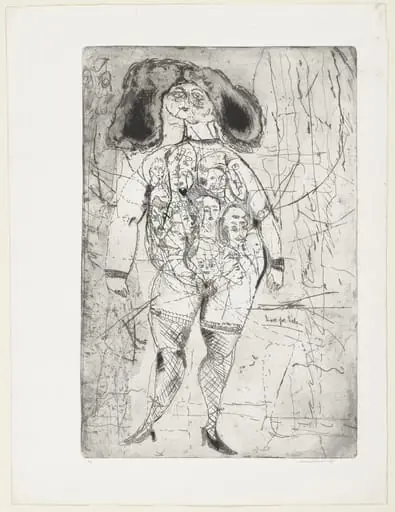
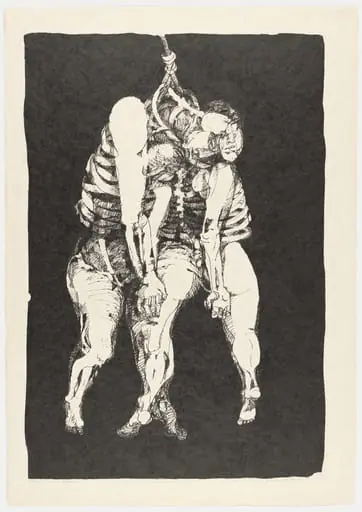
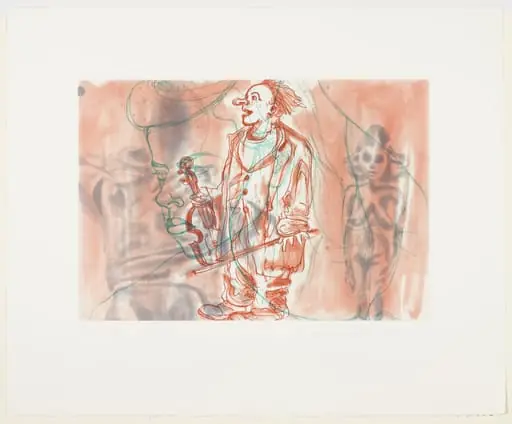
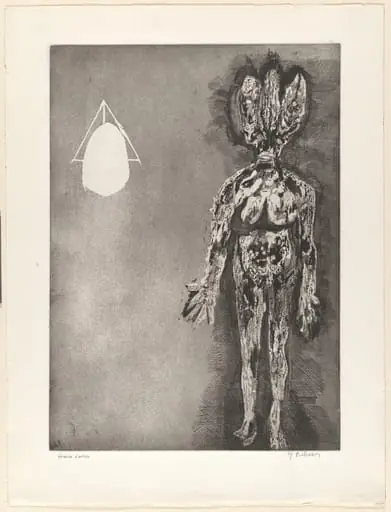
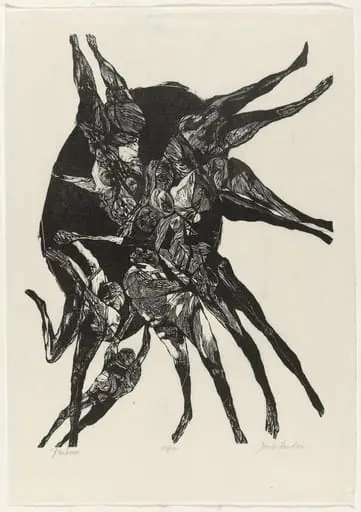
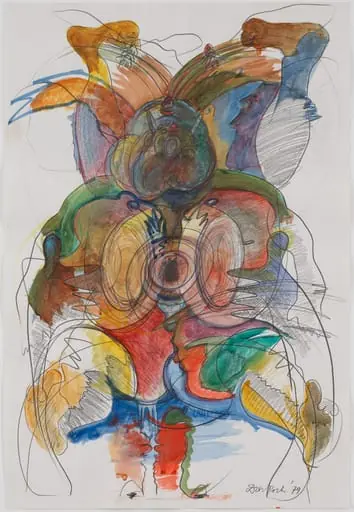
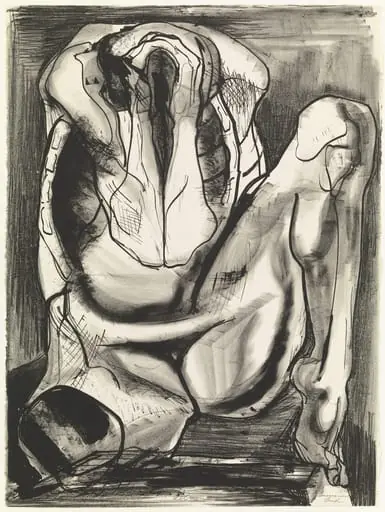
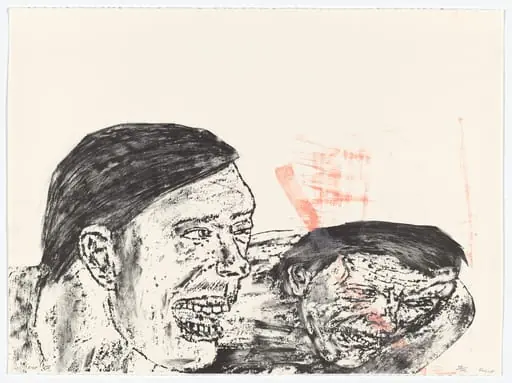
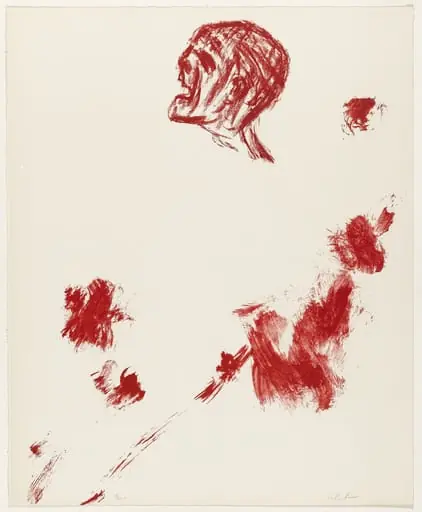
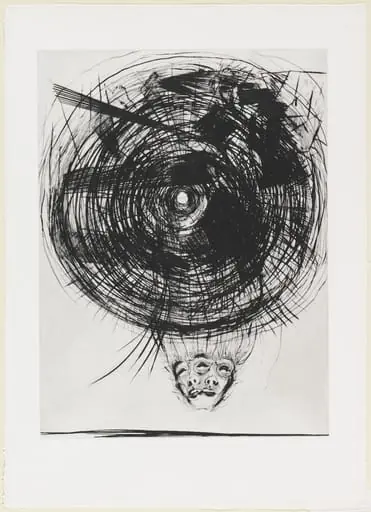
Created in 1987 by Thomas Lüchinger, this print combines soft ground etching, drypoint, and aquatint to produce a layered monochromatic image. It is part of the collection at The Museum of Modern Art. The work presents a single human form rendered in red and black inks, emphasizing movement through gestural line work and tonal contrast rather than detailed realism.
Subject & Meaning
The figure, ambiguously gendered and bearded, is contorted into a spiraling posture, suggesting internal strain or physical exertion.
The figure, ambiguously gendered and bearded, is contorted into a spiraling posture, suggesting internal strain or physical exertion. Its elongated limbs and coiled torso imply motion frozen mid-action, evoking psychological tension rather than narrative. The absence of context or environment directs focus to the body’s emotional resonance, leaving interpretation open to the viewer’s perception of energy and confinement.
Technique & Style
Lüchinger employs drypoint for its rough, velvety lines to define the figure’s contours, while aquatint creates subtle gradations of tone. Soft ground etching introduces textural variation, particularly in the hair and background. Red ink adds warmth and depth to the torso, contrasting with the stark black outlines. The interplay of these techniques enhances the sense of physical tension without relying on chiaroscuro.
History & Provenance
The work was produced in 1987 during a period when Lüchinger was actively exploring figural abstraction in printmaking. It entered The Museum of Modern Art’s collection shortly after its creation, likely through acquisition or donation. No public record of prior ownership exists, and the print remains one of fewer than a dozen known impressions from the edition.
Context
Emerging in the late 1980s, Lüchinger’s work responded to broader European trends in expressive printmaking, where artists revisited etching techniques to convey psychological states. Unlike narrative-driven imagery of the time, this piece aligns with a shift toward abstraction and bodily metaphor, reflecting concerns with identity and emotional volatility in postmodern art.
Legacy
Though not widely exhibited, this print is cited in scholarly discussions of late 20th-century printmaking for its technical synthesis and emotional intensity. It remains a representative example of how traditional etching methods were adapted to express non-narrative, embodied experience, influencing subsequent generations of printmakers focused on gesture over representation.
Artist & collection