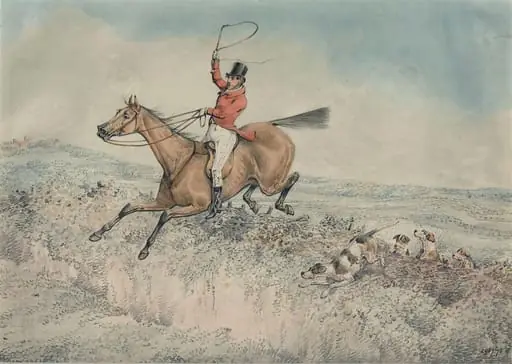
Artwork
Fox Hunting, No. 1
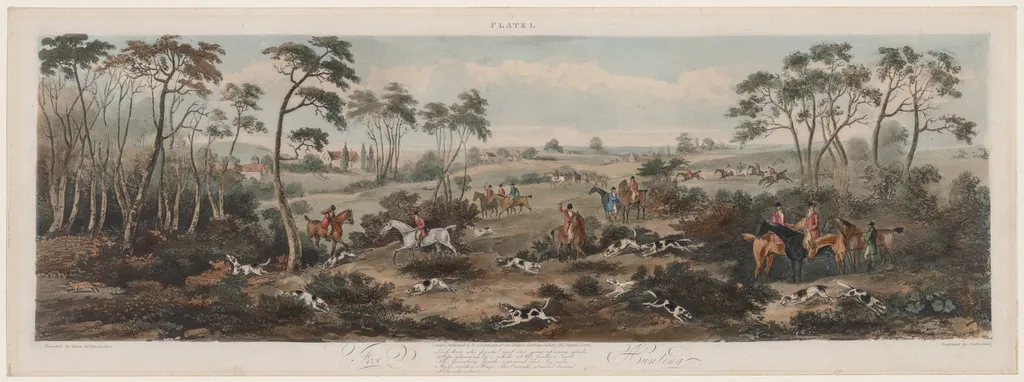
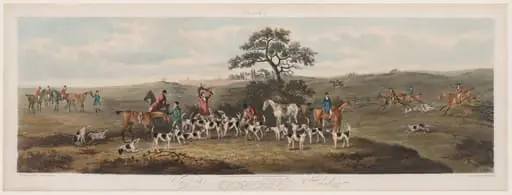
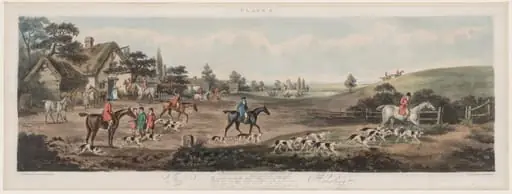
Fox Hunting, No. 1 is a print by Thomas Sutherland. It dates from 1821 and is held in the collection of the Cleveland Museum of Art.
About this work
Overview
This print reflects the popularity of sporting imagery in Regency-era Britain, aligning with publications like Ackermann’s *The Microcosm of London*.
Thomas Sutherland, a British printmaker active in the early 1800s, produced *Fox Hunting, No. 1* circa 1821 as part of a series capturing rural sport. Working primarily in aquatint, he rendered dynamic scenes with nuanced tonal gradations. This print reflects the popularity of sporting imagery in Regency-era Britain, aligning with publications like Ackermann’s *The Microcosm of London*. Sutherland’s focus on movement and atmosphere distinguished his work within the printmaking tradition of the time.
Subject & Meaning
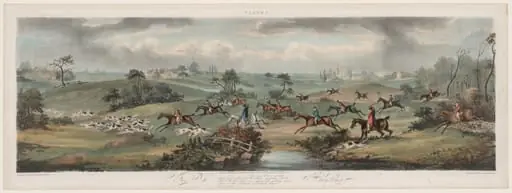
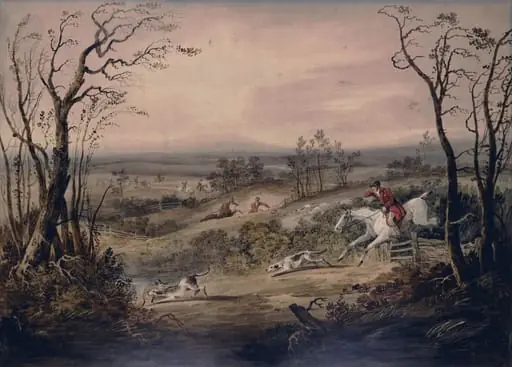
The scene depicts a fox hunt in motion: a rider in red coat leads a charge on a white horse, while hounds surge forward through dense undergrowth. The fox, though unseen, is implied by the urgency of the chase. Such imagery reinforced social hierarchies and landed gentry customs, where hunting was both recreation and ritual. The composition emphasizes momentum and control, reflecting the cultural value placed on order within chaos.
Technique & Style
Sutherland employed aquatint to achieve soft atmospheric transitions, particularly in the hazy background where light diffuses over distant fields. Fine lines define the figures and animals, while graded tones suggest depth and movement. His method favored subtle gradations over sharp detail, allowing the viewer to perceive action without literal precision. This technique aligned with contemporary tastes for evocative, rather than documentary, depictions of rural life.
History & Provenance
Created around 1821, the print likely circulated as part of a commercial series, possibly linked to Ackermann’s publishing ventures. Sutherland’s reputation rested on his military and sporting prints, which appealed to middle-class collectors interested in national pastimes. No specific early ownership records are documented, but similar works from his oeuvre appear in institutional collections, suggesting broad distribution within Britain during the 1820s.
Context
Fox hunting was a deeply embedded social practice among the British elite, symbolizing landownership, discipline, and continuity. Printmakers like Sutherland translated these events into accessible imagery, catering to urban audiences who admired rural traditions from a distance. The genre flourished alongside rising literacy and print culture, making sporting scenes a staple of domestic decoration and national identity in the early 19th century.
Legacy
Sutherland’s *Fox Hunting, No. 1* contributes to a documented visual record of British rural life before industrialization transformed the landscape. While not widely celebrated today, his prints remain valuable for their technical precision and cultural insight. They offer a window into how leisure activities were framed as noble pursuits, influencing later depictions of the countryside in both art and literature.
Artist & collection
Artist
Thomas Sutherland (1785–1838) was a British engraver and aquatinter. As well as contributing illustrations to Rudolf Ackermann's The Microcosm of London, he also produced a series of prints based on the Peninsular War.