Artwork
Portrait du Caravage (Portrait of Caravaggio)
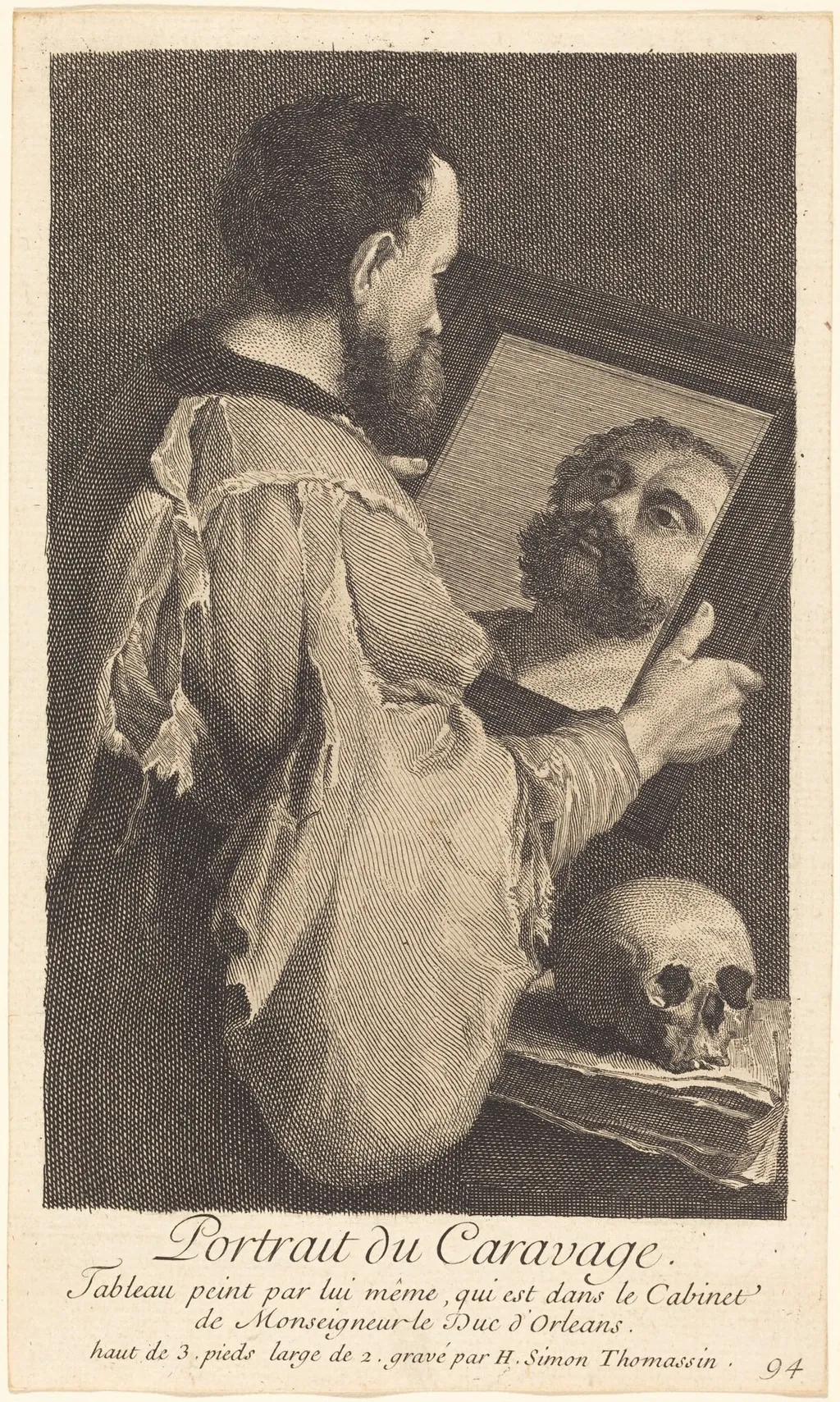
Portrait du Caravage (Portrait of Caravaggio) is an ink print by the Baroque artist Henri Simon Thomassin. It dates from 1714 and is held in the collection of the National Gallery of Art.
About this work
Overview
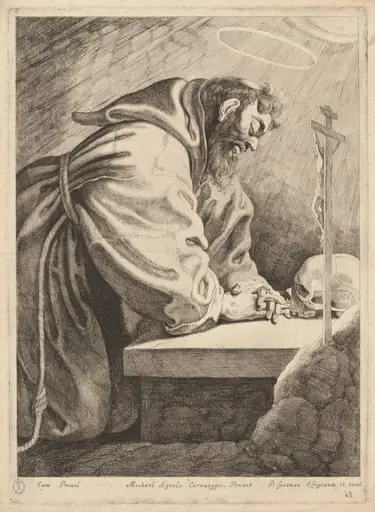
Henri Simon Thomassin’s 1714 engraving, titled *Portrait du Caravage*, presents a bearded figure in loose robes. The subject holds a miniature portrait of another bearded individual while a skull rests on his lap. The composition relies on stark contrasts of light and shadow, creating a dramatic visual effect typical of early‑18th‑century printmaking.
Subject & Meaning
The central figure is identified as the painter Caravaggio, though the work is a later interpretation rather than a contemporary likeness. The inclusion of a skull—a memento mori—references the transience of life, echoing the mortality themes that recur in Caravaggio’s own paintings.
Technique & Style
Executed on heavy laid paper, Thomassin employs fine line work and cross‑hatching to model forms and suggest volume. The engraving’s chiaroscuro effect is achieved through dense, layered strokes that deepen shadows and illuminate the face and objects, demonstrating the printmaker’s skill in translating painterly drama to a monochrome medium.
History & Provenance
Created in 1714, the print reflects a posthumous fascination with Caravaggio that grew in the early 18th century. It was produced by Thomassin, a French engraver known for reproducing works of earlier masters, and circulated among collectors interested in the legacy of the Italian Baroque artist.
Context
During the period, engravings served as a primary means of disseminating images of celebrated artists across Europe. Thomassin’s work fits within this tradition, offering a visual homage that blends portraiture with symbolic elements, thereby reinforcing Caravaggio’s reputation as a revolutionary figure in art history.
Legacy
While not an authentic portrait, the engraving contributed to the mythologizing of Caravaggio in the centuries following his death. Its striking use of light and symbolic objects influenced later printmakers who sought to capture the dramatic intensity associated with the Baroque master.
Artist & collection


![Head of a Man [recto], by Théodore Géricault](https://artifactworldgallery.com/img/theodore-gericault--head-of-a-man-recto--d6e68ba78da40efa-w320.webp)