Artwork
Saint Jerome
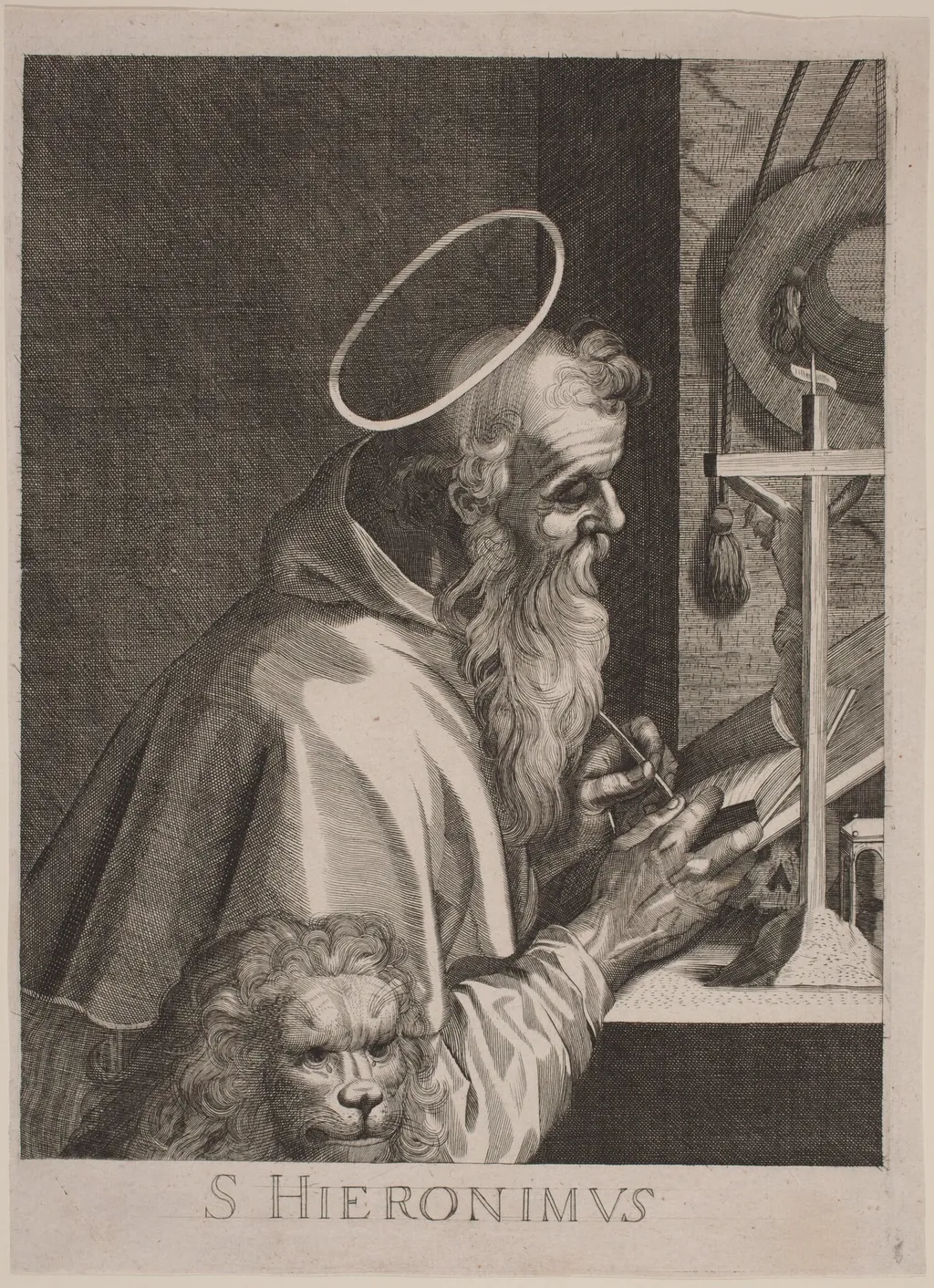
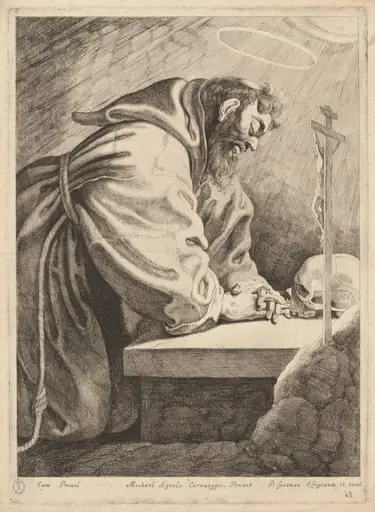
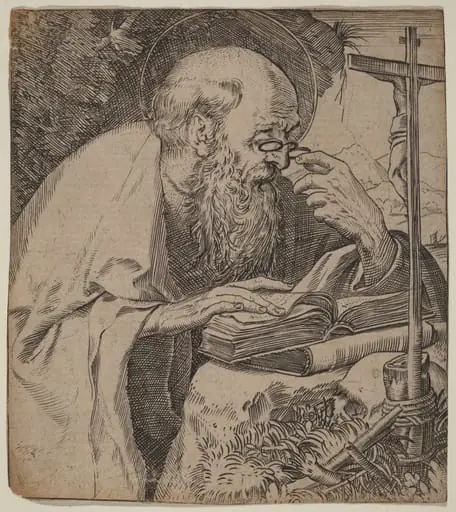
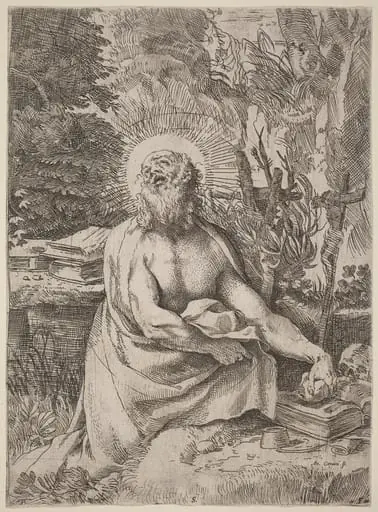
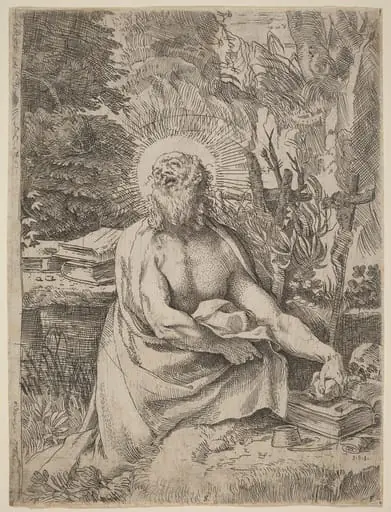
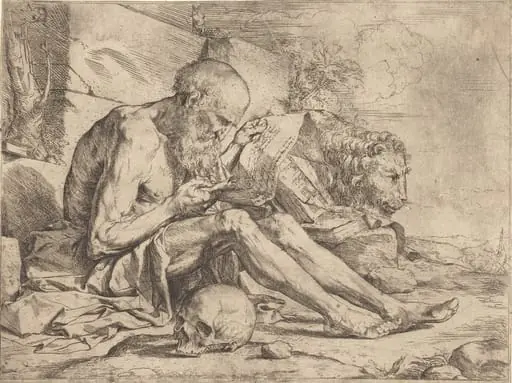
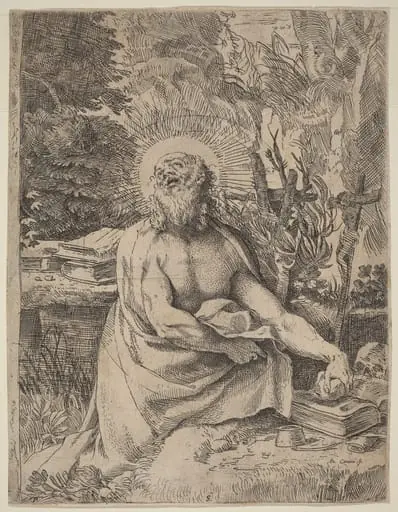
Saint Jerome is an ink print by the Renaissance artist Italian 17th Century. It dates from 1595 and is held in the collection of the National Gallery of Art.
About this work
Overview
This engraving on laid paper portrays Saint Jerome in a contemplative setting, emphasizing his scholarly devotion through meticulous detail and composition.
Subject & Meaning
The subject, Saint Jerome, is depicted in a state of intense focus, highlighting his role as a translator of religious texts. The inclusion of a lion, a symbol associated with Jerome, reinforces his identity.
Technique & Style
The use of engraving on laid paper creates a high-contrast image, with the dark background accentuating the subject's features and emphasizing the serene, introspective atmosphere.
History & Provenance
Created during the Renaissance, this work reflects the period's emphasis on religious figures and scholarly pursuits. However, specific details about its creation and ownership history are not provided.
Context
As part of the Renaissance movement, this engraving aligns with the era's revival of classical themes and its focus on individualism, as seen in the detailed, personal portrayal of Saint Jerome.
Legacy
While the broader impact of this specific engraving is not detailed, it contributes to the enduring representation of Saint Jerome in art history, symbolizing intellectual and religious dedication.
Artist & collection

Artist
This Italian artist worked in the 17th century, making engravings, ink drawings, and oil paintings.