Artwork
Singnora Pasta of the Théâtre Royal Italien at Paris
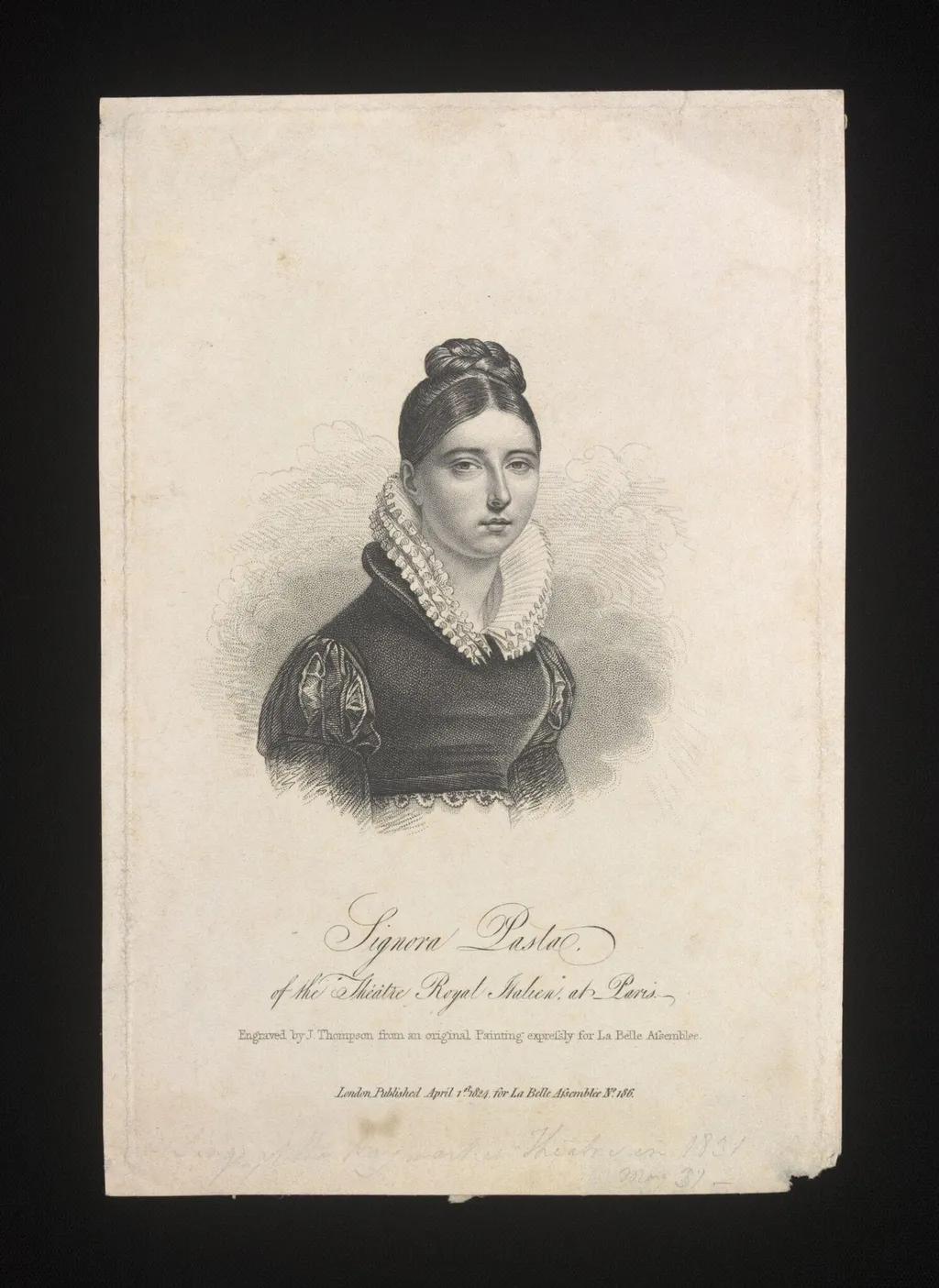
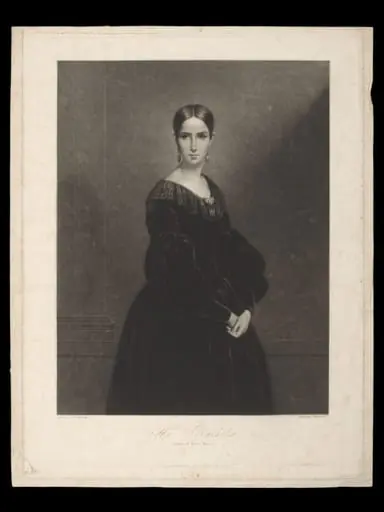
Singnora Pasta of the Théâtre Royal Italien at Paris is a print by the Romanticist artist Thompson. It dates from 1 and is held in the collection of the Victoria and Albert Museum.
About this work
Overview
A lithographic print from April 1824 portrays Giuditta Pasta, a celebrated Italian soprano, in her role at the Théâtre Royal Italien in Paris.
A lithographic print from April 1824 portrays Giuditta Pasta, a celebrated Italian soprano, in her role at the Théâtre Royal Italien in Paris. Produced for the British periodical La Belle Assemble, the image captures her public persona during the height of her European fame. The print was part of a series documenting prominent cultural figures, intended for a middle-class audience interested in the arts.
Subject & Meaning
Giuditta Pasta was renowned for her expressive vocal technique and dramatic presence in bel canto operas. This portrait emphasizes her elegance and stage authority, reflecting her status as a leading soprano of the era. The image functions not as a literal scene from an opera, but as a symbolic representation of her artistic identity, aligning her with the refined tastes of European high culture.
Technique & Style
The print employs lithography, a relatively new medium at the time, allowing for fine detail and tonal nuance. The composition is formal, with Pasta depicted in profile or three-quarter view, dressed in period-stage attire. Background elements are minimal, directing focus to her poised demeanor and facial expression, characteristic of early 19th-century portraiture in print.
History & Provenance
The print was published in London by La Belle Assemble, a monthly magazine targeting women of the upper and middle classes. It entered the Harry Beard Collection, a significant archive of theatrical memorabilia assembled in the late 19th and early 20th centuries. The collection later became part of the Victoria and Albert Museum’s holdings, preserving its cultural documentation.
Context
In the early 1820s, Pasta was among the most admired singers in Europe, particularly noted for her performances in Rossini and Bellini operas. Her appearances in Paris drew elite audiences and generated widespread media attention. This print reflects the growing intersection of music, print culture, and celebrity in the Romantic era, as public fascination with performers translated into mass-produced imagery.
Legacy
The print endures as a visual record of Pasta’s influence on operatic performance and the rise of the singer as a cultural icon. It exemplifies how print media helped shape public perception of artists beyond the concert hall. Today, it remains a key artifact in studies of 19th-century performance history and the commodification of artistic fame.
Artist & collection
Artist
This artist made a single print of a singer on stage in 1824. In “Signora Pasta of the Théâtre Royal Italien at Paris,” she captured the moment in crisp black lines on paper. The scene belongs to the early 1800s, when…