Artwork
Angelica and Medoro
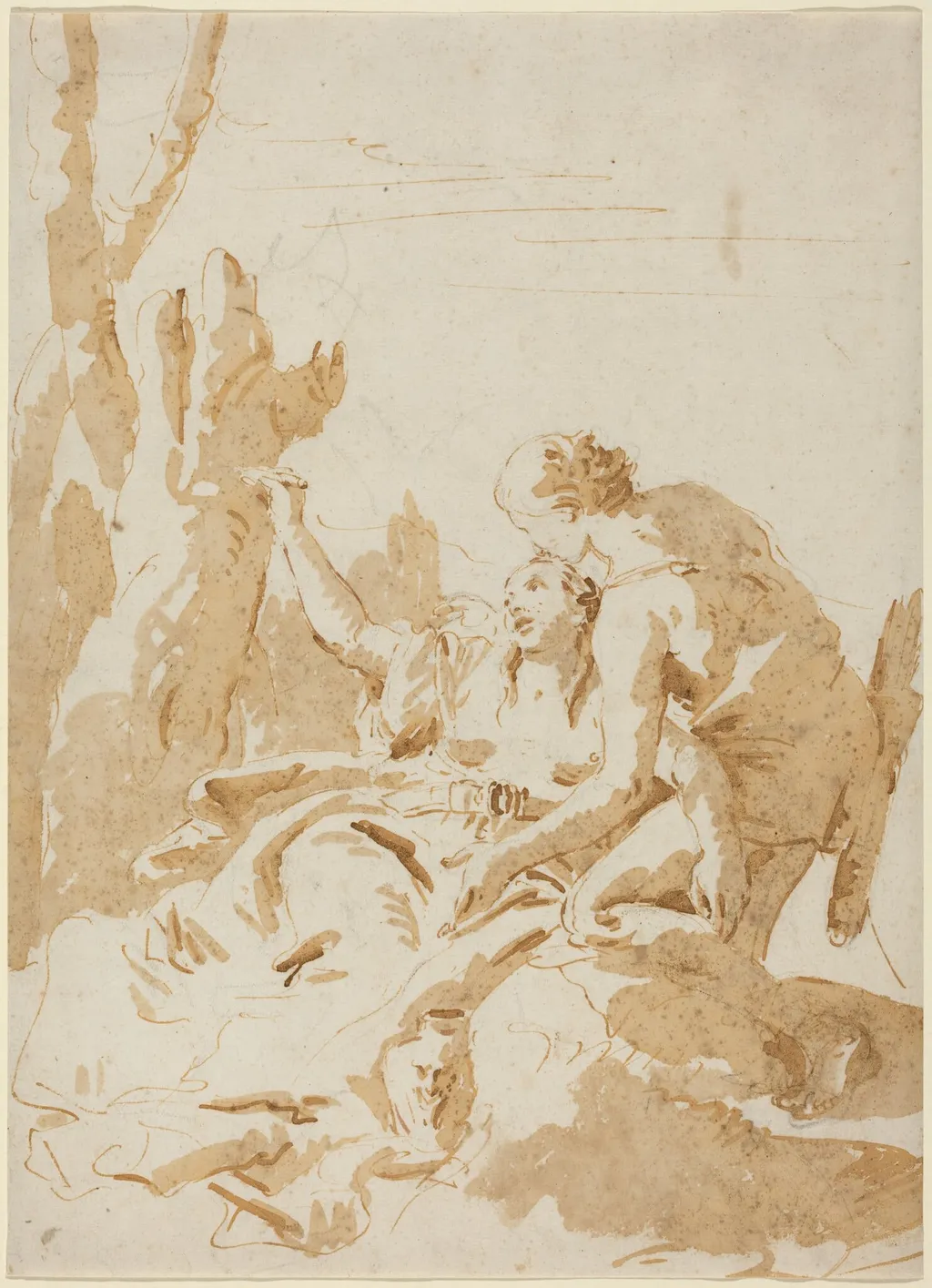
Angelica and Medoro is a chalk drawing by the Baroque artist Giovanni Battista Tiepolo. It dates from 1742 and is held in the collection of the National Gallery of Art.
About this work
Overview
Executed on laid paper, the work measures the delicate balance of narrative and atmosphere, focusing on the seated woman and the standing man whose hands meet.
Created in 1742, Giovanni Battista Tiepolo’s drawing *Angelica and Medoro* presents a quiet, intimate encounter between two figures set within a forested backdrop. Executed on laid paper, the work measures the delicate balance of narrative and atmosphere, focusing on the seated woman and the standing man whose hands meet. The composition is rendered almost entirely in muted brown tones, giving the scene a cohesive, subdued mood.
Subject & Meaning
The image illustrates a moment from Ludovico Ariosto’s epic poem *Orlando Furioso*, when the enchantress Angelica and the wounded soldier Medoro share a tender exchange amid the woods. Their closeness suggests a pause from the surrounding turmoil of the narrative, emphasizing personal affection over the larger heroic conflicts that dominate the poem.
Technique & Style
Tiepolo employed pen and brown ink, layered with a brown wash over black chalk, allowing for subtle gradations of tone. The drawing’s texture reveals the artist’s hand through visible strokes that model the foliage and clothing. While the overall palette is restrained, the fluid line work and airy composition reflect the Rococo sensibility that Tiepolo cultivated, merging elegance with a light, dynamic handling of form.
History & Provenance
The work belongs to the prolific period when Tiepolo was active across Venice, Germany, and Spain, producing both large-scale paintings and intimate drawings. Though specific ownership records are limited, the piece exemplifies the artist’s practice of creating preparatory or independent studies that circulated among patrons and collectors interested in his narrative subjects.
Context
*Angelica and Medoro* sits at the intersection of late Baroque drama and emerging Rococo refinement. While Baroque art often emphasized stark chiaroscuro and theatrical intensity, Tiepolo’s drawing adopts a softer approach, focusing on gentle interaction and delicate modeling. This shift mirrors broader 18th‑century tastes that favored elegance and emotional nuance over overt spectacle.
Artist & collection

Artist
Giovanni Battista Tiepolo, also known as Giambattista Tiepolo, was an Italian painter and printmaker from the Republic of Venice who painted in the Rococo style, considered an important member of the 18th-century Venetian school.

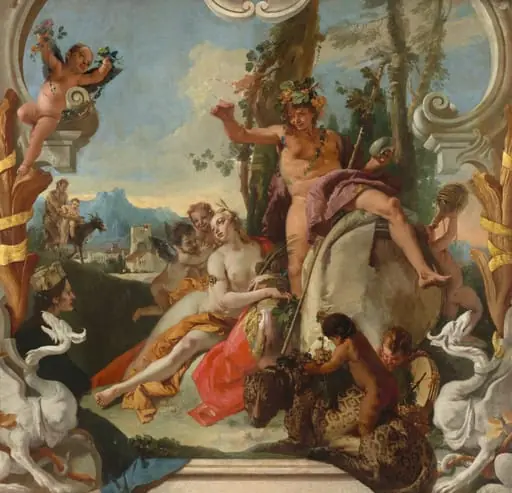
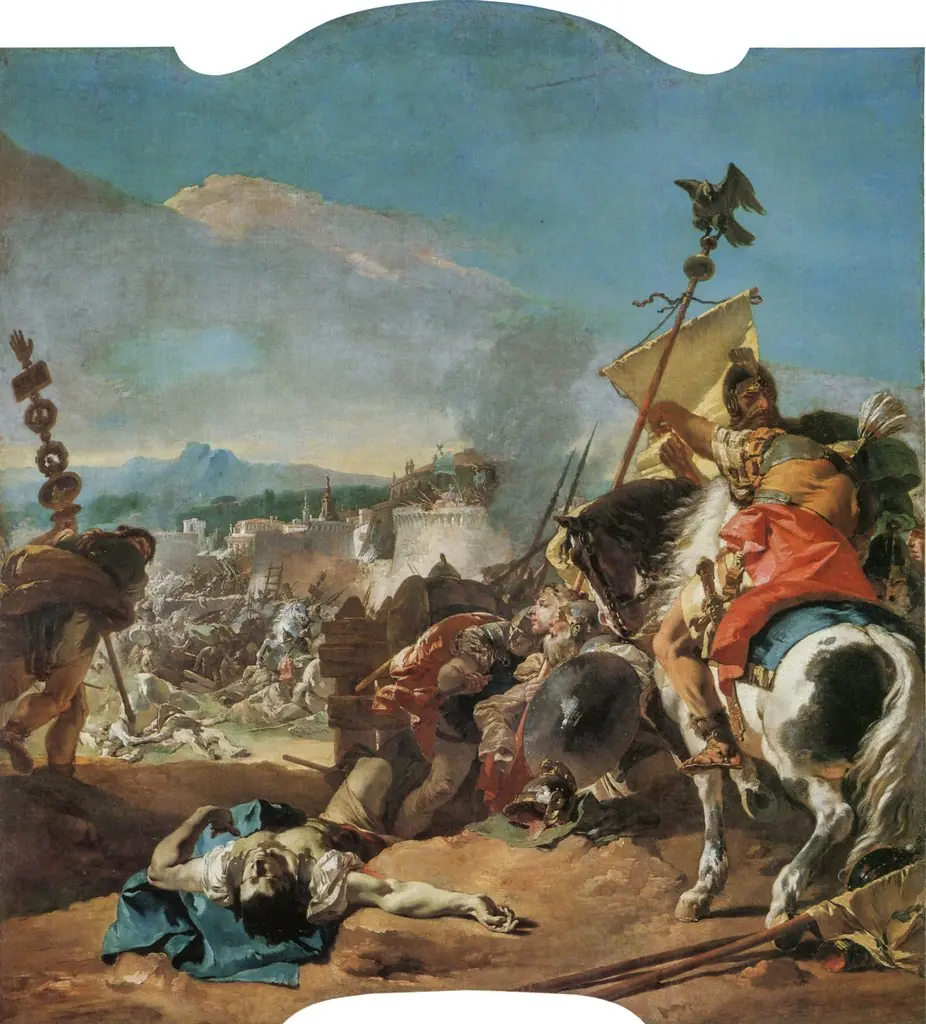
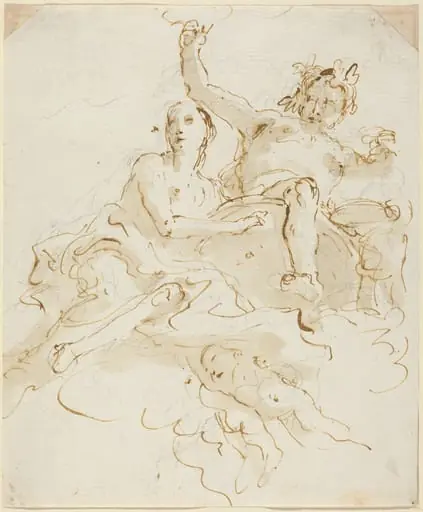 Bacchus and Ariadne
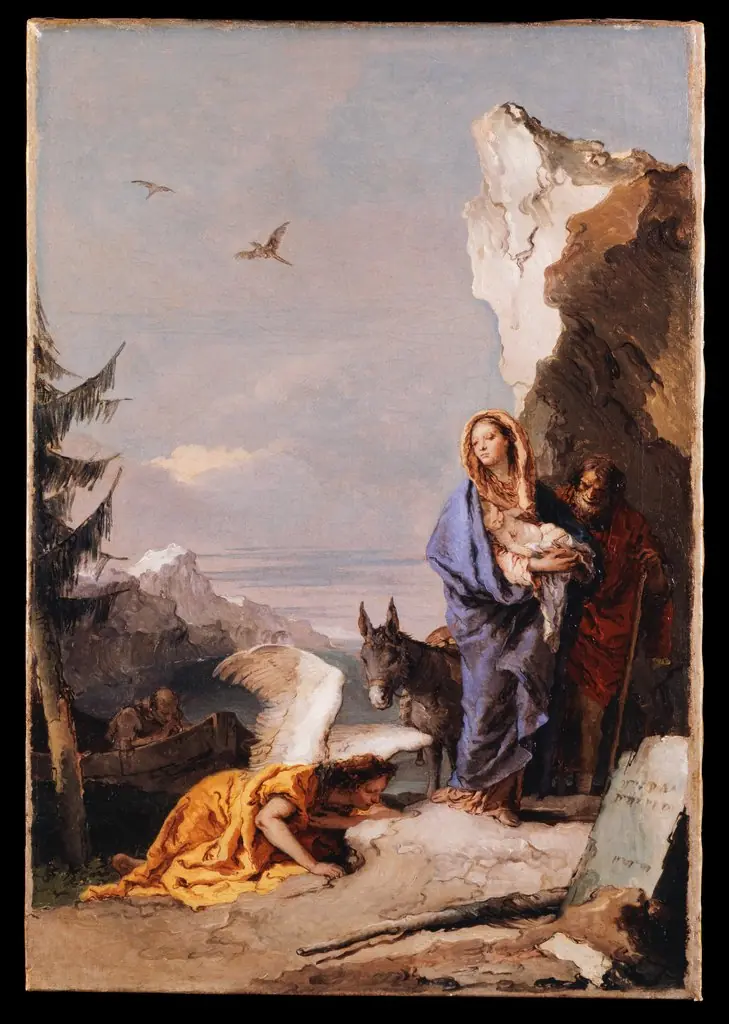
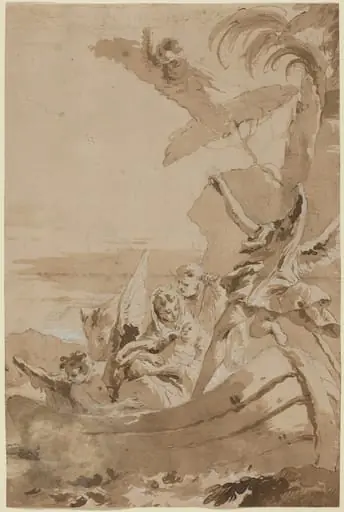 The Flight into Egypt with the Holy Family and Two Angels in a Skiff
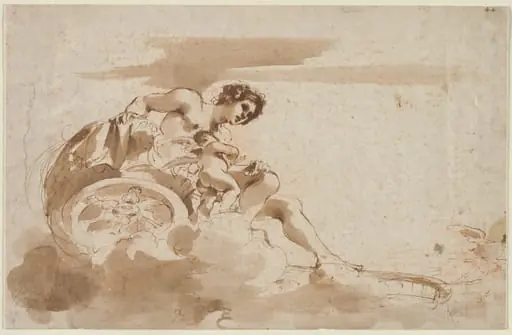 Venus and Cupid in a Chariot
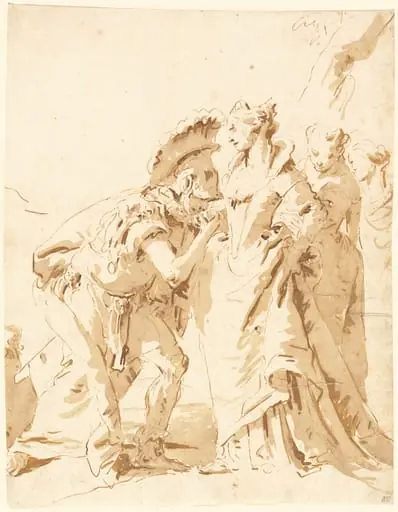 The Meeting of Antony and Cleopatra
![Penitent Magdalene with Angels in a Landscape [recto], by Donato Creti](https://artifactworldgallery.com/img/donato-creti--penitent-magdalene-with-angels-in-a-landscape-recto--329b67c038e377df-w320.webp) Penitent Magdalene with Angels in a Landscape [recto]
Penitent Magdalene with Angels in a Landscape [recto]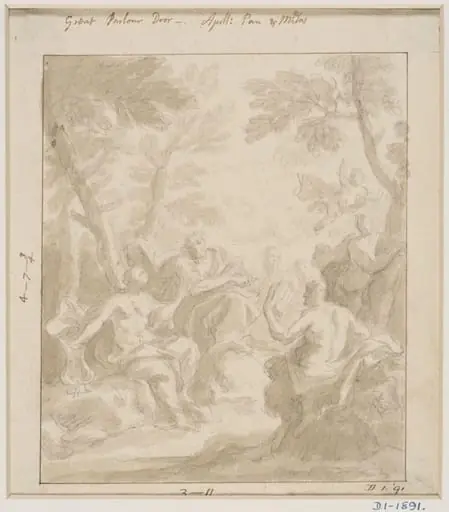 Design for an overdoor painting depicting Apollo, Pan and Midas
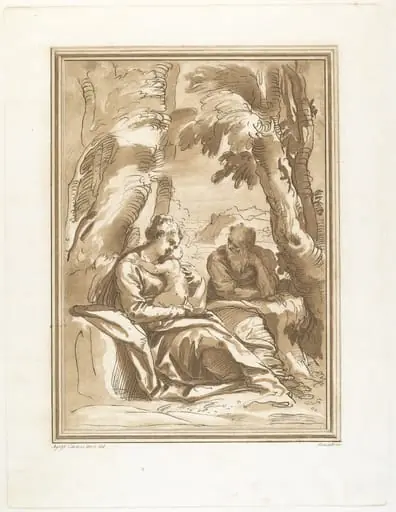 Rest on the Flight into Egypt
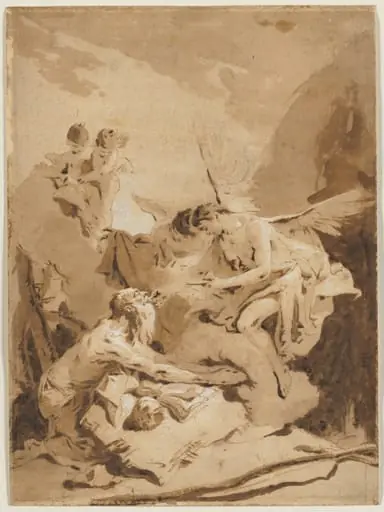 The Last Communion of St. Jerome
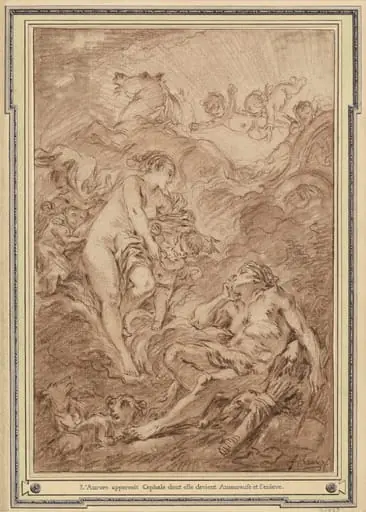 Aurora and Cephalus
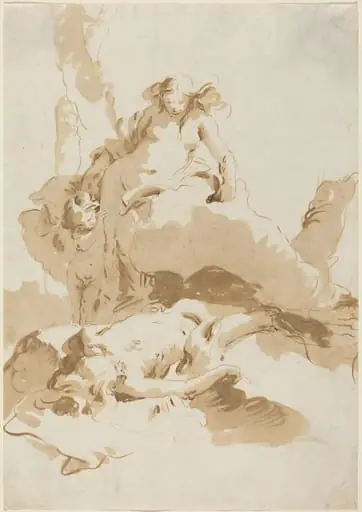 Venus and Cupid Discovering the Body of Adonis