Artwork
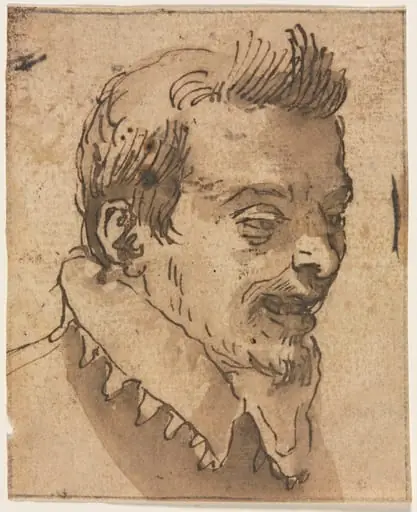
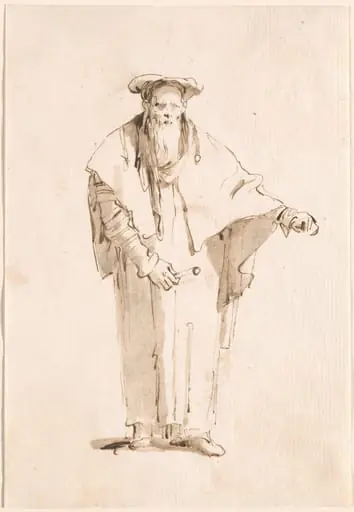
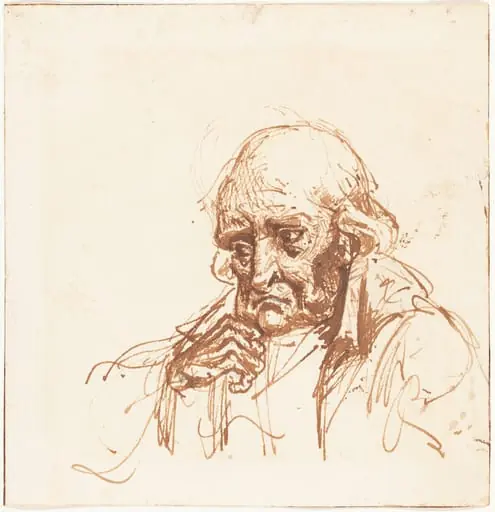
Head of a Magician
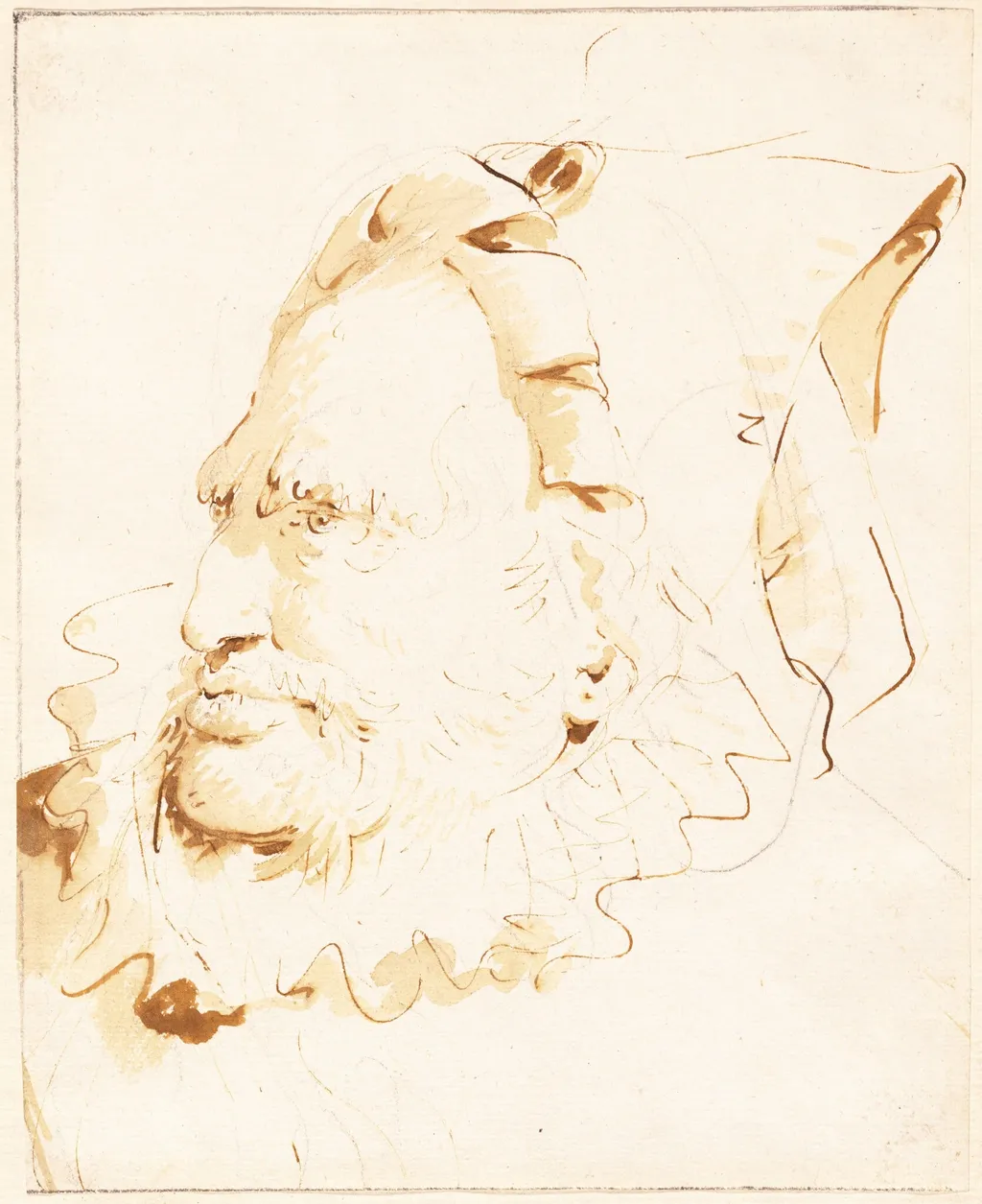
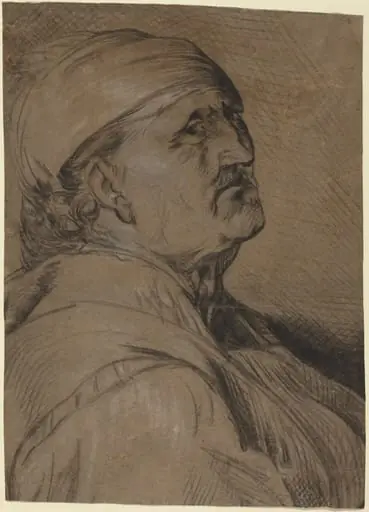
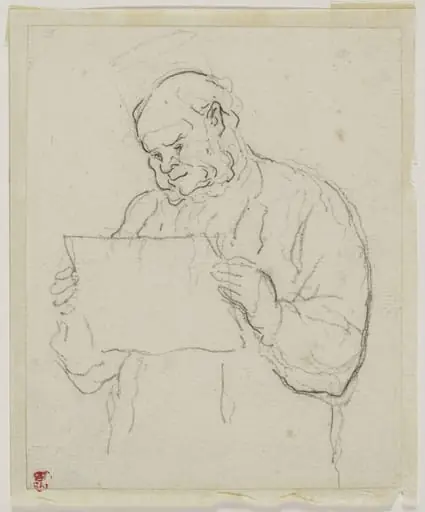
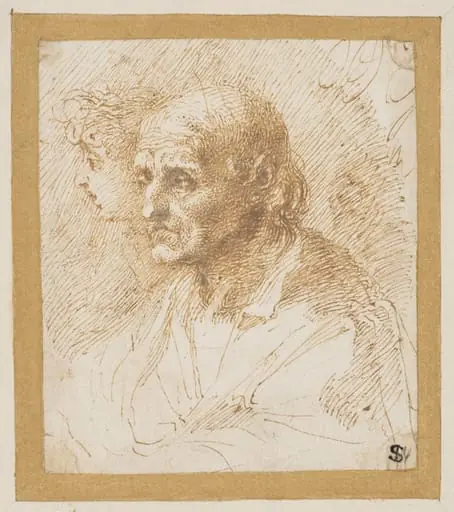
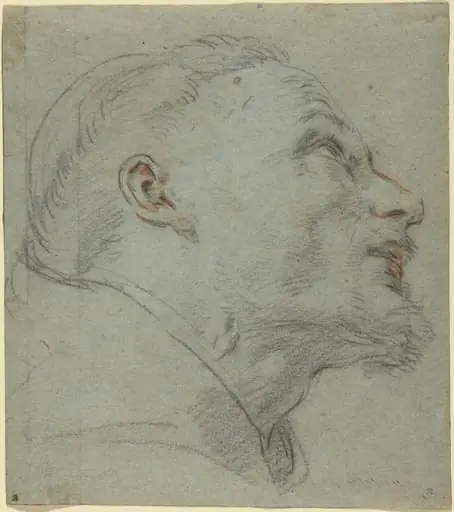
Head of a Magician is a chalk drawing by the Rococo painting artist Giovanni Battista Tiepolo. It dates from 1760 and is held in the collection of the National Gallery of Art.
About this work
Overview
The work belongs to a series of figure studies Tiepolo compiled during his later years, capturing expressive heads with minimal yet deliberate strokes.
Created around 1760, this drawing by Giovanni Battista Tiepolo is a study in ink and wash on laid paper, still attached to its original album page. Executed in brown ink over black chalk, it reflects the artist’s habit of producing rapid, observational sketches alongside his monumental frescoes. The work belongs to a series of figure studies Tiepolo compiled during his later years, capturing expressive heads with minimal yet deliberate strokes.
Subject & Meaning
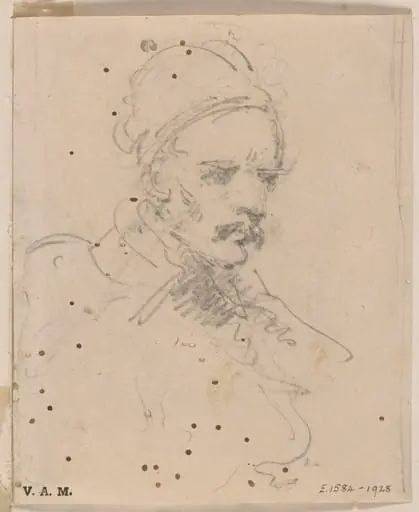
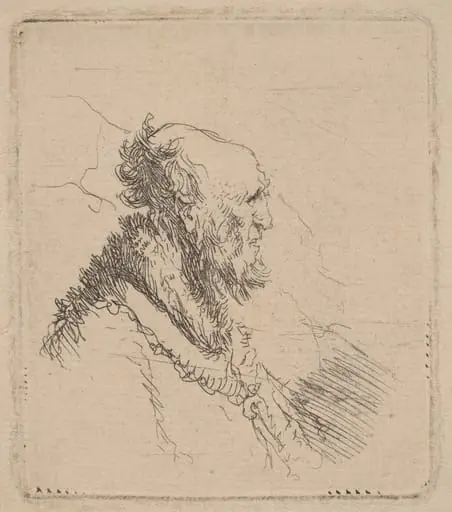
The figure depicted is a bearded man, his head turned slightly to the side, suggesting a character drawn from theatrical or exotic sources—possibly a magician or orientalized sage. The lack of contextual details and the focus on facial structure and texture imply an interest in type rather than narrative. Tiepolo likely used such studies to explore physiognomy and costume for larger compositions, not to tell a specific story.
Technique & Style
Tiepolo employed loose, energetic pen lines and layered brown washes to model form and suggest volume. The black chalk underdrawing anchors the contours, while the ink strokes vary in weight—thick for shadow, faint for suggestion—creating a sense of immediacy. The ruffled collar and tangled hair are rendered with fluid, almost calligraphic marks, demonstrating his command of line and his preference for spontaneity over polish.
History & Provenance
The drawing remains mounted on the original album page from which it was likely removed, preserving its context as part of Tiepolo’s personal collection of studies. These albums, assembled over decades, served as visual references and were sometimes shared with assistants or patrons. Its survival in near-original condition offers rare insight into the artist’s working methods during his time in Venice and later abroad.
Context
In the mid-18th century, Tiepolo was at the height of his career, producing grand frescoes across Europe while maintaining a steady output of drawings. His sketches, often made in preparation for commissions in Germany and Spain, reveal a fascination with costume, gesture, and expression. This piece aligns with a broader trend among Venetian artists who treated drawing not merely as preparation but as an autonomous art form.
Legacy
Tiepolo’s drawings, including this one, influenced later generations of artists who valued expressive line and the vitality of the sketch. Unlike more finished works, these studies were never intended for public display, yet their immediacy and technical confidence have secured their place in the canon of 18th-century graphic art. They remain vital documents of his creative process and the fluidity of Rococo draftsmanship.
Artist & collection

Artist
Giovanni Battista Tiepolo, also known as Giambattista Tiepolo, was an Italian painter and printmaker from the Republic of Venice who painted in the Rococo style, considered an important member of the 18th-century Venetian school.