Artwork
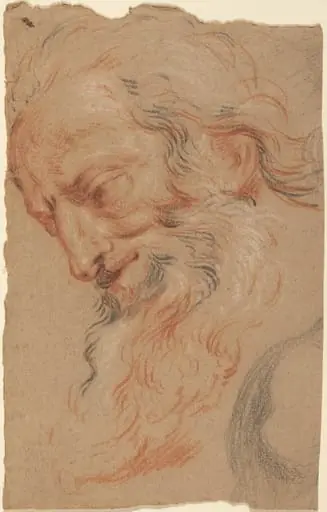
Head of Saint Francis
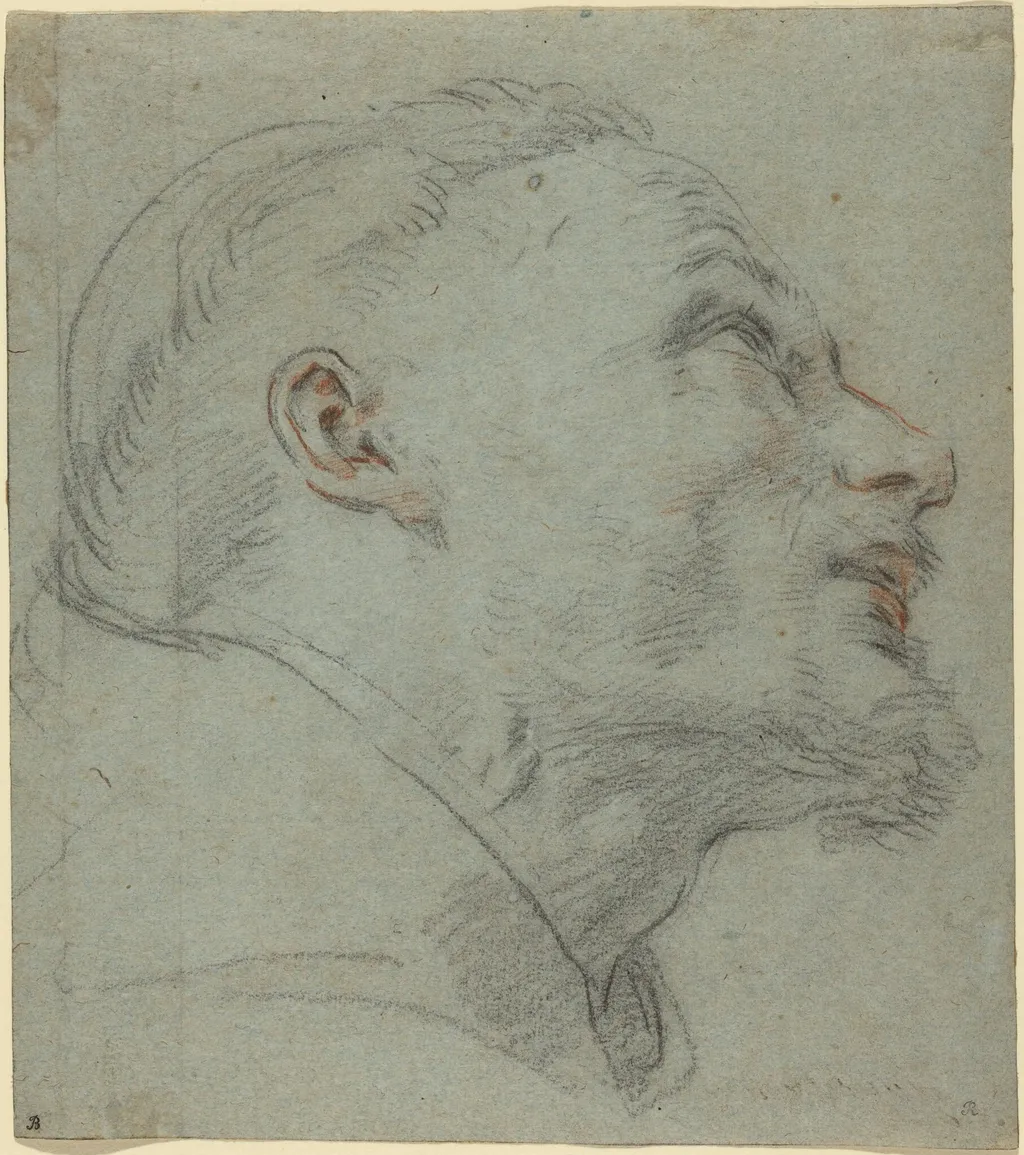
Head of Saint Francis is a chalk drawing by the Baroque artist Guido Reni. It dates from 1632 and is held in the collection of the National Gallery of Art.
About this work
Overview
Created circa 1632, this drawing depicts the head of Saint Francis rendered in black, red, and white chalk on a sheet of blue laid paper. The figure is shown in three‑quarter profile, turned slightly left, with downcast eyes and a closed mouth, suggesting a contemplative mood.
Subject & Meaning
The work belongs to the religious genre, focusing on the saint’s serene expression and modest features. The subdued palette and restrained gesture emphasize spiritual introspection rather than narrative action, aligning with the artist’s frequent engagement with sacred themes.
Technique & Style
Executed with swift, gestural strokes, the drawing employs loose lines for hair and beard, while red chalk adds subtle tonal accents to the lips and shadows. The use of blue laid paper, a common practice surface in the period, provides a muted ground that enhances the chalk’s tonal contrast.
History & Provenance
Attributed to the Italian Baroque painter Guido Reni, a leading figure of the Bolognese School influenced by the Carracci, the piece reflects his classical draftsmanship. Reni worked in Rome, Naples, and Bologna, and this study likely served as a preparatory sketch for a larger composition.
Context
During the early 17th century, Baroque art emphasized dynamic movement and emotional depth. Although this drawing appears unfinished, its expressive line work and focus on a holy figure embody the period’s blend of dramatic intensity with a restrained, classical approach.
Artist & collection
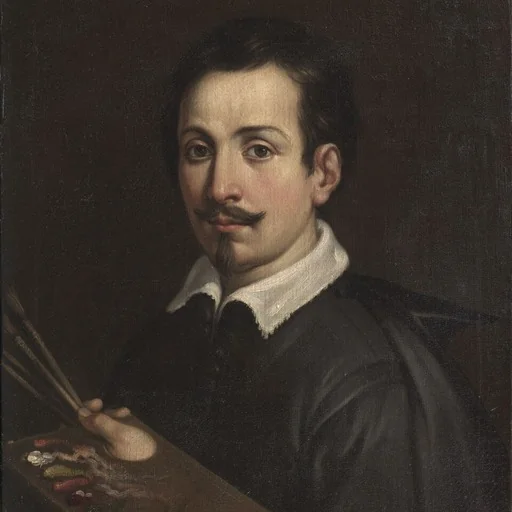
Artist
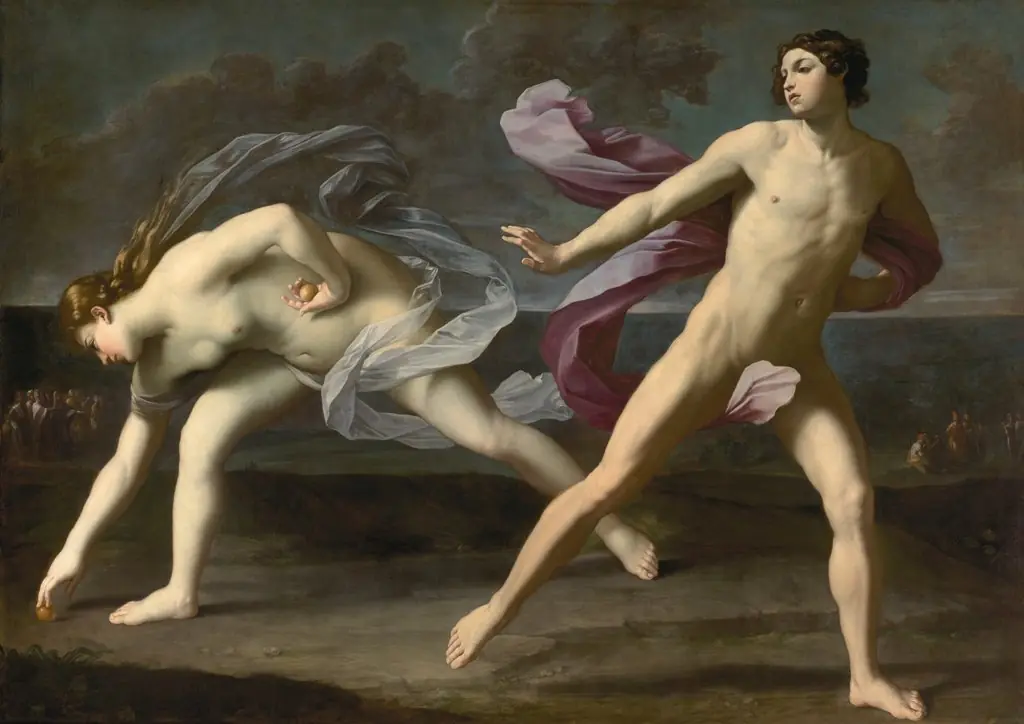
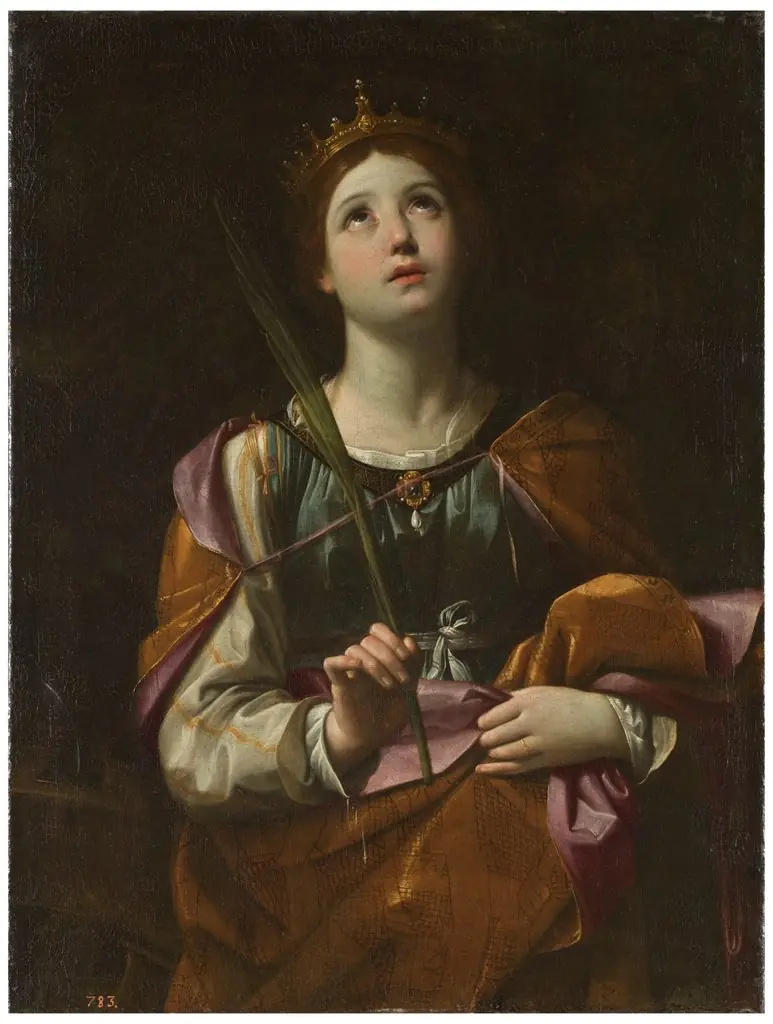
Guido Reni was an Italian Baroque painter, although his works showed a classical manner, similar to Simon Vouet, Nicolas Poussin, and Philippe de Champaigne.

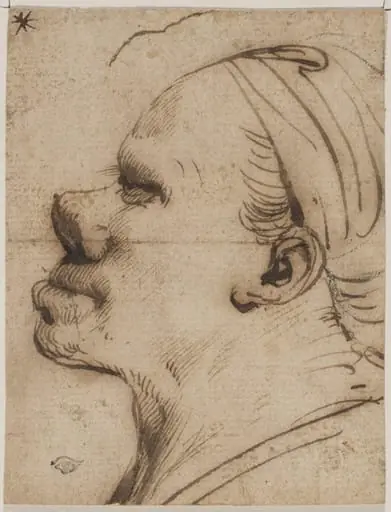 Caricature, a man's head in profile
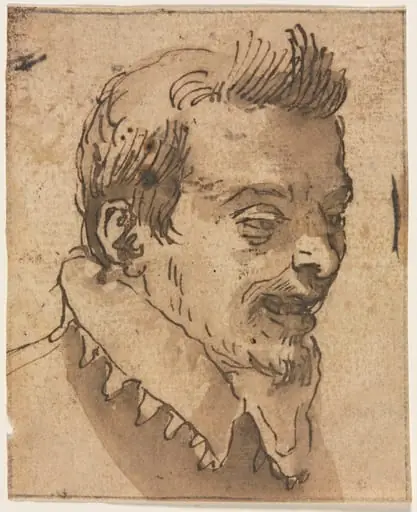 Head of a Man
![Head of a Man [recto], by Théodore Géricault](https://artifactworldgallery.com/img/theodore-gericault--head-of-a-man-recto--d6e68ba78da40efa-w320.webp) Head of a Man [recto]
Head of a Man [recto]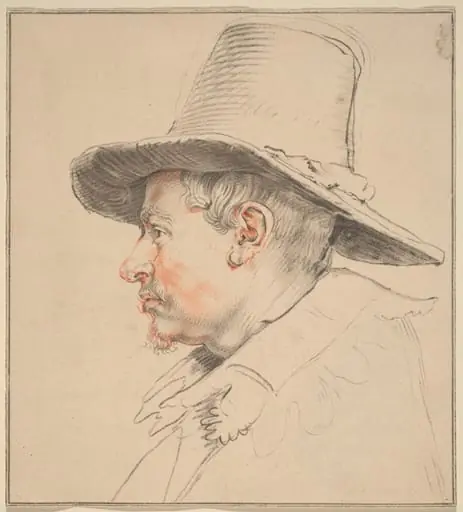 Salomon de Bray (formerly Jan van Goyen)
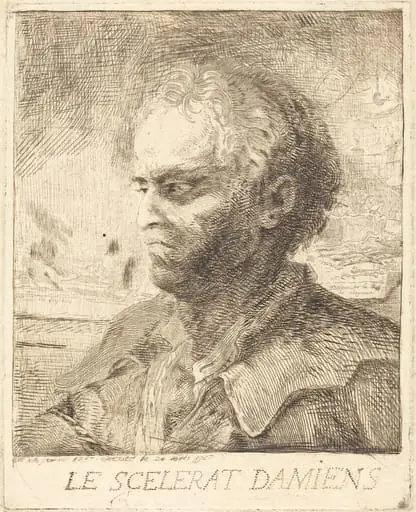 Le Scélérat Damiens
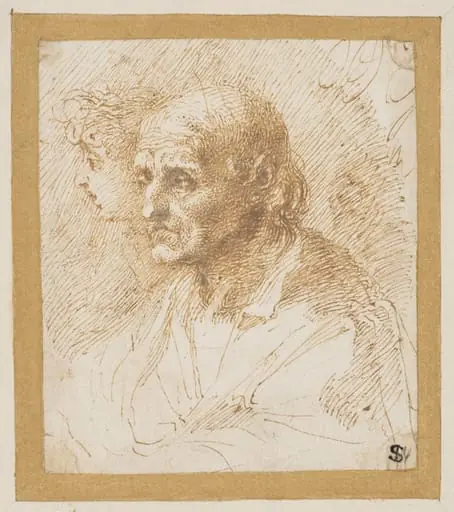 Study of the head of an old man
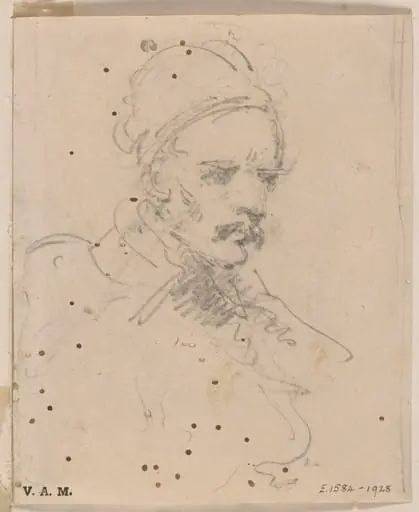 A moustachio'd man
 Head of an Old Man
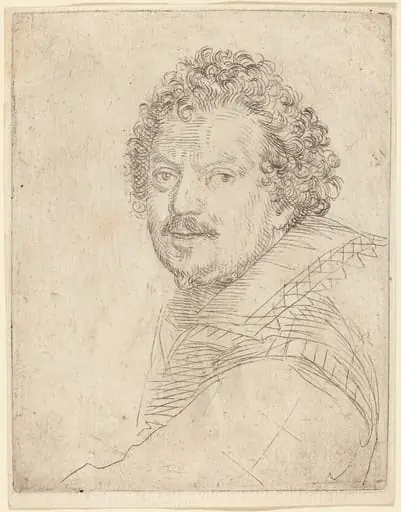 A Man with a Moustache and Goatee, Facing Forward
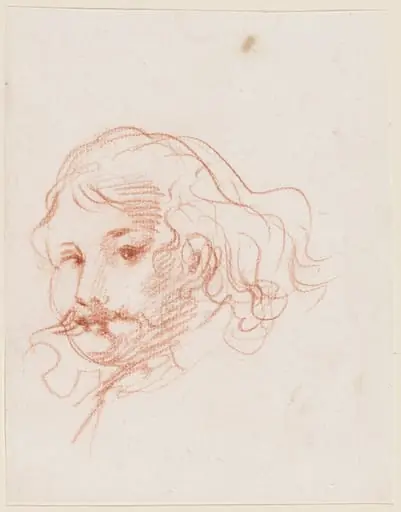 Self-Portrait
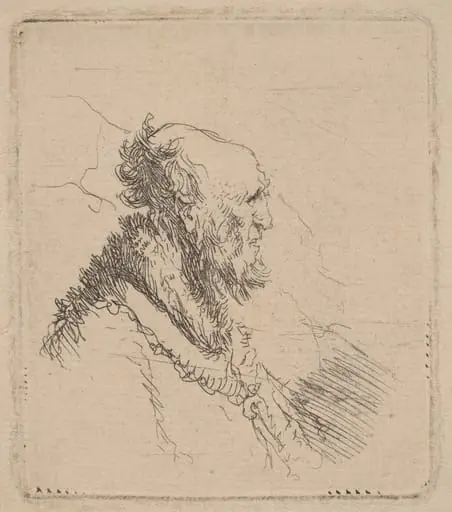 Bald Old Man with a Short Beard in Profile
 Curly-Headed Man with a Wry Mouth