Artwork
Male Nude Leaning on His Elbow (verso)
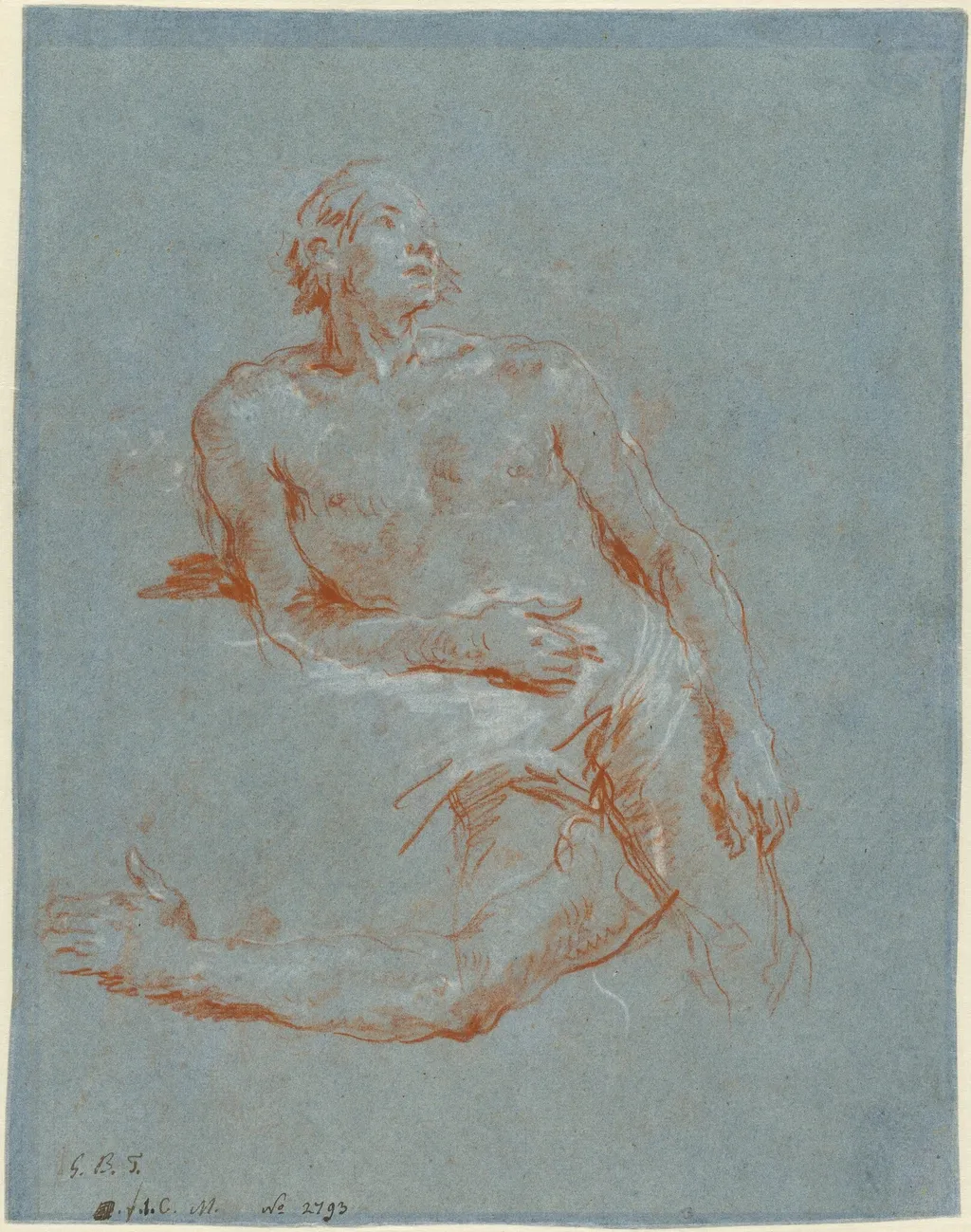
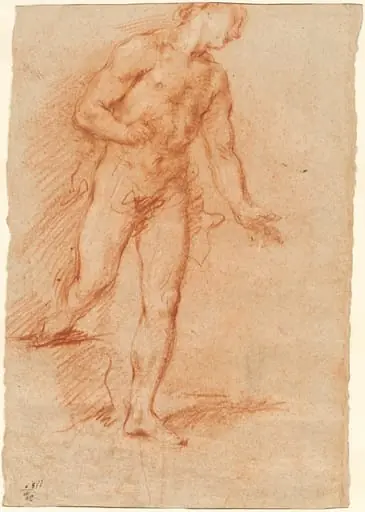
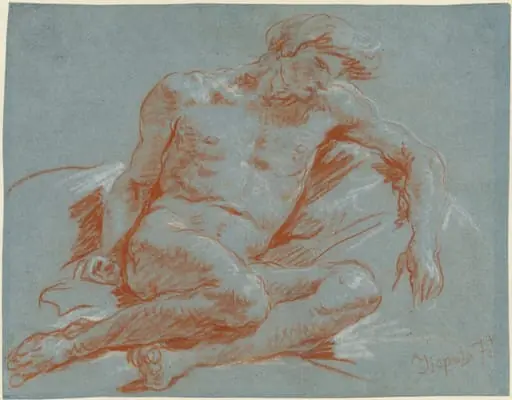
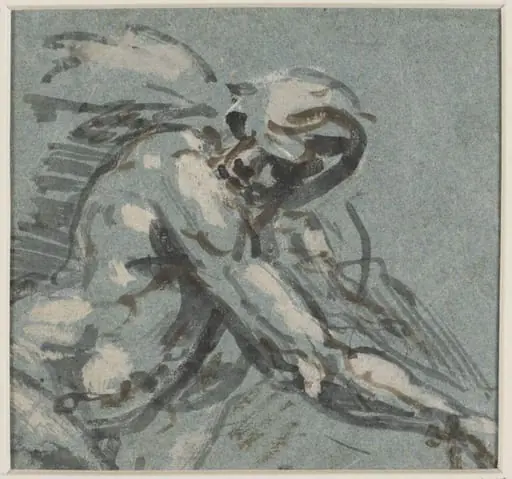
Male Nude Leaning on His Elbow (verso) is a chalk drawing by the Rococo painting artist Giovanni Battista Tiepolo. It dates from 1752 and is held in the collection of the National Gallery of Art.
About this work
Overview
It is one of many preparatory sketches produced by the Venetian artist, reflecting his ongoing engagement with anatomical form.
Created in 1752, this drawing by Giovanni Battista Tiepolo is a study of the male figure executed in red chalk with selective white highlights on blue laid paper. It is one of many preparatory sketches produced by the Venetian artist, reflecting his ongoing engagement with anatomical form. The work is signed on the verso, indicating its function as a study rather than a finished piece, and exemplifies Tiepolo’s disciplined approach to figure drawing.
Subject & Meaning
The figure is a nude male, reclining with his weight supported by one elbow, his head tilted upward and gaze averted. The posture suggests introspection or repose, devoid of narrative or mythological context. Tiepolo’s focus is on the naturalism of the body in rest, emphasizing balance, weight, and the subtle contours of muscle and bone. The absence of props or setting directs attention solely to the physical presence of the form.
Technique & Style
Tiepolo employed red chalk for the primary contours and tonal modeling, using white chalk sparingly to accentuate highlights along the torso and limbs. The blue paper, with its muted tone, enhances the contrast and gives the figure a luminous presence. The strokes are fluid yet controlled, revealing the artist’s mastery in suggesting volume through minimal means. The texture of the laid paper subtly interacts with the chalk, adding a tactile quality to the surface.
History & Provenance
The drawing was produced during Tiepolo’s mature period, when he was actively engaged in both decorative commissions and private studies. It remained in the artist’s possession until his death in 1770 and later entered a private collection in Italy before being acquired by a major European museum in the 19th century. Its verso inscription confirms its authenticity and ties it directly to Tiepolo’s working process.
Context
In mid-18th century Venice, figure drawing was central to artistic training and the development of large-scale fresco cycles. Tiepolo, like his contemporaries, relied on sketches to refine poses and anatomical accuracy before executing monumental works. This drawing reflects the broader European tradition of studying the nude as a foundation for artistic expression, even as Rococo aesthetics favored elegance over classical rigor.
Legacy
Tiepolo’s drawings, including this one, are valued for their spontaneity and technical precision. They offer insight into his creative process and the evolution of his compositional ideas. While his painted ceilings overshadow his works on paper, scholars recognize these studies as essential to understanding his influence on later generations of draftsmen and the enduring role of the nude in academic art practice.
Artist & collection

Artist
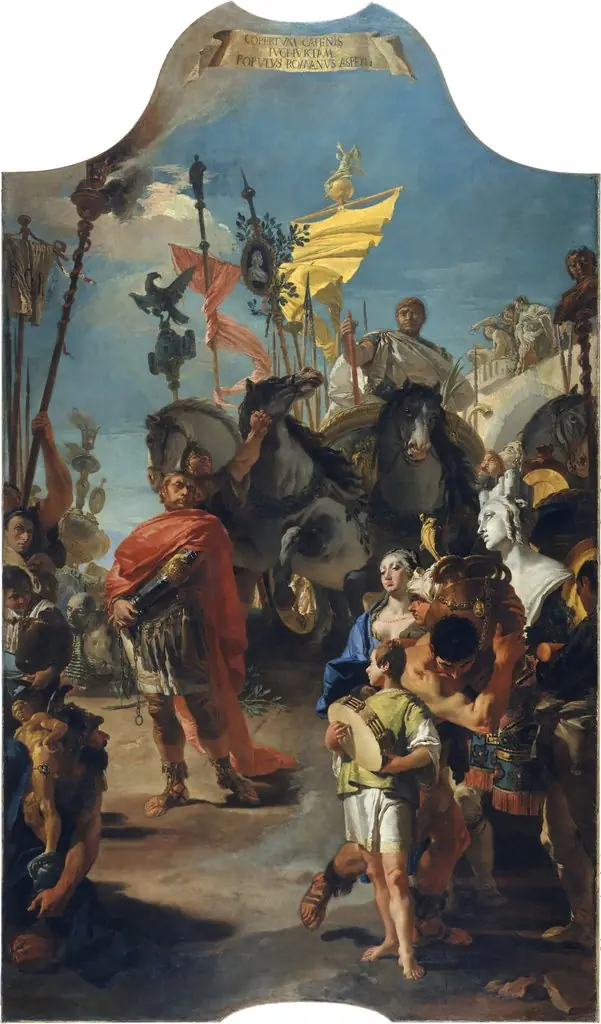
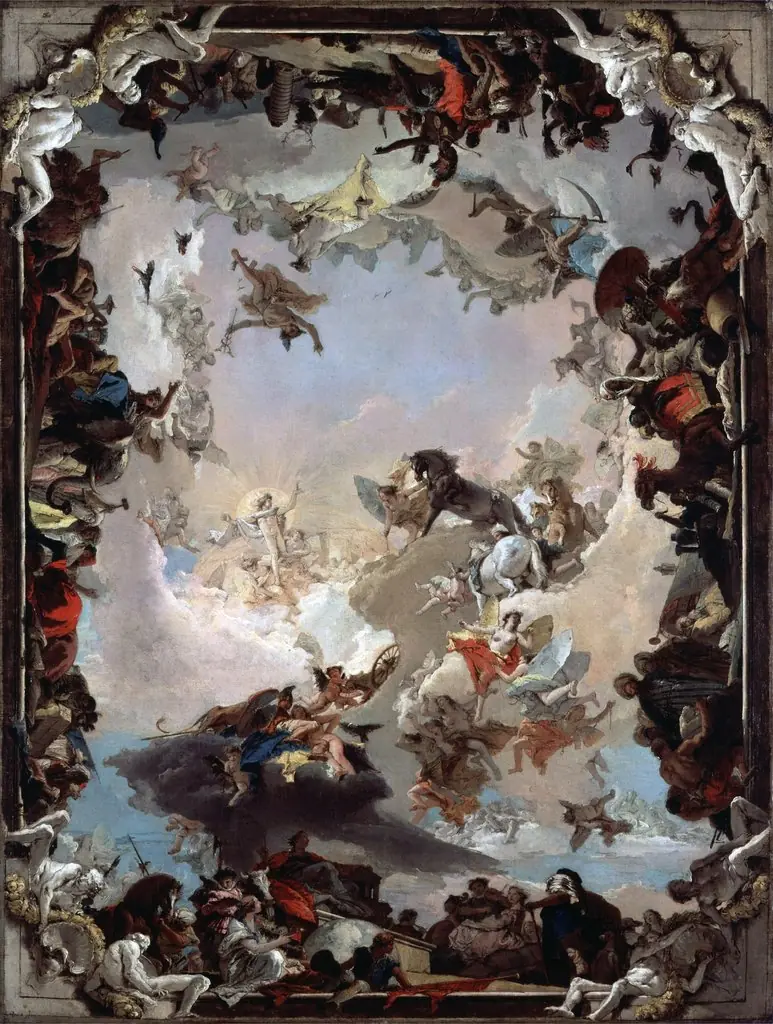
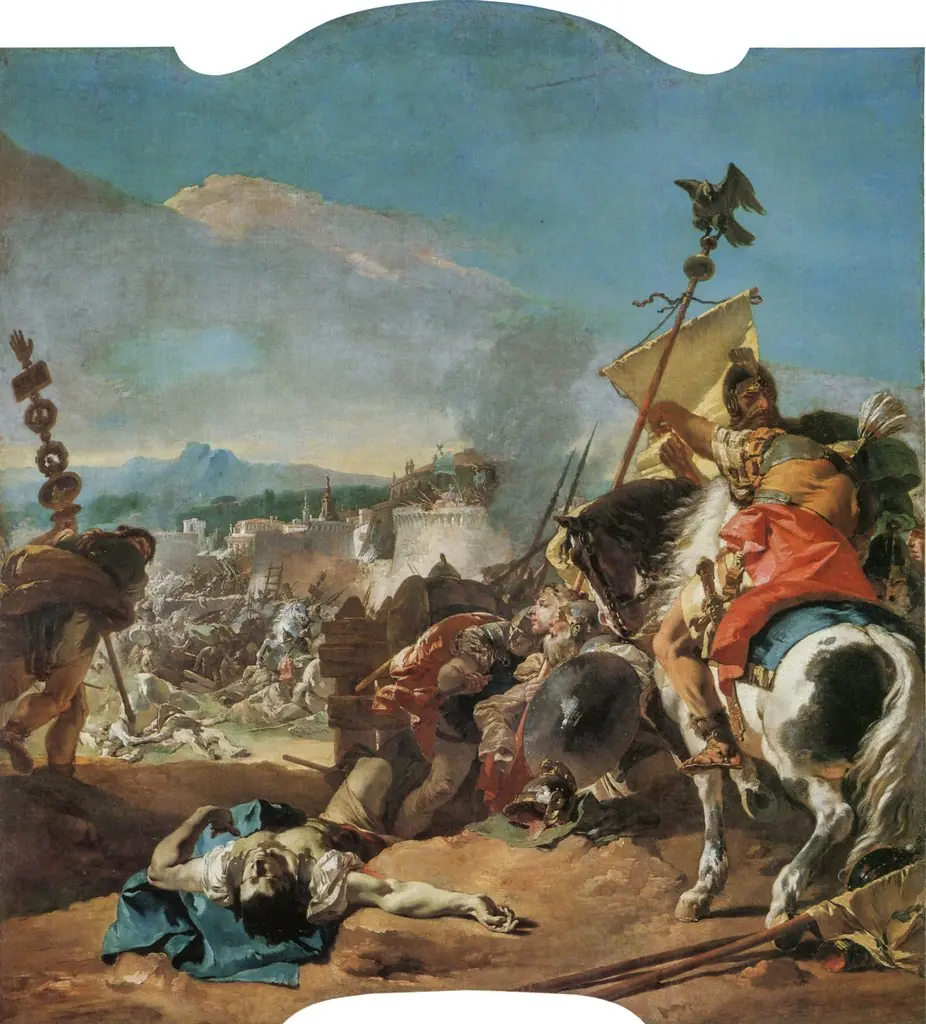
Giovanni Battista Tiepolo, also known as Giambattista Tiepolo, was an Italian painter and printmaker from the Republic of Venice who painted in the Rococo style, considered an important member of the 18th-century Venetian school.

![Male Nude [verso], by Michelangelo](https://artifactworldgallery.com/img/michelangelo--male-nude-verso--d48a81b2ad2bdbb8-w320.webp)
![Nude Male Figure [recto], by Italian 17th Century](https://artifactworldgallery.com/img/italian-17th-century--nude-male-figure-recto--f1cc965df272e72c-w320.webp)