Artwork
A Seated Male Nude with His Hands Crossed over His Head
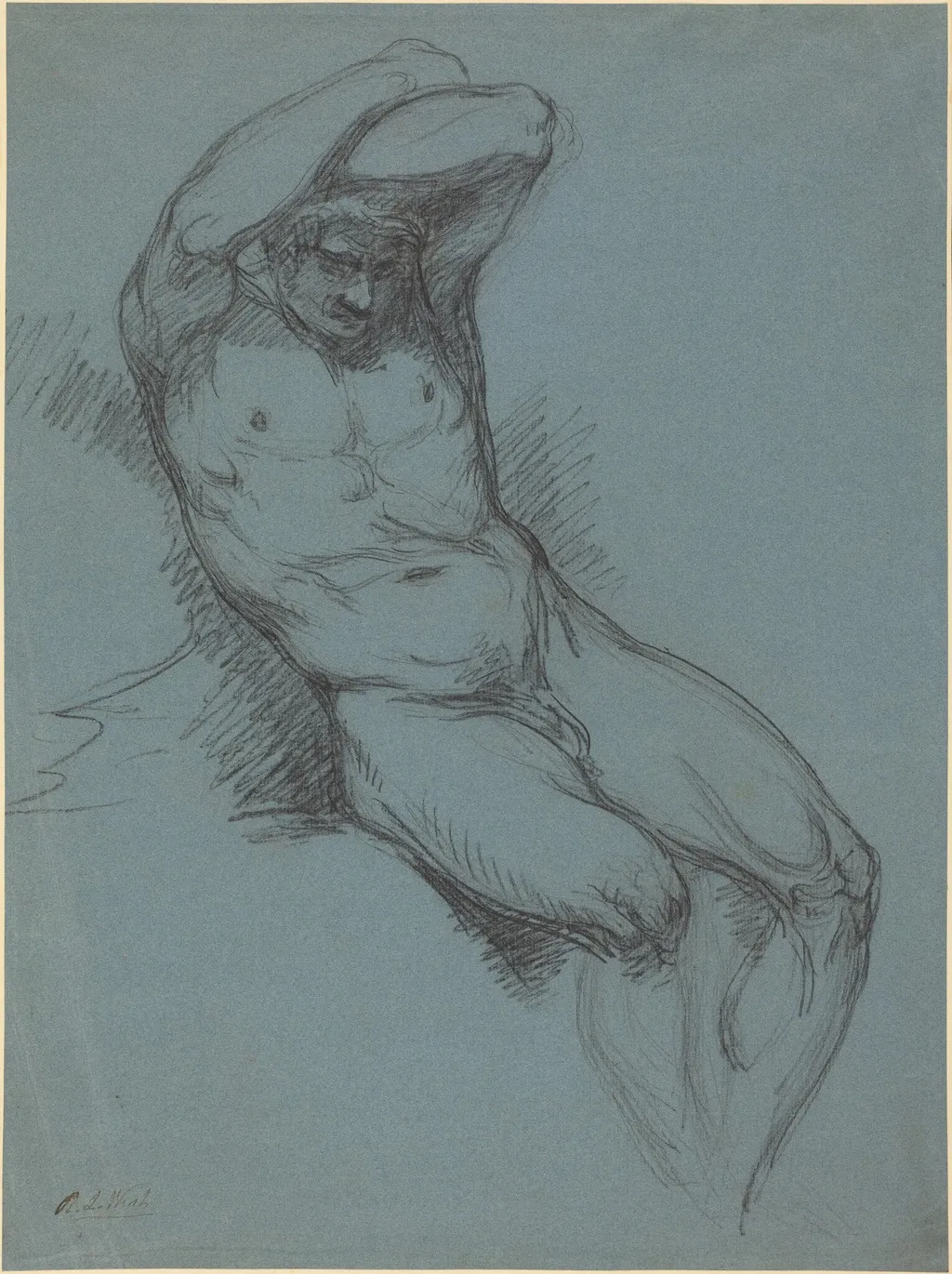
A Seated Male Nude with His Hands Crossed over His Head is a chalk drawing by the Romanticist artist Raphael Lamar West. It dates from 1810 and is held in the collection of the National Gallery of Art. This drawing, executed in 1810, depicts a male figure seated with his back to the viewer, hands clasped behind his head.
About this work
Overview
This drawing, executed in 1810, depicts a male figure seated with his back to the viewer, hands clasped behind his head. Rendered in black chalk on blue laid paper, the work emphasizes immediacy over anatomical precision. The artist, Raphael Lamar West, employs loose, gestural lines to convey posture and movement rather than detailed musculature.
Subject & Meaning
The subject—a male nude in a contemplative or relaxed pose—reflects academic study traditions while departing from idealized representations. The crossed arms and turned posture suggest a moment of introspection or physical ease, though the drawing’s economy of line leaves interpretation open. The focus remains on the body’s structure and gesture rather than narrative or allegory.
Technique & Style
West’s approach prioritizes spontaneity, using rapid, unrefined strokes to capture the figure’s form. The black chalk contrasts sharply with the blue paper, creating a tonal emphasis on volume and weight. This method aligns with Romantic tendencies, where emotional expression and dynamic movement often superseded meticulous finish.
History & Provenance
Created in 1810, the drawing’s early history remains undocumented. Its survival as a standalone work on paper suggests it may have served as a preparatory study or an independent exercise. The use of blue laid paper, a common support for sketches, reinforces its status as a working drawing rather than a finished composition.
Context
The work emerges from a period when artists increasingly valued direct observation and expressive mark-making. While rooted in academic figure drawing, its loose execution reflects broader shifts toward Romanticism, which favored subjective experience over classical restraint. Such sketches often circulated among artists as tools for study or inspiration.
Artist & collection


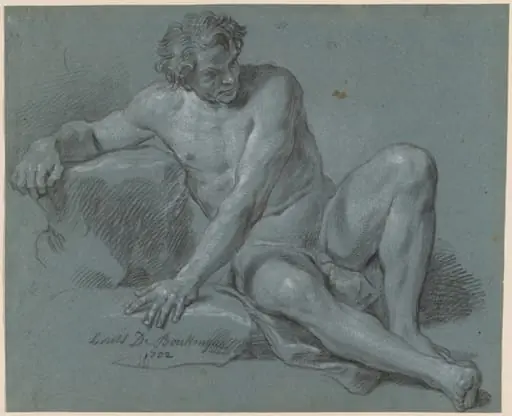 Male Nude Seated on the Ground
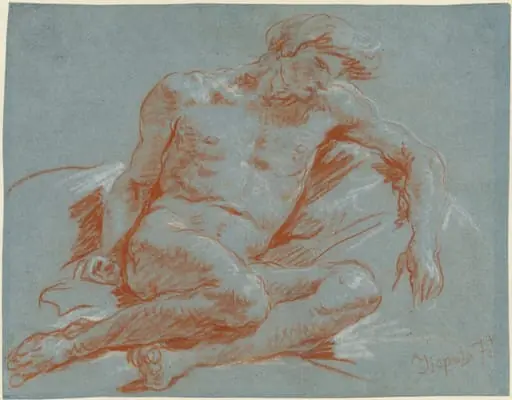 A Seated Male Nude
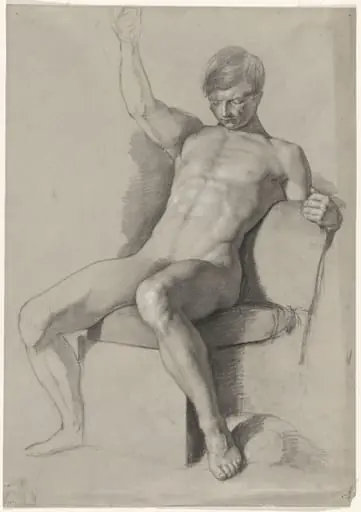 Seated Male Nude with Raised Right Hand
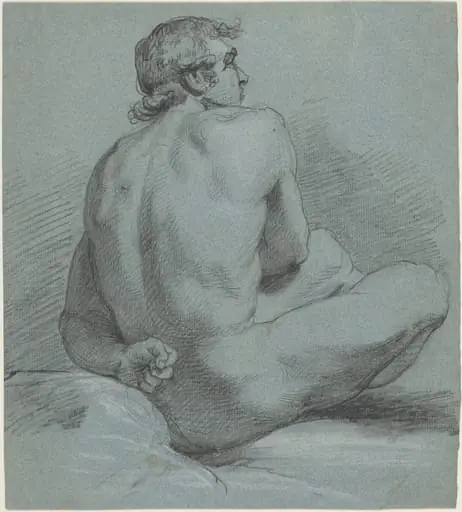 Seated Male Nude
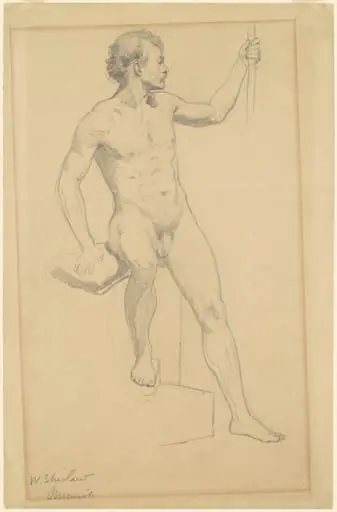 Male Nude
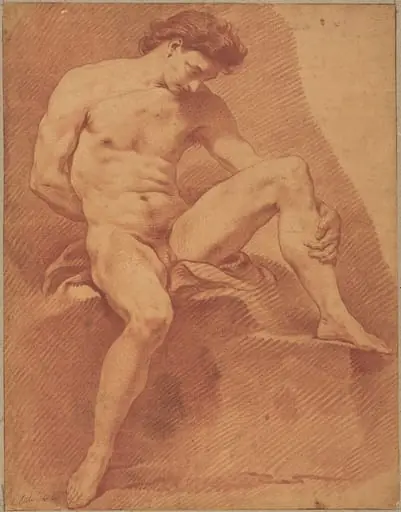 A Seated Male Nude
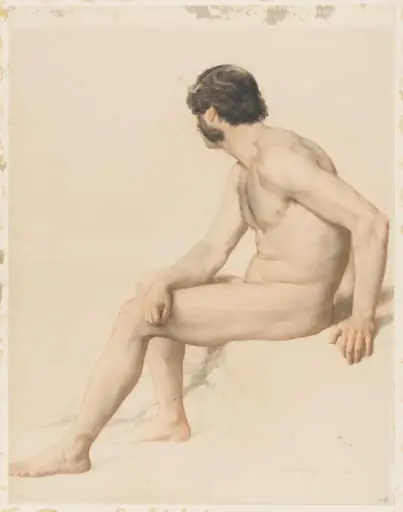 Seated Male Nude
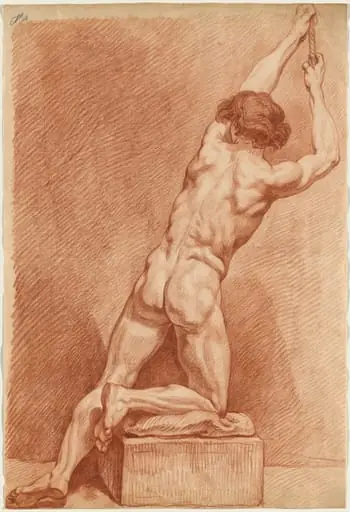 A Male Nude Seen from Behind
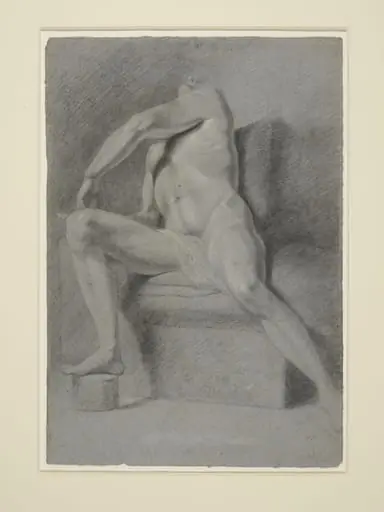 Study of a male nude figure, seated, with his right foot on a round block and his head thrown back.
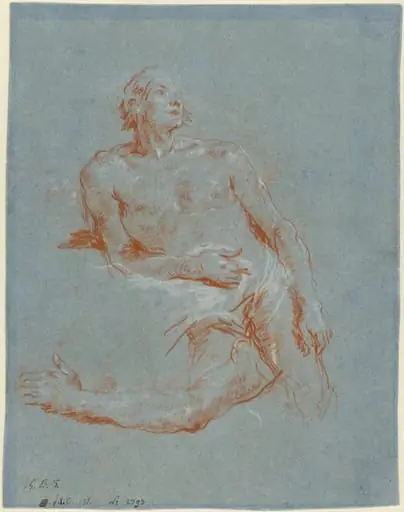 Male Nude Leaning on His Elbow (verso)