Artwork
Three Cherubs and a Beribboned Staff
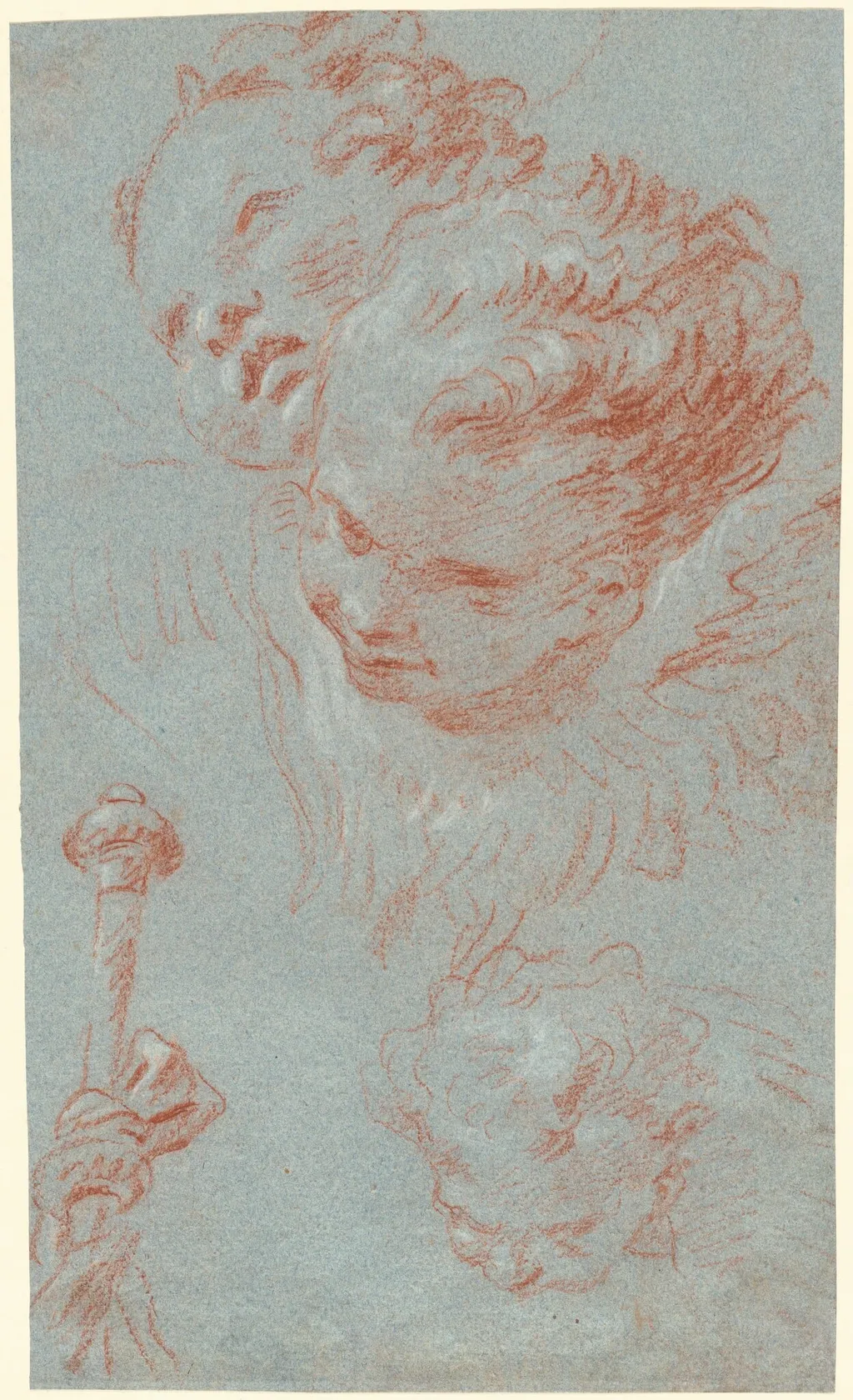
Three Cherubs and a Beribboned Staff is a chalk drawing by the Rococo painting artist Giovanni Battista Tiepolo. It dates from 1750 and is held in the collection of the National Gallery of Art.
About this work
Overview
This drawing, created in 1750, is a representative work by Giovanni Battista Tiepolo, a prominent artist of the Rococo period. Executed in red chalk on blue paper with white highlights, it showcases the artist's skill in a medium characteristic of his time.
Subject & Meaning
The drawing depicts three cherubs, one of whom holds a staff adorned with ribbons, in a playful and gentle manner. The cherubs' soft facial features contribute to the overall light and decorative quality of the work.
Technique & Style
Tiepolo employed red chalk on blue paper, a common technique of his era, and heightened the drawing with white chalk. The heads of the upper cherubs were incised for transfer, indicating the artist's intention to reproduce the image.
Context
Tiepolo's work was influenced by the Rococo style, which emphasized light, decorative, and playful elements. His career spanned multiple regions, including Italy, Germany, and Spain, where he produced a significant body of work.
Artist & collection

Artist
Giovanni Battista Tiepolo, also known as Giambattista Tiepolo, was an Italian painter and printmaker from the Republic of Venice who painted in the Rococo style, considered an important member of the 18th-century Venetian school.

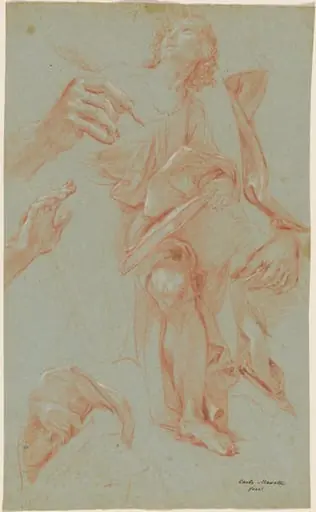 Studies of Saint James the Greater
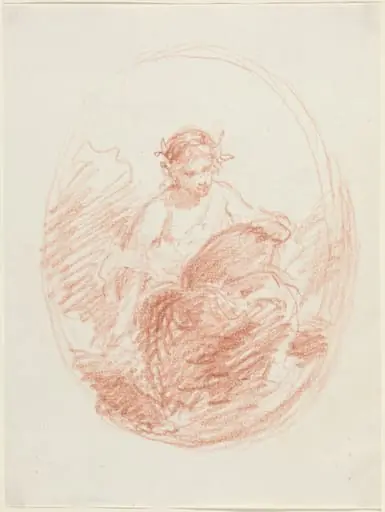 Allegorical Figure
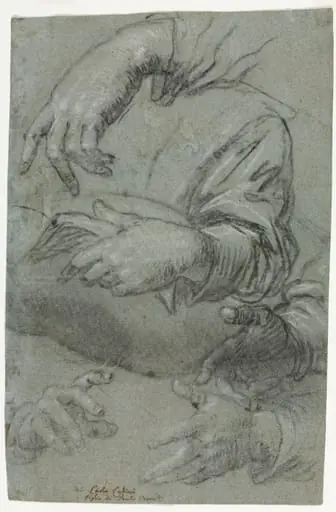 Studies of Hands (recto)
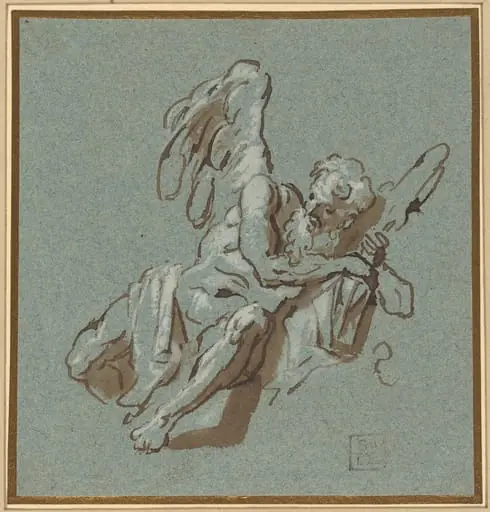 Chronos
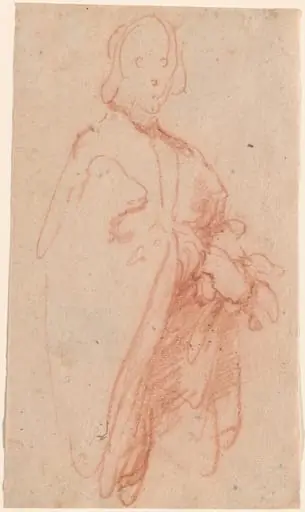 A Standing Man with Cloak and Gloves
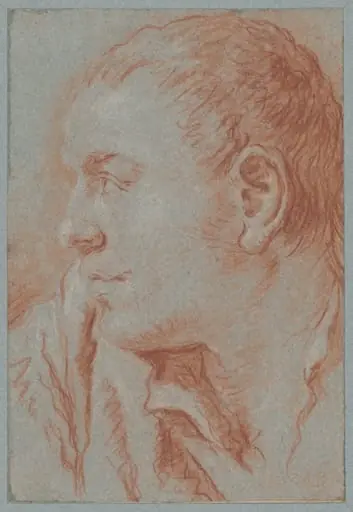 Head of a Young Man in Profile
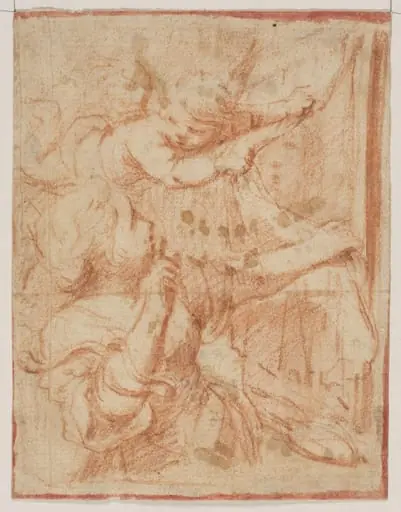 Cherub revealing a portrait to a young woman
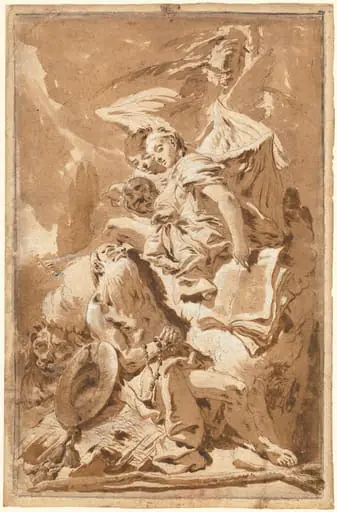 Saint Jerome in the Desert Listening to the Angels
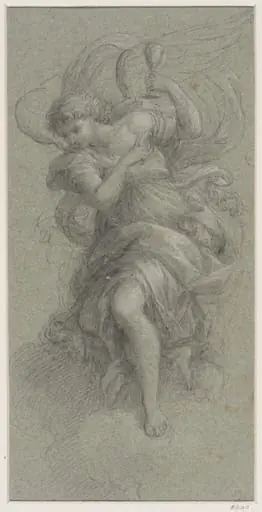 Kneeling angel holding a chalice
![Man Leaning on a Rail [verso], by Matteo Rosselli](https://artifactworldgallery.com/img/matteo-rosselli--man-leaning-on-a-rail-verso--c9936b6777df930d-w320.webp) Man Leaning on a Rail [verso]
Man Leaning on a Rail [verso]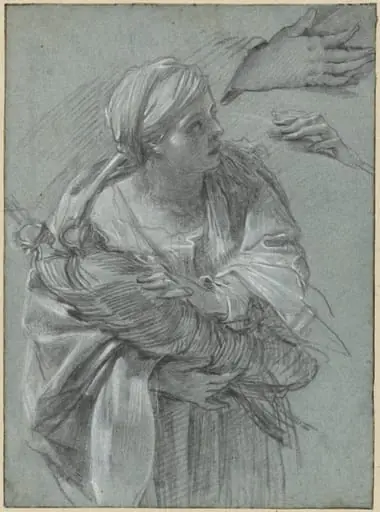 Creusa Carrying the Gods of Troy
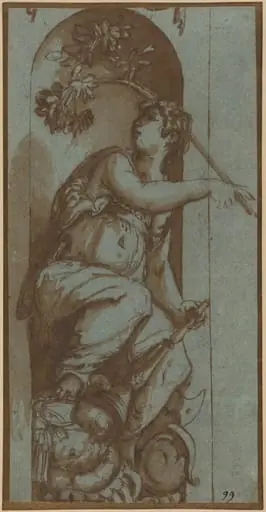 Allegory of Peace