Artwork
Allegory of Peace
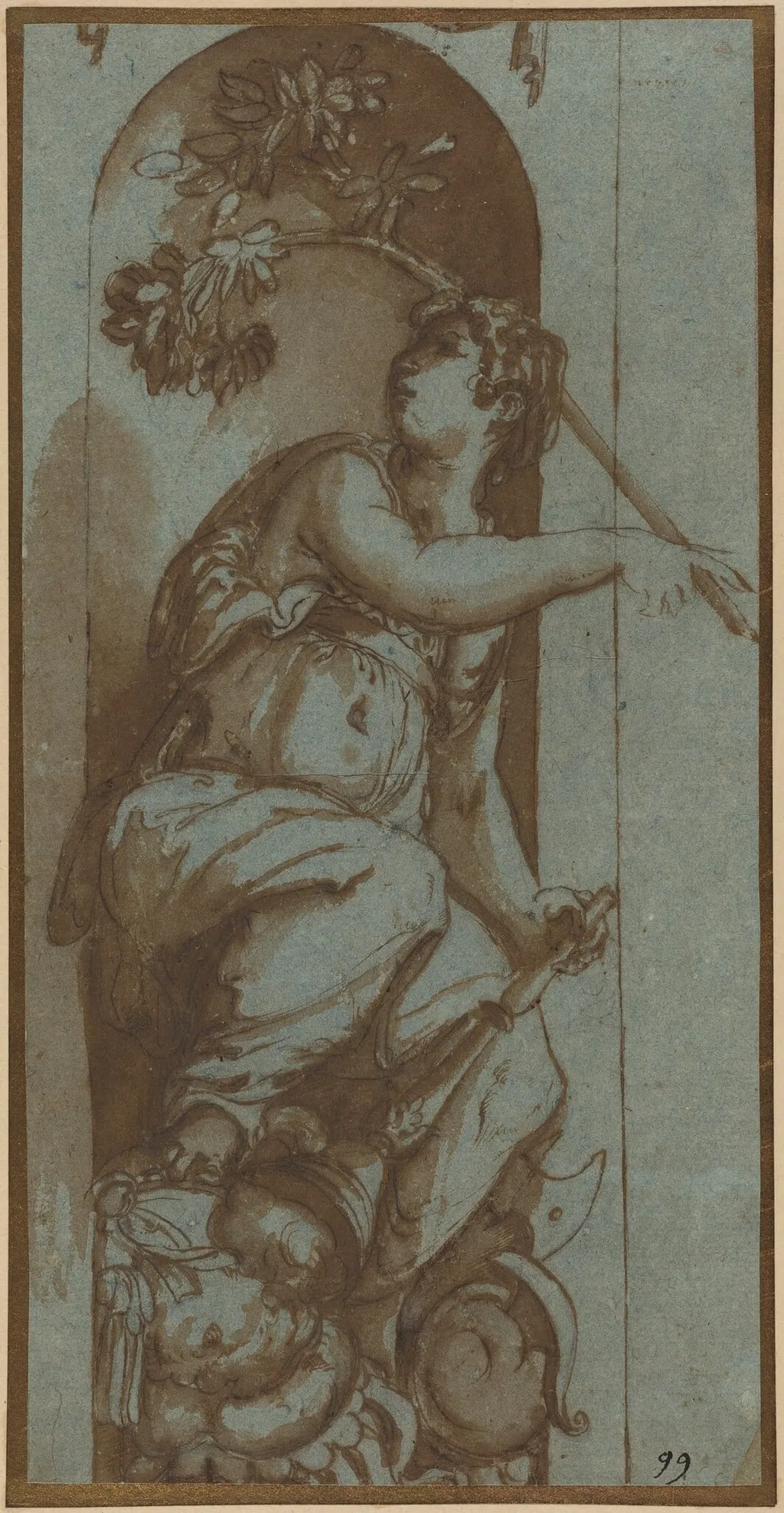
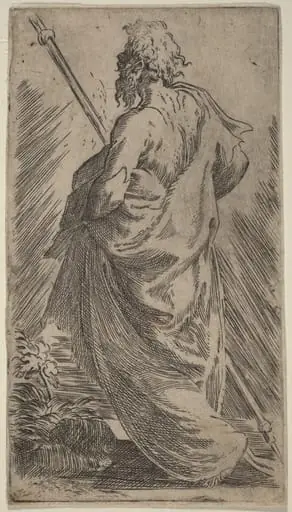
Allegory of Peace is an ink drawing by the Renaissance artist Italian 16th Century. It dates from 1550 and is held in the collection of the National Gallery of Art. This drawing, executed in pen and brown ink with wash on blue laid paper, depicts a serene female figure standing before an arched portal.
About this work
This painting is reminiscent of the Renaissance style, which often featured classical motifs and elegant lines.
This image shows a woman in a flowing robe, holding a long stick with leaves at the top. She is standing in front of a large archway, and there are some decorative elements around her.
The woman's robe is draped elegantly, and she has a gentle expression on her face. The archway behind her is adorned with some foliage, adding to the peaceful atmosphere of the scene.
This painting is reminiscent of the Renaissance style, which often featured classical motifs and elegant lines. You might also want to check out the work of Italian 16th Century.
Overview
This drawing, executed in pen and brown ink with wash on blue laid paper, depicts a serene female figure standing before an arched portal. The work is mounted on a support backing, typical of preservation practices for delicate paper works. Its restrained palette and delicate linework reflect a refined draftsmanship common in 16th-century Italian graphic art, emphasizing form over color.
Subject & Meaning
The central figure, draped in a flowing robe and holding a staff crowned with leaves, personifies Peace. Her calm demeanor and the verdant archway behind her suggest harmony and renewal. The absence of weapons or conflict, combined with natural ornamentation, reinforces an allegorical ideal rather than a narrative scene, aligning with humanist traditions of representing abstract virtues through classical forms.
Technique & Style
The artist employed fine pen lines to define the figure’s drapery, enhanced by subtle washes to model volume and shadow. The blue paper ground subtly influences the tonal range, lending a cool luminosity to the composition. The elegant, flowing contours and attention to textile folds echo Renaissance ideals of grace and proportion, drawing from classical sculpture and early Mannerist draftsmanship.
History & Provenance
The work’s origin is not definitively recorded, but its materials and style suggest it was produced in Italy during the 16th century. Its transfer to a backing sheet indicates it was preserved by collectors or institutions concerned with safeguarding fragile drawings. No documented ownership before the modern era is known, though its aesthetic aligns with private collections of graphic art from the period.
Context
Created during a time when allegorical imagery flourished in Italian courts and academies, the drawing reflects broader efforts to visualize moral and political ideals through classical symbolism. Artists often turned to mythological and personified figures to convey peace, justice, or wisdom—particularly in contexts where direct political commentary was risky or inappropriate.
Legacy
Though not widely published or exhibited, the drawing exemplifies the quiet sophistication of Renaissance graphic art. It contributes to the understanding of how allegory was rendered in intimate, non-commissioned works, offering insight into the visual language of peace beyond grand public monuments or frescoes.
Artist & collection

Artist
A 16th-century Italian sculptor left us small bronze works in dark brown and gold.

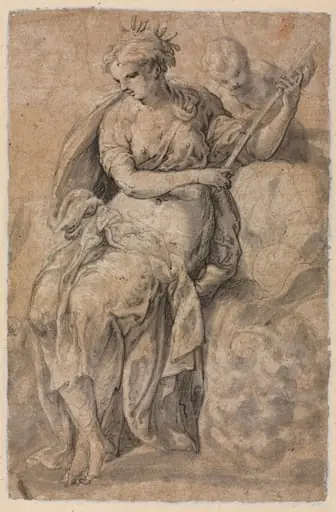 Allegorical Figure (verso)
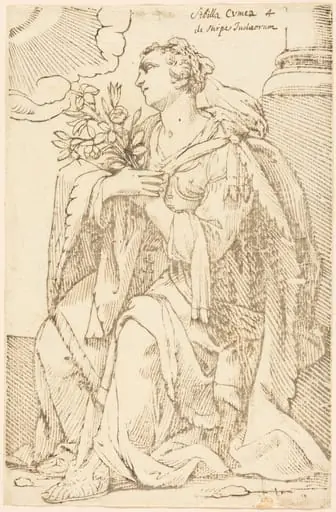 Sibylla Cimmeria
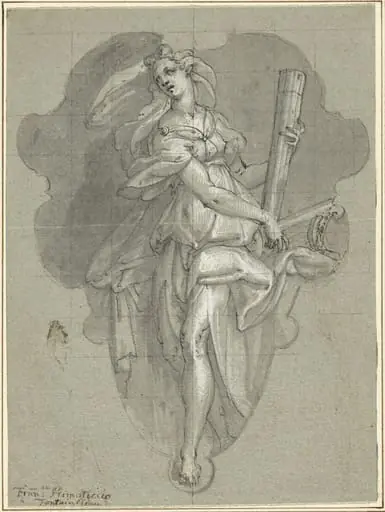 Euterpe (Personification of Music)
 Suicide of Dido
 One of Niobe's Daughters
 Allegory of Justice
 Standing Woman Holding a Scroll
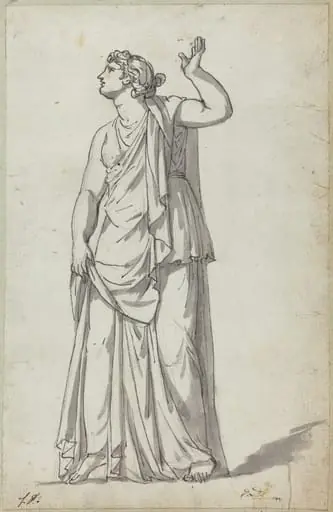 Roman Statue of a Muse (Anchyrrhoe)
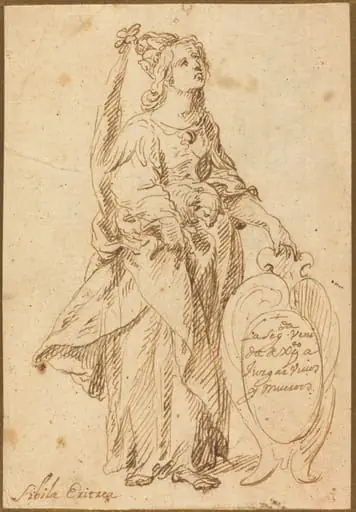 Eritrean Sibyl
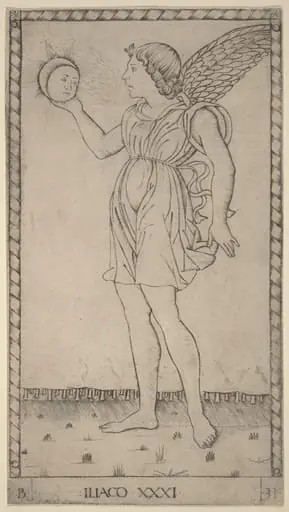 Iliaco (Genius of the Sun)
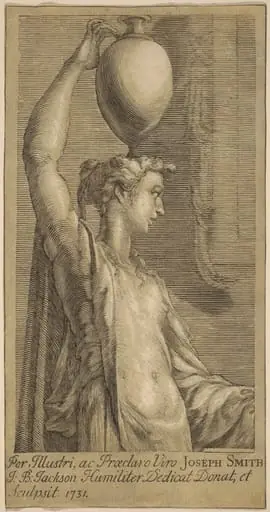 Woman Standing Holding a Jar on the Head
 Saint James the Greater