Artwork
Old Man with Bare Head
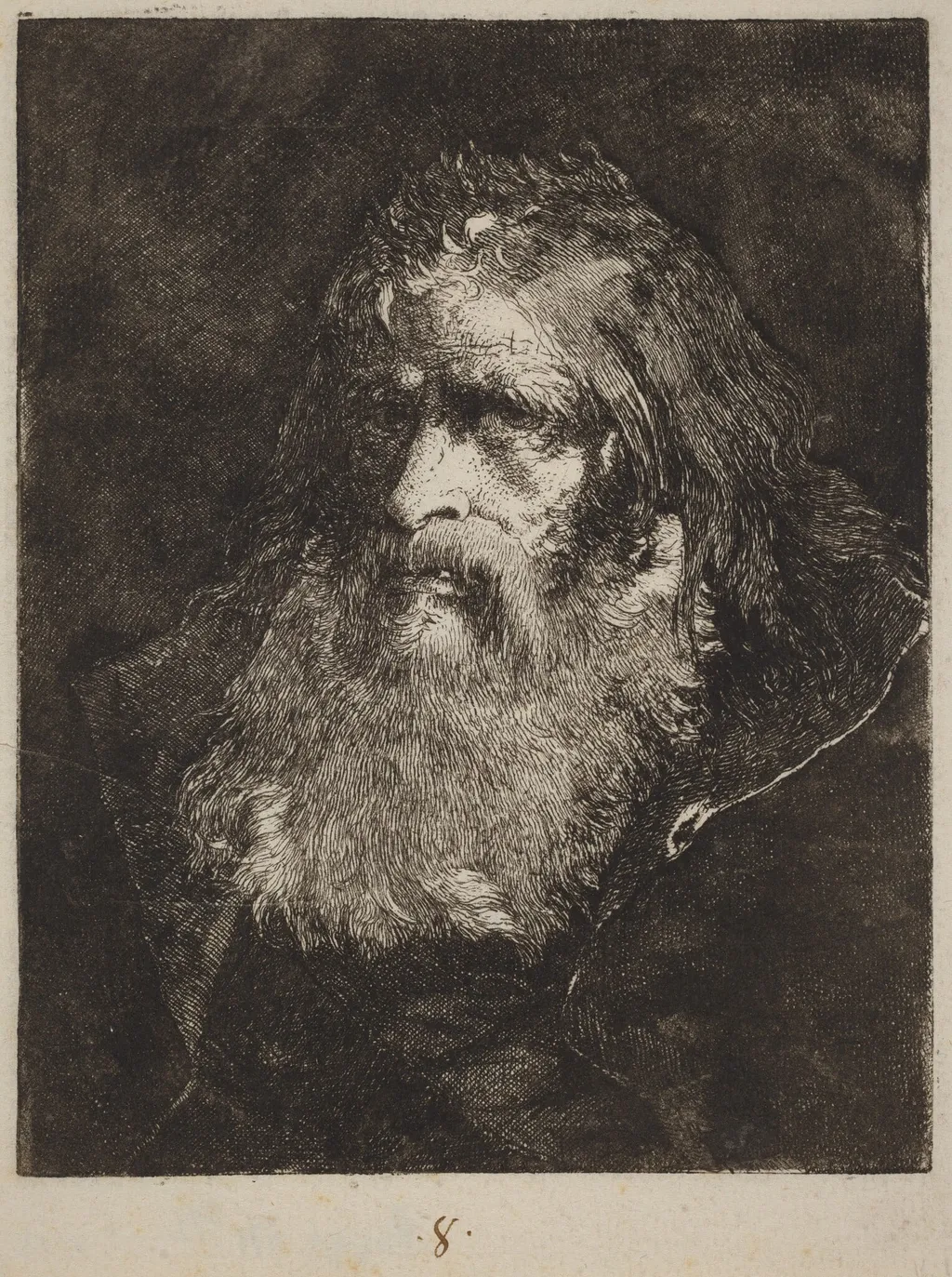
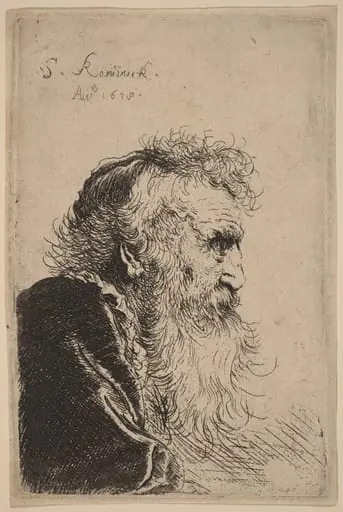
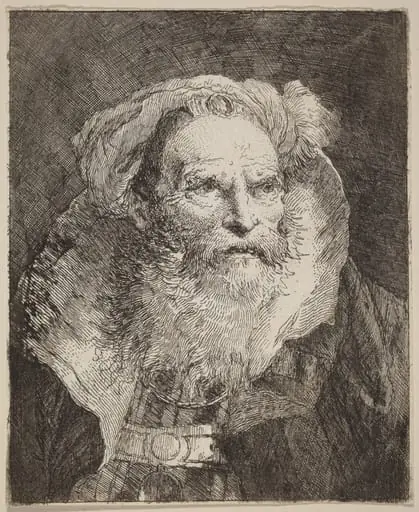
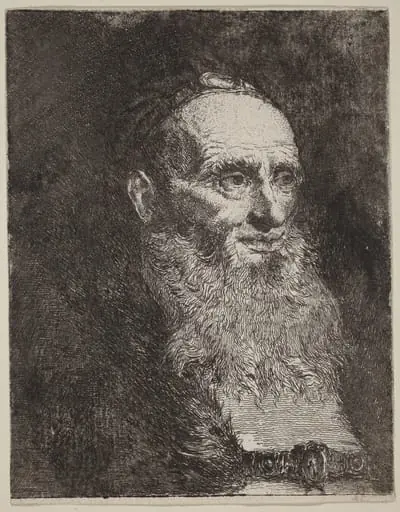
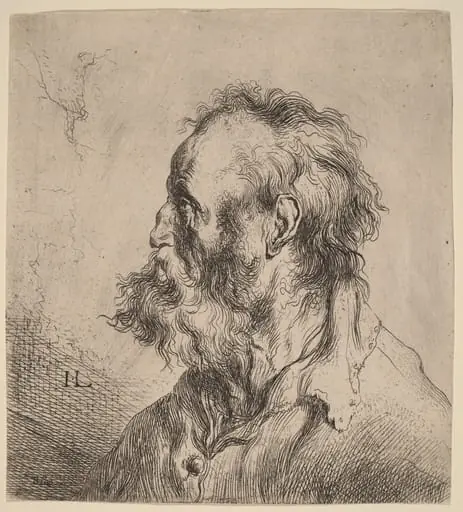
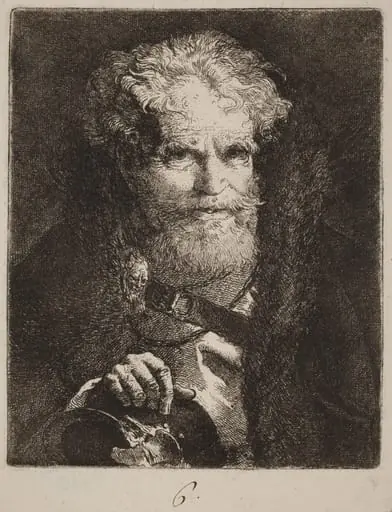
Old Man with Bare Head is an ink print by the Romanticist artist Giovanni Domenico Tiepolo. It dates from 1762 and is held in the collection of the National Gallery of Art.
About this work
Overview
It exemplifies his engagement with printmaking during a period when etching served both reproductive and original artistic purposes in 18th-century Italy.
Created around 1762, *Old Man with Bare Head* is an etching on laid paper by Giovanni Domenico Tiepolo. It exemplifies his engagement with printmaking during a period when etching served both reproductive and original artistic purposes in 18th-century Italy. Unlike his father’s grand frescoes, this work focuses on intimate, observational portraiture, revealing Tiepolo’s quieter, more personal approach to image-making.
Subject & Meaning
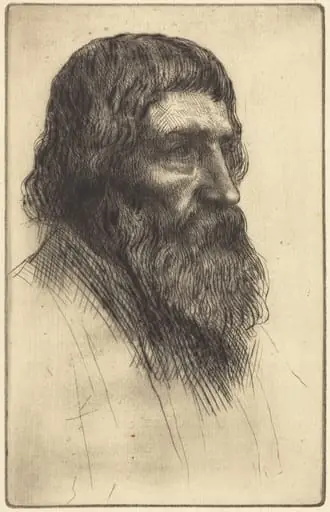
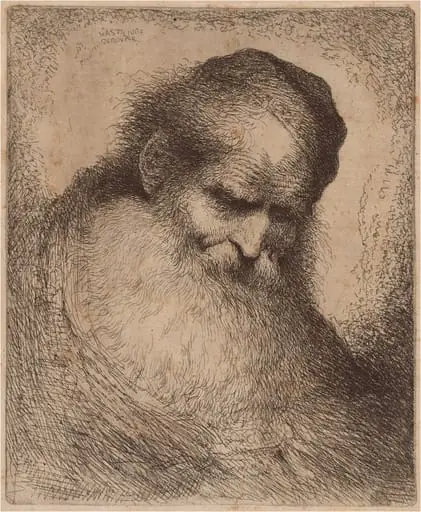
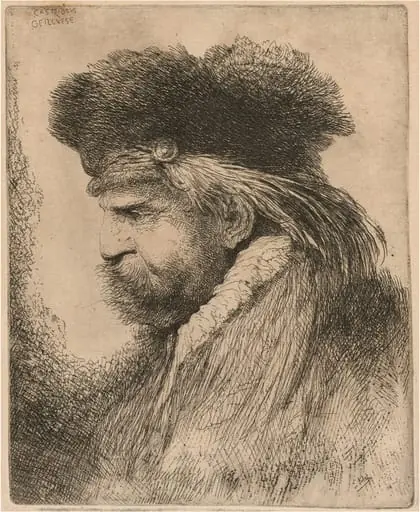
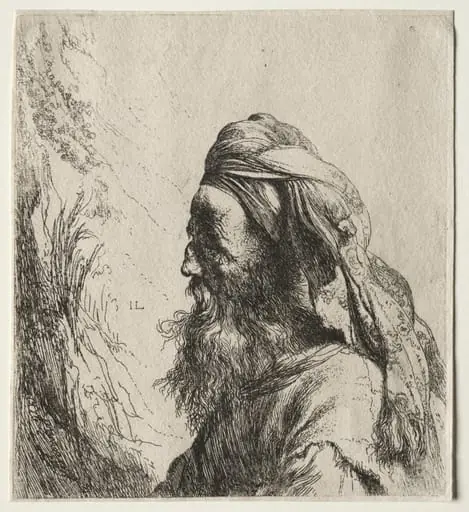
The portrait depicts an elderly man with a long, wavy beard and curly hair, his head turned slightly to the side in quiet contemplation. Dressed plainly and set against a dark, unadorned background, the figure conveys no narrative or symbolic context. The emphasis lies in the dignity of age and the psychological presence captured through subtle facial cues, suggesting a meditation on human character rather than social status.
Technique & Style
Tiepolo employed fine, controlled etching lines to render the texture of hair, skin, and wrinkles with remarkable precision. The contrast between the dark, recessed background and the illuminated face enhances the three-dimensionality of the features. His use of cross-hatching and delicate strokes mimics the natural irregularities of aging skin and coarse beard, demonstrating mastery over the medium’s capacity for tonal nuance and detail.
History & Provenance
The work originates from the later phase of Tiepolo’s career, after he had moved away from large-scale decorative projects. While specific early ownership records are sparse, the etching aligns with his known output of intimate graphic studies, likely made for private collectors or as artistic exercises. It reflects the broader 18th-century interest in prints as accessible, collectible art forms.
Context
In mid-18th-century Venice, etching was a vital medium for artists seeking to explore personal expression beyond commissioned murals. Tiepolo’s focus on individual portraiture in print distinguishes him from his father’s monumental style. This work fits within a growing trend of artists using etching to capture everyday subjects with psychological depth, bridging the gap between academic tradition and emerging realism.
Legacy
Though less celebrated than his father’s oeuvre, Giovanni Domenico Tiepolo’s etchings, including this portrait, contributed to the evolution of graphic art in Italy. His attention to subtle expression and tactile detail influenced later generations of printmakers who valued intimacy over spectacle. The work remains a quiet testament to the expressive potential of line in black-and-white portraiture.
Artist & collection
Artist
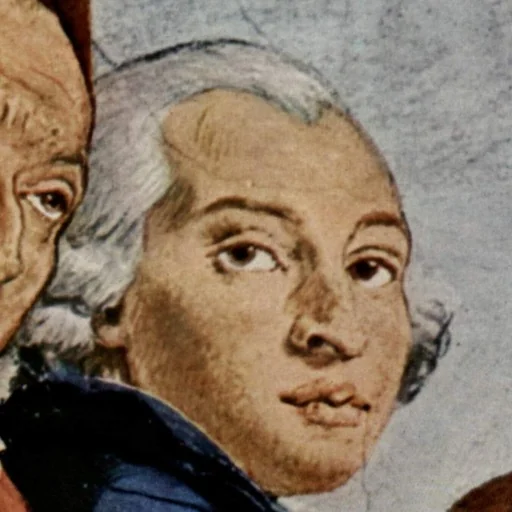
Giovanni Domenico Tiepolo (August 30, 1727 – March 3, 1804) was an Italian painter and printmaker in etching. He was the son of artist Giovanni Battista Tiepolo and elder brother of Lorenzo Baldissera Tiepolo.