Artwork
Bust of a Bearded Old Man
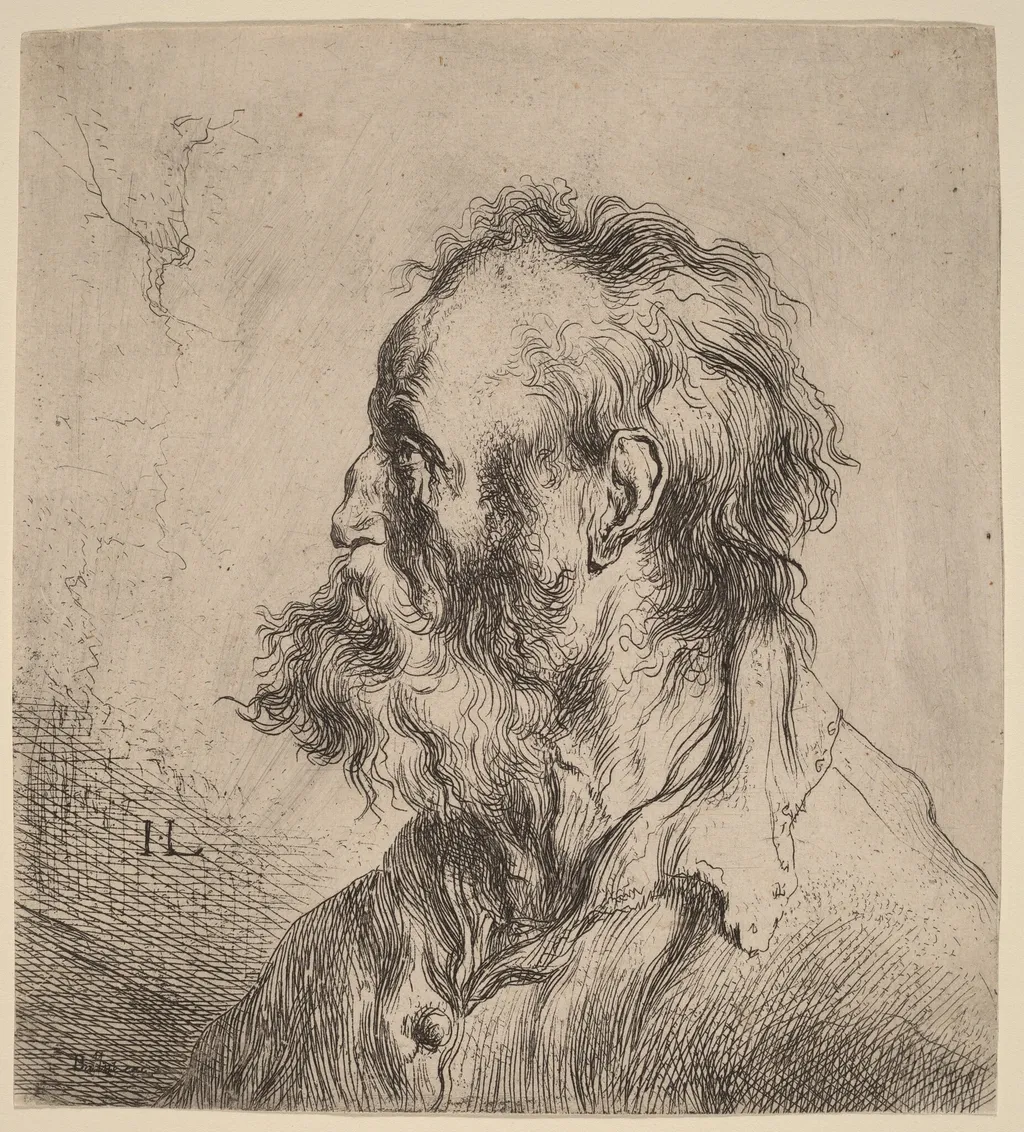
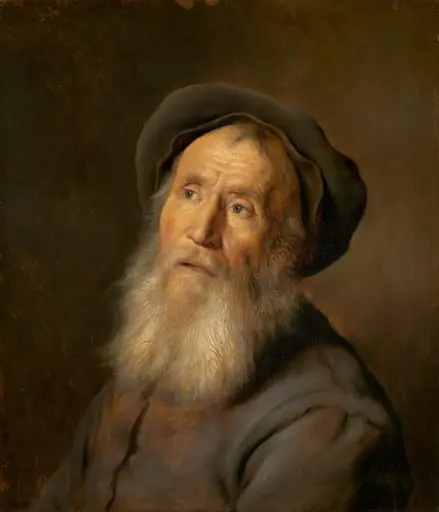
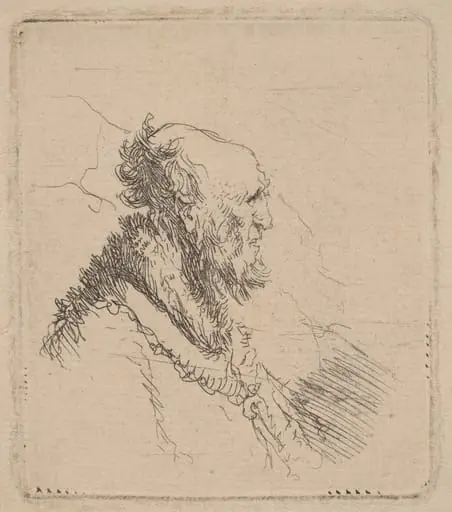
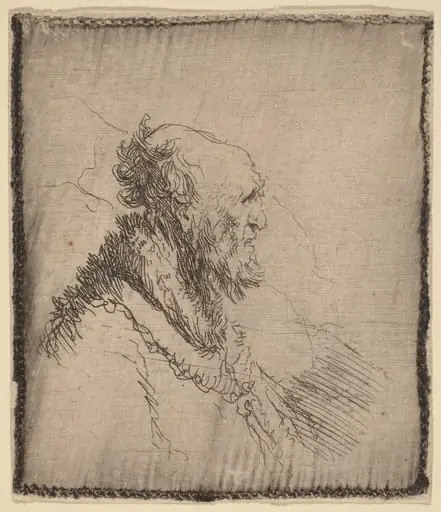
Bust of a Bearded Old Man is an ink print by the Baroque artist Jan Lievens. It dates from 1634 and is held in the collection of the National Gallery of Art.
About this work
Overview
Created around 1634, the *Bust of a Bearded Old Man* is a print by Jan Lievens, executed in etching and engraving on laid paper.
Created around 1634, the *Bust of a Bearded Old Man* is a print by Jan Lievens, executed in etching and engraving on laid paper. It belongs to a series of intimate portrait studies Lievens produced during his early career in the Dutch Republic. The work exemplifies his technical precision and interest in capturing psychological depth through monochrome printmaking, distinguishing it from his larger historical compositions.
Subject & Meaning
The figure is an elderly man rendered in profile, facing left, with a thick, unruly beard and long, disheveled hair. His loose shirt reveals a bare chest, suggesting informality or rustic simplicity. The subtle downturn of his eyes and the tension in his lips convey a quiet, inward contemplation. Rather than depicting a known individual, the portrait likely represents a type—an archetype of aged wisdom or melancholy, common in Northern European art of the period.
Technique & Style
Lievens employed fine etched lines and engraved details to model the man’s face and beard with remarkable texture. The background is minimally rendered, using soft tonal gradations to isolate the figure. The chiaroscuro effect, though restrained, enhances the three-dimensionality of the features. The technique reflects his mastery of both etching’s fluidity and engraving’s precision, honed during his formative years alongside Rembrandt.
History & Provenance
Lievens produced this print during a period of intense artistic exchange in Leiden, shortly after leaving his shared studio with Rembrandt in 1631. While the print’s early ownership is undocumented, it aligns with the broader circulation of artist-made prints among collectors in the Dutch Republic. Lievens later traveled extensively across Europe, but this work remains rooted in his Leiden phase, when portraiture and experimental printmaking defined his output.
Context
In the 1630s, Dutch artists increasingly turned to intimate, unidealized portraits as expressions of individuality and human emotion. Lievens, influenced by Rembrandt’s psychological realism and the legacy of Pieter Lastman, contributed to this trend through prints that prioritized expressive detail over narrative. The bust format, common in antiquity and revived in the Baroque era, allowed artists to focus on character without the distraction of costume or setting.
Legacy
Though less widely known than his contemporaries, Lievens’s prints like this one demonstrate a nuanced approach to portraiture that influenced later generations of Dutch graphic artists. His ability to convey emotion through minimal means—using line and tone alone—established a quiet but enduring contribution to the printmaking tradition of the Dutch Golden Age, distinct from the theatricality of some Baroque peers.
Artist & collection
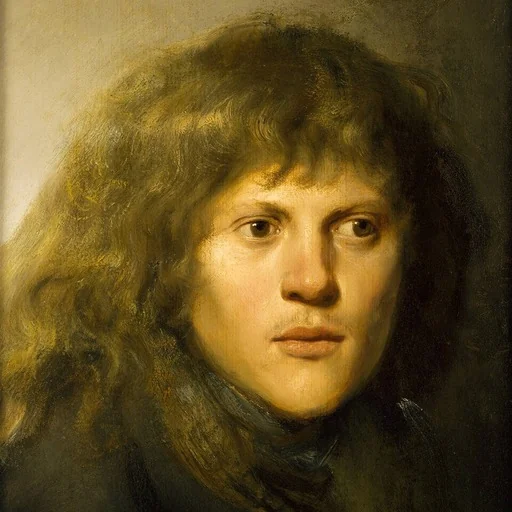
Artist
Jan Lievens (24 October 1607 – 4 June 1674) was a Dutch Golden Age painter who was associated with his close contemporary Rembrandt, a year older, in the early parts of their careers.