Artwork
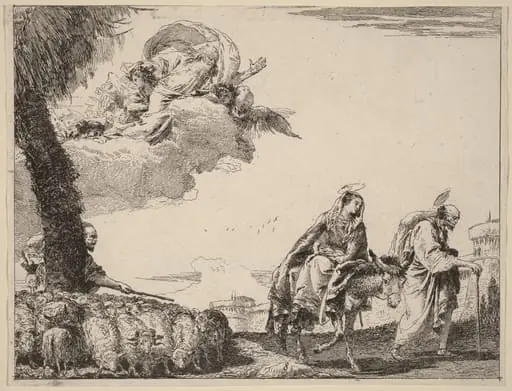
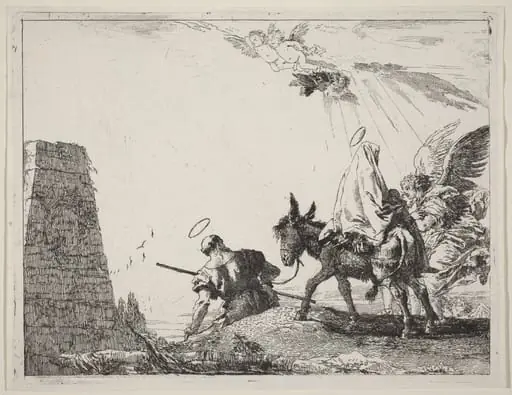
The Flight, Joseph at Right and Mary and Angel at Left
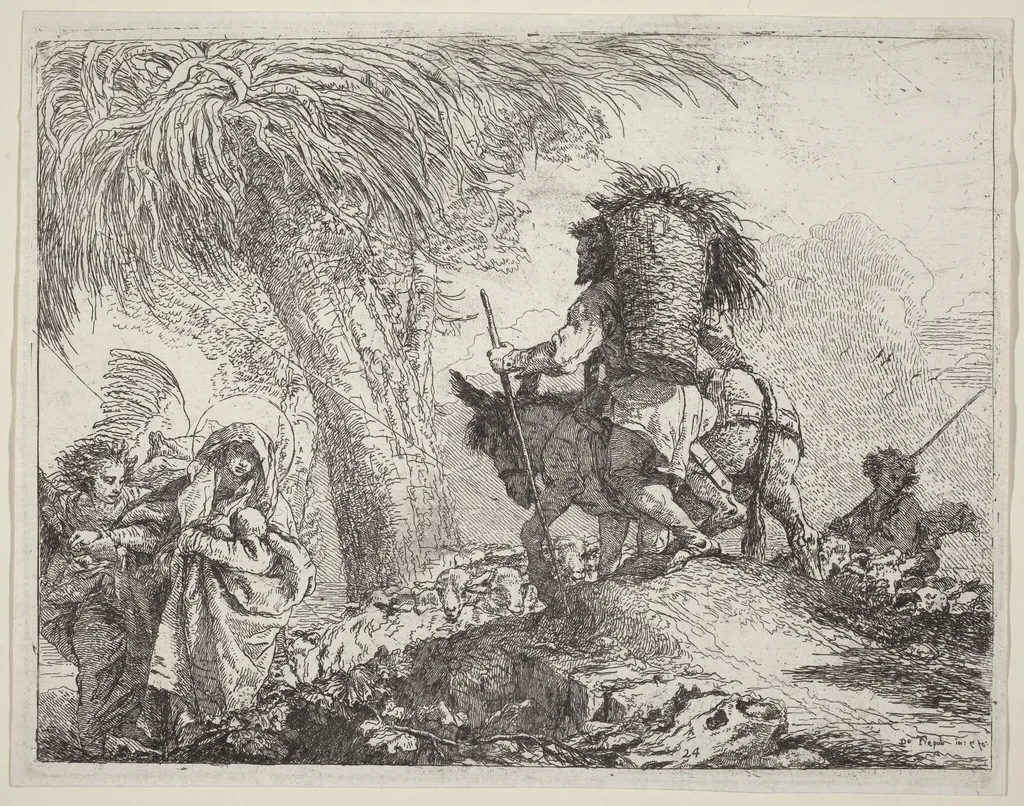
The Flight, Joseph at Right and Mary and Angel at Left is an ink print by the Romanticist artist Giovanni Domenico Tiepolo. It dates from 1753 and is held in the collection of the National Gallery of Art.
About this work
Overview
Created in 1753, this etching by Giovanni Domenico Tiepolo captures a moment from the biblical narrative of the Holy Family’s escape into Egypt. Rendered in monochrome, the composition centers on three figures amid a dense, turbulent landscape. The artist’s use of fine, energetic lines conveys urgency and motion, characteristic of his printmaking style during this period of his career.
Subject & Meaning
The scene illustrates the Flight into Egypt, a moment of peril and divine guidance. Joseph, on the right, grips a staff and steps forward with resolve, while Mary, on the left, clutches her child as an angel hovers protectively above. The absence of overt supernatural elements grounds the moment in human vulnerability, emphasizing quiet endurance amid danger rather than miraculous intervention.
Technique & Style
Tiepolo employed etching to achieve dynamic, fluid lines that suggest movement and texture. The background is filled with swirling, irregular strokes of rock and foliage, creating a sense of claustrophobic urgency. Figures are rendered with minimal detail but strong gestural energy, their forms emerging from the dense inkwork rather than being defined by outline.
History & Provenance
As the son of Giovanni Battista Tiepolo, he worked within a well-established artistic lineage but developed a more intimate, expressive mode in his prints.
This print belongs to a series of religious scenes Tiepolo produced in the 1750s, likely intended for private collectors rather than public display. As the son of Giovanni Battista Tiepolo, he worked within a well-established artistic lineage but developed a more intimate, expressive mode in his prints. The work’s survival in multiple institutional collections suggests early recognition of its technical merit.
Context
In mid-18th-century Venice, religious imagery remained popular among patrons, though the tone was shifting toward personal devotion over grandeur. Tiepolo’s etchings reflect this trend—reducing scale and drama to focus on emotional immediacy. His work here aligns with broader European interest in intimate biblical narratives, distinct from the theatricality of his father’s frescoes.
Legacy
Though less celebrated than his father’s monumental works, Giovanni Domenico Tiepolo’s etchings influenced later generations of printmakers through their expressive line and psychological nuance. This piece exemplifies his ability to convey narrative tension in miniature, contributing to the evolution of the etching as a medium for emotional storytelling rather than mere illustration.
Artist & collection
Artist
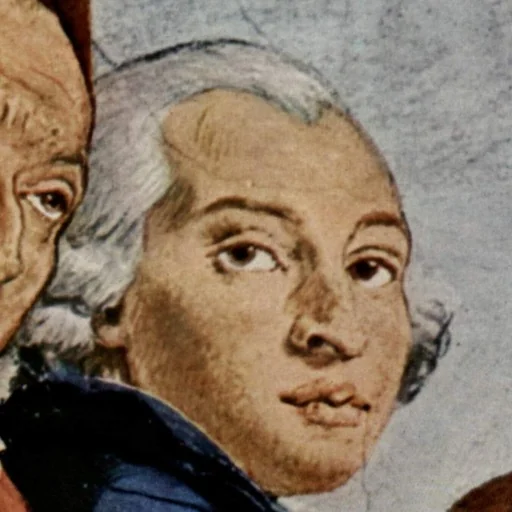
Giovanni Domenico Tiepolo (August 30, 1727 – March 3, 1804) was an Italian painter and printmaker in etching. He was the son of artist Giovanni Battista Tiepolo and elder brother of Lorenzo Baldissera Tiepolo.

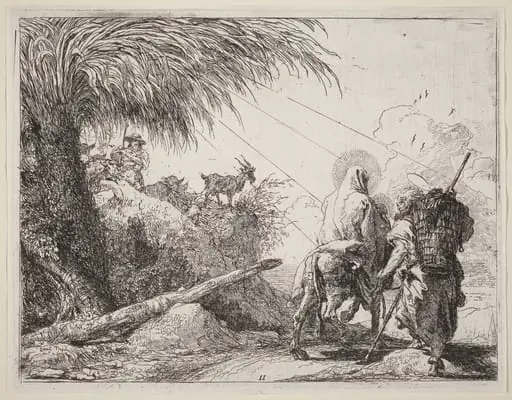 The Flight, Holy Family at the Right, Joseph Looking to the Left
 The Flight with the Holy Family at the Right
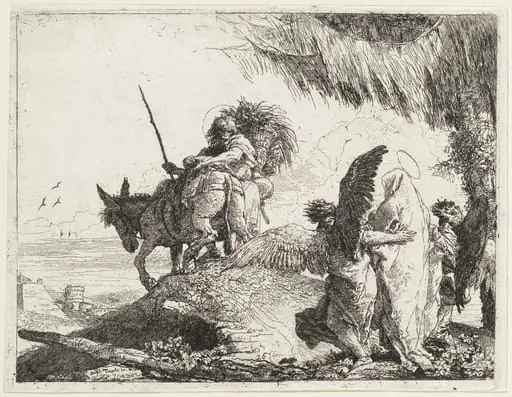 The Flight, with Madonna at Right Supported by Angels
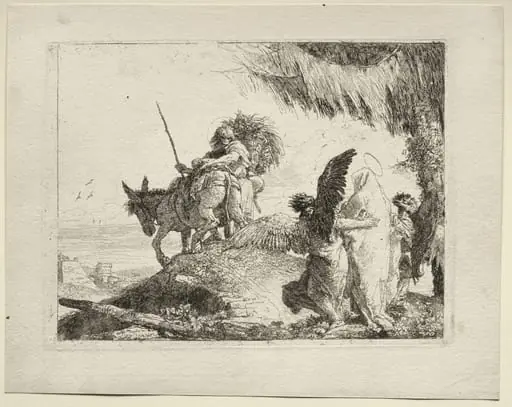 The Flight into Egypt: The Flight with the Madonna at Right Supported by Angels
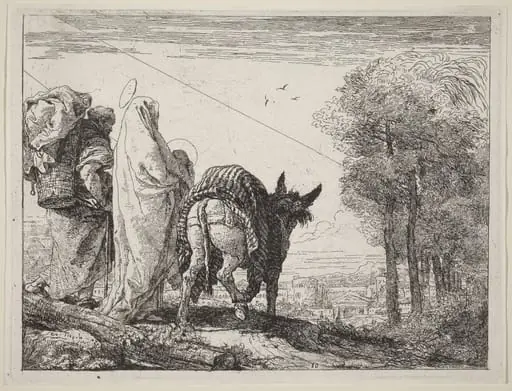 The Flight with the Holy Family at the Left
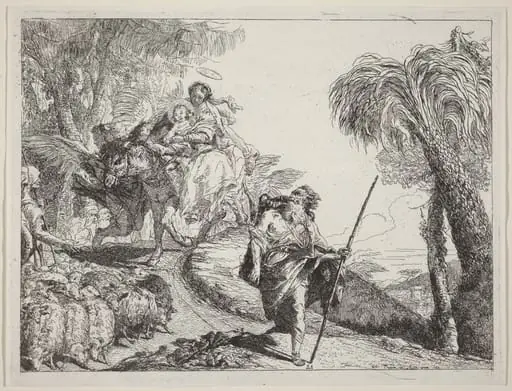 The Flight with Joseph in the Foreground
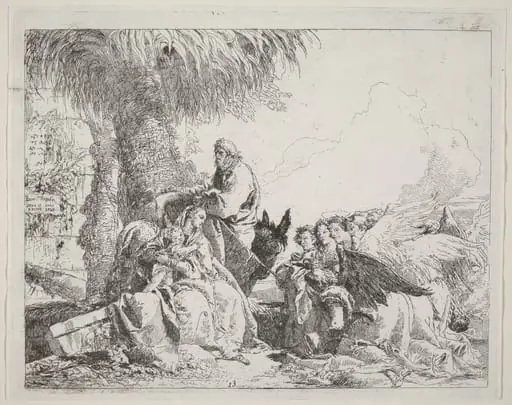 The Rest on the Flight, with Adoring Angels
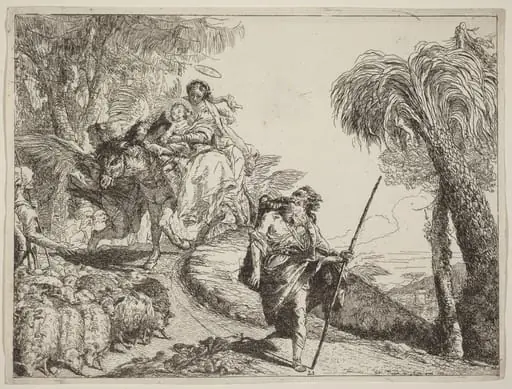 The Flight with Joseph in the Foreground
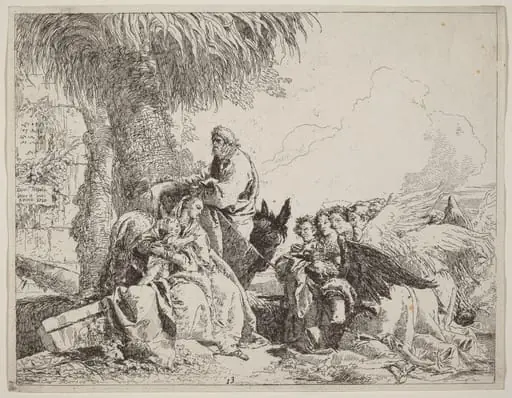 The Rest on the Flight, with Adoring Angels
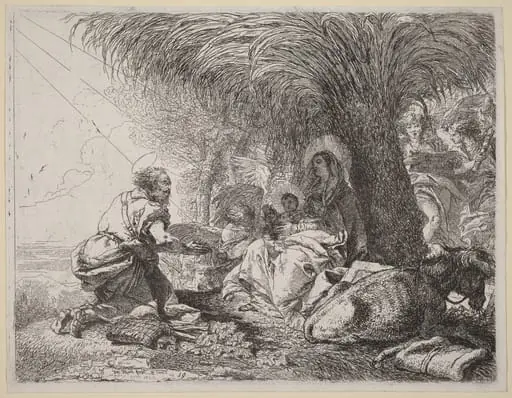 The Rest on the Flight with Joseph in Adoration
 The Flight with Obelisk at the Left