Artwork
A Bearded Old Man Leaning His Head on His Hand
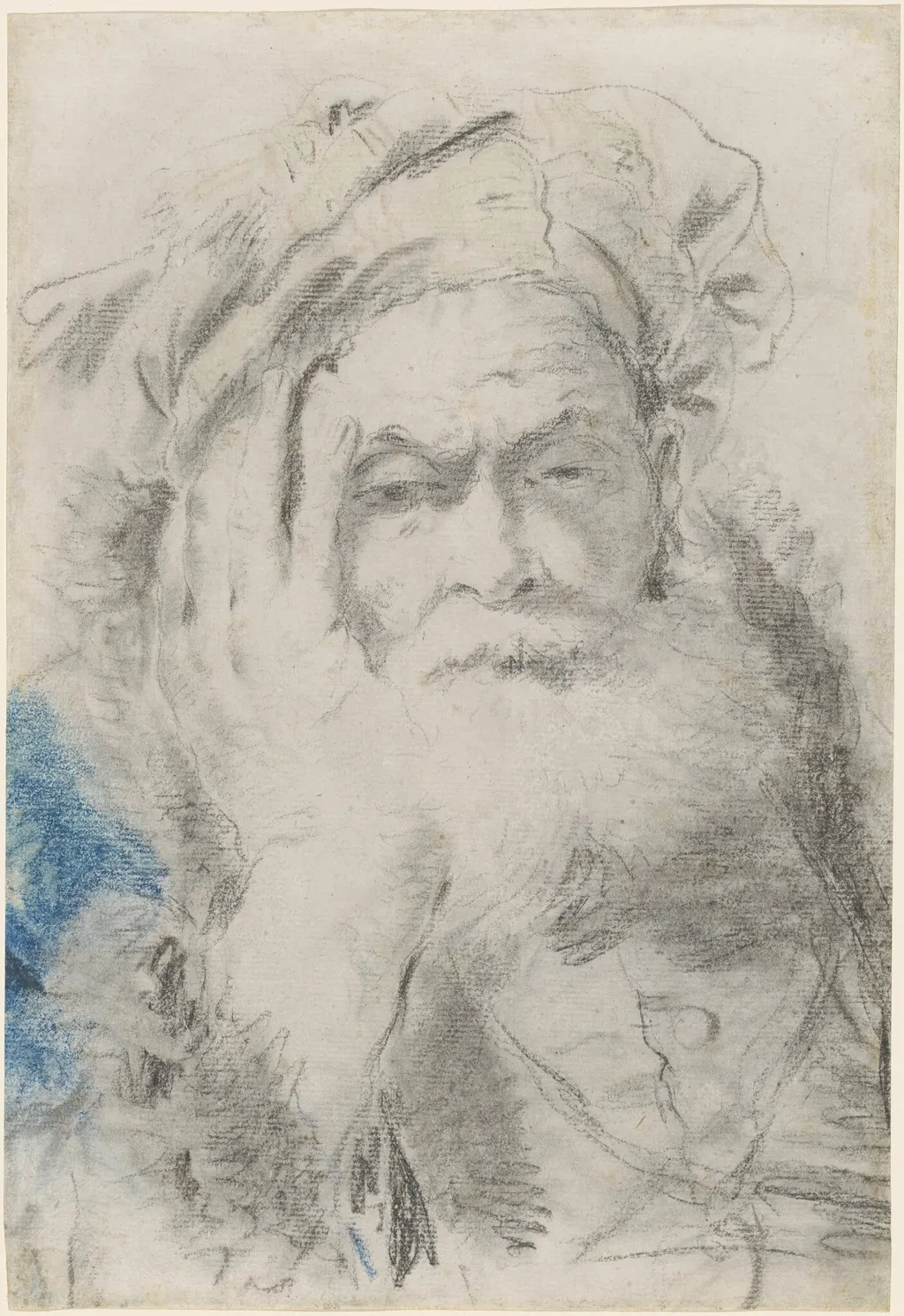
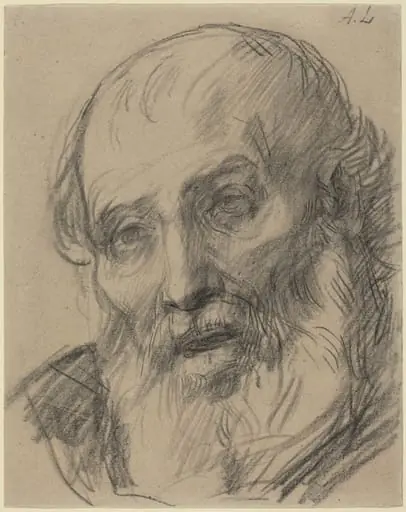
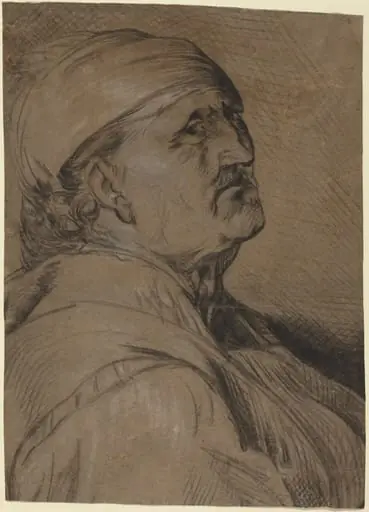
A Bearded Old Man Leaning His Head on His Hand is a charcoal drawing by the Romanticist artist Lorenzo Baldissera Tiepolo. It dates from 1758 and is held in the collection of the National Gallery of Art.
About this work
The painting is called A Bearded Old Man Leaning His Head on His Hand.
The painting is called A Bearded Old Man Leaning His Head on His Hand.
It was made by Tiepolo, Lorenzo Baldissera, between 1755 and 1762.
The artist used charcoal and pastel to create this portrait, which is a notable fact because pastel is a technique that involves using colored sticks to draw, and it was not as common during that time period.
You can learn more about this technique by looking up pastel.
Overview
Created between 1755 and 1762, this drawing by Lorenzo Baldissera Tiepolo is executed in charcoal, stumping, and blue pastel. It belongs to a series of figure studies produced during his formative years as an artist, when he worked alongside his father, Giovanni Battista Tiepolo, on large-scale decorative projects. The choice of medium reflects an experimental approach to capturing form and tone with both precision and atmospheric softness.
Subject & Meaning
The subject is an elderly man, his head resting on his hand in a posture of quiet contemplation. No narrative or symbolic context is provided; the focus is on the physical presence and emotional stillness of the individual. The pose suggests introspection, possibly drawn from life or memory, and aligns with the Renaissance tradition of studying human expression through solitary, unidealized figures.
Technique & Style
Charcoal provides the foundational structure, while stumping softens transitions between light and shadow. Blue pastel is applied sparingly to suggest cool tonal variations in the skin and beard, a subtle use of color uncommon in traditional draftsmanship of the period. The technique merges the immediacy of drawing with the tactile richness of pastel, revealing an interest in material experimentation beyond conventional line work.
History & Provenance
The drawing was made during Lorenzo’s time in Würzburg, where he assisted his father on the frescoes of the Prince-Bishop’s palace. Though little is documented about its early ownership, it likely remained within the Tiepolo family circle before entering institutional collections. Its survival as a standalone study highlights its value as a private exercise rather than a preparatory sketch for a larger commission.
Context
In mid-18th-century Italy, figure studies were essential training for artists working in fresco and portraiture. While many artists relied on pen or chalk, Lorenzo’s use of blue pastel signals an openness to newer materials and a sensitivity to tonal nuance. This work reflects the broader shift toward intimate, observational drawing as a means of artistic development, separate from grand decorative projects.
Legacy
Though Lorenzo Baldissera Tiepolo is less known than his father, this drawing exemplifies his skill in capturing psychological presence through modest means. It stands as a quiet testament to the importance of study in artistic practice, preserving a moment of focused observation that transcends its function as a preparatory sketch and endures as a self-contained work of quiet intensity.
Artist & collection

Artist
Lorenzo Baldissera Tiepolo (8 August 1736 – August 1776) was an artist and son of the more famous Giovanni Battista Tiepolo.