Artwork
The Vision of Saint Anne
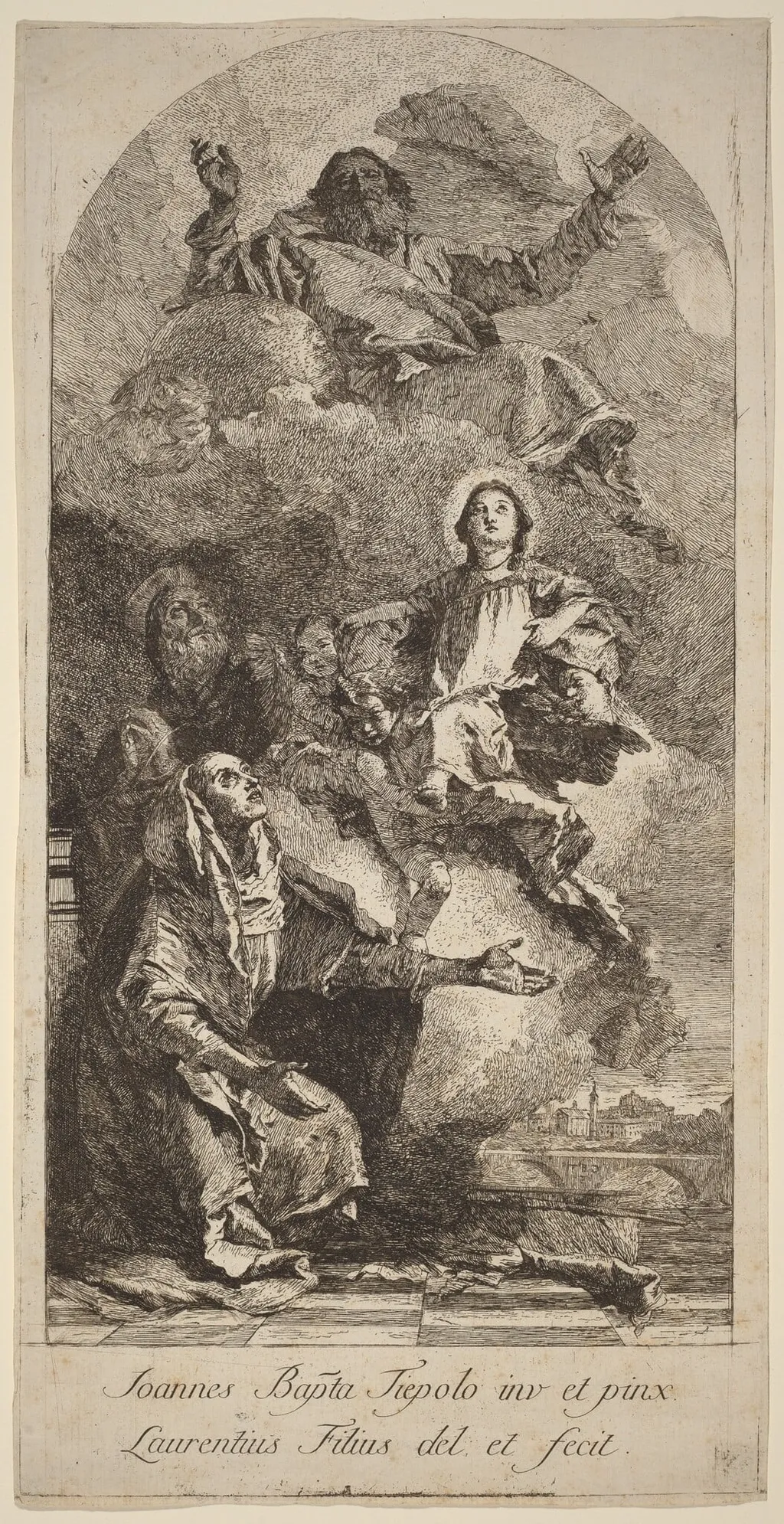
The Vision of Saint Anne is an ink print by the Baroque artist Lorenzo Baldissera Tiepolo. It dates from 1756 and is held in the collection of the National Gallery of Art.
About this work
Overview
Created in 1756, *The Vision of Saint Anne* is an etching by Lorenzo Baldissera Tiepolo, the younger son of the renowned painter Giovanni Battista Tiepolo.
Created in 1756, *The Vision of Saint Anne* is an etching by Lorenzo Baldissera Tiepolo, the younger son of the renowned painter Giovanni Battista Tiepolo. Executed in black and white, the print presents a compact religious tableau that highlights the artist’s early involvement in large‑scale projects, notably the fresco program at the Würzburg Residence where he worked with his family from the early 1750s.
Subject & Meaning
The composition centers on a kneeling, robed figure who gazes upward at a luminous female apparition. She hovers above, clothed in a flowing gown, cradling an infant, while swirling clouds frame the scene. The ethereal presence suggests a Marian or Saint Anne vision, inviting contemplation of divine intercession and the sanctity of motherhood within a celestial setting.
Technique & Style
Tiepolo employed traditional etching methods, incising lines into a copper plate and using acid to produce varying depths. Through careful hatching and cross‑hatching, he achieved tonal gradations that give the figures a three‑dimensional quality against the sky. The subtle contrast between the dark foreground and the luminous, almost translucent figure demonstrates his skill in rendering light within the print medium.
History & Provenance
The print bears an inscription at its base identifying Lorenzo Baldissera Tiepolo and his son as the makers, indicating a collaborative family workshop. Produced shortly after his contributions to the Würzburg Residence frescoes, the work likely circulated among patrons familiar with the Tiepolo workshop’s output in the mid‑18th century, though specific ownership records remain scarce.
Context
During the 1750s, the Tiepolo family was active across Europe, blending Italian Rococo sensibilities with the Germanic court’s decorative demands. Lorenzo’s involvement in the Würzburg Residence frescoes exposed him to grand narrative schemes, which he distilled here into a more intimate, print‑based format, reflecting the period’s interest in devotional imagery for private devotion.
Artist & collection

Artist
Lorenzo Baldissera Tiepolo (8 August 1736 – August 1776) was an artist and son of the more famous Giovanni Battista Tiepolo.

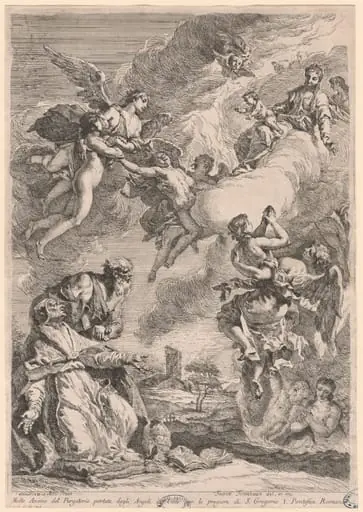 Pope Gregory the Great and Saint Vitale Interceding for the Souls in Purgatory
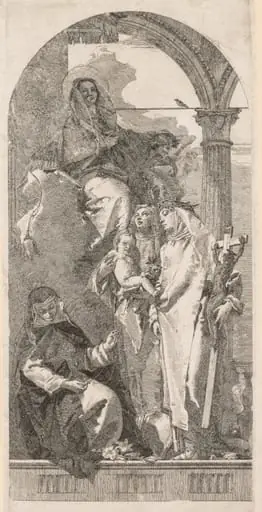 Madonna with Saints Agnes, Catherine and Rosa
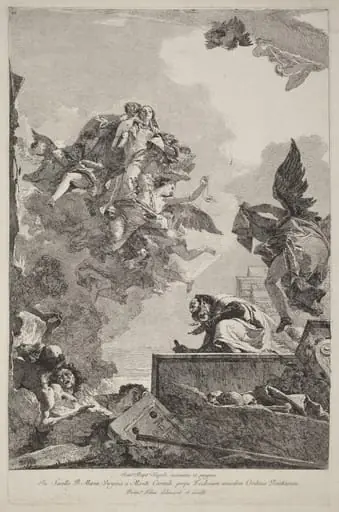 The Madonna del Carmelo Appearing to Saint Simon Stock
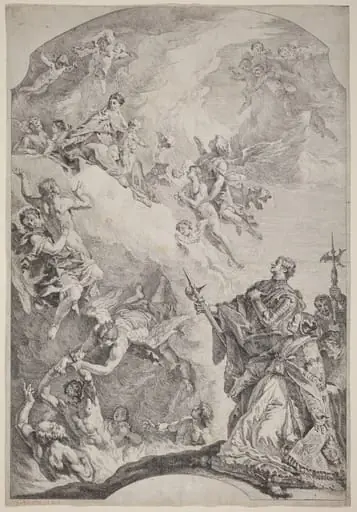 Saint Gregoire I Delivering Souls from Purgatory
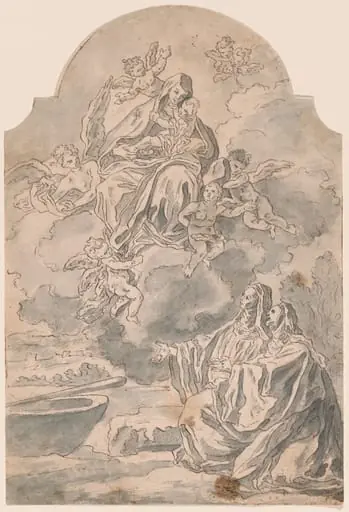 The Virgin and Child Appearing to Two Female Monastics
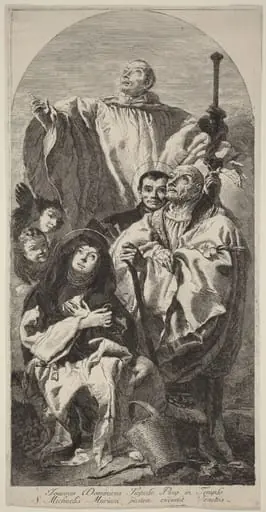 Four Saints of the Benedictine Order
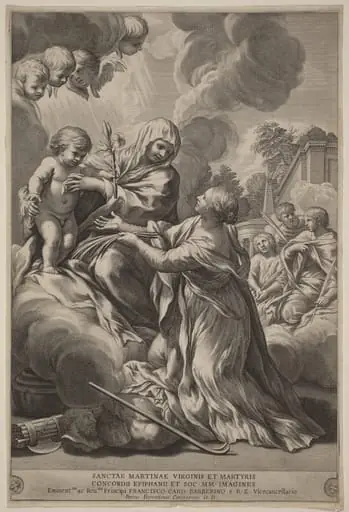 Virgin and Child with Martyrs
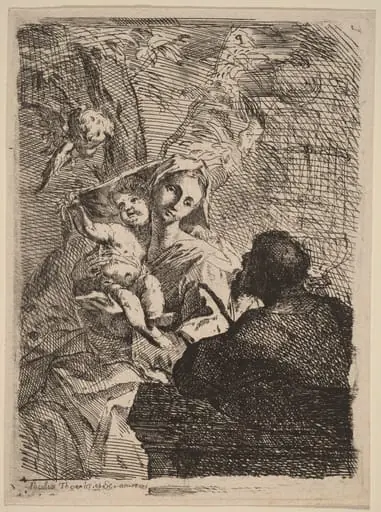 The Rest on the Flight into Egypt
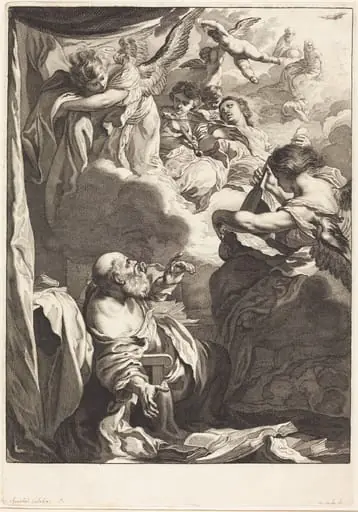 The Ecstasy of Saint Paul
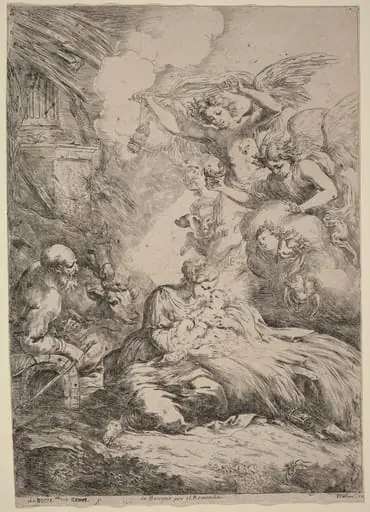 The Holy Family Adored by Angels (The Large Nativity)