Artwork
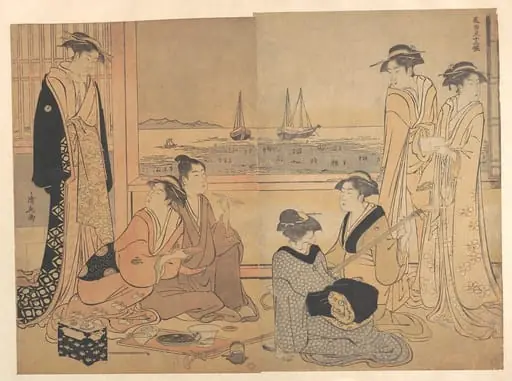
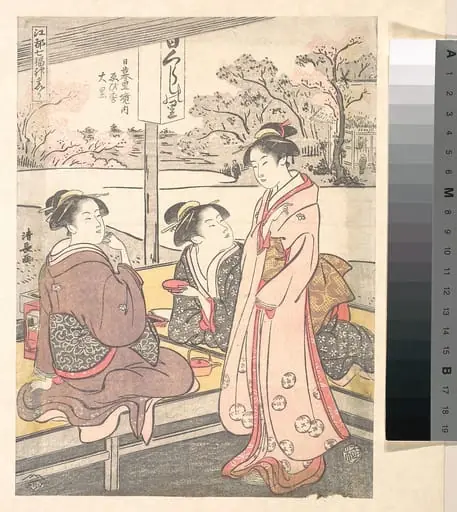
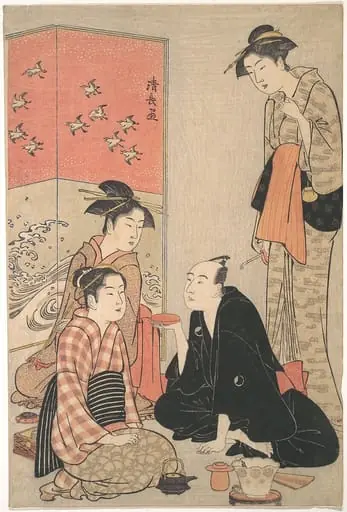
Entertainment on a Balcony by the Water at Nakasu, from the series, A Collection of Beautiful Modern Women of the Pleasure Quarters
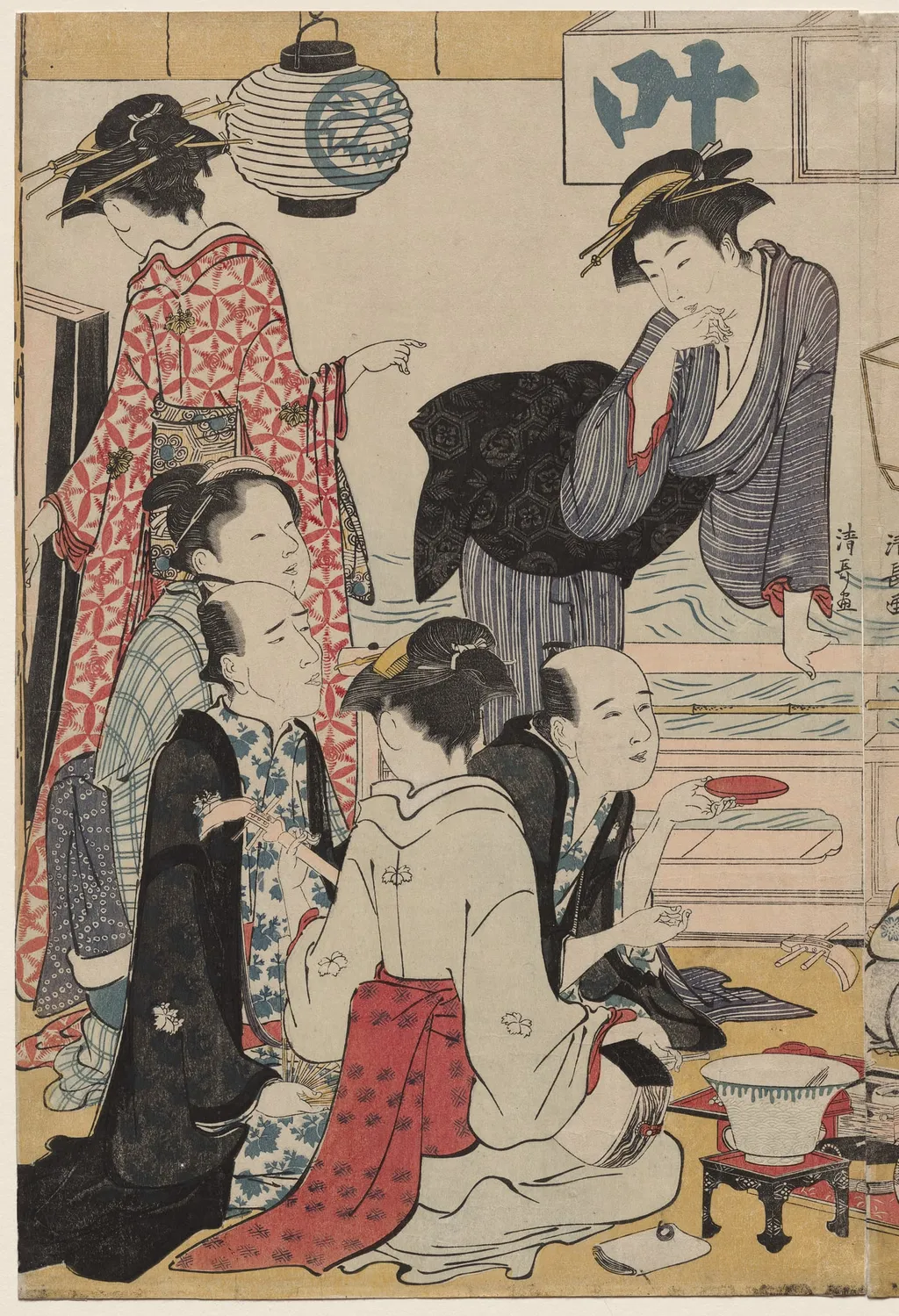
Entertainment on a Balcony by the Water at Nakasu, from the series, A Collection of Beautiful Modern Women of the Pleasure Quarters is a print by the Romanticist artist Torii Kiyonaga. It dates from 1783 and is held in the collection of the Cleveland Museum of Art.
About this work
Overview
Created in 1783 by Torii Kiyonaga, this woodblock print is part of a series depicting contemporary women of Edo’s pleasure districts.
Created in 1783 by Torii Kiyonaga, this woodblock print is part of a series depicting contemporary women of Edo’s pleasure districts. It captures a quiet moment on a waterfront balcony in Nakasu, one of Edo’s famed entertainment zones. The composition features four figures arranged with deliberate stillness, framed by a low fence and distant boats. The print exemplifies the ukiyo-e tradition, blending everyday observation with refined aesthetic control.
Subject & Meaning
The scene portrays two women in vividly colored kimonos, accompanied by two men in more subdued attire, suggesting a social gathering among patrons and courtesans. The lantern and fan imply evening leisure, while the water and boats anchor the setting in Nakasu’s riverside culture. The figures’ postures convey intimacy without overt drama, reflecting the nuanced social rituals of the pleasure quarters rather than sensationalized spectacle.
Technique & Style
Kiyonaga employs flat, unmodulated colors and clean, precise outlines characteristic of late 18th-century ukiyo-e. The kimonos display bold patterns—gold accents on red, white blossoms on blue—rendered with minimal shading. Background elements are simplified, with no perspective or depth, emphasizing surface decoration. The overall effect is serene and orderly, prioritizing harmony and elegance over realism or emotional intensity.
History & Provenance
The print was produced during a period when ukiyo-e prints flourished as affordable art for urban audiences. It entered the collection of The Cleveland Museum of Art through documented acquisitions in the 20th century, likely as part of a broader effort to assemble representative works of Japanese printmaking. Its preservation reflects its significance as a record of Edo-period social life and artistic practice.
Context
Nakasu was a bustling district along the Sumida River, known for teahouses, theaters, and courtesan establishments. Kiyonaga’s series focused on the fashionable women who inhabited this world, presenting them not as exoticized figures but as participants in daily rituals of dress, conversation, and leisure. The print aligns with contemporary tastes for depictions of urban elegance and transient beauty.
Legacy
Kiyonaga’s work helped define the aesthetic of mature ukiyo-e, influencing later artists through its balance of realism and stylization. While not widely known outside specialist circles, this print remains a valuable document of Edo-era gender, class, and leisure. Its presence in major Western collections underscores its role in shaping global understanding of Japanese visual culture.
Own this work as a print
Artist & collection